

Contents
Daily Current Affairs — 09 July 2026
- India–Indonesia Comprehensive Strategic Partnership: Outcomes of the State VisitGS 2 & 3
- World Bank Country Income Classification, FY2027GS 3
- BHAVYA Industrial Parks Scheme and the Board of Trade AgendaGS 3
- The Right to Be Forgotten: The Delhi High Court FrameworkGS 2
- War Crimes, Universal Jurisdiction and the Geneva Conventions ActGS 2
- AISHE 2022-24: Rising Female and Social-Group Enrolment in Higher EducationGS 2
Article 01
India–Indonesia Comprehensive Strategic Partnership: Outcomes of the State Visit
GS Paper 2 & GS Paper 3 — International Relations / Defence & Security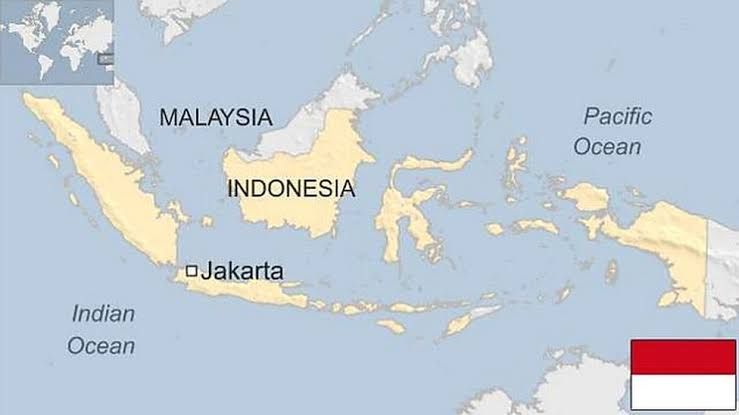
India-Indonesia Comprehensive Strategic Partnership
Why in News
The Prime Minister of India concluded a State Visit to Indonesia, advancing the India-Indonesia Comprehensive Strategic Partnership established in 2018. During the visit, the Prime Minister was conferred the Bintang Adipurna, Indonesia's highest national honour, becoming only the second Indian Prime Minister after Jawaharlal Nehru to receive it. The visit produced a wide set of agreements spanning defence, maritime security, critical minerals, technology, health, agriculture and cultural diplomacy.
Static Background
- India and Indonesia share civilizational links, with Hindu, Buddhist and Islamic traditions historically transmitted from the Indian coastline to the Indonesian archipelago.
- Both countries played a leading role in the Bandung Conference (1955), which laid the groundwork for the Non-Aligned Movement (1961).
- Bilateral ties progressed through India's Look East Policy (1991) and the upgraded Act East Policy (2014); the two countries marked 75 years of diplomatic relations in 2024.
- The relationship was elevated to a Comprehensive Strategic Partnership in 2018, anchored by a Shared Vision on Maritime Cooperation in the Indo-Pacific.
- Bilateral trade stood at approximately USD 28.15 billion in 2024-25; India is the largest global buyer of Indonesian crude palm oil and its second-largest buyer of coal.
- The diaspora includes an estimated 1,20,000 Persons of Indian Origin and 15,000 Non-Resident Indians.
Key Outcomes of the Visit
Defence and Maritime Security
- Indonesia signed a USD 200 million contract to procure two batteries of the BrahMos supersonic cruise missile system, a joint India-Russia programme.
- Indonesia placed the first-ever export order for India's indigenously developed Astra air-to-air missile system, to equip its Su-30 fleet.
- The two countries extended the MoU and Implementation Agreement on Maritime Safety and Security Cooperation.
- India and Indonesia agreed to jointly develop Sabang Port, located at the northern tip of Sumatra overlooking the entrance to the Strait of Malacca, a critical maritime chokepoint.
- The two sides welcomed the planned convening of the 3rd India-Indonesia Security Dialogue.
The Astra Missile Programme
- Astra is a family of indigenous Beyond-Visual-Range Air-to-Air Missiles (BVRAAM) developed by the DRDO for integration with the Air Force and Navy.
- Astra Mk1 has a range of 80–110 km, an altitude ceiling of about 20 km, and a top speed of Mach 4.5; it is integrated with the Su-30 MKI fleet and is planned for the Tejas Mk1A and the Rafale.
- Astra Mk2, with an enhanced range of up to 200 km, has received the Acceptance of Necessity from the Defence Acquisition Council, signalling the start of procurement even as testing continues.
- Astra Mk3, officially named Gandiva, is under development and is expected to use a Solid Fuel Ducted Ramjet engine for sustained mid-flight thrust, with a potential range exceeding 350 km.
- The Astra family is positioned as India's indigenous counter to China's long-range PL-15 missile, used by both China and Pakistan.
Critical Minerals, Steel and Heavy Industry
- The Steel Authority of India entered into an agreement to establish a high-capacity stainless-steel slab manufacturing facility in Indonesia.
- An MoU was signed for the joint development of rare earth magnets, used in electric vehicles and advanced electronics.
- A separate MoU covers cooperation on extraction and technology across the steel and mineral supply chain.
Technology, Space, Health and Agriculture
- The Framework Agreement on Cooperation in the Exploration and Uses of Outer Space for Peaceful Purposes was extended, alongside MoUs on research and telecommunications technology cooperation.
- An MoU between India's Central Drugs Standard Control Organisation and Indonesia aims to harmonise medical product regulations, supported by a Health Workforce Collaboration agreement.
- India's National Disaster Management Authority established an institutional link with Indonesia's disaster management agency.
- A comprehensive MoU on Agriculture and Allied Sectors was signed, and India announced the supply of 100 tonnes of DWR 162 wheat seeds to Indonesia.
Soft Power and Institutional Diplomacy
- Indonesia launched the Indonesia Open Network, modelled on India's Open Network for Digital Commerce.
- Indonesia will deploy a Liaison Officer to the Information Fusion Centre for the Indian Ocean Region in Gurugram, strengthening maritime domain awareness.
- India will provide technical assistance for the conservation of the Prambanan Temple Complex in Yogyakarta, Indonesia's largest Hindu temple site.
- 2026-27 was designated the "Tagore-Dewantara Year of India-Indonesia Cultural and Educational Diplomacy," marking the centenary of Rabindranath Tagore's visit to Indonesia.
- The Election Commission of India and Indonesia's General Elections Commission agreed to share best practices in managing large-scale elections.
- A branch campus of the Indian Institute of Management, Bangalore, will be set up at the Singhasari Special Economic Zone in East Java.
Concerns and Way Forward
- Indonesia's Bebas-Aktif (independent and active) foreign policy makes it cautious of minilateral groupings such as the Quad, which it views as a risk to ASEAN Centrality.
- Despite the BrahMos purchase, Indonesia avoids overt alignment against China, whose economic footprint in Indonesian infrastructure and nickel-based EV supply chains remains substantially larger than India's.
- Bilateral trade remains skewed toward Indonesia because of India's large palm oil imports; the absence of a bilateral Comprehensive Economic Cooperation Agreement and low utilisation of the ASEAN-India Trade in Goods Agreement constrain trade expansion.
- Way forward includes fast-tracking a trade agreement review, building critical mineral supply chains through joint ventures, operationalising Sabang Port through a dedicated Special Purpose Vehicle, and aligning India's SAGAR vision with Indonesia's Global Maritime Fulcrum while respecting its strategic autonomy.
Value Addition for Mains: Formation of the Indonesian Archipelago
- The Indonesian archipelago is a volcanic island arc formed by intense tectonic activity along the Pacific Ring of Fire.
- It sits at a triple junction where the Eurasian, Indo-Australian and Pacific plates converge.
- The denser Indo-Australian oceanic crust is forced beneath the lighter Eurasian plate, creating a subduction zone such as the Sunda Trench.
- Friction and heat at depth cause partial melting of rock, generating magma that rises through fractures in the overriding plate and erupts as undersea volcanoes.
- Repeated eruptions build submarine mountains that eventually breach the ocean surface, forming a curved chain of islands such as Sumatra, Java and Bali.
The visit consolidates India-Indonesia ties across defence, connectivity and technology, giving India a strategic foothold near the Malacca Strait. However, translating this convergence into deeper economic integration will require addressing the trade imbalance and respecting Indonesia's cautious approach to great-power balancing.
Prelims Pointers
- Bintang Adipurna — Indonesia's highest civilian honour; the Indian PM is only the second recipient after Jawaharlal Nehru.
- Sabang Port — located at the northern tip of Sumatra, overlooking the Strait of Malacca.
- Astra Mk1 — DRDO-developed Beyond-Visual-Range Air-to-Air Missile, range 80–110 km; first-ever Astra export, to Indonesia.
- IFC-IOR — Information Fusion Centre for the Indian Ocean Region, based in Gurugram, for maritime domain awareness.
- Bandung Conference (1955) — precursor to the Non-Aligned Movement, founded in 1961.
Mains Practice Question
"India-Indonesia ties have moved beyond civilizational affinity to strategic convergence, yet structural asymmetries persist." Discuss the outcomes of the 2026 State Visit and identify the challenges to deeper economic integration between the two countries.
GS Paper 2 · 15 marks
MCQ Practice
Match List I with List II and select the correct answer using the codes given below:
List I
A. Bintang Adipurna B. Sabang Port C. Indonesia Open Network D. IFC-IOR
List II
1. Maritime domain awareness 2. Digital public infrastructure export 3. Highest civilian honour 4. Strategic port near the Malacca Strait
- AA-3, B-4, C-1, D-2
- BA-3, B-4, C-2, D-1
- CA-4, B-3, C-2, D-1
- DA-1, B-2, C-3, D-4
Answer: B
The Bintang Adipurna is Indonesia's highest civilian honour; Sabang Port is the strategically located port near the Malacca Strait being jointly developed; the Indonesia Open Network is modelled on India's digital commerce platform; and the IFC-IOR in Gurugram supports maritime domain awareness, to which Indonesia will now post a Liaison Officer.
Article 02
World Bank Country Income Classification, FY2027
GS Paper 3 — Indian Economy
Why in News
The World Bank's Country Income Classifications for Fiscal Year 2027, released in July 2026, retained India's status as a Lower-Middle-Income economy, a classification it has held since 2009. In contrast, Sri Lanka, along with Vietnam and the Philippines, was upgraded to the Upper-Middle-Income category this year, reflecting recovery from Sri Lanka's 2022 economic crisis and export-led growth in the other two economies.
Static Background
- The World Bank classifies the world's economies into four income groups — Low, Lower-Middle, Upper-Middle and High income — updated annually on 1 July.
- Classification is based on Gross National Income (GNI) per capita of the previous calendar year, expressed in current US dollars using the Atlas method.
- The Atlas method smooths short-term exchange-rate volatility by averaging exchange rates over several years and adjusting for inflation, enabling cross-country comparability.
- Income thresholds for each category are revised annually using the Special Drawing Rights (SDR) deflator to account for global inflation.
- India moved out of the Low-Income bracket into the Lower-Middle-Income category in 2009.
Key Highlights of the FY2027 Classification
- The annual update covers 218 economies; six countries moved to a higher income category this cycle.
- Lower-Middle to Upper-Middle income: Sri Lanka, Vietnam, the Philippines, Jordan and the Federated States of Micronesia.
- Low to Lower-Middle income: Togo.
- Upper-Middle to High income: Mayotte.
- Sri Lanka recorded 5% real GDP growth in 2025, with its Atlas GNI per capita rising 11.2%, attributed to stronger economic activity, lower inflation and exchange-rate stability following its 2022 sovereign debt default.
- Vietnam and the Philippines were driven by export-led industrial growth, while Jordan and Togo's upgrades were aided largely by statistical adjustments, including updated national accounts and census data.
- India's GNI per capita stood at approximately USD 2,760 in 2025.
- The share of low-income economies globally fell from nearly 30% in 1987 to about 11% by 2026.
Why India Continues in the Lower-Middle-Income Bracket
- Denominator effect: India's population of over 1.4 billion dilutes aggregate GDP gains when converted to a per capita measure, making the leap to the upper-middle threshold mathematically steep.
- Regional disparities: industrialised states such as Tamil Nadu, Maharashtra and Gujarat report per capita incomes well above the national average, while populous states such as Bihar and Uttar Pradesh, with lower productivity, pull down the national mean.
- Informal sector dependence: up to 85% of India's workforce remains informal, with heavy reliance on low-productivity agriculture, suppressing average earnings.
- Historical starting point: India exited the Low-Income bracket only in 2009, and crossing the next threshold requires a sustained multi-decade period of high real growth outpacing population growth.
Significance and Limitations
- Income classification determines eligibility for concessional financing — low-income countries access International Development Association (IDA) support, while many middle-income countries borrow from the International Bank for Reconstruction and Development (IBRD) on less concessional terms.
- It also informs foreign aid allocation, eligibility for preferential trade schemes, prioritisation of climate finance, and investor and policy benchmarking.
- The World Bank itself cautions that the classification is primarily an analytical and operational tool, not a comprehensive measure of development, since it does not capture inequality, poverty depth, health, education or institutional quality.
Sri Lanka's upgrade illustrates a post-crisis recovery story, while India's continued Lower-Middle-Income status underscores the gap between aggregate economic size and per capita income, a gap that domestic productivity growth and reduced regional disparity will need to close over the coming decade.
Prelims Pointers
- Atlas Method — smooths GNI figures using multi-year averaged exchange rates and inflation adjustment for cross-country comparison.
- India's classification — Lower-Middle-Income since 2009; GNI per capita approximately USD 2,760 in 2025.
- World Bank income groups — Low, Lower-Middle, Upper-Middle and High income (four categories).
- IDA vs IBRD — IDA offers concessional finance to low-income countries; IBRD lends to middle-income countries on less concessional terms.
- SDR deflator — used to revise income-category thresholds annually for global inflation.
Mains Practice Question
"The World Bank's income classification is often conflated with a measure of overall development, when in reality it is a narrow analytical construct." Critically examine this statement with reference to India's continued Lower-Middle-Income status despite its large aggregate economy.
GS Paper 3 · 15 marks
MCQ Practice
As per the World Bank's Country Income Classification for FY2027, India's Gross National Income (GNI) per capita for 2025 was approximately:
- AUSD 1,760
- BUSD 2,760
- CUSD 3,760
- DUSD 4,760
Answer: B
India's Atlas GNI per capita for 2025 was reported at approximately USD 2,760, keeping it below the threshold required for Upper-Middle-Income status.
Article 03
BHAVYA Industrial Parks Scheme and the Board of Trade Agenda
GS Paper 3 — Indian Economy / Industrial Policy
Why in News
The Union Minister of Commerce and Industry chaired the Board of Trade meeting in New Delhi, urging State governments to fully utilise the BHAVYA Industrial Parks Scheme and accord high priority to exports. A seven-point action agenda was outlined for States, Export Promotion Councils and industry to accelerate India's export growth, alongside the announcement of a 90-day Districts as Export Hubs drive and a review of the Export Promotion Mission.
Static Background
- The Board of Trade is the apex consultative platform of the Department of Commerce for dialogue between the Centre, States, industry associations and Export Promotion Councils on trade policy.
- BHAVYA (Bharat Audyogik Vikas Yojana) is a Central Sector Scheme of the Department for Promotion of Industry and Internal Trade to develop 100 investment-ready industrial parks across India, with a total outlay of about ₹33,660 crore, to be implemented over six years (2026-27 to 2031-32).
- The Export Promotion Mission (EPM) is jointly implemented by the Ministries of Commerce, MSME and Finance with an outlay exceeding ₹25,000 crore, structured around two pillars — NIRYAT PROTSAHAN for trade finance and NIRYAT DISHA for market access.
Seven-Point Action Agenda
- States, line ministries, Export Promotion Councils and industry associations to treat exports as a high-priority agenda item, establishing dedicated export committees with regular, including monthly, review meetings.
- Active participation in the first round of the BHAVYA scheme, and prompt notification of labour codes by States yet to do so, with land and labour flagged as critical business enablers.
- Strengthening quality infrastructure through testing facilities in government, semi-government and university laboratories to reduce compliance costs.
- Leveraging Export Promotion Mission support, particularly for micro and small enterprises, to finance international certifications and compliance with SPS and TBT requirements in developed markets.
- Directing industries affected by unfair trade practices to the Directorate General of Trade Remedies (DGTR), which can recommend anti-dumping duties, safeguard measures and other trade remedies.
- Identifying import substitution opportunities where domestic manufacturing can competitively replace imports.
- Active participation by States and industry associations in international exhibitions, trade fairs and business delegations, particularly to support new and MSME exporters.
BHAVYA Scheme — Structural Features
- Supports both greenfield and eligible brownfield industrial parks, with a minimum land requirement of 100 acres for non-hilly States and 25 acres for hilly, North-Eastern, Union Territory and smaller States.
- Up to 50 industrial parks will be selected in the first phase through a competitive process assessing connectivity, site suitability, infrastructure quality, digital readiness and sustainability.
- Projects will be implemented through Special Purpose Vehicles under the Companies Act, 2013, with the National Industrial Corridor Development Corporation acting as the Project Management Agency.
90-Day Districts as Export Hubs Drive
- Covers 120 priority districts across 27 States and Union Territories, supported by 24 DGFT Regional Authorities and 11 partner agencies.
- Focuses on measurable outcomes such as new exporter registrations and export value growth, converging with the One District One Product initiative, Geographical Indication products and MSME clusters.
Export Performance and Target
| Indicator | Figure |
|---|---|
| Total exports, FY 2025-26 (highest ever) | USD 863 billion (4.6% growth) |
| Merchandise exports, FY 2025-26 | ~USD 442 billion |
| Services exports, FY 2025-26 (record) | >USD 421 billion |
| Overall export target | USD 1 trillion |
| – Merchandise component of target | ~USD 530 billion |
| – Services component of target | ~USD 470 billion |
The Board also reviewed India's Free Trade Agreements, which cover markets accounting for over USD 27 trillion in GDP; the DGTR's new SETU digital platform; Government e-Marketplace procurement crossing ₹5 lakh crore, with 45% benefiting MSMEs; DPIIT's startup ecosystem of over 2.35 lakh startups supported by the Fund of Funds 2.0; the Ministry of Textiles' Vision 2030 targeting USD 100 billion in exports; and Production Linked Incentive-driven mobile phone manufacturing of approximately ₹6.25 lakh crore.
Concerns and Way Forward
- Achieving the export target requires a coordinated Centre-State partnership, with States expected to convene export promotion committees, undertake monthly district-level reviews, and align State schemes with Central programmes.
- Cross-border e-commerce was highlighted as a low-barrier entry point for first-time exporters, to be supported through Dak Ghar Niryat Kendras so that every district can emerge as an exporting district.
- Import substitution and export promotion were described as complementary objectives within the broader Aatmanirbhar Bharat framework.
The Board of Trade meeting reflects a renewed push to convert India's record FY 2025-26 export performance into sustained growth toward the USD 1 trillion target, with BHAVYA and the Export Promotion Mission serving as the principal instruments for industrial infrastructure and MSME-led export support.
Prelims Pointers
- BHAVYA — Bharat Audyogik Vikas Yojana; DPIIT scheme for 100 industrial parks; outlay ₹33,660 crore (2026-27 to 2031-32); NICDC is the Project Management Agency.
- Export Promotion Mission — two pillars, NIRYAT PROTSAHAN (trade finance) and NIRYAT DISHA (market access); outlay over ₹25,000 crore.
- DGTR — Directorate General of Trade Remedies; recommends anti-dumping duties and safeguard measures against unfair trade practices.
- India's FY 2025-26 exports — highest ever, at USD 863 billion.
- Fund of Funds for Startups — ₹10,000 crore corpus, managed by SIDBI, investing in startups through SEBI-registered Alternative Investment Funds rather than directly.
Mains Practice Question
"Achieving India's USD 1 trillion export target requires addressing State-level bottlenecks as much as Central schemes." Examine this statement with reference to the BHAVYA Industrial Parks Scheme and the Export Promotion Mission.
GS Paper 3 · 15 marks
MCQ Practice
Assertion (A): The BHAVYA Industrial Parks Scheme mandates a lower minimum land requirement for hilly and North-Eastern States compared to other States.
Reason (R): The scheme aims to ensure equitable industrial infrastructure development while accounting for the geographical and developmental constraints of hilly and North-Eastern regions.
Select the correct answer using the codes given below:
- ABoth A and R are true, and R is the correct explanation of A
- BBoth A and R are true, but R is not the correct explanation of A
- CA is true, but R is false
- DA is false, but R is true
Answer: A
BHAVYA sets a minimum land requirement of 100 acres for non-hilly States and only 25 acres for hilly, North-Eastern, Union Territory and smaller States, precisely to accommodate their geographical and developmental constraints while ensuring equitable industrial infrastructure development.
Article 04
The Right to Be Forgotten: The Delhi High Court Framework
GS Paper 2 — Polity and Governance
This analysis is based on an opinion/explainer piece. The proposed institutional design for adjudicating erasure requests reflects the author's recommendation rather than settled law or government policy.
Why in News
The Delhi High Court, in a batch of over 30 consolidated petitions led by Laksh Vir Singh Yadav v. Union of India, laid down principles governing the "right to be forgotten" in a ruling delivered on 29 May 2026. The Court evolved a structured framework to protect the privacy of individuals continuing to be affected by their digital footprints even after their legal matters were settled in their favour.
Static Background
- The "right to be forgotten" is the right to have information erased or de-indexed from the public digital environment when its continued accessibility is harmful and serves no public interest.
- The concept gained prominence through the 2014 European Court of Justice ruling in the case of Mario Costeja González, a Spanish citizen who successfully argued that an old, settled debt notice should no longer appear in search results; this laid the groundwork for the right to erasure under Article 17 of the EU's General Data Protection Regulation.
- In India, the Supreme Court's judgment in K.S. Puttaswamy v. Union of India (2017) held that privacy, including informational privacy, is a fundamental right under Article 21.
- In the years that followed, High Courts adopted divergent approaches — some permitted anonymisation in limited matrimonial or criminal matters, while others declined similar requests on grounds of open justice, leaving no coherent framework until the 2026 ruling.
Key Features of the Ruling
- The right to be forgotten was held to flow from Article 21's guarantee of dignity and informational privacy.
- The Court prescribed a structured proportionality test: retention of information must serve a legitimate purpose; the harm to privacy must be weighed against the public interest; and the least intrusive means — typically masking names rather than deleting the judgment — should be preferred.
- A two-week compliance deadline was set for legal databases to implement the required changes.
- Only the names of parties are to be redacted; the underlying facts of the case remain intact and accessible.
- Judgments continue to be accessible through case-number or keyword searches; only name-based search results are restricted.
Interaction with Constitutional Values
- The right to be forgotten is not a stand-alone right; it frequently comes into tension with the freedom of speech and press under Article 19(1)(a), the principle of open justice, and the public's right to know.
- Privacy interests may need to yield where the public interest is of a high order, particularly in serious criminal matters, but the Court recognised that a person's permanent digital record should not extend punishment well beyond the conclusion of a trial.
Concerns and Way Forward
- Enforcement remains the toughest challenge: an acquittal judgment may still surface prominently in name-based searches even after a de-indexing order, since mirror sites, archived copies and social media reposting fall outside the reach of a single court order.
- The Digital Personal Data Protection Act, 2023 offers only a limited, largely consent-based right to erasure under Section 12, and does not explicitly address judicial records or public archives; its rules remain unnotified and the Data Protection Board is not yet fully operational.
- One suggested approach, put forward in the underlying commentary rather than by the Court itself, is a tiered system in which platforms handle routine requests, the Data Protection Board handles contested cases, and courts handle matters involving judicial records.
- Until the Supreme Court settles the matter definitively and the data protection institutional architecture becomes functional, the Delhi High Court's framework is likely to remain largely declaratory in practice.
The Delhi High Court ruling marks a significant step in reconciling informational privacy with open justice, but its practical impact will depend on technical compliance by legal databases and the eventual operationalisation of India's data protection institutions.
Prelims Pointers
- K.S. Puttaswamy v. Union of India (2017) — Supreme Court recognised privacy as a Fundamental Right under Article 21.
- Mario Costeja González case (2014) — European Court of Justice ruling that laid the basis for the "right to be forgotten" and Article 17 of the GDPR.
- Digital Personal Data Protection Act, 2023, Section 12 — provides a limited, consent-based right to erasure.
- Laksh Vir Singh Yadav v. Union of India (2026) — Delhi High Court ruling establishing a structured proportionality test for the right to be forgotten.
- The right to be forgotten interacts with Article 19(1)(a) and the principle of open justice.
Mains Practice Question
"The right to be forgotten sits at the intersection of privacy and the constitutional commitment to open justice." Discuss the balance struck by the Delhi High Court in its 2026 ruling and the institutional gaps that limit its enforcement.
GS Paper 2 · 15 marks
MCQ Practice
With reference to the Delhi High Court's May 2026 ruling on the right to be forgotten, consider the statement: "The ruling permits complete deletion of the judgment text upon a successful application, including the underlying facts of the case." Which one of the following is correct?
- AThe statement is correct, as complete deletion is the preferred remedy
- BThe statement is incorrect; only the parties' names are redacted while the facts of the case remain accessible
- CThe statement is correct only for criminal cases, not civil matters
- DThe statement is incorrect; the ruling applies exclusively to social media content, not court judgments
Answer: B
The Court prescribed masking of names as the least intrusive remedy, explicitly preserving the facts of the case; complete deletion of judgments was not permitted, and judgments remain searchable by case number or keyword.
Article 05
War Crimes, Universal Jurisdiction and the Geneva Conventions Act
GS Paper 2 — International Relations / International Law
This topic involves an active, contested international conflict. The analysis below focuses strictly on the applicable legal framework — the Geneva Conventions, universal jurisdiction and Indian statute — rather than adjudicating the underlying allegations, which remain contested and are the subject of ongoing international legal proceedings.
Why in News
The Hind Rajab Foundation, a Brussels-based Palestinian rights organisation, filed a complaint with India's Ministry of Home Affairs, the Bureau of Immigration and the police, seeking action against an Israeli soldier reported to be travelling in Himachal Pradesh. The complaint cited alleged conduct during military operations in Gaza in 2024 and has brought India's legal framework on war crimes and universal jurisdiction into focus.
Static Background
- The Geneva Conventions of 1949, along with their additional protocols, are the foundational treaties of international humanitarian law governing conduct in armed conflict; India is a signatory.
- The Fourth Geneva Convention specifically protects civilians during wartime and defines "grave breaches" to include intentional attacks known to cause civilian death or injury, or severe damage to civilian objects.
- India has not enacted a standalone law criminalising "war crimes" as a distinct offence, but has passed the Geneva Conventions Act, 1960, which criminalises acts constituting a "grave breach" under the Convention.
- Universal jurisdiction is the principle that allows a state to prosecute serious international crimes — such as war crimes, genocide and crimes against humanity — regardless of where the offence occurred or the nationality of the accused.
Key Features of the Case
- Under the Geneva Conventions Act, 1960, India can, in principle, arrest a person for an offence constituting a grave breach irrespective of nationality or the location where the offence occurred.
- Where arrest is not pursued, the Home Ministry and the Bureau of Immigration may instead facilitate the deportation of the accused from Indian territory.
- The complaint in this instance included geo-located videos, social media content and chain-of-command documentation, according to the complainant organisation; as of the reporting period, the Indian government had not issued a public statement or initiated a formal probe.
- The complainant organisation has pursued comparable universal-jurisdiction complaints in other countries, reporting case progress in Brazil, Romania, Peru, Belgium and Canada, with a court in Chile recognising universal jurisdiction over alleged Gaza-related war crimes in a separate case.
Broader Context
- India-Israel relations include an expanding tourism relationship, with a significant number of Israeli travellers, often recently discharged from military service, undertaking extended trips across several regions of India.
- Scrutiny of this travel pattern has intensified amid the ongoing conflict in Gaza and a pending case at the International Court of Justice concerning allegations against Israel, which Israel disputes.
Concerns and Way Forward
- Enforcing universal jurisdiction requires a clear domestic procedure, diplomatic coordination and political will; in the absence of a formal probe, such complaints risk remaining largely symbolic.
- India's response reflects a broader diplomatic balancing act between maintaining strategic and economic ties with Israel and upholding its treaty obligations under the Geneva Conventions.
- A clearer domestic protocol for processing universal-jurisdiction complaints, better coordination with immigration authorities on entry and exit tracking, and a consistent institutional response distinguishing diplomatic considerations from treaty-law obligations would strengthen India's legal position.
The case illustrates the gap between the legal principle of universal jurisdiction and its practical enforcement, and highlights the need for India to develop a clearer institutional response to complaints invoking the Geneva Conventions Act, 1960.
Prelims Pointers
- Geneva Conventions Act, 1960 — India's domestic law criminalising "grave breaches" of the Geneva Conventions; enables universal jurisdiction.
- Fourth Geneva Convention — protects civilians and civilian objects during armed conflict.
- Universal jurisdiction — principle allowing prosecution of serious international crimes irrespective of the location of the offence or the nationality of the accused.
- India is a signatory to the Geneva Conventions (1949).
Mains Practice Question
"Universal jurisdiction remains more a principle of international law than a practised reality." Discuss with reference to India's Geneva Conventions Act, 1960, and the challenges in enforcing it.
GS Paper 2 · 15 marks
MCQ Practice
Which of the following statements regarding India's legal framework on war crimes is NOT correct?
- AIndia has enacted the Geneva Conventions Act, 1960, to give domestic effect to its treaty obligations
- BIndia can, in principle, act against a foreign national for a grave breach under the Geneva Conventions regardless of where the offence occurred
- CIndia has a standalone domestic statute exclusively defining and criminalising "war crimes" as a distinct offence
- DThe Fourth Geneva Convention protects civilians and civilian objects during armed conflict
Answer: C
India does not have a standalone law that defines and criminalises "war crimes" as a distinct offence; it instead relies on the Geneva Conventions Act, 1960, which criminalises "grave breaches" of the Geneva Conventions.
Article 06
AISHE 2022-24: Rising Female and Social-Group Enrolment in Higher Education
GS Paper 2 — Education and Social Justice
Why in News
The latest All India Survey on Higher Education (AISHE) reports for 2022-23 and 2023-24, released by the Ministry of Education, show total higher education enrolment rising to 4.5 crore in 2023-24, with female enrolment recording a 42.2% increase since 2014-15.
Static Background
- AISHE is an annual survey conducted by the Ministry of Education, covering higher education institutions across the country, with data self-reported by institutions through a web-based portal.
- The Ministry applies built-in validation and scrutiny checks, though primary responsibility for data quality rests with the reporting institutions.
- The latest survey draws on data from 59,533 higher education institutions, reflecting an institutional participation rate of over 90%.
Key Findings
| Indicator | 2014-15 | 2023-24 |
|---|---|---|
| Total enrolment | 3.42 crore | 4.5 crore (+31.5%) |
| Female enrolment | 1.57 crore | 2.24 crore (+42.2%) |
| SC enrolment | – | 69.72 lakh (+51.4%) |
| ST enrolment | – | 28.83 lakh (+75.7%) |
| OBC enrolment | 1.13 crore | 1.80 crore (+60.2%) |
| STEM enrolment | – | 1.02 crore |
- The Gender Parity Index stood at 1.08 in 2023-24, remaining above 1.0 for seven consecutive years — indicating that female participation has consistently outpaced male participation.
- India's overall Gross Enrolment Ratio reached 30 in 2023-24, with the female Gross Enrolment Ratio at 31.2, distinctly higher than the national baseline.
- The Gross Enrolment Ratio for Scheduled Caste students rose from 18.9 to 27.8, and for Scheduled Tribe students from 13.5 to 22.8, over the decade.
- The female share within STEM programmes climbed to 44% in 2023-24, up from 38.4% a decade earlier.
Concerns and Way Forward
- Since the data is self-reported by institutions, data quality assurance depends significantly on institutional diligence despite Ministry-level validation checks.
- Sustaining these gains will require continued focus on access in underrepresented regions and social groups, alongside converting enrolment gains into improved completion rates and quality outcomes, dimensions the enrolment data alone does not capture.
The AISHE findings point to a decade of steady gains in access to higher education for women and historically disadvantaged groups, though translating rising enrolment ratios into genuine educational equity will depend on parallel improvements in completion rates and learning outcomes.
Prelims Pointers
- AISHE — All India Survey on Higher Education, conducted annually by the Ministry of Education.
- Gender Parity Index — ratio of female to male Gross Enrolment Ratio; a value above 1.0 indicates female participation exceeds male participation.
- Gross Enrolment Ratio — enrolment expressed as a proportion of the eligible age-group population; 2023-24 figure was 30 overall and 31.2 for females.
- Female share in STEM enrolment rose to 44% in 2023-24, from 38.4% in 2014-15.
Mains Practice Question
"Rising enrolment ratios are a necessary but not sufficient indicator of educational equity." Examine this statement in light of the latest AISHE findings on gender and social-group participation in Indian higher education.
GS Paper 2 · 15 marks
MCQ Practice
Consider the following statements regarding the AISHE reports for 2022-23 and 2023-24:
1. The Gender Parity Index in higher education has remained above 1.0 for seven consecutive years.
2. The Gross Enrolment Ratio for Scheduled Tribe students has grown at a faster rate than for Scheduled Caste students since 2014-15.
3. The female share in STEM enrolment has crossed 50% as of 2023-24.
Which of the statements given above is/are correct?
- A1 and 2 only
- B2 and 3 only
- C1 only
- D1, 2 and 3
Answer: A
Statement 1 is correct — GPI has stayed above 1.0 for seven years. Statement 2 is correct — ST GER rose from 13.5 to 22.8 (about 69% relative growth) compared to SC GER's rise from 18.9 to 27.8 (about 47% relative growth). Statement 3 is incorrect — the female share in STEM reached 44%, not over 50%.