

Content
- Gaganyaan – Integrated Air Drop Test (IADT-02)
- MSMEs & Export Disruptions due to West Asia Crisis
- Indus River Dolphin (Beas) – Conservation Model & Significance
- Climate Change & Disruption of Bakarwal Migration
- CAPF (General Administration) Act, 2026
- Subansiri Hydropower & Northeast Hydro Push
- COP33 Hosting Withdrawal – India’s Climate Strategy Shift
Gaganyaan – Integrated Air Drop Test (IADT-02)
Why in News ?
- Indian Space Research Organisation successfully conducted Second Integrated Air Drop Test (IADT-02) at Satish Dhawan Space Centre.
- Marks critical progress towards Gaganyaan G1 mission readiness, India’s first human spaceflight programme.
Relevance
GS Paper III (Science & Technology)
- Human spaceflight capability by Indian Space Research Organisation.
- Crew safety systems, re-entry technology, and human-rating standards.
GS Paper III (Security)
- Strategic tech sovereignty in space domain.
- Dual-use implications (space + defence coordination).
GS Paper II (Governance)
- Inter-agency coordination (ISRO–IAF–Navy–DRDO).
Practice Question
Q.“Human spaceflight missions represent a technological leap but require uncompromising safety standards.”Discuss in the context of Gaganyaan’s recent IADT tests. (250 words)
Context & Basics
- Gaganyaan Mission aims to send Indian astronauts (Gagannauts) into Low Earth Orbit (~400 km) for 3-day mission.
- IADT tests validate Crew Module safety systems, especially parachute-based deceleration and recovery mechanisms.
- Conducted with support from Indian Air Force, Indian Navy, and Defence Research and Development Organisation.
Key Features of IADT-02
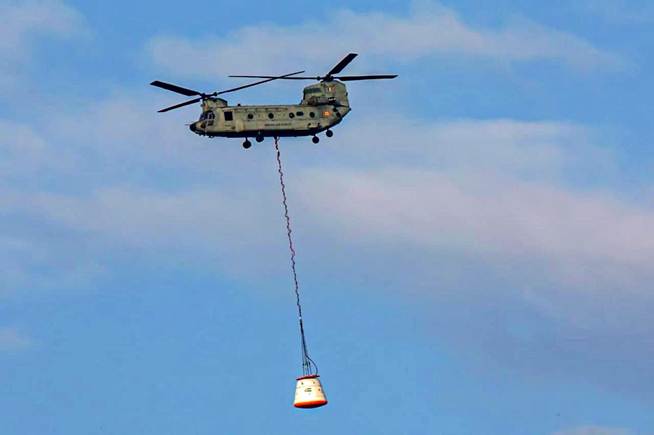
- Crew Module (~5.7 tonnes) lifted by Chinook helicopter to ~3 km altitude, simulating re-entry descent conditions.
- Deployment of 10 parachutes (4 types) in precise sequence, ensuring gradual deceleration.
- Successful sea landing and recovery by Indian Navy, validating end-to-end recovery operations.
- Confirms parachute reliability and descent stability, crucial for astronaut safety.
Static Background (Gaganyaan Architecture)
- Launch vehicle: LVM3 (GSLV Mk III).
- Components: Crew Module (CM) + Service Module (SM) = Orbital Module.
- Safety systems: Launch Escape System (LES), parachutes, flotation devices.
- Mission sequence: Launch → Orbit → Re-entry → Splashdown recovery.
Technological Significance
- Validates human-rating of launch and recovery systems, a prerequisite for crewed missions.
- Demonstrates precision parachute deployment technology, critical for controlled descent.
- Enhances India’s capability in crew safety engineering and space recovery logistics.
- Strengthens inter-agency coordination (ISRO–IAF–Navy–DRDO) for complex missions.
Strategic Significance
- Places India among elite human spaceflight nations (USA, Russia, China).
- Boosts technological sovereignty and Atmanirbhar Bharat in space sector.
- Enhances India’s role in global space economy and future collaborations (space stations, lunar missions).
Challenges
- Ensuring 100% reliability of crew safety systems, as even minor failure can be catastrophic in human missions.
- Complex integration of multiple systems (launch, life support, re-entry, recovery) requires high precision coordination.
- High cost and technological complexity compared to unmanned missions.
- Need for advanced life support systems and astronaut training infrastructure.
- Managing harsh re-entry conditions (heat, pressure, deceleration) safely.
Way Forward
- Conduct multiple validation tests (abort tests, recovery trials) to ensure redundancy and reliability.
- Strengthen indigenous life-support and human-rating technologies.
- Expand international collaboration for training and mission design.
- Develop long-term human spaceflight roadmap (space station, deep space missions).
- Enhance private sector participation in space ecosystem.
Prelims Pointers
- Gaganyaan – India’s first human spaceflight mission.
- IADT tests parachute-based recovery systems.
- Crew Module returns to Earth via splashdown in sea.
- Launch site: Satish Dhawan Space Centre, Sriharikota.
- Launch vehicle: LVM3.
MSMEs & Export Disruptions due to West Asia Crisis
Why in News ?
- Government held inter-ministerial meetings under Ministry of Commerce and Industry and Ministry of Ports, Shipping and Waterways to assess compliance burden on MSME exporters due to West Asia conflict.
Relevance
GS Paper III (Economy)
- MSMEs (~30% GDP, ~45% exports) and external sector vulnerability.
- Trade logistics, supply chain disruptions.
GS Paper II (Governance)
- Crisis response and trade facilitation policies.
Practice Question
Q.“Global geopolitical disruptions disproportionately impact MSME exporters.”Analyse challenges and suggest policy measures. (250 words)
Context & Basics
- MSMEs contribute ~30% of GDP and ~45% of exports, making them critical to India’s external sector stability.
- Ongoing conflict in West Asia has disrupted shipping routes, logistics chains, and trade flows, impacting export operations.
Nature of Disruptions
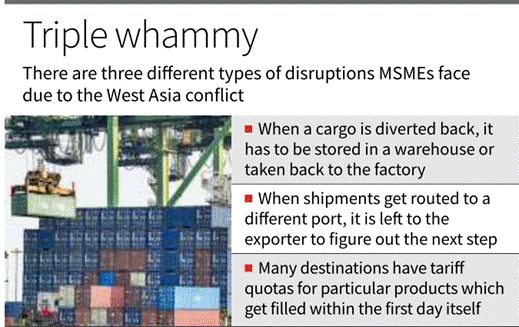
- Shipment rerouting or return to India, forcing exporters into “back-to-town” procedures with complex regulatory compliance.
- Diversion to alternate ports, increasing responsibility on exporters for last-mile logistics and customs clearance.
- Tariff quota delays (especially in Europe) leading to 90-day waiting cycles, increasing storage and compliance costs.
Compliance Burden on MSMEs
- Increased paperwork, excise duties, tariff recalculations, and uncertainty in landed cost estimation.
- MSMEs lack dedicated compliance teams, forcing entrepreneurs to handle complex regulatory requirements themselves.
- Dependence on manual tools (Excel-based systems) leads to errors, delays, and inefficiencies.
- Fragmented compliance systems increase transaction time and risk of non-compliance penalties.
Economic Implications
- Rising logistics and warehousing costs reduce export margins and competitiveness.
- Working capital stress due to delayed shipments and blocked inventory.
- Risk of loss of export orders and market share, especially in price-sensitive sectors.
- Undermines MSMEs’ agility advantage, crucial for global competitiveness.
Governance Response
- Government engaging port authorities, shipping agencies, EPCs, and industry stakeholders to assess impact.
- Focus on policy coordination and crisis response mechanisms to ease trade disruptions.
- Existing schemes (e.g., RELIEF) not fully addressing “back-to-town” cargo challenges.
Challenges
- Regulatory uncertainty due to dynamic geopolitical situation, making compliance unpredictable for MSMEs.
- Limited financial and technological capacity of MSMEs to manage complex export compliance systems.
- Inadequate digital integration across customs, logistics, and taxation systems, increasing procedural burden.
- High dependence on global supply chains, making MSMEs vulnerable to external shocks.
- Lack of real-time advisory and support systems for exporters during disruptions.
- Tariff quota rigidities in destination markets exacerbate delays and cost escalation.
Way Forward
- Develop integrated digital compliance platforms for MSMEs with automated HS code, tax, and documentation management.
- Provide targeted financial support and working capital assistance during trade disruptions.
- Simplify “back-to-town” procedures and extend RELIEF schemes to returned cargo.
- Strengthen trade facilitation and logistics resilience, including diversified shipping routes.
- Establish real-time export advisory systems for MSMEs during geopolitical crises.
- Promote capacity building and compliance training programmes for MSME exporters.
Prelims Pointers
- MSMEs defined under MSME Development Act, 2006 (investment + turnover criteria).
- Export Promotion Councils (EPCs) support sector-specific exports.
- HS Code used for classification of traded goods globally.
- Tariff quotas = limited quantity allowed at lower duty rates.
Indus River Dolphin (Beas) – Conservation Model & Significance
Why in News ?
- Conservation success in Beas River Conservation Reserve (BRCR) highlights recovery of Indus River Dolphin, aided by citizen science (Dolphin Mitras) and habitat protection.
Relevance
GS Paper III (Environment)
- Conservation of endangered species.
- Community-based conservation models.
GS Paper I (Geography)
- River ecosystems and biodiversity.
Practice Question
Q.“Community participation is key to successful biodiversity conservation.”Examine with reference to the Indus River Dolphin in Beas River. (250 words)
Context & Basics
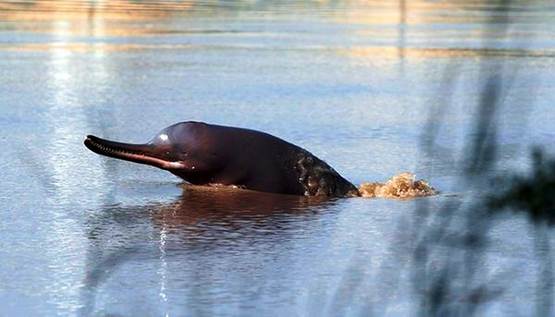
- Indus River Dolphin (bhulan) is a freshwater cetacean, endemic to Indus river system, among the world’s most endangered river dolphins.
- Rediscovered in India in 2007 in Beas after being presumed extinct, now inhabiting ~70 km stretch (Beas–Harike).
Static Background
- Protected under Schedule I of Wild Life (Protection) Act, 1972, ensuring highest legal protection.
- Declared Beas River Conservation Reserve (2018) under Section 36A, India’s largest riverine conservation reserve.
- Indicator species for river ecosystem health and freshwater biodiversity.
Biological & Ecological Features
- Functionally blind, relies on echolocation for navigation and hunting in turbid waters.
- Unique side-swimming behaviour, using elongated snout to probe riverbed for prey.
- Prefers braided river channels, typically found in small groups or solitary pairs.
Distribution & Decline
- Historically present across Indus and tributaries (India & Pakistan).
- Drastic decline due to flow regulation, dams, pollution, fishing nets, and habitat fragmentation.
- Current Indian population confined to easternmost limit (Beas River).
Conservation Model (Best Practice)
- Community-led conservation through Dolphin Mitras (local volunteers, fishers) for real-time monitoring.
- Collaboration between Punjab Forest Department, WII, WWF-India, ensuring science-based management.
- Citizen science acts as early warning system for stranding, threats, and mortality events.
- Integration of traditional knowledge + modern ecology, enhancing conservation effectiveness.
Ecological Significance
- Maintains trophic balance by regulating fish populations.
- Indicator of river health, water quality, and ecological integrity.
- Protecting dolphin habitat ensures broader conservation of freshwater ecosystems.
Challenges
- Flow regulation and dams disrupt river connectivity, fragmenting dolphin habitats and restricting movement.
- Water pollution from agricultural runoff and industrial effluents degrades habitat quality and prey availability.
- Fishing net entanglement remains a major cause of accidental mortality in river dolphins.
- Climate change impacts, including altered flow regimes and reduced water levels, threaten habitat sustainability.
- Limited habitat range (~70 km stretch) increases vulnerability to localized disturbances and stochastic events.
- Lack of interstate and transboundary coordination across Indus basin affects long-term conservation strategy.
Way Forward
- Ensure environmental flow (e-flows) in rivers to maintain habitat connectivity and ecological balance.
- Promote sustainable fishing practices and dolphin-safe gear technologies.
- Strengthen pollution control measures and river rejuvenation programmes.
- Expand community-based conservation models (Dolphin Mitras) to other river systems.
- Enhance long-term monitoring using technology (acoustic sensors, GIS mapping).
- Foster India-Pakistan cooperation on Indus basin biodiversity conservation.
Prelims Pointers
- Indus River Dolphin (Platanista minor) – freshwater dolphin, functionally blind.
- IUCN Status: Endangered
- State Aquatic Animal: The Indus River Dolphin was declared the State Aquatic Animal of Punjab in 2019.
- Key Habitat: The 185 km stretch from Talwara to Harike.
- Neighboring Giants: The Beas is also home to the reintroduced Gharial (Gavialis gangeticus), making the BRCR a unique multi-species aquatic sanctuary.
- Conservation partners: WII, WWF-India, Punjab Forest Department.
Indus River – Basic Notes
Origin & Course
- Origin: Near Lake Mansarovar in Tibet Autonomous Region (close to Mount Kailash).
- Flows through Ladakh (India) → enters Pakistan → drains into Arabian Sea (near Karachi).
- Total length: ~3180 km (one of the longest rivers in Asia).
Important Tributaries
Left Bank Tributaries (Punjab rivers)
- Jhelum, Chenab, Ravi, Beas, Sutlej → form Punjab (land of five rivers).
Right Bank Tributaries
- Shyok, Gilgit, Kabul, Kurram, Gomal.
Basin Characteristics
- Basin spread across China (Tibet), India, Pakistan, Afghanistan.
- Drains northwestern Himalayas and Karakoram ranges.
- Important for irrigation, hydropower, and agriculture in Pakistan and parts of India.
Climate Change & Disruption of Bakarwal Migration
Why in News ?
- Climate change disrupting traditional migration of Bakarwals in Kashmir, with 20–30% families staying back in winters, altering centuries-old transhumance patterns.
- Decline in snowfall (~25% reduction) and weakening western disturbances impacting pasture cycles and livelihoods.
Relevance
GS Paper I (Society & Geography)
- Impact of climate change on vulnerable communities.
- Transhumance and pastoral livelihoods.
GS Paper III (Environment)
- Climate variability, Himalayan ecology.
Practice Question
Q.“Climate change is reshaping traditional livelihood systems in India.”Discuss with reference to Bakarwal migration patterns. (250 words)
Context & Basics
- Bakarwals are nomadic pastoralists practicing seasonal migration (transhumance) between Jammu (winter) and Kashmir (summer).
- Migration historically guided by snowfall patterns, pasture availability, and climatic rhythms.
- Depend on livestock-based economy (sheep, goats, cattle) for sustenance.
Static Background
- Western Disturbances: Extra-tropical systems from Mediterranean region, contributing 60–70% winter precipitation in NW Himalayas.
- Himalayas warming at ~2× global average (IPCC AR6).
- Region part of Indo-Burma biodiversity hotspot, ecologically fragile and climate-sensitive.
Key Climate Trends
- Temperature rise ~1.2°C in Kashmir vs global ~0.7°C over last century.
- Snowfall decline ~25% (recent 5 years vs 40-year average).
- Snow persistence lowest in 23 years (ICIMOD 2025).
- Shift from snow to rainfall, reducing natural water storage capacity.
Changing Migration Patterns
- Increasing number of families abandoning migration, opting for winter settlement in Kashmir.
- Emergence of informal adaptation strategies, such as grazing in orchards in exchange for labour/security.
- Migration cost (~₹40,000 annually) incentivises settlement over mobility.
Ecological Implications
- Reduced snow leads to hydrological imbalance, affecting stream flow, soil moisture, and pasture regeneration.
- Increased frequency of extreme weather events, creating unpredictability in grazing cycles.
- Pressure on local ecosystems due to year-round grazing and settlement clusters.
Socio-Economic Impacts
- Loss of traditional livelihood security, as migration ensured optimal pasture utilisation across seasons.
- Increased vulnerability to extreme weather, as seen in sudden snowfall trapping families.
- Emergence of informal economy linkages (orchard-based arrangements).
- Rising health and sanitation issues due to unplanned settlements.
Cultural & Ethical Concerns
- Gradual erosion of nomadic identity and indigenous knowledge systems (routes, ecology, seasonal cycles).
- Loss of inter-generational knowledge transfer, affecting cultural continuity.
- Raises questions of climate justice, as marginal communities face disproportionate impacts.
Challenges
- Policy mismatch, as welfare schemes designed for mobile populations fail to address emerging semi-settled realities.
- Lack of official data and tracking on changing migration trends, limiting targeted interventions.
- Inadequate infrastructure (water, sanitation, healthcare) in new settlement zones.
- Increased human-wildlife and resource conflicts due to prolonged stay in ecologically sensitive areas.
- Unpredictable extreme weather events undermine adaptive strategies based on past experience.
- Weak integration of traditional knowledge with scientific climate adaptation planning.
Way Forward
- Develop adaptive policy framework recognising transition from nomadism to semi-settlement.
- Provide basic services (housing, sanitation, healthcare, education) in emerging settlement clusters.
- Promote climate-resilient pastoralism, including fodder banks and veterinary support.
- Strengthen early warning systems for extreme weather events in Himalayan regions.
- Integrate indigenous knowledge with scientific climate models for better adaptation strategies.
- Ensure livelihood diversification and skill development to reduce vulnerability.
- Conduct systematic data collection and mapping of migration changes for evidence-based policymaking.
Prelims Pointers
- Bakarwals – nomadic pastoral tribe of Jammu & Kashmir.
- Western Disturbances bring winter rainfall/snowfall to North India.
- ICIMOD monitors Himalayan cryosphere and snow trends.
- Transhumance = seasonal livestock movement.
CAPF (General Administration) Act, 2026
Why in News ?
- CAPF (General Administration) Act, 2026 notified after Presidential assent amid protests by retired personnel and families over service conditions and cadre management issues.
- Act mandates IPS deputation dominance in senior ranks, overriding Supreme Court (2025) directive to reduce deputation.
Relevance
GS Paper II (Polity)
- Centre–judiciary conflict, separation of powers.
- Service conditions and cadre management.
GS Paper III (Security)
- Internal security effectiveness of CAPFs.
Practice Question
Q.“Professional autonomy and morale of security forces are critical for internal security.”Critically examine in light of the CAPF Act, 2026. (250 words)
Context & Basics
- Applies to Central Armed Police Forces (CAPFs) including CRPF, BSF, ITBP, CISF, SSB, Assam Rifles.
- CAPFs form first line of defence in internal security, border management, and counter-insurgency operations.
- Historically governed by executive orders, now replaced by statutory framework.
Static Background
- CAPFs function under Ministry of Home Affairs.
- Leadership traditionally dominated by Indian Police Service officers on deputation.
- Supreme Court (May 2025) directed progressive reduction in IPS deputation to ensure career progression for cadre officers.
Key Provisions of the Act
- 50% posts of Inspector General (IG), ≥67% Additional DG, and 100% DG/Special DG posts reserved for IPS officers on deputation.
- Formalises IPS dominance in leadership, previously governed through executive decisions.
- Overrides judicial direction, reducing scope for cadre-based promotions in CAPFs.
Data & Facts
- CAPFs have ~10 lakh personnel, critical for internal security architecture.
- Around 13,000 Group A cadre officers face career stagnation due to limited promotional avenues.
- Promotion timeline: 15–18 years for first promotion (Assistant Commandant to next rank).
Analysis
- Institutionalises dual control structure, where operational forces are led by external cadre (IPS).
- Undermines morale and motivation of CAPF cadre officers, affecting operational efficiency.
- Reflects tension between bureaucratic control vs specialised force autonomy.
- Raises concerns over judicial compliance and separation of powers, as Act contradicts Supreme Court direction.
- Weakens professionalisation of CAPFs, unlike military forces with internal leadership pipelines.
Challenges
- Severe career stagnation among cadre officers, with limited promotional posts due to IPS reservation in higher ranks.
- Morale and motivation issues arising from perceived discrimination between IPS officers and CAPF cadre officers.
- Operational inefficiency risk, as deputed officers may lack long-term institutional familiarity with CAPF-specific challenges.
- Violation of judicial spirit, as Act effectively nullifies Supreme Court’s directive on reducing deputation.
- Lack of uniform service conditions, including demands for Old Pension Scheme (OPS), time-bound promotions, and parity.
- Institutional imbalance, where decision-making remains centralised without adequate representation of serving CAPF officers.
Way Forward
- Gradually implement cadre review and increase promotional posts for CAPF officers to ensure career progression.
- Balance leadership by reducing IPS deputation and promoting internal officers in higher ranks.
- Align legislation with Supreme Court directives, ensuring respect for judicial authority and constitutional principles.
- Introduce time-bound promotion policies and service parity reforms.
- Strengthen institutional autonomy and professionalisation of CAPFs, similar to armed forces.
- Address welfare issues including pension reforms, housing, and family support systems.
Prelims Pointers
- CAPFs under Ministry of Home Affairs.
- Include CRPF, BSF, ITBP, CISF, SSB, Assam Rifles.
- IPS officers are recruited via UPSC Civil Services Examination.
- CRPF Valour Day commemorates 1965 Rann of Kutch battle.
Subansiri Hydropower & Northeast Hydro Push
Why in News ?
- Assam and Meghalaya declined power purchase from Subansiri Lower Hydroelectric Project (SLHEP) due to high tariff ₹7.70/unit vs cheaper renewables ₹2.5–3/unit.
- Cabinet Committee on Economic Affairs approved ₹40,175 crore for Kamala (1720 MW) and Kalai-II (1200 MW) projects in Arunachal Pradesh.
Relevance
GS Paper III (Economy + Environment)
- Energy security vs environmental sustainability.
- Hydropower economics and tariff issues.
GS Paper II (IR)
- Strategic importance of Northeast (China factor).
Practice Question
Q.“Hydropower in Northeast India presents both opportunities and dilemmas.”Discuss with reference to Subansiri project. (250 words)
Context & Basics
- SLHEP (2000 MW) is India’s largest run-of-the-river hydel project, located on Subansiri River at Assam–Arunachal border.
- Developed by NHPC Limited, featuring 116 m concrete gravity dam, critical for energy security and flood control.
Static Background
- Hydropower is classified as renewable energy (since 2019); contributes ~11–12% of India’s installed capacity.
- Brahmaputra basin has ~40% of India’s hydropower potential, largely concentrated in Northeast India.
- Run-of-the-river projects minimise storage but allow peaking power generation.
Key Issues: “Sunk Cost Trap” & Tariff Crisis
- Tariff escalation from ₹2 to ₹7.70/unit due to Interest During Construction (IDC) accumulated during 2011–2019 delays.
- Cost now exceeds national hydel average ₹3.15/unit, making project economically unviable for DISCOMs.
- Competition from SECI renewable auctions (₹2.5–3/unit) undermines hydropower attractiveness.
- Illustrates sunk cost fallacy, where past investments distort present economic decisions.
River Morphometry & Hydro Potential
- Subansiri River originates in Tibet (>5000 m) and descends to ~100 m plains, creating high head ideal for hydropower.
- Largest tributary of Brahmaputra River, enhancing basin-level hydrological significance.
- Kamala River (tributary of Subansiri) and Lohit River (tributary of Brahmaputra) targeted for new hydro projects.
New Hydropower Projects (CCEA Approved)
- Kamala Project (1720 MW): Expected generation 6870 MU annually, joint venture with Arunachal Pradesh.
- Kalai-II Project (1200 MW): Expected generation 4853 MU annually, located in strategic Anjaw district (bordering China).
- States receive 13% benefit (12% free power + 1% LADF) ensuring local development incentives.
Strategic Significance
- Strengthens energy security and grid balancing, especially for intermittent solar/wind energy integration.
- Enhances strategic infrastructure in border areas, supporting “effective occupation” in Arunachal Pradesh.
- Counters China’s upstream hydropower activities on transboundary rivers.
- Supports Act East Policy and Northeast economic integration.
Ecological & Environmental Concerns
- Region lies in Seismic Zone V, raising risks of dam failure and disaster vulnerability.
- Impacts Indo-Burma biodiversity hotspot, threatening species like Ganges River Dolphin.
- Flow alteration and peaking power releases disrupt aquatic ecosystems and sediment flow.
- High sediment load (especially in Lohit River) affects dam lifespan and downstream geomorphology.
Challenges
- High tariff competitiveness issue reduces demand for hydropower compared to cheaper renewables, affecting financial viability.
- Project delays due to protests and litigation (NGT) increase costs and investor uncertainty.
- Inter-state coordination challenges in power purchase agreements and benefit-sharing.
- Ecological fragility of Northeast region leads to resistance from local communities and environmental groups.
- Seismic risks and climate-induced variability threaten long-term sustainability of large dams.
- Transmission infrastructure gaps limit evacuation of power from remote Northeast region.
Way Forward
- Rationalise tariffs through viability gap funding and hydropower-specific incentives to enhance competitiveness.
- Promote hybrid energy models (hydro + solar/wind) for optimal grid balancing and cost efficiency.
- Strengthen environmental impact assessments with basin-level planning rather than project-specific clearances.
- Ensure community participation and benefit-sharing mechanisms to reduce local resistance.
- Invest in transmission corridors (Green Energy Corridors) to integrate Northeast power with national grid.
- Enhance dam safety standards and seismic resilience technologies.
- Develop regional hydro-diplomacy framework for transboundary rivers with China.
Prelims Pointers
- Subansiri = largest tributary of Brahmaputra, originates in Tibet.
- SLHEP = 2000 MW, run-of-the-river project.
- Concrete gravity dam resists pressure through own weight.
- LADF = 1% additional benefit for local development.
Subansiri River – Basic Notes
Origin & Course
- Origin: Near Tibet Autonomous Region (Himalayan region, north of Arunachal Pradesh).
- Enters India through Arunachal Pradesh (Miri Hills) → flows into Assam.
- Joins Brahmaputra River at Jamurighat (Assam).
- Total length: ~442 km (approx.).
Key Features
- Largest tributary of Brahmaputra River.
- Known as “Gold River” (Subarnashiri) due to historical presence of gold dust in riverbed.
- Exhibits steep gradient (high head) from Himalayas → ideal for hydropower generation.
Basin Characteristics
- Drains parts of Tibet, Arunachal Pradesh, and Assam.
- Flows through Eastern Himalayas, part of Indo-Burma biodiversity hotspot.
- Characterised by high rainfall, steep slopes, and sediment-rich flow.
Important Tributaries
- Kamala River (important tributary in Arunachal Pradesh).
- Several hill streams and seasonal tributaries contribute to flow.
COP33 Hosting Withdrawal – India’s Climate Strategy Shift
Why in News ?
- India decided not to bid for COP33 (2028) despite earlier offer at COP28, citing conflict between global climate expectations and national interest.
Relevance
GS Paper II (IR)
- Climate diplomacy, Global South leadership.
GS Paper III (Environment)
- Climate commitments vs development trade-offs.
Practice Question
Q.“India’s withdrawal from COP33 bid reflects a shift towards strategic climate realism.”
Critically analyse. (250 words)
Context & Basics
- COP (Conference of Parties) under United Nations Framework Convention on Climate Change is the annual global climate negotiation platform.
- Host country acts as COP President, expected to build consensus, advance Paris Agreement goals, and increase climate ambition.
- COP33 (2028) will include Second Global Stocktake (GST) to assess progress under Paris Agreement.
Static Background
- Paris Agreement (2015) aims to limit warming to 1.5°C–2°C above pre-industrial levels.
- Article 9.1 mandates developed countries to provide climate finance to developing nations.
- Global Stocktake (GST) occurs every 5 years to evaluate collective climate progress.
India’s Evolving Climate Position
- Shift towards “development-first approach”, prioritising economic growth, energy security, and poverty alleviation.
- Critique of temperature-centric targets (1.5°C/2°C) as inequitable for developing countries.
- Strong demand for climate finance accountability under Article 9.1 (“shall provide”).
- Emphasis on historical responsibility and carbon space equity.
Reasons for Withdrawal
- As COP host, India would need to champion Paris Agreement implementation, conflicting with its critical stance on its inequities.
- COP33 expected to push higher emission reduction commitments, potentially constraining India’s development trajectory.
- GST exercise likely to demand enhanced climate ambition, putting pressure on developing countries.
- Possible early release of IPCC AR7 report could intensify calls for stricter climate action.
- Risk of being “boxed into commitments” that contradict India’s national priorities.
Overview
- Reflects assertion of strategic autonomy in climate diplomacy.
- Highlights tension between Global South equity concerns vs Global North climate agenda.
- Signals India’s shift from consensus-builder to interest-driven negotiator.
- Aligns with stance of China and other developing countries on carbon space and finance justice.
Implications
- India loses opportunity to shape global climate narrative and lead Global South coalition.
- May reduce India’s soft power and climate leadership visibility.
- However, protects policy flexibility in energy mix (coal, renewables balance).
- Reinforces India’s demand for fair burden-sharing and climate justice.
Challenges
- Balancing development needs with global climate commitments amid increasing international pressure.
- Managing energy transition while ensuring affordability and energy security for a large population.
- Risk of diplomatic isolation or criticism from developed countries for perceived low ambition.
- Limited progress on climate finance commitments by developed nations, constraining developing country actions.
- Navigating scientific pressure from IPCC reports vs economic realities.
- Maintaining leadership role in Global South while avoiding responsibility dilution perception.
Way Forward
- Continue advocating equity-based climate framework and CBDR-RC principle.
- Push for binding climate finance commitments under Article 9.1.
- Strengthen domestic climate action (renewables, green hydrogen, energy efficiency) without compromising growth.
- Build Global South alliances (BASIC, G77) to influence negotiations collectively.
- Promote alternative metrics beyond temperature targets, focusing on resilience and adaptation.
- Enhance climate diplomacy while safeguarding national interest.
Prelims Pointers
- COP = Conference of Parties under UNFCCC.
- Paris Agreement (2015) – legally binding global climate treaty.
- GST (Global Stocktake) – every 5 years.
- Article 9.1 – developed countries must provide climate finance.
- IPCC Assessment Reports (AR) guide global climate policy.
Conference of Parties (COP) – Basic Notes
What is COP?
- COP (Conference of Parties) is the supreme decision-making body of the United Nations Framework Convention on Climate Change.
- Comprises all member countries (Parties) to the Convention (197 Parties).
- Meets annually to review progress and negotiate climate actions.
Origin & Evolution
- UNFCCC adopted at Rio Earth Summit (1992); came into force in 1994.
- First COP held in COP1 Berlin.
- COP process evolved to include major agreements like Kyoto Protocol (1997) and Paris Agreement (2015).
Objectives
- Review implementation of UNFCCC commitments.
- Negotiate global climate agreements and targets.
- Facilitate climate finance, technology transfer, and capacity building.
- Promote adaptation and mitigation strategies.
Key Principles
- CBDR-RC (Common But Differentiated Responsibilities and Respective Capabilities).
- Equity and climate justice.
- Recognition of historical emissions responsibility of developed countries.
Important COP Outcomes
- Kyoto Protocol: Binding emission reduction targets for developed nations.
- Paris Agreement: Limit warming to 1.5°C–2°C, nationally determined contributions (NDCs).
- Glasgow Climate Pact (COP26, 2021): Focus on coal phase-down, net-zero commitments.
- COP28 (Dubai, 2023): First Global Stocktake (GST) assessing progress.