

Contents
16 June 2026
- India's Health Transformation — Towards Universal Health CoverageGS2
- Nicobarese Tribal Councils — Draft Electoral Rules, 2026GS2
- Artemis III — NASA Names Crew, Restructures as Earth-Orbit TestGS3
- Project Kusha — Extended Range Air Defence System (ERADS)GS3
- India–Slovakia Elevate Ties to a Comprehensive PartnershipGS2
- The Drone Revolution and Modern WarfareGS3
- US–Iran Agreement to End War and Reopen the Strait of HormuzGS2
- Heatwaves and Surface Ozone — Rising Cardiac and Respiratory RiskGS3
- NCERT Restores the Original 'Dancing Girl' ImageGS1
Article 01
India's Health Transformation — Towards Universal Health Coverage
GS Paper 2 — Governance | Health | Social Sector | Government Schemes
Why in News
India's march towards Universal Health Coverage (UHC) is back in focus after the National Statistical Office (NSO), under MoSPI, released its 2025 survey of over 1.39 lakh households. It found more Indians than ever using public facilities, with outpatient care often free and about half of hospitalised patients paying below Rs 1,100 — a measure of renewed trust driven by Ayushman Bharat and the National Health Mission.
Ayushman Bharat — The Four Pillars
| Pillar | Thrust | Key Data |
|---|---|---|
| AB-PMJAY (2018) | World's largest public health assurance — Rs 5 lakh/family/year to ~12 crore poorest families (~40% of population) | 44.14 cr Ayushman Cards; 12.03 cr hospitalisations; 36,218 hospitals empanelled (19,659 public, 16,559 private). Vay Vandana (Oct 2024) covers all 70+ citizens |
| Ayushman Arogya Mandirs | Comprehensive primary care — 12 free services beyond maternal-child health | 1.86 lakh+ functional; cumulative footfall over 540 crore |
| PM-ABHIM (Oct 2021) | Resilient, pandemic-ready public health infrastructure (outlay Rs 64,180 cr) | 744 integrated public health labs; 631 critical-care hospital blocks |
| ABDM (Sept 2021) | Citizen-owned digital health records via the 14-digit ABHA ID | 20.49 cr ABHA registrations; 27,328 facilities onboarded |
National Health Mission — Disease Elimination
- Immunisation: Mission Indradhanush (2014) vaccinated 5.46 crore previously unimmunised children; zero-dose children fell from 0.11% (2023) to 0.06% (2024). India was WHO-certified for maternal and neonatal tetanus elimination in May 2015.
- Tuberculosis: NTEP plus PM TB Mukt Bharat Abhiyaan (2022); over 3.78 lakh Nik-shay Mitras support patients with nutrition baskets.
- Malaria: National Framework for Malaria Elimination (2016) targets elimination by 2027; a 'test, treat and track' strategy under the 2023–27 plan.
- HIV: mother-to-child transmission down about 74.5% (2010–2024), outpacing the global decline.
Tackling Non-Communicable Diseases (NCDs)
- NCDs now account for 60% of all deaths in India.
- AAMs have driven mass screening — 41.5 crore for hypertension, 41.3 crore for diabetes, over 60 crore combined for oral, breast and cervical cancers.
- PM National Dialysis Programme (2016) delivered over 4 crore free haemodialysis sessions.
- India won the Bloomberg Philanthropies Award (2025) for a 17.3% reduction in tobacco use; Eat Right India and Fit India target lifestyle risk factors.
Digital and Last-Mile Delivery
- eSanjeevani (Nov 2019): over 47 crore teleconsultations; Tele-MANAS (Oct 2022): mental-health support in 20 languages.
- i-DRONE (ICMR, 2021) delivered medicines across difficult terrain; AI tools — Cough Against TB (12–16% additional cases detected) and MadhuNetrAI (diabetic retinopathy) — extend specialist reach.
Challenges
- Fiscal shortfall: the NHP 2017 target of 2.5% of GDP by 2025 is unmet; Union health spending fell from 0.37% (2020-21) to 0.29% of GDP (2025-26), and the Union share of CSS health transfers dropped from 75.9% (2014-15) to 43% (2024-25).
- Hidden out-of-pocket costs: a NITI Aayog evaluation found 65% of PMJAY beneficiaries in private hospitals still incurred OOP expenditure.
- Structural gaps: no statutory Right to Health Act; 'public health and sanitation' sits under Entry 6 of the State List, limiting uniform national standards.
- Low per-capita spend: among the lowest globally — lower than Bhutan and Sri Lanka.
Way Forward
- Legislate a fiscal roadmap to 2.5–3% of GDP and reverse the post-pandemic Union spending decline.
- Scale AI diagnostics (MadhuNetrAI, Cough Against TB) and the i-DRONE network to all rural AAMs.
- Enact a justiciable Right to Health framework and ensure 100% ABHA/U-WIN portability across public and private hospitals.
Sustained investment in infrastructure, digital health and financial protection through Ayushman Bharat has measurably advanced UHC and reduced health inequalities — feeding directly into SDG 3 and the vision of a healthier Viksit Bharat @ 2047. The next frontier is fiscal: protecting public spending so that access depends on need, not the ability to pay.
Prelims Pointers
- AB-PMJAY (2018): launched under NHP 2017; Rs 5 lakh/family/year to ~12 crore families.
- Ayushman Bharat Vay Vandana (Oct 2024): extends cover to all citizens above 70, irrespective of income.
- ABHA: a unique 14-digit health identity under ABDM.
- PM-ABHIM (2021): outlay Rs 64,180 crore for health infrastructure and pandemic preparedness.
- Mission Indradhanush (2014): catch-up immunisation; UIP gives free vaccines against 12 diseases.
- MNT elimination: India WHO-certified in May 2015.
- Tele-MANAS = national tele-mental-health service (helpline 14416); eSanjeevani = national telemedicine platform.
- NSO functions under the Ministry of Statistics and Programme Implementation (MoSPI).
- Health is in the State List (Entry 6) of the Seventh Schedule — there is no national Right to Health Act.
Practice Mains Question
"India has expanded health coverage even as public health expenditure has stagnated." Critically examine the achievements of Ayushman Bharat and the structural funding constraints that threaten the sustainability of Universal Health Coverage in India.
GS Paper 2 | 250 words | 15 marks
Prelims Practice MCQ
Match the following health initiatives with their year of launch:
Initiative — A. AB-PMJAY B. ABDM C. PM-ABHIM D. Tele-MANAS
Year — 1. 2018 2. 2021 (September) 3. 2021 (October) 4. 2022
Select the correct match:
- (a)A-1, B-2, C-3, D-4
- (b)A-1, B-3, C-2, D-4
- (c)A-2, B-1, C-3, D-4
- (d)A-1, B-2, C-4, D-3
Correct Answer: (a)
AB-PMJAY was launched in 2018; the Ayushman Bharat Digital Mission (ABDM) in September 2021; PM-ABHIM in October 2021; and Tele-MANAS in October 2022. Hence A-1, B-2, C-3, D-4.
Article 02
Nicobarese Tribal Councils — Draft Electoral Rules, 2026
GS Paper 2 — Governance | Tribal Rights | GS Paper 1 — Society & Tribes
Why in News
The Andaman and Nicobar Islands administration has notified the Draft A&NI Tribal Councils (Preparation of Electoral Rolls and Conduct of Elections) Rules, 2026, introducing a formal, mainland-style electoral framework for Nicobarese tribal councils. With a June 15, 2026 deadline for objections, the move has alarmed the community, which fears erosion of its consensus-based self-governance — amid the backdrop of the Rs 91,000-crore Great Nicobar Development Project.
Who Are the Nicobarese
- A Scheduled Tribe of about 30,000 people across the Nicobar group, represented by seven Tribal Councils (Car Nicobar, Nancowry, Kamorta, Teressa, Little Nicobar, Great Nicobar, and others).
- The 'captaincy' system dates to the 16th century (locals dealing with passing ships) and was formalised by the British in the late 19th century; the higher Tribal Council tier emerged only in the 1990s to access Central welfare schemes.
- Legal recognition flows from the A&N Islands (Protection of Aboriginal Tribes) Regulation, 1956 and the Nicobar Islands Tribal Council Regulation, 2009.
How the Traditional System Works
- Governance is consensus-based — elections are held only when the community feels the need, not on a fixed calendar; villagers nominate, prepare their own ballots and elect Captains by majority.
- The Tuhet (extended kinship group) is the social foundation; Captains act as facilitators, not unilateral lawmakers.
- Valued leadership traits include education, Hindi fluency and the ability to engage officialdom — but the system suffers from poor documentation and unclear tenure.
What the Draft Rules Propose
| Feature | Proposed Change |
|---|---|
| Fixed tenure | A legally binding five-year term, replacing the fluid customary cycle |
| Mainland machinery | Delimitation of constituencies, formal electoral rolls, candidate nomination and scrutiny |
| Restructured hierarchy | Villagers elect 5–9 Captains per village and directly vote for the Chief Captain; First Captains elect the Vice-Chief Captain |
| Gender mainstreaming | Institutional reservation of seats for women in village and island councils |
| Administrative veto | Retains the 2009 Regulation's clause giving the Deputy/Assistant Commissioner an absolute veto over council decisions deemed a threat to public order |
Concerns
- Bureaucratisation of a living, consensus tradition into a procedure-driven structure.
- Non-recognition of the Tuhet system and a consultation deficit.
- Mega-project subtext: the Great Nicobar Tribal Council has opposed the Rs 91,000-crore project (port, international airport, township); analysts suspect the rules were fast-tracked to weaken resistance.
- Legal nuance: as a UT, A&NI sits outside the Fifth Schedule, leaving a gap in formal tribal self-rule despite ST protections.
Way Forward
- Anchor reform in Free, Prior and Informed Consent (FPIC) in deep consultation with the Tuhets and existing councils.
- Explore a PESA-1996-style hybrid — adding women's reservation and accountability while legally recognising the Tuhet structure.
- Decouple governance reform from the mega-project so that legitimate indigenous dissent is not structurally suppressed.
Genuine self-rule cannot be delivered through a standardised electoral template designed for mainland India. When a community has governed itself organically for generations, formalisation without consultation is not reform — it is substitution. The test is whether modernisation strengthens customary self-governance or merely reduces it to administrative compliance.
Prelims Pointers
- Nicobarese: a Scheduled Tribe of ~30,000; seven Tribal Councils in the Nicobar group.
- Tuhet = the traditional extended-kinship (joint family) unit that anchors Nicobarese society.
- Key Regulations: A&N (Protection of Aboriginal Tribes) Regulation, 1956; Nicobar Islands Tribal Council Regulation, 2009 (a Presidential regulation).
- Fifth Schedule nuance: A&N Islands, being a Union Territory, fall outside the Fifth Schedule framework that covers Scheduled Areas.
- PESA, 1996 extends panchayat self-rule to Fifth Schedule areas (not applicable to A&N).
- Great Nicobar Project: Rs 91,000 crore — transhipment port, international airport and township.
- FPIC = Free, Prior and Informed Consent — a key principle in indigenous-rights governance.
Practice Mains Question
"Electoral formalisation of tribal councils risks bureaucratising indigenous self-governance." In the light of the draft Nicobarese electoral rules, discuss how customary and democratic governance systems can be harmonised without eroding cultural autonomy.
GS Paper 2 | 250 words | 15 marks
Prelims Practice MCQ
Consider the following two statements:
Assertion (A): The Andaman and Nicobar Islands fall outside the Fifth Schedule framework of the Constitution.
Reason (R): The Andaman and Nicobar Islands are a Union Territory.
Select the correct option:
- (a)Both A and R are true, and R is the correct explanation of A
- (b)Both A and R are true, but R is not the correct explanation of A
- (c)A is true, but R is false
- (d)A is false, but R is true
Correct Answer: (a)
The Fifth Schedule applies to Scheduled Areas in States (not UTs). Because A&N is a Union Territory, it lies outside the Fifth Schedule framework — so R correctly explains A. (Tribal protection in A&N flows instead from regulations such as the 1956 and 2009 Regulations.)
Article 03
Artemis III — NASA Names Crew, Restructures as Earth-Orbit Test
GS Paper 3 — Science & Technology | Space
Why in News
NASA Administrator Jared Isaacman named the four-member crew for Artemis III, now restructured as a complex Earth-orbit docking demonstration in 2027 that will test the SpaceX Starship and Blue Origin Blue Moon landers in space for the first time. The actual crewed lunar landing has shifted to Artemis IV (2028).
The Crew
| Astronaut | Role | Agency |
|---|---|---|
| Randy Bresnik | Commander (veteran of three spaceflights) | NASA |
| Luca Parmitano | Pilot — first ESA astronaut on an Artemis mission | ESA (Italy) |
| Frank Rubio | Mission Specialist (US single-flight endurance record-holder) | NASA |
| Andre Douglas | Mission Specialist (first-time flyer) | NASA |
Mission Profile
- A two-week mission in Low Earth Orbit (LEO) — it will not approach the Moon.
- Orion (launched atop the Space Launch System, SLS) will dock first with Blue Moon (~2 days), then with Starship (~1 day), testing docking mechanisms, life support and software.
- First to launch is Blue Moon, then Orion with the crew; the spacecraft rendezvous and hover before returning to Earth.
Programme Context
- Artemis I (2022) was uncrewed; Artemis II flew a crewed lunar flyby in April 2026 (three US astronauts and Canada's Jeremy Hansen).
- NASA cancelled the Gateway lunar-orbit station, pivoting to a lunar-surface base; a fresh NASA–Italy agreement supports the base — explaining Parmitano's inclusion.
- Lander delays: Blue Origin's New Glenn exploded on its pad while preparing an Amazon-satellite launch, grounding it for months; NASA still expects it ready for Artemis III.
Strategic Significance
- Testing docking and life-support hardware in Earth orbit de-risks later deep-space operations.
- It is central to US leadership in space amid competition from China's 2030 crewed-landing target, and a foundational step toward eventual human missions to Mars.
Artemis III's reinvention as a LEO docking rehearsal reflects a pragmatic, risk-managed approach to returning humans to the Moon 'to stay'. Success hinges on two commercial landers maturing in parallel — making industrial readiness, not just rocketry, the decisive variable.
Prelims Pointers
- Artemis = NASA's programme to return humans to the Moon for a sustained presence.
- SLS launches the Orion crew capsule; the two human landing systems are Starship (SpaceX) and Blue Moon (Blue Origin).
- Luca Parmitano (ESA, Italy) is the first ESA astronaut assigned to Artemis; Jeremy Hansen (Canada) flew on Artemis II.
- Low Earth Orbit (LEO): generally up to about 2,000 km altitude.
- Gateway = the planned lunar-orbit station, now cancelled in favour of a surface base.
- Artemis IV (2028) is slated to land crew near the lunar South Pole.
- China targets its own crewed lunar landing by 2030.
Practice Mains Question
Discuss how testing critical spacecraft systems in Earth orbit before lunar missions reflects a risk-managed approach to human spaceflight. What lessons does the Artemis programme hold for India's human spaceflight ambitions?
GS Paper 3 | 150 words | 10 marks
Prelims Practice MCQ
Match the following spacecraft with their developers:
Spacecraft — A. Orion B. Starship C. Blue Moon D. Space Launch System (SLS)
Developer — 1. SpaceX 2. Blue Origin 3. NASA
Select the correct match:
- (a)A-3, B-1, C-2, D-3
- (b)A-1, B-2, C-3, D-1
- (c)A-3, B-2, C-1, D-3
- (d)A-2, B-1, C-3, D-2
Correct Answer: (a)
Orion and the SLS are NASA systems; Starship is built by SpaceX; Blue Moon by Blue Origin. Hence A-3, B-1, C-2, D-3.
Article 04
Project Kusha — Extended Range Air Defence System (ERADS)
GS Paper 3 — Defence | Science & Technology | Internal Security
Why in News
Defence Minister Rajnath Singh described Project Kusha as a "game changer" for India's security architecture while inaugurating the Advanced Weapon System Complex at DRDO's Dr A.P.J. Abdul Kalam Missile Complex in Hyderabad. In February 2026 the Defence Secretary had announced the success of the system's initial tests.
About Project Kusha
- An indigenous long-range surface-to-air missile (LR-SAM) system — earlier called XRSAM — developed by DRDO for the IAF (lead agency) and the Navy.
- It bridges the gap between the MR-SAM (~80 km) and the S-400 (400 km), and supplements Barak-8 and the Ballistic Missile Defence programme.
- It is one element of Mission Sudarshan Chakra (as stated in the source material).
Three Interceptor Variants
| Variant | Range | Primary Targets |
|---|---|---|
| M1 | 150 km | Cruise missiles, drones, aircraft |
| M2 | 250 km | Stealth fighters and cruise missiles at ~250 km |
| M3 | 350–400 km | Larger assets such as AEW&C at ~350 km |
All three share a common kill vehicle but use different boosters; the system features advanced long-range surveillance and fire-control radars.
Approvals, Timeline and Industry
- Cleared by the Cabinet Committee on Security in May 2022; Acceptance of Necessity (AoN) granted in September 2023 for five IAF squadrons at Rs 21,700 crore.
- Bharat Electronics Limited (BEL) is the development and integration partner; phased induction is expected between 2028 and 2030.
- Development was requested to be fast-tracked after Operation Sindoor.
Operational Role and Significance
- Batteries will plug into the Integrated Air Command and Control System (IACCS) — the IAF's automated network fusing military and civil radars — enabling coordinated firing and automated threat prioritisation.
- A naval version against anti-ship ballistic missiles (up to Mach 7, range over 250 km) is under development.
- It strengthens indigenous capability, reduces dependence on the S-400, and complements QRSAM, VSHORADS and BMD in a multi-layered shield.
Project Kusha represents a decisive step towards a self-reliant, layered air-and-missile defence. Its value lies not only in interceptor range but in network-centric integration through the IACCS — turning dispersed sensors and shooters into a single, responsive grid.
Prelims Pointers
- Project Kusha = Extended Range Air Defence System (ERADS), formerly XRSAM, by DRDO.
- Variants: M1 = 150 km, M2 = 250 km, M3 = 350–400 km; common kill vehicle, different boosters.
- Lead agency: the Indian Air Force; the system supplements Barak-8 and the S-400 (400 km).
- IACCS = Integrated Air Command and Control System — the IAF's automated air-defence network integrating military and civil radars.
- BEL is DRDO's development and integration partner; AoN granted Sept 2023 (Rs 21,700 cr, 5 squadrons).
- QRSAM / VSHORADS = Quick-Reaction / Very-Short-Range air-defence systems (shorter-range complements).
Practice Mains Question
"Indigenous long-range air defence is central to India's strategic autonomy." Examine the significance of Project Kusha in building a multi-layered air and missile defence architecture and reducing dependence on foreign platforms.
GS Paper 3 | 250 words | 15 marks
Prelims Practice MCQ
Project Kusha's interceptor variants are designed for tiered interception. What is the approximate range of the M2 variant?
- (a)80 km
- (b)150 km
- (c)250 km
- (d)400 km
Correct Answer: (c)
The three variants have ranges of M1 ~150 km, M2 ~250 km and M3 ~350–400 km. The ~80 km figure is the MR-SAM, and 400 km is the S-400 — both systems that Project Kusha is meant to bridge or supplement.
Article 05
India–Slovakia Elevate Ties to a Comprehensive Partnership
GS Paper 2 — International Relations
Why in News
Prime Minister Narendra Modi and Slovak Prime Minister Robert Fico held talks in Bratislava, branding the relationship a 'Comprehensive Partnership' and signing MoUs across defence, labour mobility, education and digital technology. It is the first visit by an Indian PM since Slovakia's founding in 1993.
Prime Minister Narendra Modi and Slovak Prime Minister Robert Fico during bilateral talks in Bratislava. (Representative image)
Key Outcomes
- Trade and investment: commitments across automobiles, railways, advanced manufacturing and green technology, with the India–EU Free Trade Agreement expected to add momentum.
- Labour mobility: an MoU to ease migration and information exchange, with agreement to conclude a social security agreement.
- Education: a higher-education MoU promoting mobility of students and researchers, especially in STEM and humanities.
Counter-Terrorism and Multilateralism
- Agreed to form a Joint Working Group on Terrorism and 'strongly' condemned the April 2025 Pahalgam terror attack.
- Called for adoption of the Comprehensive Convention on International Terrorism (CCIT) at the UN and action against terrorists, including those on the UNSC 1267 Sanctions Committee list.
- Reaffirmed support for multilateralism and UN/UNSC reform, including expansion of permanent and non-permanent seats.
The visit deepens India's footprint in Central Europe and aligns a manufacturing-heavy Slovak economy with India's automotive and green-tech ambitions. Riding the prospective India–EU FTA, the partnership signals India's intent to diversify European engagement beyond its traditional large-economy partners.
Prelims Pointers
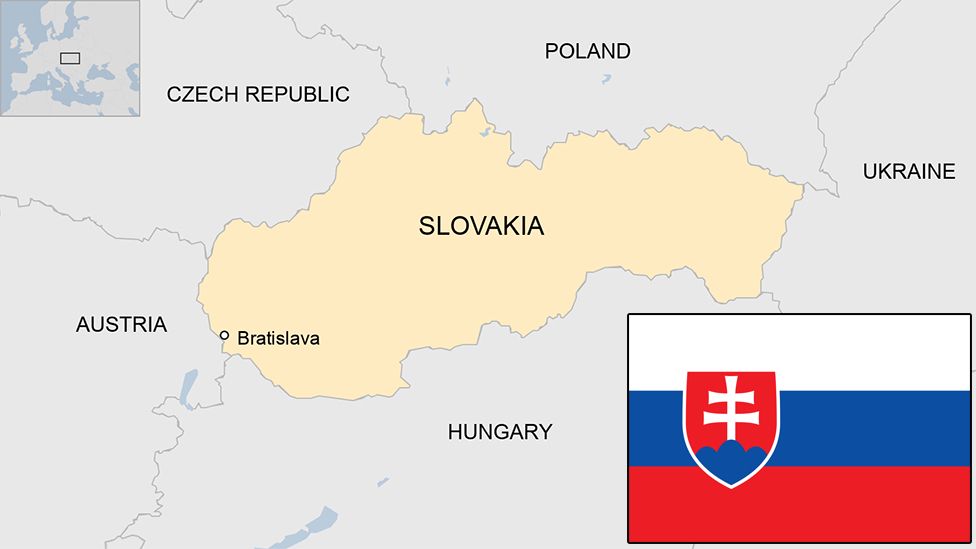
- Slovakia: capital Bratislava (on the Danube); independent since 1993 (split of Czechoslovakia); an EU and Eurozone member.
- CCIT = Comprehensive Convention on International Terrorism — proposed by India (1996) and still pending at the UN.
- UNSC 1267 Sanctions Committee targets individuals/entities linked to ISIL (Da'esh) and Al-Qaeda.
- India–EU FTA negotiations underpin the trade dimension of India's Europe outreach.
- A 'Comprehensive Partnership' is the framing used to upgrade the bilateral relationship.
Practice Mains Question
Examine the strategic and economic rationale behind India's deepening engagement with Central European states such as Slovakia, and the role of the prospective India–EU Free Trade Agreement in this outreach.
GS Paper 2 | 250 words | 15 marks
Prelims Practice MCQ
With reference to Slovakia and India–Slovakia relations, which one of the following statements is NOT correct?
- (a)Slovakia became an independent state in 1993 following the split of Czechoslovakia.
- (b)Bratislava, its capital, lies on the river Danube.
- (c)Slovakia is not a member of the European Union.
- (d)The Comprehensive Convention on International Terrorism (CCIT) was originally proposed by India at the UN.
Correct Answer: (c)
Statement (c) is incorrect — Slovakia is a member of the European Union (and the Eurozone). The other three statements are accurate: it became independent in 1993, Bratislava sits on the Danube, and the CCIT is an India-proposed convention.
Article 06
The Drone Revolution and Modern Warfare
GS Paper 3 — Security & Defence | Science & Technology | GS Paper 2 — International Relations
Why in News
An analytical commentary argues that the wars in Ukraine and Lebanon and the wider US–Israel–Iran theatre have made cheap, mass-produced drones (Unmanned Aerial Systems, UAS) central to modern warfare — shifting military power from expensive platforms towards industrial scale and technological adaptation.
The Paradigm Shift
- For decades, superiority belonged to armies with advanced aircraft, tanks, artillery and large budgets; smaller actors relied on asymmetric tactics.
- Commercially derived drones — performing ISR, target acquisition, precision strike, artillery spotting, electronic warfare and logistics — have moved from auxiliary tools to central instruments.
- The result is a continuous, interconnected battlespace of persistent visibility, where no rear area is safe and detection is rapidly followed by engagement.
Three Models of Drone Warfare
- Ukraine: rapid adaptation of commercial drones into improvised reconnaissance and strike systems — the first industrial-scale, drone-intensive war.
- Hezbollah: reliance on Iranian platforms — Ababil, Mohajer-4, Shahed-129 for tiered ISR and the Shahed-136 loitering munition for one-way strikes; increasingly jamming-resistant fibre-optic FPV drones.
- Iran/IRGC: drones embedded in a strategy of deterrence, coercion and power projection, supplied to proxies across Iraq, Syria, Lebanon and Yemen.
Counter-Drone Response
- Israel's IDF fields a layered counter-drone architecture — EW systems, specialised radars and the AI-enabled Iron Drone Raider (net capture or collision instead of costly missiles), alongside Heron ISR drones and loitering munitions.
Why It Matters
- The revolution is as much about economics as technology: cheap mass production shifts advantage to the scale, speed and production capacity of UAS ecosystems.
- Warfare becomes a test of industrial endurance and relentless adaptation — drones are now the very infrastructure of war.
- For India: the lessons reinforce the push for indigenous drone and counter-drone ecosystems and a domestic UAS manufacturing base.
Drones have collapsed the old distinction between front and rear and between great and small powers. The decisive military edge increasingly lies in the capacity to build, deploy and counter fast-evolving unmanned systems at scale — a contest of factories as much as of forces.
Prelims Pointers
- UAS / UAV = Unmanned Aerial System / Vehicle; ISR = Intelligence, Surveillance and Reconnaissance.
- Loitering munition (e.g., Shahed-136) = a one-way 'kamikaze' drone that loiters before striking.
- FPV drone = first-person-view drone; fibre-optic FPV drones resist jamming and electronic warfare.
- Heron is an Israeli (IAI) Medium-Altitude Long-Endurance ISR drone.
- IRGC = Islamic Revolutionary Guard Corps (Iran).
- Electronic Warfare (EW) contests the electromagnetic spectrum — jamming, spoofing and counter-measures.
Practice Mains Question
"Drones have become the infrastructure of modern warfare rather than merely its weapons." Examine how unmanned systems are reshaping military doctrine, and assess the implications for India's defence preparedness.
GS Paper 3 | 250 words | 15 marks
Prelims Practice MCQ
The Shahed-136, widely used across recent West Asian conflicts, is best described as which of the following?
- (a)A medium-altitude long-endurance ISR drone
- (b)A loitering munition (one-way attack drone)
- (c)A manned electronic-warfare aircraft
- (d)A fibre-optic counter-drone interceptor
Correct Answer: (b)
The Shahed-136 is a loitering munition — a one-way 'kamikaze' drone that loiters over an area before diving onto a target. ISR roles in that family are filled by platforms like the Mohajer-4 and Shahed-129.
Article 07
US–Iran Agreement to End War and Reopen the Strait of Hormuz
GS Paper 2 — International Relations | GS Paper 3 — Energy Security
Why in News
The United States and Iran announced a preliminary agreement to end the war, lift blockades in the Strait of Hormuz and the Gulf of Oman, and begin negotiations on Tehran's nuclear programme and Western sanctions. Signed digitally, an in-person signing is set for Geneva on June 19; US President Donald Trump authorised a toll-free reopening of the Strait.
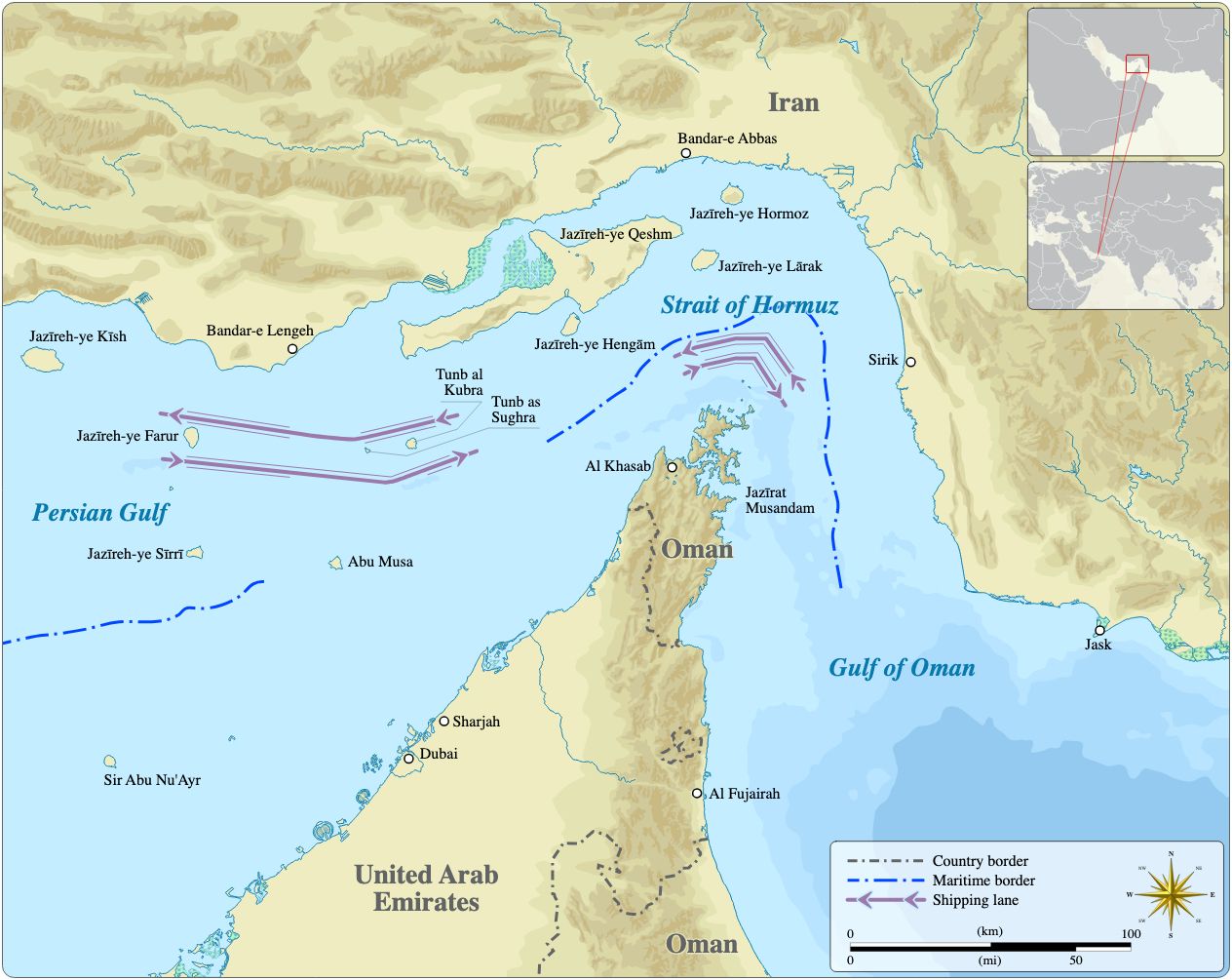
The Strait of Hormuz — the narrow chokepoint linking the Persian Gulf to the Gulf of Oman, through which about a fifth of the world's oil transits. (Representative image)
Contours of the Deal
- An end to hostilities, reopening of the Strait, and substantive talks on the nuclear file and sanctions relief.
- US Vice-President J.D. Vance said the deal was signed digitally on Sunday; Iran said it would not collect tolls but would charge navigation-service and environmental fees.
- Iran's Foreign Ministry called the release of frozen assets and war reparations 'essential' parts of the deal; the US side indicated it would not withdraw troops.
- Despite the announcement, vessel traffic through the Strait remained cautious.
Why the Strait of Hormuz Matters
- A narrow chokepoint linking the Persian Gulf to the Gulf of Oman (and onward to the Arabian Sea), bordered by Iran and Oman.
- Roughly a fifth of the world's petroleum liquids transit Hormuz, with limited bypass-pipeline capacity — making it the world's most critical oil chokepoint.
India's Interest
- Energy security: a large share of India's crude and LNG imports pass through Hormuz; disruption spikes prices and freight/insurance costs.
- Diaspora and trade: millions of Indians work in the Gulf; India also has stakes via Chabahar port (in Iran, on the Gulf of Oman, outside Hormuz).
- Prime Minister Narendra Modi welcomed the deal and expressed hope it would restore stability and ensure freedom of navigation.
If it holds, the agreement removes a major tail risk to global energy markets and to India's import bill. But with reparations, asset releases and the nuclear file still to be negotiated, the durability of the truce — not just the reopening of Hormuz — will determine its strategic significance.
Prelims Pointers
- Strait of Hormuz connects the Persian Gulf with the Gulf of Oman; it is bordered by Iran and Oman (Musandam peninsula).
- It is the world's most important oil chokepoint — about one-fifth of global petroleum liquids pass through it.
- The Gulf of Oman opens into the Arabian Sea (Indian Ocean).
- Chabahar port (Iran) lies on the Gulf of Oman, outside the Strait of Hormuz — a strategic India-developed gateway to Central Asia.
- The talks revive the broader nuclear and sanctions agenda associated with the JCPOA framework.
Practice Mains Question
"The security of the Strait of Hormuz is inseparable from India's energy security." Discuss India's strategic and economic stakes in stability in the Persian Gulf and the policy options available to safeguard its energy imports.
GS Paper 2 | 250 words | 15 marks
Prelims Practice MCQ
With reference to the Strait of Hormuz, which one of the following statements is correct?
- (a)It connects the Red Sea with the Gulf of Aden.
- (b)It connects the Persian Gulf with the Gulf of Oman.
- (c)It connects the Mediterranean Sea with the Red Sea.
- (d)It connects the Arabian Sea with the Bay of Bengal.
Correct Answer: (b)
The Strait of Hormuz links the Persian Gulf to the Gulf of Oman, bordered by Iran and Oman. Option (a) describes the Bab-el-Mandeb; (c) describes the Suez Canal region; (d) is incorrect geographically.
Article 08
Heatwaves and Surface Ozone — Rising Cardiac and Respiratory Risk
GS Paper 3 — Environment & Ecology | Public Health
Why in News
A peer-reviewed study in the Nature Portfolio journal npj Clean Air (June 12, 2026) finds that heatwaves push surface ozone to 85–110 micrograms per cubic metre in northern India — above the 70 µg/m³ reference level used in the study and exceeding WHO guidance in every region — adding to a far larger seasonal toll of cardiac and respiratory deaths.
Key Findings
- Ozone spikes during heatwaves and falls back within 3–4 days of a heatwave ending.
- On 2024 heatwave days, the study links about 26,500 deaths from ischaemic heart disease (IHD) and COPD to ozone exposure; the heatwave's marginal contribution was roughly 830 deaths (about 490 cardiac + 342 COPD).
- It counted 188 heatwave events over two decades; the most severe years — 2010, 2016, 2019 and 2024 — broadly coincided with El Niño conditions, and the Western Himalayas saw the steepest long-term rise.
The Science of Surface Ozone
- Surface (tropospheric) ozone is a secondary pollutant — not emitted directly, but formed when sunlight drives reactions among precursors such as nitrogen oxides (NOx) and volatile organic compounds (VOCs); the process speeds up in heat.
- The authors note that NO2 and formaldehyde (HCHO) directly damage the respiratory system.
Method Caveat
- Mortality figures are modelled, not directly counted — continuous ground-level ozone data were unavailable for specific heatwave days.
- A small per-person risk applied across India's population of over a billion, for two leading causes of death, produces large absolute totals.
Way Forward
- Target ozone precursors (NOx and VOCs) through vehicular, industrial and power-sector controls.
- Integrate ozone into Heat Action Plans and expand ground-level monitoring.
- Protect vulnerable groups — the elderly and those with heart or lung disease — during heatwaves.
The study reframes heatwaves as not just a temperature hazard but a pollution-amplifying one, with ozone quietly raising cardiac and respiratory deaths. Cutting NOx and VOC emissions therefore yields a double dividend — cleaner air and greater heat resilience.
Prelims Pointers
- Surface (tropospheric) ozone is a secondary pollutant — formed in situ, not directly emitted.
- Precursors: NOx + VOCs + sunlight; heat accelerates formation.
- WHO 2021 Air Quality Guideline for ozone: peak-season mean of 60 µg/m³ and an 8-hour daily maximum of 100 µg/m³ (the study uses a 70 µg/m³ reference).
- Good vs bad ozone: stratospheric ozone shields against UV; ground-level ozone harms health and crops and is a greenhouse gas.
- IHD = ischaemic heart disease; COPD = chronic obstructive pulmonary disease.
- El Niño phases are linked to more severe Indian heatwaves.
Practice Mains Question
Examine the linkages between heatwaves, surface ozone and public health in India. Suggest measures to address ground-level ozone pollution as part of an integrated heat- and air-quality response.
GS Paper 3 | 250 words | 15 marks
Prelims Practice MCQ
Consider the following statements about ozone:
1. Surface ozone is directly emitted by motor vehicles and industries.
2. Surface ozone forms when sunlight drives reactions among nitrogen oxides and volatile organic compounds.
3. Stratospheric ozone protects the Earth's surface from harmful ultraviolet radiation.
Which of the statements given above is/are correct?
- (a)1 and 2 only
- (b)2 and 3 only
- (c)1 and 3 only
- (d)1, 2 and 3
Correct Answer: (b)
Statement 1 is incorrect — surface ozone is a secondary pollutant, not emitted directly. Statement 2 is correct — it forms via sunlight-driven reactions among NOx and VOCs. Statement 3 is correct — stratospheric ozone absorbs harmful UV radiation.
Article 09
NCERT Restores the Original 'Dancing Girl' Image
GS Paper 1 — Art & Culture | Indus Valley Civilisation
Why in News
The National Council of Educational Research and Training (NCERT) has decided to restore the original image of the Harappan-era bronze 'Dancing Girl' in the new Class 9 Arts Education textbook, after the Education Ministry sought an explanation over a version in which the figurine's bare torso had been shaded. The change is immediate in the digital edition and will reflect in print from next year.
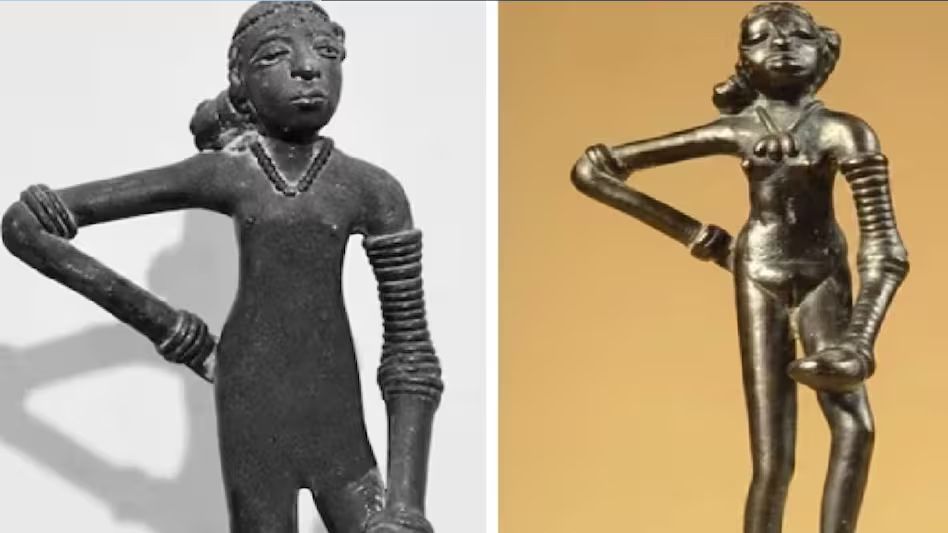
The 'Dancing Girl' of Mohenjo-daro — a bronze figurine cast using the lost-wax technique, housed at the National Museum, New Delhi. (Representative image)
About the Artefact
- A small bronze figurine (about 10.5 cm) from Mohenjo-daro, dated to roughly 2500 BCE.
- Cast using the lost-wax (cire perdue) technique — evidence of advanced Harappan metallurgy and naturalistic art.
- It is displayed at the National Museum, New Delhi, and is routinely taught in schools.
The Controversy
- In the Class 9 Arts textbook the figurine's torso was shaded/covered; NCERT defended this as inviting students to use their 'imagination'.
- The same image already appears in a Class 6 Social Science textbook. Historian Michel Danino, who headed that committee, had earlier resisted objections that the nude figurine could be 'controversial', agreeing only to move it to an inside page at reduced size while keeping it in the book.
- Following the Ministry's query, NCERT was nudged to reverse the retouching for consistency across grades.
Significance
- The 'Dancing Girl' is among the most recognisable symbols of Indus art and craftsmanship.
- The episode reflects the wider debate on the faithful depiction of cultural heritage in school education.
Restoring the original image affirms the principle that heritage artefacts should be taught as they are — the 'Dancing Girl' stands as testament to the Indus Valley's mastery of bronze casting, and her unaltered form is part of that historical record.
Prelims Pointers
- 'Dancing Girl': a bronze figurine from Mohenjo-daro (~2500 BCE), made by the lost-wax (cire perdue) technique; housed at the National Museum, New Delhi.
- Mohenjo-daro lies on the Indus (Larkana district, Sindh, in present-day Pakistan); a UNESCO World Heritage Site.
- The 'Priest-King' is a famous steatite sculpture, also from Mohenjo-daro.
- Lost-wax casting = a metal-casting method using a wax model later melted out — known to Harappans.
- NCERT is an autonomous body under the Ministry of Education.
Practice Mains Question
Cultural heritage artefacts in school textbooks are part of a society's historical record. Discuss, with reference to the 'Dancing Girl', the importance of faithful representation of cultural heritage in education.
GS Paper 1 | 150 words | 10 marks
Prelims Practice MCQ
With reference to the Harappan 'Dancing Girl' figurine, which one of the following is correct?
- (a)It is a steatite sculpture discovered at Harappa.
- (b)It is a terracotta figurine from Lothal.
- (c)It is a bronze figurine from Mohenjo-daro, made by the lost-wax technique.
- (d)It is a copper seal from Dholavira.