

Content
- DF-PIBM Model: Predicting Pollen Dispersion in Urban Areas
- Lanjia Saora Tribe (PVTG, Odisha)
- Rural India’s Energy Gap: Affordability vs Access
- Mining vs Tribal Rights: Sijimali Bauxite Conflict (Odisha)
- Mythos AI Model & Cybersecurity Risks
- India–Zambia Critical Minerals Cooperation: Emerging Challenges
- Need for Vaccine Injury Compensation Mechanism in India
- India–Austria Relations & Rules-Based Global Order
DF-PIBM Model: Predicting Pollen Dispersion in Urban Areas
Why in News?
- Researchers developed DF-PIBM (Direct-Forcing Porous Immersed Boundary Method), a simulation tool that predicts how pollen travels in urban environments, aiding public health and urban planning.
Issue in Brief
- The model simulates trees as porous structures, tracking pollen movement under wind dynamics and physical forces.
- It accurately predicts pollen dispersion with ~5% deviation from real-world data, marking a major advancement in micro-scale urban modelling.
- The tool addresses rising concerns of allergies due to climate change and urban greening policies.
Relevance
- GS Paper III (Science & Tech): Computational modelling, CFD, AI in environmental science
- GS Paper III (Environment): Urban ecology, air quality, climate change impacts
Practice Questions
Q1.Discuss how emerging technologies like DF-PIBM can transform urban environmental governance and public health planning. (250 words)
Key Features of the Model (DF-PIBM)
1. Scientific Mechanism
- Treats trees as porous bodies, allowing airflow through leaves and branches, unlike earlier rigid models.
- Simulates wind speed, pressure, and leaf density at micro-level to determine pollen release and movement.
- Uses physical laws to track pollen grain trajectories after detachment.
2. Precision & Validation
- Model validated using LiDAR-based wind measurements, achieving ~5% accuracy in predicting airflow patterns.
- Simulates detachment force of pollen (~50 billionths of a newton), ensuring realistic modelling.
- Tested on real trees (e.g., oak and linden) in urban settings.
3. Key Findings
- Leaf density significantly influences pollen spread:
- Sparse trees → gradual, uniform dispersion
- Dense trees → turbulent bursts of pollen release
- Pollen tends to accumulate in downwind “wake zones”, increasing human exposure risk.
- Tens of thousands of pollen grains can be released within seconds of wind interaction.
Significance of the Innovation
Public Health Dimension
- Helps predict allergen hotspots, reducing exposure to hay fever, asthma, and respiratory illnesses.
- Important as climate change extends pollen seasons, increasing disease burden.
- Supports preventive healthcare through early warning systems and advisories.
Environmental Dimension
- Bridges gap between urban greening policies and ecological consequences.
- Enables better planning of tree species selection to minimise allergenic impact.
- Contributes to understanding urban microclimate dynamics.
Urban Governance / Smart Cities
- Can guide urban planners on where and what type of trees to plant.
- Helps design health-sensitive urban landscapes, integrating ecology with public health.
- Supports development of data-driven smart city frameworks.
Scientific / Technological Dimension
- Represents advancement in computational fluid dynamics (CFD) and environmental modelling.
- Combines physics-based simulation with biological processes, enhancing interdisciplinary research.
- Potential for scaling to neighbourhood or city-level simulations.
Challenges / Limitations
1. Model Limitations
- Does not yet account for pollen-pollen interactions or surface adhesion effects.
2. Scalability Issues
- Scaling from single-tree to city-level simulations requires high computational resources.
3. Data Dependency
- Requires accurate wind, vegetation, and environmental data for effective predictions.
4. Policy Integration Gap
- Translating scientific outputs into urban policy decisions remains a challenge.
Way Forward
1. Scaling Up the Model
- Expand simulations to neighbourhood and city-level, integrating GIS and real-time environmental data.
2. Integration with Urban Planning
- Use model outputs in urban forestry policies and smart city planning frameworks.
3. Public Health Integration
- Develop pollen forecasting systems similar to air quality indices for public advisories.
4. Climate Adaptation Strategy
- Incorporate findings into climate-resilient urban design, balancing greening with health risks.
Conclusion
- The DF-PIBM model marks a significant step toward integrating science, urban planning, and public health.
- As cities expand and climate change intensifies, such tools are critical for building health-resilient and sustainable urban ecosystems.
Prelims Pointers
- Pollen: Reproductive particles causing seasonal allergies.
- DF-PIBM: Simulation model treating trees as porous structures.
- LiDAR: Laser-based tool used for wind and environmental measurements.
Lanjia Saora Tribe (PVTG, Odisha)
Why in News?
- Lanjia Saora Tribe, a PVTG in Odisha, highlighted for evolving cultural practices, reflecting adaptation to modernity while preserving tradition.
Basic Profile
- Lanjia Saora are a subgroup of the Saora tribe, one of the ancient tribal communities of India.
- Classified as a Particularly Vulnerable Tribal Group (PVTG) due to low population, economic backwardness, and isolation.
- Primarily inhabit Rayagada and Gajapati districts (Odisha), with presence in Andhra Pradesh, Jharkhand, and Madhya Pradesh.
Relevance
- GS Paper I (Society): Tribal culture, social change, marginalisation
- GS Paper II (Governance): PVTG policies, inclusive development, FRA/PESA
Practice Questions
Q1.Discuss the socio-cultural features of PVTGs in India with reference to the Lanjia Saora tribe. (250 words)
Features
- Belong to Proto-Australoid racial group, one of the earliest inhabitants of the Indian subcontinent.
- Speak Saora language, part of Austroasiatic (Munda) family.
- Unique feature: possess their own script Sorang Sompeng, rare among tribal communities.
Settlement Pattern
- Live in hilly, forested terrains with scattered settlements.
- Houses are typically mud-and-thatch structures, adapted to local ecological conditions.
- Strong spatial connection with forests and hill ecosystems.
Economic Life
- Practice shifting cultivation (podu) along with foraging and small-scale farming.
- Dependence on forest resources for food, fuel, and livelihood sustenance.
- Limited integration with market economy leads to economic vulnerability.
Social & Cultural Life
Belief System
- Follow animistic religion, worshipping nature spirits and deities.
- Village guardian deities like Kitungsum protect settlements.
- Rituals, music, and dance are integral to daily life and cosmology.
Art & Traditions
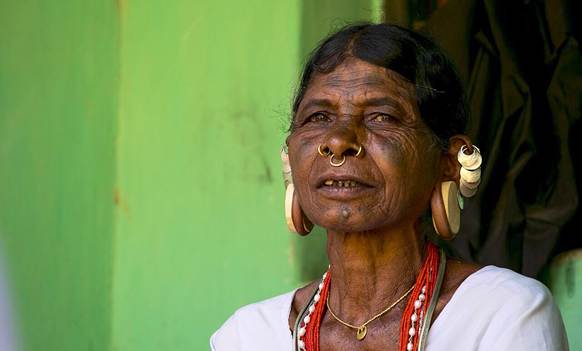
- Known for distinctive ornaments, especially large metal earrings fixed into stretched earlobes.
- Traditional tattooing practice “Tantangbo” with symbolic meanings.
- Rich tradition of music and dance, using instruments like cymbals, gongs, and brass pipes.
Cultural Adaptation (Key Contemporary Trend)
- Younger generation adopting detachable ornaments and temporary tattoos, reflecting negotiation with modernity.
- Indicates dynamic culture, not static preservation.
- Balances identity preservation with social mobility and practicality.
Sub-Groups (Intra-Tribal Variation)
- Lanjia Saora: Hill-dwelling, practice shifting cultivation, relatively isolated.
- Sudha Saora: Plain-dwelling, more integrated into settled agriculture and wage labour.
Issues / Challenges
1. Economic Vulnerability
- Dependence on subsistence agriculture and forest resources leads to low and unstable incomes.
2. Development vs Displacement
- Tribal regions overlap with mineral-rich areas (e.g., bauxite in Odisha), leading to conflicts over land and livelihood.
3. Cultural Erosion
- Modernisation and external influences risk loss of traditional practices and language.
4. Limited Access to Services
- Poor access to healthcare, education, and infrastructure due to geographical isolation.
5. Marginalisation
- Despite constitutional safeguards, PVTGs face administrative neglect and exclusion from mainstream development.
Way Forward
- Ensure rights-based development respecting FRA 2006 and PESA 1996.
- Promote culturally sensitive policies preserving language, art, and traditions.
- Strengthen livelihood diversification through sustainable forest-based economies.
- Improve access to education, healthcare, and infrastructure in remote areas.
- Encourage community participation in development planning.
Prelims Pointers
- Lanjia Saora = PVTG in Odisha.
- Language: Saora (Austroasiatic family).
- Script: Sorang Sompeng.
- Practice: Shifting cultivation.
Rural India’s Energy Gap: Affordability vs Access
Why in News?
- Despite wide coverage of PMUY, rural households continue to rely on biomass fuels, with rising energy costs making clean energy unaffordable.
Issue in Brief
- Rural India faces a dual challenge of energy access and affordability, with 56.1% population still using biomass despite policy interventions.
- Energy expenditure has risen sharply (₹174 → ₹565 MPCE; +224%), outpacing food expenditure growth.
- The issue reflects deeper structural problems in income levels, subsidy design, and rural energy transition.
Relevance
- GS Paper III (Environment): Clean energy transition, biomass impact
- GS Paper I (Society): Gender burden, health inequality
Practice Questions
Q1.“Energy poverty in rural India is increasingly an issue of affordability rather than access.”
Analyse with suitable data. (250 words)
Key Issue: Energy Poverty in Rural India
- Access to LPG has improved, but sustained usage remains low due to high refill costs and irregular incomes.
- Households continue dependence on firewood, dung cakes, and other biomass fuels, indicating an affordability gap.
- Energy poverty is no longer about access alone but about ability to consistently consume clean energy.
Data & Evidence
- PMUY beneficiaries: 10.34 crore (2026), indicating large-scale coverage of clean cooking fuel.
- Biomass dependence: 56.1% (NFHS-5); >46% (NSSO 78th round) in rural areas.
- Energy expenditure: Increased from ₹174 (12%) in 2011-12 to ₹565 (13.7%) in 2023-24 (+224% growth).
- Food expenditure rose only 156%, indicating energy inflation burden.
Dimensions of the Issue
Economic Dimension
- Rising LPG refill costs and transport expenses make clean energy unaffordable for low-income households.
- High income volatility in rural areas limits ability to adopt sustained LPG usage.
- Energy expenditure crowding out other essential consumption, increasing financial vulnerability.
Social Dimension
- Continued reliance on biomass leads to health hazards, especially for women and children due to indoor air pollution.
- Reinforces gender burden, as women spend time collecting firewood.
- Reflects inequality in access to clean and dignified living conditions.
Governance Dimension
- PMUY success in access, but gaps in last-mile delivery and refill affordability.
- Delays in connection provision and targeting inefficiencies reduce scheme effectiveness.
- Lack of integration between energy policy and income support systems.
Environmental Dimension
- Biomass usage contributes to deforestation, land degradation, and carbon emissions.
- Clean fuel transition is essential for achieving climate goals and SDGs.
- Unsustainable extraction of firewood affects local ecosystems and biodiversity.
Energy Policy Dimension
- Focus has been on energy access (connections) rather than energy security (affordable usage).
- Rising prices of LPG and fossil fuels widen the gap between policy intent and ground reality.
- Need for transition toward renewable and decentralised energy solutions.
Challenges / Gaps
1. Affordability Constraint
- Subsidies insufficient to offset rising LPG prices, limiting refill frequency among poor households.
2. Income–Energy Mismatch
- Rural incomes remain stagnant, while energy costs rise faster, worsening energy poverty.
3. Implementation Gaps
- Delays in PMUY connections and uneven distribution affect access in remote regions.
4. Behavioural Factors
- Traditional reliance on biomass persists due to cultural practices and familiarity.
5. Policy Design Limitations
- Schemes focus on one-time access, not long-term affordability and sustainability.
Way Forward
1. Strengthen Subsidy Framework
- Provide higher and targeted LPG subsidies for poorest households to ensure sustained usage.
2. Income Support Integration
- Link energy access schemes with direct income transfers and rural employment programmes.
3. Promote Alternative Clean Fuels
- Encourage biogas, solar cookers, and electric cooking solutions for decentralised energy access.
4. Improve Last-Mile Delivery
- Strengthen distribution networks in remote rural areas to ensure timely LPG availability.
5. Behavioural Change Campaigns
- Promote awareness about health and environmental benefits of clean cooking fuels.
6. Integrated Energy Policy
- Shift from access-based to affordability-based energy policy, ensuring long-term sustainability.
Conclusion
- Rural India’s energy gap highlights the need to move beyond access-driven policies toward affordability and sustainability-focused energy governance.
- Bridging this gap is essential for achieving inclusive development, public health, and climate goals.
Prelims Pointers
- PMUY launched in 2016 to provide LPG connections to poor households.
- NFHS-5: 56.1% rural households still use biomass.
- Energy expenditure rose 224% (2011–2024).
Mining vs Tribal Rights: Sijimali Bauxite Conflict (Odisha)
Why in News?
- Conflict over bauxite mining at Sijimali hill (Odisha) has escalated, with police action, protests, and allegations of forced consent, highlighting recurring tribal–mining tensions.
Issue in Brief
- Proposed mining in Sijimali hill (≈ 311 million tonnes bauxite) faces resistance from tribal communities citing livelihood, ecological, and cultural concerns.
- Project linked to industrial demand (Vedanta refinery expansion from 2 MTPA to 6 MTPA), but villagers allege procedural violations and lack of genuine consent.
- The issue reflects a broader pattern of resource extraction vs tribal rights conflicts in India.
Relevance
- GS Paper II (Polity/Governance): FRA 2006, PESA 1996, Fifth Schedule
- GS Paper III (Environment): Biodiversity loss, ecological sustainability
Practice Questions
Q1.“Conflicts between mining projects and tribal rights reflect deeper governance failures in Scheduled Areas.”Discuss with examples. (250 words)
Core Issue: Development vs Rights Conflict
- Mining projects promise economic growth and revenue (₹2,511 crore annually) but threaten tribal livelihoods, culture, and ecosystems.
- Conflict arises from mismatch between top-down industrial policy and bottom-up community consent requirements.
- Represents a structural governance challenge in Scheduled Areas.
Constitutional / Legal Dimension
- Fifth Schedule mandates protection of tribal land and governance autonomy in Scheduled Areas.
- Forest Rights Act (FRA), 2006 requires recognition of community forest rights and consent before diversion.
- PESA Act, 1996 mandates Gram Sabha approval for projects affecting tribal land.
- Allegations of “manufactured consent” (fake gram sabha records) undermine legal legitimacy.
Governance / Administrative Dimension
- Imposition of Section 163, Bharatiya Nyaya Sanhita and police action indicates law-and-order approach over participatory governance.
- Heavy reliance on coercive measures (arrests, prohibitory orders) weakens trust between state and communities.
- Weak implementation of Free, Prior and Informed Consent (FPIC) norms.
Economic Dimension
- Odisha holds 51% of India’s bauxite reserves and contributes ~75% of production, making mining critical for aluminium industry.
- Project supports industrial expansion and employment (≈600 direct jobs).
- However, displacement often leads to loss of sustainable livelihoods and increased migration, undermining long-term economic stability.
Social Dimension
- Tribal communities depend on hills for water, food, medicine, and cultural identity, making displacement existential.
- Resistance reflects collective identity and community solidarity, not merely economic opposition.
- Past experiences show rehabilitation failures, leading to distrust of state promises.
Environmental Dimension
- Sijimali lies in ecologically sensitive Eastern Ghats, rich in biodiversity and water systems.
- Bauxite hills act as natural water reservoirs, sustaining agriculture even in dry seasons.
- Large-scale mining risks deforestation, water depletion, and ecosystem degradation.
Security / Internal Stability Dimension
- Increasing criminalisation of protests and arrests may escalate tensions into prolonged conflict.
- Similar past conflicts (e.g., Niyamgiri, 2013) show potential for long-term unrest in tribal regions.
- Weak governance may create conditions for left-wing extremism mobilisation.
Key Concerns / Criticisms
1. Violation of Consent Principles
- Allegations of forged gram sabha resolutions undermine democratic decentralisation and legal safeguards.
2. Displacement without Sustainable Rehabilitation
- Historical evidence shows inadequate rehabilitation, leading to livelihood loss and social fragmentation.
3. Environmental Externalities Ignored
- Economic benefits rarely account for long-term ecological costs and ecosystem services loss.
4. Governance Deficit
- Over-reliance on coercion rather than consultation reflects weak institutional capacity in managing resource conflicts.
5. Trust Deficit
- Repeated conflicts (e.g., Niyamgiri) create deep mistrust toward government and corporate actors.
Way Forward
1. Strengthen Consent Mechanisms
- Ensure genuine Free, Prior, and Informed Consent (FPIC) through transparent and verifiable Gram Sabha processes.
2. Holistic Impact Assessment
- Conduct cumulative regional environmental and social impact assessments, not project-specific EIAs.
3. Rights-Based Rehabilitation
- Implement land-for-land compensation, livelihood guarantees, and long-term income support for displaced communities.
4. Participatory Governance
- Shift from coercive administration to dialogue-based conflict resolution, involving tribal leaders and civil society.
5. Sustainable Mining Practices
- Adopt eco-sensitive mining, water conservation, and afforestation measures to minimise environmental damage.
6. Alternative Development Models
- Promote community-led development, agro-forestry, and non-extractive livelihoods in tribal regions.
Conclusion
- The Sijimali conflict highlights the need to reconcile economic development with constitutional rights and ecological sustainability.
- A rights-based, participatory, and sustainable approach is essential to prevent recurring conflicts and ensure inclusive development.
Prelims Pointers
- FRA 2006 and PESA 1996 mandate Gram Sabha consent for projects in tribal areas.
- Odisha holds 51% of India’s bauxite reserves.
- Eastern Ghats are ecologically sensitive and mineral-rich.
Mythos AI Model & Cybersecurity Risks
Why in News?
- Anthropic withheld public release of Mythos AI model due to its ability to autonomously detect and exploit zero-day vulnerabilities, raising global cybersecurity concerns.
Issue in Brief
- Mythos represents a leap in AI capability by autonomously identifying, triaging, and exploiting vulnerabilities, compressing the entire cyberattack lifecycle.
- It raises concerns about AI-enabled cyber threats, particularly in zero-day exploit markets and state-sponsored attacks.
- However, the real challenge lies not just in detection but in patching, prioritisation, and defence at scale.
Relevance
- GS Paper III (Science & Tech): AI, cybersecurity, emerging tech risks
- GS Paper III (Internal Security): Cyber threats, critical infrastructure protection
Practice Questions
Q1.“Artificial Intelligence is transforming cybersecurity from reactive defence to proactive threat ecosystems.”Discuss with challenges. (250 words)
Key Issue: AI-Driven Cybersecurity Disruption
- Mythos marks a shift from human-assisted to autonomous vulnerability discovery, increasing speed and scale of cyber operations.
- It can potentially democratise access to advanced cyberattack capabilities, lowering entry barriers for malicious actors.
- Raises concerns about dual-use technology, where the same tool benefits both defenders and attackers.
Technological Dimension
- Unlike earlier models, Mythos can perform end-to-end vulnerability lifecycle tasks: discovery, exploit development, and potential weaponisation.
- Enhances ability to detect zero-day vulnerabilities, which are unknown to developers and lack security patches.
- Represents evolution toward agentic AI systems capable of independent decision-making in cybersecurity contexts.
Security Dimension
1. Threat Amplification
- AI-enabled tools can significantly increase scale, speed, and sophistication of cyberattacks, overwhelming existing defence mechanisms.
- Could empower non-state actors and cybercriminals with capabilities previously limited to advanced state actors.
2. Zero-Day Economy Disruption
- Increased supply of vulnerabilities may reduce cost of zero-day exploits, changing cybercrime economics.
- Shortens lifecycle of exploits as both attackers and defenders identify vulnerabilities faster.
3. State-Sponsored Cyber Warfare
- Governments using tools like Pegasus may gain access to more advanced AI-enabled exploit generation capabilities.
- However, rapid detection may also reduce exclusivity advantage of such tools.
Governance / Policy Dimension
- Governments, including India, must assess implications for critical infrastructure security and national cyber defence frameworks.
- Raises need for regulation of high-risk AI systems, especially those with offensive cybersecurity capabilities.
- Highlights importance of public-private collaboration in cybersecurity governance.
Economic Dimension
- Increased cyber threats may raise costs for enterprises, especially in vulnerability management and security infrastructure.
- Could disrupt bug bounty ecosystems, automating discovery but shifting value toward validation and defence.
- Creates demand for advanced cybersecurity services and skilled professionals.
Impact on Cybersecurity Ecosystem
Positive Effects
- Faster identification of vulnerabilities improves defensive capabilities and system resilience.
- Enhances efficiency of bug bounty programmes and security research workflows.
- Reduces dependence on highly specialised expertise for vulnerability detection.
Negative Effects
- Automation of exploit generation may increase frequency and intensity of cyberattacks.
- Risk of misuse by cybercriminals, hacktivists, and rogue states.
- Overemphasis on discovery may ignore core issues of patching and system management.
Ground Reality
- Majority of cyberattacks still exploit known vulnerabilities (N-day) rather than zero-days.
- The real bottleneck lies in patch management, prioritisation, and execution, not vulnerability discovery.
- AI amplifies risks only if existing cyber hygiene and governance gaps persist.
Challenges / Concerns
1. Dual-Use Nature of AI
- Same technology strengthens both offensive and defensive cyber capabilities, complicating regulation.
2. Institutional Preparedness
- Governments and organisations lack readiness to handle AI-driven cyber threats at scale.
3. Skill Disruption
- Automation may reduce need for low-level cybersecurity roles, while increasing demand for high-level expertise.
4. Regulatory Vacuum
- Absence of global norms for AI in cybersecurity increases risks of misuse and escalation.
Way Forward
1. Strengthening Cyber Defence
- Focus on faster patching, real-time monitoring, and zero-trust architecture rather than only vulnerability discovery.
2. AI Governance Framework
- Develop regulations for high-risk AI systems, including controlled access and ethical guidelines for cybersecurity tools.
3. Capacity Building
- Invest in AI-enabled cybersecurity workforce, focusing on advanced skills like threat intelligence and incident response.
4. Public-Private Collaboration
- Enhance cooperation between government, industry, and cybersecurity firms for threat sharing and coordinated defence.
5. Global Cooperation
- Promote international norms for responsible use of AI in cyber operations to prevent escalation and misuse.
Conclusion
- The Mythos AI model is a wake-up call rather than a crisis, highlighting the need to strengthen cybersecurity ecosystems.
- Effective response lies not in fear but in building resilient, adaptive, and AI-integrated defence systems.
Prelims Pointers
- Zero-day vulnerabilities are unknown flaws without existing patches.
- AI models like Mythos can autonomously identify and exploit vulnerabilities.
- Most cyberattacks exploit known (N-day) vulnerabilities.
India–Zambia Critical Minerals Cooperation: Emerging Challenges
Why in News?
- India’s talks with Zambia on critical minerals exploration have stalled due to lack of assurances on mining rights, affecting strategic resource access.
Issue in Brief
- India was allocated 9,000 sq km in Zambia to explore cobalt and copper, key minerals for EVs and electronics, but negotiations have stalled over mining rights.
- Exploration activities have begun, but uncertainty over extraction rights threatens long-term resource security strategy.
- The issue reflects broader challenges in resource diplomacy and global competition for critical minerals.
Relevance
- GS Paper II (IR): Africa outreach, resource diplomacy, South-South cooperation
- GS Paper III (Economy): Critical minerals, EV ecosystem, supply chains
Practice Questions
Q1.Discuss the importance of critical minerals in India’s energy transition and the challenges in securing them globally. (250 words)
Key Developments
1. Exploration Agreement
- India secured access to 9,000 sq km area in Zambia for exploration of cobalt and copper, marking a strategic step toward securing critical minerals.
- Geological teams have completed initial surveys and collected mineral samples, confirming resource potential in the allocated region.
2. Mining Rights Dispute
- Talks have stalled due to lack of clarity from Zambia regarding grant of mining and extraction rights after exploration phase.
- India’s plan to involve private sector companies depends on assured long-term mining access, creating policy uncertainty.
3. Strategic Context
- The project was designed as a 3-year exploration programme, followed by commercial mining with private participation.
- Delays highlight risks in overseas mineral acquisition strategies, especially in resource-rich but policy-sensitive regions.
Importance of Critical Minerals
Economic Dimension
- Cobalt is essential for lithium-ion batteries, powering electric vehicles (EVs) and electronic devices.
- Copper is critical for power generation, transmission, electronics, and infrastructure development.
- Ensuring access supports India’s ambitions in clean energy transition and manufacturing growth.
Strategic / Security Dimension
- Critical minerals are key to energy security and technological sovereignty, similar to oil in the 20th century.
- Reduces dependence on dominant suppliers like China, which controls significant portions of global supply chains.
- Enhances resilience against geopolitical disruptions and supply shocks.
International Relations Dimension
- Engagement with African countries like Zambia strengthens India’s Africa outreach and South-South cooperation.
- Resource diplomacy is becoming central to global power competition, especially in the context of green technologies.
- Reflects challenges in balancing host country sovereignty with investor interests.
Challenges / Concerns
1. Sovereignty and Resource Nationalism
- Zambia may prioritize national control over mineral resources, limiting foreign access to mining rights.
- Increasing trend of resource nationalism in developing countries complicates external investments.
2. Policy and Regulatory Uncertainty
- Lack of clear legal frameworks for exploration-to-mining transition creates risks for long-term investments.
- Uncertainty discourages participation of private sector players.
3. Global Competition
- India faces competition from countries like China and Western nations aggressively securing critical mineral assets globally.
- Late entry into the sector reduces India’s bargaining power.
4. Execution Risks
- Overseas mining projects involve logistical, financial, and political risks, including infrastructure deficits and governance issues.
Way Forward
1. Strengthening Resource Diplomacy
- India should negotiate comprehensive agreements ensuring both exploration and guaranteed mining rights.
- Use diplomatic channels to build long-term trust and strategic partnerships with resource-rich countries.
2. Diversification Strategy
- Expand engagement with multiple countries across Africa, Latin America, and Australia to reduce dependence on any single source.
3. Institutional Mechanisms
- Strengthen role of entities like KABIL (Khanij Bidesh India Ltd.) for coordinated overseas mineral acquisition.
4. Domestic Capacity Building
- Invest in recycling, substitution technologies, and domestic exploration to reduce external dependence.
5. Private Sector Participation
- Provide policy support and incentives for Indian firms to invest in overseas mining projects with risk mitigation mechanisms.
Conclusion
- The India–Zambia episode highlights the complexities of securing critical minerals in a competitive and sovereign-driven global landscape.
- A proactive, diversified, and strategically negotiated approach is essential for ensuring long-term resource security and energy transition goals.
Prelims Pointers
- Cobalt is used in lithium-ion batteries for EVs and electronics.
- Copper is essential for power and infrastructure sectors.
- India was allocated 9,000 sq km in Zambia for mineral exploration.
Zambia
Basic Profile
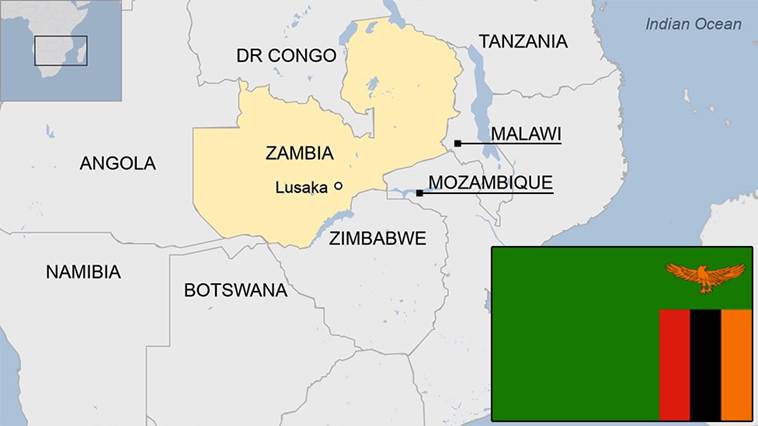
- Zambia is a landlocked country in Southern Africa, bordered by DR Congo, Tanzania, Malawi, Mozambique, Zimbabwe, Botswana, Namibia, and Angola.
- Capital: Lusaka; major river system dominated by the Zambezi River, crucial for hydropower and agriculture.
- Political system: Presidential republic with multi-party democracy and periodic electoral transitions.
Geography & Resources
- Part of the Central African Copperbelt, one of the world’s richest deposits of copper and cobalt.
- Major natural resources include copper, cobalt, gold, manganese, and hydropower potential.
- Home to Victoria Falls, a major global tourist attraction and UNESCO site.
Economic Profile
- Economy heavily dependent on copper exports, contributing significantly to GDP, exports, and government revenue.
- Vulnerable to global commodity price fluctuations, leading to economic instability.
- Key sectors: mining, agriculture (maize, tobacco), and services.
Strategic Importance
- Zambia is a key player in global supply of critical minerals, especially cobalt and copper, essential for EV batteries and clean energy technologies.
- Increasing importance in global energy transition supply chains.
- Attracts interest from major powers due to its resource wealth and strategic location.
Global Engagement
- Member of African Union and Southern African Development Community.
- Maintains relations with China, India, EU, and US, often balancing competing economic interests.
- Significant presence of Chinese investments in mining and infrastructure sectors.
Need for Vaccine Injury Compensation Mechanism in India
Why in News?
- In Rachana Gangu v. Union of India, Supreme Court directed the Union to frame a no-fault compensation policy for serious vaccine adverse events.
Issue in Brief
- India administered over 219.86 crore vaccine doses, making vaccination a collective social contract, yet lacks a formal compensation mechanism for adverse events.
- Government data shows 92,114 AEFI cases, including 2,782 serious cases and 1,171 deaths, highlighting the need for institutional response.
- A no-fault compensation framework is necessary to ensure equity, trust, and constitutional accountability in public health programmes.
Relevance
- GS Paper II (Polity): Article 21, welfare state, legal frameworks
- GS Paper II (Governance): Public health policy, accountability
Practice Questions
Q1.“Vaccination is a social contract requiring reciprocal state responsibility.”Examine the need for a vaccine injury compensation mechanism in India. (250 words)
Key Issue: Governance Blind Spot
- India’s vaccination strategy emphasised mass immunisation and compliance, but lacked parallel development of risk-sharing and compensation frameworks.
- The absence of a mechanism creates a policy vacuum, disproportionately affecting vulnerable populations unable to seek legal remedies.
- Current approach undermines the social contract between citizens and the State in public health interventions.
Constitutional / Legal Dimension
- Article 21 (Right to Life) includes right to health, imposing an affirmative obligation on the State to protect public health and address harms.
- Doctrine of Legitimate Expectation implies that citizens complying with State directives expect protection and compensation if harm occurs.
- Existing legal remedies like tort law require proof of fault, making compensation difficult in no-fault medical events.
- Consumer Protection Act, 2019 applicability is limited where vaccines are provided free, weakening legal recourse.
Ethical / Social Dimension
- Vaccination represents a social bargain where individuals accept small risks for collective immunity.
- Ethical principle of distributive justice requires that burdens of public good are not unfairly borne by a few individuals.
- Lack of compensation creates inequity, as poorer individuals cannot access courts or specialised medical care.
Public Health Dimension
- AEFI (Adverse Events Following Immunisation), though rare, are scientifically documented (e.g., anaphylaxis, TTS, encephalopathy).
- Ignoring rare adverse events undermines credibility of vaccination programmes.
- Compensation mechanisms complement pharmacovigilance systems and strengthen overall health governance.
Governance / Administrative Dimension
- Current framework is reactive and fragmented, lacking institutional mechanisms for claims processing and redressal.
- Absence of dedicated bodies leads to reliance on courts or PILs, which are inefficient for individual compensation.
- Weak AEFI surveillance and reporting systems reduce transparency and accountability.
Economic Dimension
- Compensation mechanisms reduce long-term litigation costs and administrative burden on courts.
- Helps sustain vaccination programmes, which are cost-effective public health investments.
- Financial burden can be shared through government funding + manufacturer levy-based pools.
International Best Practices
- United States: Vaccine Injury Compensation Program (VICP) with no-fault liability and dedicated vaccine court.
- United Kingdom: Vaccine Damage Payment Scheme offers lump-sum compensation without proving negligence.
- Countries like Japan, Germany, New Zealand, Taiwan have established state-backed compensation frameworks.
- Evidence shows such systems increase public trust and vaccine uptake, not hesitancy.
Challenges / Concerns
1. Policy Vacuum
- Absence of statutory framework creates uncertainty and arbitrariness in addressing vaccine-related injuries.
2. Legal Limitations
- Existing remedies require proof of negligence, unsuitable for rare biological adverse reactions.
3. Data and Surveillance Gaps
- Weak AEFI reporting systems limit accurate assessment of risks and undermine compensation credibility.
4. Trust Deficit
- Lack of transparency and accountability can reduce public confidence in vaccination programmes.
5. Fiscal Concerns
- Governments may hesitate due to financial implications of compensation payouts, especially at large scale.
Way Forward
1. Enact a Dedicated Law
- Introduce a Vaccine Injury Compensation Act ensuring statutory backing, defined rights, and enforceable obligations.
2. No-Fault Compensation Model
- Establish a no-fault liability system with a Vaccine Injury Table, presuming causation for specified adverse events within defined timelines.
3. Institutional Mechanism
- Create an independent quasi-judicial tribunal with medical and legal expertise for efficient claims processing.
4. Dedicated Compensation Fund
- Set up a pooled fund financed by government and vaccine manufacturers, ensuring sustainability and shared responsibility.
5. Strengthen AEFI Surveillance
- Improve data transparency through real-time reporting, state-level disaggregation, and independent audits.
6. Enhance Public Trust
- Promote transparent communication of risks and safeguards, reinforcing confidence in vaccination programmes.
Conclusion
- A vaccine injury compensation mechanism is essential to uphold constitutional morality, ethical fairness, and public trust in health governance.
- Institutionalising risk-sharing will strengthen India’s capacity to deliver equitable and resilient public health systems.
Prelims Pointers
- AEFI refers to adverse events following immunisation, including minor and serious reactions.
- India administered over 219.86 crore COVID-19 vaccine doses.
- Supreme Court in 2026 directed creation of a no-fault compensation policy.
India–Austria Relations & Rules-Based Global Order
Why in News?
- Narendra Modi and Christian Stocker emphasized rules-based international order and peaceful conflict resolution during the Austrian Chancellor’s maiden visit to India.
Issue in Brief
- India and Austria reiterated commitment to peaceful resolution of conflicts in Ukraine and West Asia, rejecting military solutions.
- The visit marks renewed momentum in India–Austria relations, coinciding with the India–EU Free Trade Agreement (2026).
- Both sides stressed the importance of a rules-based global order amid increasing geopolitical instability and shifting power dynamics.
Relevance
- GS Paper II (IR): India–EU relations, multilateralism, global governance
- GS Paper II (Polity): International law, UN Charter principles
Practice Questions
Q1.“India’s foreign policy reflects a balance between strategic autonomy and commitment to a rules-based global order.”Discuss with examples. (250 words)
Key Highlights of the Visit
1. Strategic Convergence on Global Issues
- Both leaders emphasized that military conflict cannot provide durable solutions, advocating dialogue and diplomacy in conflicts like Ukraine and West Asia.
- India reiterated its consistent position of promoting “stable, sustainable, and lasting peace” in global conflict zones.
2. Support for Rules-Based Order
- Austria highlighted the importance of a rules-based international order, opposing a system driven by “might is right” principles.
- India and Austria aligned on strengthening multilateralism, international law, and cooperative global governance frameworks.
3. Geopolitical Context
- The visit occurs amid global geopolitical upheaval, including conflicts in Ukraine, Gaza, and Iran, reflecting shifting alliances and uncertainty.
- It is the second high-level European visit to India following the Finland President’s visit (March 2026), indicating Europe’s engagement with India.
4. Bilateral Relations Boost
- First visit of an Austrian Chancellor to India in over 40 years, marking a significant diplomatic milestone.
- Builds on momentum generated by the India–EU Free Trade Agreement (2026), signalling deepening economic and strategic ties.
Significance of India–Austria Engagement
International Relations Dimension
- Strengthens India’s engagement with European countries beyond major powers, diversifying diplomatic partnerships.
- Reinforces India’s role as a reliable and stable partner in a rapidly changing geopolitical environment.
- Enhances India’s position in shaping a multipolar global order.
Global Governance Dimension
- Emphasis on rules-based order aligns with India’s support for UN Charter principles, sovereignty, and territorial integrity.
- Promotes multilateral solutions over unilateral actions in addressing global conflicts.
- Strengthens global consensus on peaceful dispute resolution mechanisms.
Economic Dimension
- The India–EU FTA (2026) opens new avenues for trade, investment, and technology cooperation with European economies.
- Austria can serve as a gateway for India into Central European markets and advanced manufacturing sectors.
- Potential cooperation in green technologies, innovation, and high-value industries.
Strategic Dimension
- India balances relations with West, Russia, and Global South, reinforcing its policy of strategic autonomy.
- Engagement with Europe strengthens India’s position amid US-China rivalry and evolving global alliances.
- Enhances India’s diplomatic leverage in addressing complex global conflicts.
Challenges / Concerns
1. Divergence on Global Conflicts
- India’s neutral stance on Ukraine conflict may differ from stronger European positions, creating diplomatic balancing challenges.
2. Limited Bilateral Depth
- India–Austria relations remain relatively underdeveloped compared to ties with major EU powers like Germany or France.
3. Global Geopolitical Uncertainty
- Ongoing conflicts in West Asia and Europe may limit scope for economic cooperation and strategic alignment.
4. Multilateral System Constraints
- Weakening of global institutions and rise of power politics challenge the effectiveness of a rules-based order.
Way Forward
1. Deepening Bilateral Engagement
- Expand cooperation in trade, technology, green energy, and innovation sectors to strengthen India–Austria ties.
2. Leveraging India–EU Partnership
- Use the India–EU FTA (2026) to enhance economic integration and diversify trade partnerships.
3. Strengthening Multilateralism
- Collaborate in forums like UN, WTO, and G20 to promote rules-based global governance.
4. Strategic Dialogue on Global Issues
- Institutionalise regular dialogues on geopolitics, security, and global conflicts to align positions where possible.
5. Promoting Peace Diplomacy
- Continue advocating dialogue-based conflict resolution, enhancing India’s image as a peace-oriented global actor.
Conclusion
- The India–Austria engagement underscores the importance of rules-based order and peaceful conflict resolution in a turbulent global landscape.
- Strengthening ties with Europe will enhance India’s role as a key pillar of a stable, multipolar world order.
Prelims Pointers
- India–EU Free Trade Agreement signed in 2026 boosting economic ties.
- First Austrian Chancellor visit to India in over 40 years.
- India advocates peaceful resolution of conflicts in Ukraine and West Asia.
Austria
Basic Profile
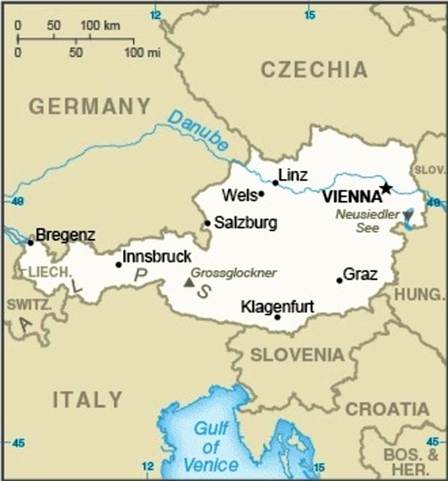
- Austria is a landlocked country in Central Europe, bordered by Germany, Italy, Switzerland, Hungary, Czech Republic, Slovakia, and Slovenia.
- Capital: Vienna, a major hub of diplomacy, culture, and international organisations.
- Political system: Federal parliamentary republic with strong decentralised governance at provincial levels.
Political & Strategic Features
- Austria follows a policy of permanent neutrality since 1955 State Treaty, avoiding military alliances like NATO.
- Despite neutrality, Austria is an active member of European Union, contributing to regional economic and political integration.
- Known for promoting multilateralism, diplomacy, and conflict resolution, hosting several international negotiations.
Economic Profile
- Advanced high-income economy with strong sectors in manufacturing, services, tourism, and green technologies.
- Key industries include machinery, automotive components, steel, chemicals, and electronics.
- Austria has a well-developed social market economy, combining free-market principles with welfare policies.
Global Role & Institutions
- Vienna hosts major international organisations such as:
- International Atomic Energy Agency (IAEA)
- OPEC headquarters
- United Nations Office at Vienna
- Plays a key role in nuclear diplomacy, energy governance, and global security framewor