

In-Depth News Analysis9 Items
Core TopicImportantConcise
Polity & GovernanceGS Paper II
01Memorandum of Procedure — SC Notice to Centre & CJI02Central Secretariat Library Relocation — SC Suo Motu
International RelationsGS Paper II
03India’s ₹15,000-crore Package for Flood-Hit Nepal
Science & Technology / HealthGS Paper III · II
04ICMR AMRSN Report 2025 — Antibiotics Losing Punch05BepiColombo Enters Mercury Orbit06Industry-Built PSLV-N1 Delayed to 2027
Environment & EcologyGS Paper III
07Beyond Delhi’s Smog — Four Winters of AQI Data08Mercury in Fairness Creams & the Minamata Convention
Internal SecurityGS Paper III
09I4C Advisory on WhatsApp Web Session Misuse
Polity & GovernanceGeneral Studies Paper II
01
Appointment of Judges: Supreme Court Issues Notice on the Decade-Long Delay in Finalising the Memorandum of Procedure
GS-II · Polity — Structure & Functioning of the Judiciary; AppointmentsPrelims + MainsThe Indian Express
The Supreme Court has issued notice to the Union Government and the Chief Justice of India (CJI), in his administrative capacity, on a PIL by the NGO Lok Prahari. The PIL seeks directions to finalise the revised Memorandum of Procedure (MoP) for appointing judges, which has been pending since December 2015, and to bring Collegium decisions within the scope of the RTI Act.
◈ From the Basics — How are judges appointed?
- Article 124(2): the President appoints Supreme Court judges after consultation with such judges of the SC and High Courts as he deems necessary. The CJI must always be consulted for the appointment of any judge other than the CJI.
- Article 217: High Court judges are appointed by the President after consulting the CJI, the Governor and the Chief Justice of that High Court. Article 222 governs transfers between High Courts.
- The word that changed everything — “consultation”: the Constitution does not mention a Collegium. The system was created by judicial interpretation in the “Judges Cases”.
- Memorandum of Procedure (MoP): the document that lays down the steps for appointment, elevation and transfer of judges of the SC and HCs. It is a set of mutually agreed conventions, first drawn up on 30 June 1999 after the Second (1993) and Third (1998) Judges Cases.
- Who initiates: the CJI initiates SC appointments. For a High Court, its Chief Justice initiates in consultation with the two senior-most puisne judges.
Figure 1 — From “consultation” to Collegium to an unfinished MoP: the evolution of judicial appointments
1981First Judgesexecutive primacy1998Third JudgesCJI + 4 for SC201499th Amendment+ NJAC ActDec 2015SC: finalisea new MoPNov 2026SC notice onMoP delay1993Second JudgesCollegium born1999MoP drawn up(30 June)Oct 2015Fourth JudgesNJAC struck down2016–17drafts exchanged;no agreementjudgmentsexecutive / ParliamentMoP milestones
The appointment system rests on judicial precedent plus an executive–judicial convention, the MoP. The revised MoP has been stuck for almost 11 years.
The Judges Cases — the Prelims essentials
- First Judges Case — S.P. Gupta v. Union of India (1981): “consultation” does not mean “concurrence”, so the executive had primacy.
- Second Judges Case — SC Advocates-on-Record Association v. Union of India (1993): overruled the first. “Consultation” means concurrence, giving primacy to the CJI acting with his two senior-most colleagues. This created the Collegium.
- Third Judges Case — In re Special Reference No. 1 of 1998 (Article 143): the SC Collegium was expanded to the CJI + four senior-most judges. For High Courts, it is the CJI + two.
- Fourth Judges Case (16 October 2015): a five-judge bench struck down the 99th Constitutional Amendment and the NJAC Act, 2014 by 4:1 for violating judicial independence, which is part of the basic structure. The proposed six-member NJAC would have had the CJI, two senior SC judges, the Union Law Minister and two eminent persons.
The Stalled MoP — What happened after 2015
- The 2015 order: the Constitution Bench left the drafting of a new MoP to the Government, “in consultation with the CJI”, with the CJI deciding on the unanimous view of the Collegium. It listed the factors to consider: eligibility criteria, procedure and a secretariat for the SC and each HC. The Court called these “broad suggestions” and fixed no time limit.
- Two sticking points: a draft MoP was sent to the judiciary in March 2016. The SC reportedly did not accept the Centre’s demand for (i) a power to reject a name on “national security” grounds, and (ii) a permanent Collegium secretariat.
- Since then: the Collegium sent its version to the Government in March 2017, and the Government has called it “under consideration” ever since. In 2023, a Union Law Minister proposed adding a Government nominee to search committees. As late as February 2026, the Government told the Rajya Sabha that revision was still “under consideration”.
- De facto veto: on some occasions the Government has not acted on names, even after the Collegium reiterated them, despite the convention that a reiteration is binding.
- Earlier judicial nudges: in 2017, a two-judge bench (in R.P. Luthra v. Union of India) said the issue could not remain pending indefinitely. That order was later recalled by a bench headed by the then CJI.
▤ The RTI Angle
- CPIO, Supreme Court v. Subhash Chandra Agarwal (2019): a five-judge bench held that the office of the CJI is a “public authority” under the RTI Act, 2005. Disclosure must still be balanced against privacy and judicial independence.
- In practice: the Department of Justice has declined RTI requests on the MoP, calling the information classified.
- The petition’s demand: bring Collegium decisions under RTI. This is a long-standing demand for transparency in a system often criticised as “judges appointing judges”.
The Critical View
- Accountability vacuum: with no written, agreed MoP, there are no timelines for either side. This feeds vacancies and delays in High Courts.
- Independence vs accountability: the Court rejected executive participation through the NJAC but has not fully delivered the transparency reforms it promised. A secretariat, evaluation criteria and published reasons are only partly in place.
- The “national security” clause: it could give the executive an unreviewable veto. Without it, though, the Government feels it lacks a formal channel for genuine concerns.
- Some progress: the SC now publishes Collegium resolutions and maintains a system tracking data and judicial performance.
✎ Mains Practice Question
Nearly a decade after the NJAC verdict, the Memorandum of Procedure for judicial appointments remains unfinalised. Critically examine how this impasse affects judicial independence, transparency and timely appointments, and suggest a way forward. 15 marks · 250 words
02
Central Secretariat Library: Supreme Court Criticises the “Ad Hoc” Relocation of a 135-Year-Old Collection under Central Vista
GS-II · Governance — Judiciary (Suo Motu, PIL); GS-I · Culture — Heritage ConservationPrelims + MainsThe Hindu
The Supreme Court took suo motu cognisance of the relocation of the Central Secretariat Library (CSL) from Shastri Bhawan, which is being demolished for the Central Vista redevelopment. The Court criticised the Centre’s “ad hoc approach”, halted the shifting of books, and on 20 November referred the matter to the CJI for assignment to an appropriate bench.
◈ Background — What is the CSL?
- Origins: founded in 1891 as the Imperial Secretariat Library in Kolkata. It moved to Delhi with the capital, and has been housed in the G-Wing of Shastri Bhawan since 1969.
- Administration: under the Ministry of Education until 1971, and under the Ministry of Culture since 1972.
- Scale: about 8.5 lakh volumes, making it the second-largest Central Government library after the National Library, Kolkata. It also has a textbook library at R.K. Puram.
- Collections: the digitised Gazette of India notifications, 1922–2001; a research collection on countries and Indian regions; and microfilms of British-era official publications.
The Dispute — Timeline
- 17 September: the library was told to vacate by 30 September. The CPWD asked offices to remove furniture before demolition, but no space had been demarcated for the library.
- 5 October: the SC acted suo motu and sought an affidavit with the earmarked space and layout plans. It also flagged that more than 2 lakh regional-language books had sat packed in boxes for nearly 15 years at R.K. Puram since Delhi Metro construction.
- 16 November (affidavit): about 5,583 sq m earmarked for the CSL and the Tulsi Sadan Library in the new Kartavya Bhawan-4, against 5,209.58 sq m now occupied. The building is due by December 2028. In the interim, books go to a General Pool Office Accommodation complex near Netaji Nagar.
- The Court’s response: it halted the shifting, and the amicus curiae described the interim facility holding Tulsi Sadan’s books as “atrocious”.
- 20 November: referred to the CJI, as “master of the roster”, to assign a bench.
▤ Static Hooks for Prelims
- Seventh Schedule: Union List Entry 62 covers the National Library and other institutions declared by Parliament to be of national importance. State List Entry 12 covers libraries and museums controlled or financed by the State.
- Delivery of Books and Newspapers (Public Libraries) Act, 1954: publishers must deposit copies with four libraries: the National Library (Kolkata), Connemara Public Library (Chennai), Asiatic Society Library (Mumbai) and Delhi Public Library.
- Duty and principles: Article 51A(f) is the Fundamental Duty to value and preserve our rich heritage. Article 49 (DPSP) concerns protecting monuments and objects of national importance.
- Central Vista: the redevelopment was upheld 2:1 in Rajiv Suri v. DDA (January 2021). The Common Central Secretariat is being built as a series of Kartavya Bhawans.
- Suo motu and amicus curiae: courts can act on their own motion under their Article 32/142 powers. An amicus curiae (“friend of the court”) is a lawyer appointed to assist the Court.
Why It Matters
- Heritage beyond monuments: archives and libraries are documentary heritage. Old books and microfilms are damaged by humidity, pests and poor handling.
- Planning deficit: the case shows infrastructure timelines outrunning the needs of knowledge institutions. Two lakh books still boxed after 15 years is a warning sign.
- Judicial oversight of executive process: the Court is not blocking redevelopment. It is insisting on due care, a concrete plan and accountability.
✎ Mains Practice Question
Urban redevelopment often overlooks the conservation of documentary heritage such as libraries and archives. In the light of the Central Secretariat Library case, discuss the need for a heritage-sensitive framework for public infrastructure projects. 10 marks · 150 words
International RelationsGeneral Studies Paper II
03
India Announces ₹15,000-crore Package for Flood-Hit Nepal; Reiterates a “Forward-Looking” Approach on Boundary Issues
GS-II · IR — India and its Neighbourhood; Bilateral AgreementsGS-III · Disaster Management (Transboundary)Prelims + MainsThe Hindu · PIB (MEA joint statement)
During the Nepal Prime Minister’s first official visit to India, India announced a ₹15,000-crore development package for reconstruction and long-term development after the devastating August 2026 flood in the Bhotekoshi River. The two Prime Ministers also instructed their Foreign Secretaries to work on the outstanding boundary issues.
₹15,000 cr
Total development package
₹11,500 cr
Rupee-denominated concessional LoC — energy projects only
₹3,500 cr
Direct grants for reconstruction of infrastructure
1,751 km
Open India–Nepal border, touching 5 Indian States
Figure 2 — Anatomy of the ₹15,000-crore package
₹11,500 crore · 76.7%rupee-denominated concessional Line of Credit₹3,500 crgrants · 23.3%→ entirely for ENERGY projects (a loan, repayable)→ RECONSTRUCTIONBar widths are proportional to the amounts (total ₹15,000 crore)
About three-quarters of the package is credit for energy, and the rest are grants. This mix links disaster recovery to India–Nepal hydropower cooperation.
◈ From the Basics — The India–Nepal relationship
- Treaty of Peace and Friendship, 1950: the foundation of ties. It grants national treatment to each other’s citizens in residence, property, trade and movement (Articles 6–7). Nepal has long sought a review.
- Open border: about 1,751 km, touching Uttarakhand, Uttar Pradesh, Bihar, West Bengal and Sikkim. It is guarded by the Sashastra Seema Bal (SSB).
- Economic weight: India is Nepal’s largest trade partner and transit route. The Nepali rupee is pegged to the Indian rupee at 1.6 NPR = 1 INR.
- Water and energy: the Kosi Agreement (1954), the Gandak Agreement (1959) and the Mahakali Treaty (1996), which covers the Pancheshwar project. Under a long-term power trade agreement (2024), India is to import 10,000 MW from Nepal within a decade.
- Lines of Credit (LoCs): India extends concessional loans through the EXIM Bank under the IDEAS scheme, usually dollar-denominated. A rupee-denominated LoC supports rupee internationalisation and removes currency risk for a partner whose currency is pegged to the INR.
Figure 3 — Nepal: a landlocked Himalayan state between India and China
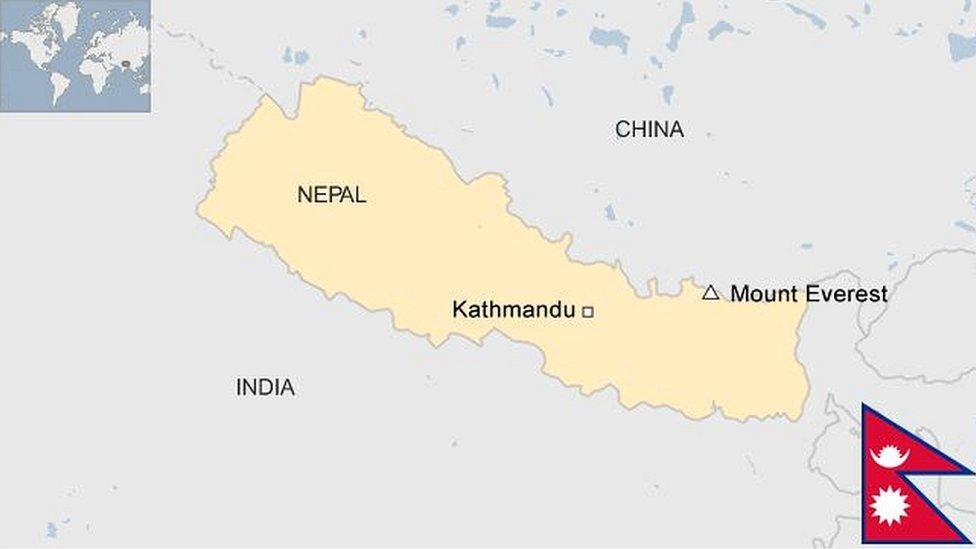
Nepal borders China (Tibet) to the north and India on three sides. Its access to the sea depends on transit through India. The Bhotekoshi flood struck north of Kathmandu on the Tibet border, and the disputed Kalapani area lies at the far-western India–Nepal–China trijunction. Map courtesy BBC; reproduced with credit for educational use. Boundaries are illustrative and not authenticated.
The Trigger — The Bhotekoshi Flood (26 August 2026)
- An avalanche / glacier collapse near the Nepal–Tibet border at Rasuwagadhi sent a flash flood down the Bhotekoshi, with no rainfall and therefore no warning.
- The toll ran into the hundreds, with thousands missing, including Indian tourists. Hydropower projects, roads and bridges were destroyed.
- Transboundary link: the Bhotekoshi feeds the Trishuli, part of the Gandaki (Narayani) system that enters India as the Gandak. That is why Bihar and Uttar Pradesh were put on alert.
- India’s response: HADR (humanitarian assistance and disaster relief) teams, including a medical and tunnel-rescue team. The package is the long-term follow-up.
The Boundary Question — Kalapani–Lipulekh–Limpiyadhura
- Origin: the Treaty of Sugauli (1816) made the Kali (Mahakali) river the boundary. The two countries dispute where the river rises, which determines who owns the Kalapani area at the India–Nepal–China trijunction (Uttarakhand).
- 2020 flashpoint: Nepal issued a new political map claiming the area and amended its Constitution to adopt it. India rejected this as “artificial enlargement”. Lipulekh is used for the Kailash Mansarovar Yatra and India–China border trade.
- Eminent Persons Group (EPG): set up in 2016 to review the whole relationship, including the 1950 Treaty. Its report has never been made public.
- Today’s position: India repeated its “forward-looking” approach and the Foreign Secretaries were tasked with the outstanding boundary issues. This is a diplomatic track, not a public dispute.
Significance and Concerns
- Neighbourhood First in practice: fast HADR followed by reconstruction finance builds goodwill at a time of political transition in Nepal.
- Strategic competition: India offers an alternative to Chinese BRI-linked financing, and energy LoCs strengthen grid interdependence.
- Delivery record: past Indian projects in Nepal have faced implementation delays, a long-standing grievance in Kathmandu. Timely execution will decide the package’s impact.
- Debt vs grant: most of the money is a loan. Nepal will weigh its repayment burden after a disaster.
- Himalayan hazard: the flood points to the need for joint early-warning systems for GLOFs and avalanche-triggered floods, possibly through bodies such as ICIMOD (Kathmandu).
✎ Mains Practice Question
“Disaster diplomacy and energy interdependence can anchor India–Nepal ties better than contested history.” Discuss in the light of India’s recent development package to Nepal and the unresolved boundary question. 15 marks · 250 words
Science & Technology / HealthGeneral Studies Papers III & II
04
Antimicrobial Resistance: ICMR Report Finds Common Antibiotics Failing — Now Even in Secondary-Care Hospitals
GS-II · Health — Issues relating to HealthGS-III · S&T — Biotechnology; One HealthPrelims + MainsThe Indian Express (Expert Explains)
The ICMR Antimicrobial Resistance Surveillance and Research Network (AMRSN) Annual Report 2025 shows very low effectiveness of several antibiotics against E. coli and Klebsiella pneumoniae. These bacteria cause pneumonia, urinary tract infections and bloodstream infections. For the first time, the report includes data from 34 secondary-care hospitals, which shows that AMR is not confined to large tertiary hospitals.
◈ From the Basics — What is AMR?
Antimicrobial resistance (AMR) occurs when bacteria, viruses, fungi or parasites evolve so that the medicines meant to kill them no longer work. Every antibiotic dose kills susceptible microbes and leaves the resistant ones to multiply. This is natural selection at work, and misuse speeds it up.
- Spread of resistance genes: bacteria pass resistance genes to each other through plasmids. This is called horizontal gene transfer. Examples include NDM (New Delhi metallo-β-lactamase) and OXA-48, which defeat carbapenems.
- Lines of treatment: first- and second-line antibiotics are cheap and safe. Third-line / last-resort drugs such as carbapenems and colistin are costlier, more toxic and often less effective.
- Antibiotics do not work on viruses: most cases of viral fever and many diarrhoeal illnesses need no antibiotic, yet they are routinely prescribed one.
- Global burden: AMR is one of the leading causes of death worldwide. The UNGA Political Declaration on AMR (September 2024) commits countries to cut AMR-associated deaths by 10% by 2030.
Key Findings of the Report
- Low effectiveness of several antibiotics against E. coli and Klebsiella, both in hospitalised patients and in outpatients (OPD). Resistance is in the community too.
- Secondary-care hospitals: resistance to third-generation cephalosporins is very high even in district-level hospitals. Carbapenem resistance remains mostly a large-hospital problem.
- Newborns at risk: Klebsiella pneumoniae is the leading bacterium in newborns with bloodstream infections, with worrying resistance patterns in NICUs. Treatment protocols may need revision.
- Hospital-acquired infections often do not respond to first- and second-line drugs, which forces the use of costly third-line antibiotics.
- Genetic drivers: carbapenem-resistance genes such as OXA-48 and NDM were found in Klebsiella samples.
Figure 4 — How AMR builds up and spreads: drivers → selection → spread → treatment failure
1. DRIVERS• antibiotics for viral fever• over-the-counter sales• use in animal farming• poor infection control• weak hand hygiene• pharma / hospital effluent2. SELECTIONsusceptible bacteria die;resistant ones surviveand multiplygenes shared via plasmids(NDM, OXA-48 →carbapenem resistance)3. SPREADICUs & NICUsdistrict hospitalscommunity (OPD cases)water, soil, food chain→ a One Healthproblem4. OUTCOME1st / 2nd-line drugs fail→ 3rd-line / last-resort(carbapenems, colistin)costlier, more side-effects,longer stays, highermortalityBreaking any link helps: stewardship (1), diagnostics (2), infection prevention & control (3), new drugs (4)
AMR is not only a prescription problem. It is also a problem of hygiene, agriculture and the environment, hence the One Health approach.
▤ India’s AMR Policy Architecture
- ICMR-AMRSN (est. 2013): a national network for surveillance and research, publishing annual reports. NARS-Net, run by the NCDC, covers medical college laboratories.
- Chennai Declaration (2012): a medical-community roadmap on AMR. The Red Line campaign (2016) marks prescription-only antibiotics with a red vertical line.
- Schedule H1 (2014): stricter rules on selling certain antibiotics, with mandatory register-keeping by chemists.
- NAP-AMR (2017–21), followed by NAP-AMR 2.0 (2025–29), launched on 18 November 2025 during World AMR Awareness Week (18–24 November). It includes action plans for each ministry, with budgets and coordination mechanisms.
- Animal sector: colistin was banned as a growth promoter in food animals in 2019. Kerala (KARSAP, 2018) was the first State with its own AMR action plan.
- WHO AWaRe classification: antibiotics are grouped as Access, Watch and Reserve to guide stewardship.
What Needs to Be Done
- Mandatory antimicrobial stewardship programmes in hospitals, including district hospitals, plus infection control committees.
- Local antibiograms: resistance patterns differ by hospital and region, and doctors should choose drugs based on them.
- Rapid diagnostics: move from empirical to culture-guided treatment and de-escalate once results arrive.
- Prevention: adult vaccination against flu, typhoid and pneumococcus; hand hygiene and respiratory hygiene.
- Regulation: curb over-the-counter sales and antibiotics in animal farming, and control pharmaceutical effluents.
✎ Mains Practice Question
Antimicrobial resistance is often described as a “silent pandemic”. Examine the drivers of AMR in India and evaluate the adequacy of the One Health approach adopted under the National Action Plan on AMR. 15 marks · 250 words
05
BepiColombo: Europe–Japan Mission Becomes the First in a Decade to Orbit Mercury
GS-III · S&T — Space TechnologyGS-I · Geography — Solar SystemPrelims-orientedThe Indian Express (AP)
After an eight-year cruise, BepiColombo, a joint mission of the European Space Agency (ESA) and the Japan Aerospace Exploration Agency (JAXA), slipped into orbit around Mercury on 21 November 2026. Its two orbiters will separate in December to study the planet from different altitudes.
Figure 5 — Mercury as seen by BepiColombo’s monitoring camera during a flyby
Labelled features include the south pole and craters Boccaccio, Hurley, Roerich, Raphael and Stoddart. Mercury’s craters are named after artists, writers and musicians. Parts of the spacecraft (magnetometer boom and antenna) appear in the foreground. Permanently shadowed polar craters are thought to hold water ice. Image: ESA/BepiColombo/MTM, CC BY-SA 3.0 IGO.
▤ Mission at a Glance
- Agencies: ESA and JAXA. Cost about $2 billion (€1.7 billion).
- Launch: October 2018, on an Ariane 5 from Kourou, French Guiana.
- Two orbiters: ESA’s Mercury Planetary Orbiter (MPO) for the surface and interior, in a low orbit. JAXA’s Mercury Magnetospheric Orbiter (Mio) for the magnetic field and environment, in a larger elliptical orbit. The Mercury Transfer Module (MTM) carried both and was jettisoned in September 2026.
- Route: gravity-assist flybys of Earth (once), Venus (twice) and Mercury (six times), more than 10 billion km in all.
- Timeline ahead: orbiters separate on 9–10 December 2026, and the science phase begins in about April 2027. The planned duration is at least one Earth year.
- Name: after Italian mathematician Giuseppe “Bepi” Colombo, who explained Mercury’s 3:2 spin-orbit resonance and designed the Mariner 10 flyby trajectory.
From the Basics — Why Mercury is so hard to reach
- The paradox: Mercury is close, but reaching it means shedding the huge speed a spacecraft gains as it falls towards the Sun. That is why the mission needed nine planetary flybys and electric propulsion.
- Gravity assist: a flyby lets a spacecraft exchange momentum with a planet and change speed and direction without using fuel.
- Only the third visitor: Mariner 10 (NASA) made three flybys in 1974–75. MESSENGER (NASA) orbited from 2011 until it crashed in 2015. BepiColombo is the first two-spacecraft mission to Mercury.
- Mercury facts: the smallest planet and closest to the Sun, with no moons. A year lasts 88 days and a day (rotation) about 59 days. It has a very large iron core and a global magnetic field, and surface temperatures above 400°C.
- Science goals: the interior and magnetic field; craters, volcanic plains and ridges; the exosphere; and polar water ice. Simultaneous measurements from two spacecraft are a first.
India Link
- India’s inner-planet ambitions centre on the Venus Orbiter Mission (Shukrayaan), approved in 2024. BepiColombo’s Venus flybys and thermal engineering near the Sun are useful reference points.
✎ Mains Practice Question
International collaboration has become central to complex planetary missions. Discuss with reference to the BepiColombo mission, and examine the lessons for India’s planetary exploration programme. 10 marks · 150 words
06
Industry-Built PSLV-N1: Maiden Flight Slips to Early 2027 — What It Means for Space-Sector Reform
GS-III · S&T — Space; Indigenisation of TechnologyPrelims + MainsThe Indian Express
The maiden flight of PSLV-N1, the first PSLV built by industry, by a HAL–L&T consortium, is likely to slip to early 2027. It will carry the EOS-10 earth-observation satellite. Under the 2022 contract, the first rocket was due within two years and all five by 2026.
◈ From the Basics — The PSLV
- Polar Satellite Launch Vehicle: ISRO’s “workhorse”, with four stages that alternate solid (PS1, PS3) and liquid (PS2 with the Vikas engine, PS4).
- Variants include PSLV-G, CA (Core Alone), DL, QL and XL, depending on the number of strap-on boosters. Notable launches: Chandrayaan-1, Mangalyaan and Aditya-L1.
- Recent setbacks: PSLV-C61 (EOS-09, May 2025) and PSLV-C62 (EOS-N1, January 2026) both failed in the third stage (PS3). These were the PSLV’s first back-to-back failures, and ISRO has since made changes recommended by its Failure Analysis Committees.
Why the Delay
- Coordination with the payload (EOS-10) and finding an available launch window.
- Knock-on from the PSLV failures: suppliers of some components were changed on the failure committee’s advice. ISRO is likely to clear PSLV-N1 only after a successful flight of its own PSLV.
▤ Space-Sector Reforms — The Architecture
- NSIL (2019): NewSpace India Ltd, ISRO’s commercial arm, which awarded the industry PSLV contract.
- IN-SPACe (2020): a single-window body that authorises and promotes private space activity.
- Indian Space Policy 2023: lets private entities carry out end-to-end space activities. ISRO moves towards R&D.
- FDI liberalisation (2024): up to 74% automatic for satellites, 49% automatic for launch vehicles, and 100% for components.
- Private launchers: Skyroot’s Vikram-S (2022), India’s first private sub-orbital rocket, and Agnikul’s Agnibaan SOrTeD (2024), with a 3D-printed semi-cryogenic engine. The SSLV technology was transferred to HAL.
The Critical View
- Learning curve: moving from building parts to integrating a whole launcher is hard, and delays are common worldwide.
- Reliability first: with two recent failures, ISRO cannot risk a third. That caution slows the handover to industry.
- The bigger goal: industry must take over routine launches so ISRO can focus on Gaganyaan, the Bharatiya Antariksh Station and deep-space missions.
✎ Mains Practice Question
Discuss the significance of transferring launch-vehicle production to Indian industry. What challenges are evident from the PSLV-N1 programme, and how can they be addressed? 10 marks · 150 words
Environment & EcologyGeneral Studies Paper III
07
Beyond Delhi’s Smog: Four Winters of CPCB Data Show Worsening Air in Several Towns, Sharp Gains in Bihar — and Gaps in Monitoring
GS-III · Environment — Pollution; ConservationGS-I · Geography — Climatology (Indo-Gangetic Plain)Prelims + MainsThe Hindu (Data analysis)
An analysis of CPCB daily bulletins for four winters (October to February, 2022-23 to 2025-26) finds that air quality has worsened sharply in several smaller towns, led by Nandesari (Gujarat). Several Bihar cities improved dramatically. Gaps in monitoring data, including at stations reporting the biggest changes, raise questions about the network itself.
◈ From the Basics — How is the AQI calculated?
- National Air Quality Index (NAQI): launched in 2014. It converts pollutant concentrations into one number from 0 to 500, in six categories: Good (0–50), Satisfactory (51–100), Moderately polluted (101–200), Poor (201–300), Very poor (301–400) and Severe (401–500).
- Data source: Continuous Ambient Air Quality Monitoring Stations (CAAQMS) record pollutants including PM2.5, PM10, NO₂, SO₂, CO, O₃ and NH₃. PM is measured on a filter tape using beta-ray attenuation. According to a CPCB document, India has 634 monitoring stations.
- Method: each pollutant becomes a sub-index, using 24-hour averages for most pollutants and 8-hour for CO and O₃. The worst sub-index becomes the AQI, and that pollutant is the “dominant pollutant”. In North India this is usually PM2.5 or PM10.
- Validity rules: AQI needs at least three pollutants, one of them PM2.5 or PM10, and at least 16 hours of data a day. Where a city has several stations, their values are averaged.
Figure 6 — Biggest changes in winter AQI, 2022-23 → 2025-26 (points)
0worse →← betterNandesari (Gujarat)Hapur (UP)Naharlagun (Arunachal)Charkhi Dadri (Haryana)Sonipat (Haryana)Mandideep (MP)+159+107+83+80+76+73Patna (Bihar)Begusarai (Bihar)−163 (302 → 139)−269
Several of the biggest risers are industrial towns (Nandesari, Mandideep) or on the Indo-Gangetic Plain. Bihar’s gains are striking, but data gaps at several stations call for caution in reading them. Data: CPCB bulletins, as analysed by the newspaper.
Why the Indo-Gangetic Plain Chokes in Winter
- After Delhi-NCR, the worst towns are Bhiwadi, Meerut, Faridabad, Patna, Hajipur, Bulandshahr, Charkhi Dadri and Hapur, all on the Indo-Gangetic Plain (IGP).
- Meteorology: in winter, falling temperatures, a shallower atmospheric boundary layer (the mixing height) and weak winds trap pollutants near the ground. Temperature inversions act like a lid.
- Geography: the IGP is a landlocked basin bounded by the Himalaya, with dense population, stubble burning, brick kilns, traffic and fine alluvial dust.
The Bihar Turnaround — and Its Caveats
- Begusarai’s median winter AQI fell 269 points. Patna went from 302 to 139. Siwan, Katihar, Bettiah, Purnia and Samastipur also improved.
- Reasons cited by the State Pollution Control Board: green cover above 15%; clean fuel mandated for industry, with a lower VAT on clean fuels; zig-zag brick-kiln technology; better road networks; and more sprinklers and mechanical sweepers.
- Caveat: stations such as Begusarai, Darbhanga, Nandesari, Naharlagun and Imphal have many missing days. Darbhanga stopped reporting for almost three winters. Between January and October 2026, 21 locations had insufficient data on 200+ days.
▤ The Legal & Policy Framework
- Air (Prevention and Control of Pollution) Act, 1981: the CPCB (first constituted under the Water Act, 1974) and the State PCBs enforce it.
- NAAQS (2009): standards for 12 pollutants. The 24-hour limits are PM2.5 = 60 µg/m³ and PM10 = 100 µg/m³. WHO 2021 guidelines are far stricter: PM2.5 annual 5 and 24-hour 15 µg/m³.
- National Clean Air Programme (NCAP, 2019): covers 130 cities (mainly non-attainment cities). The revised target is up to a 40% cut in PM10 by 2025-26. Performance is ranked in Swachh Vayu Survekshan.
- Delhi-NCR: the Commission for Air Quality Management (CAQM) Act, 2021 and the Graded Response Action Plan (GRAP).
The Critical View
- Monitoring is the foundation: missing data can make a town look cleaner or dirtier than it is. Policy, rankings and NCAP funds all depend on the readings.
- Smaller towns are under-watched: industrial clusters such as Nandesari and Mandideep need enforcement, not only monitoring.
- Airshed approach: pollution crosses city and State lines. The IGP needs regional airshed management, not city-by-city targets.
- Transparency: the CPCB did not respond on the data gaps. Uptime and maintenance reports for stations should be public.
✎ Mains Practice Question
Air pollution in India is often discussed through the lens of Delhi, but data show worsening air quality in smaller towns too. Examine the meteorological and anthropogenic factors behind winter pollution on the Indo-Gangetic Plain, and evaluate the case for an airshed-based approach backed by reliable monitoring. 15 marks · 250 words
08
Mercury-Laced “Fairness Creams”: Kidney Damage Cases Expose Regulatory Gaps in Cosmetics and E-Commerce
GS-III · Environment — Hazardous Substances; International ConventionsGS-II · Health; Regulatory BodiesPrelims + MainsThe Indian Express
A 17-year-old in Keralam developed membranous nephropathy, a kidney disease, after using a fairness cream bought online. Its mercury content was about 12,500 ppm, against a permitted limit of 1 ppm. One hospital in Malappuram reported 13 similar cases between 2021 and 2023. The State has ordered action against illegal cosmetics, some of them imported from Pakistan.
◈ From the Basics — Why mercury, and why it harms
- Melanin is the pigment that protects skin from UV radiation. It is made with the help of the enzyme tyrosinase.
- Mercury inhibits tyrosinase, which lightens skin. That is why it is added illegally to “whitening” creams. In a cream it is easily absorbed through the skin.
- Health effects: kidney damage (the glomeruli, the kidney’s filters, are injured and protein such as albumin leaks into urine), neurological effects (tremors, numbness, mood changes) and skin damage. Recovery may take three months to a year.
- Minamata disease: named after Minamata, Japan, where industrial methylmercury released into the bay poisoned people who ate the fish. It was identified in 1956.
▤ The Regulatory Framework
- Minamata Convention on Mercury: adopted in 2013 under UNEP, in force since 2017. India ratified it in 2018. Article 4 requires Parties to stop the manufacture, import and export of listed mercury-added products, including cosmetics with more than 1 ppm mercury such as skin-lightening creams.
- Cosmetics Rules, 2020: issued under the Drugs and Cosmetics Act, 1940, replacing the cosmetics provisions of the 1945 Rules. Rule 39(5) fixes the limit for unintentional mercury at 1 ppm. Labels must disclose hazardous ingredients.
- Who does what: the Central Drugs Standard Control Organisation (CDSCO), headed by the DCGI, regulates imports, approves new ingredients and sets standards. State drug controllers license manufacturers, inspect factories and police retail markets.
- Consumer law: the Consumer Protection Act, 2019, with its product-liability chapter, and the Consumer Protection (E-Commerce) Rules, 2020, which set duties for platforms.
The Gaps
- The e-commerce blind spot: creams sold online often have no ingredient or manufacturer label, so it is hard to fix liability. Keralam is considering action against platforms.
- Smuggled and unregistered imports bypass CDSCO approval.
- Enforcement capacity: State drug-control departments have few inspectors and testing labs. A special drive in July led to about 15 cases.
- Late diagnosis: doctors rarely ask about cosmetic use, so mercury poisoning goes undetected.
- The social driver: colourism, the preference for fair skin, sustains demand. Advertising codes such as ASCI’s guidelines on fairness ads address only part of the problem.
✎ Mains Practice Question
The sale of mercury-laced skin-lightening creams through online platforms exposes gaps in India’s cosmetics regulation. Discuss these gaps in the light of India’s obligations under the Minamata Convention and suggest reforms. 10 marks · 150 words
Internal SecurityGeneral Studies Paper III
09
I4C Warns of WhatsApp Web Session Hijacking: Log Out, Don’t Just Close the Tab
GS-III · Security — Cyber Security; Role of Media & Social NetworkingPrelims-orientedThe Hindu
The National Cybercrime Threat Analytics Unit (NCTAU) of the Indian Cyber Crime Coordination Centre (I4C), under the Ministry of Home Affairs, has issued an advisory. It warns that an active WhatsApp Web session on a shared or public computer can be exploited to read messages, impersonate the user and carry out fraud and phishing.
◈ The Advisory & Its Context
- What to do: log out manually after every session, because closing the tab does not end the session. Use private/incognito mode only on trusted computers. Avoid cyber cafés, kiosks, hotel business centres and borrowed systems.
- Sensitive data: do not share government, organisational, financial or confidential information through WhatsApp Web.
- The threat: session hijacking exploits an authenticated session, so no password is needed. It enables identity theft and social-engineering fraud.
- About I4C: approved in 2018 and operational from 2020. It runs the National Cybercrime Reporting Portal (cybercrime.gov.in) and the 1930 financial-fraud helpline, along with units for threat analytics, training, forensics and research.
- Law: IT Act, 2000 — Section 66C (identity theft) and 66D (cheating by personation using a computer resource). CERT-In (Section 70B) is the national incident-response agency. The DPDP Act, 2023 governs personal data protection.
✎ Mains Practice Question
Social-engineering frauds now exploit everyday digital habits more than technical vulnerabilities. Discuss the role of institutions such as I4C and the importance of cyber hygiene in India’s cyber-security strategy. 10 marks · 150 words