

In-Depth News Analysis8 Items
Core TopicImportantConcise
Art, Culture & HeritageGS Paper I
01Sarnath Inscribed as UNESCO World Heritage Site — India's 45th
Environment, Ecology & AgricultureGS Paper III
02India's Paddy Fields Among World's Top Methane Sources — Nature Food Study
Science & TechnologyGS Paper III
03Zoopharmacognosy — When Animals Self-Medicate04Quantum Computing + AI for Cancer Peptide Design — DTU Study05NASA PRAXIS Mission: Sampling Planetary Ring Particles
International RelationsGS Paper II
06Black Sea Crisis — India Advisory for Seafarers07UNESCO 48th WHC: D-Day Beaches, Mount Olympus, Asuka-Fujiwara Inscribed
Polity, Governance & LawGS Paper II
08BitChat Blocked — Section 79 IT Act, Proportionality, and Free Expression
Art, Culture & HeritageGeneral Studies Paper I
01
Sarnath Inscribed on UNESCO World Heritage List — India's 45th Site
GS-I · Culture — Buddhism, Art & Architecture, UNESCO HeritageGS-II · IR — Cultural Diplomacy, Multilateral BodiesPrelims + MainsThe Hindu · 27 July 2026 · UNESCO WHC 48th Session, Busan
The UNESCO World Heritage Committee at its 48th session in Busan, South Korea, inscribed the "Ancient Buddhist Site of Sarnath" on the World Heritage List on 26 July 2026 — making it India's 45th recognised property and placing three of the four principal Buddhist pilgrimage sites under global heritage protection.
Figure 1 — Monastery ruins and the Dhamek Stupa, Sarnath Archaeological Site, Varanasi, UP
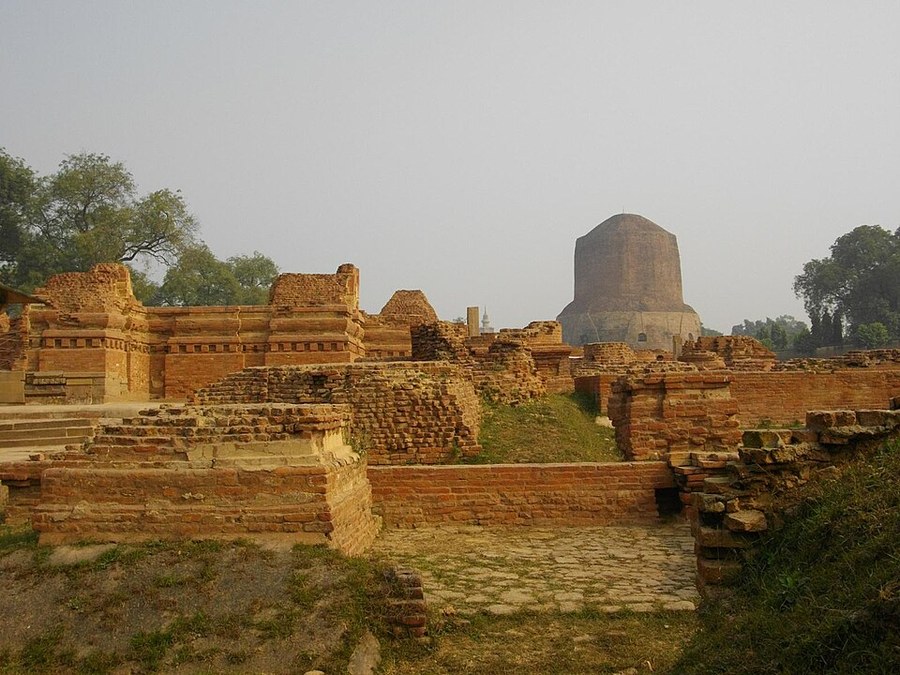
The Dhamek Stupa (rear) — 39 m high, dating to the pre-Ashokan period and modified by Emperor Ashoka c. 249 BCE — dominates the archaeological precinct at Sarnath where the Buddha delivered his first sermon around 528 BCE.
◈ Static Background: Sarnath — Sixteen Centuries of History
Sarnath (also known as Rishipatana, Ishipatana, Mrigadava — "Deer Park") lies 8 km northeast of Varanasi, UP, near the confluence of the Ganges and the Varuna rivers.
Its significance derives from the Dharmachakra Pravartana (Turning of the Wheel of the Law) — the Buddha's first sermon to his five disciples around 528 BCE, founding the Buddhist Sangha and articulating the Noble Eightfold Path.
- The Four Sacred Buddhist Sites (Mahaparinibbana Sutta, Digha Nikaya 16): Lumbini (birth), Bodh Gaya (enlightenment), Sarnath (first sermon), Kushinagar (parinirvana). Of these, only Kushinagar now remains outside the World Heritage List.
- Patronage lineage: Pre-Mauryan settlement (5th–4th c. BCE) → Ashokan construction (3rd c. BCE, Lion Capital, Schism Edict pillar) → Gupta artistic peak (4th–6th c. CE, Dharmachakra Pravartana sculpture) → Pala dynasty patronage (8th–11th c.) → destruction by Qutb ud-Din Aibak in 1194 CE → rediscovery by Zamindar Jagat Singh's workers (1794) → systematic excavation by Alexander Cunningham (1835–36, first DG of ASI).
- The Lion Capital (c. 250 BCE): Found during Friedrich Oertel's 1904–05 excavations; adopted as India's National Emblem on 26 January 1950. The 32-spoke Dharma Chakra from its abacus is incorporated in the Indian national flag.
- Sarnath Archaeological Museum (est. 1904): India's earliest site museum; houses the Lion Capital, the 5th-century CE Gupta sandstone Buddha Preaching First Sermon sculpture, and the Kumaradevi inscription (mid-12th century).
- Tentative List entry: 1998 — mandatory prerequisite for WHC nomination. Nomination submitted January 2025; ICOMOS site mission conducted before today's decision.
The Inscribed Serial Property: Two Component Parts
- Chaukhandi Stupa: 800 m outside Deer Park; marks where the Buddha reunited with his first five disciples — Kaundinya, Assaji, Bhaddiya, Vappa, Mahanama. Topped by an octagonal Mughal brick tower erected by Akbar in 1588 CE as a memorial to Humayun — a rare Buddhist-Mughal composite monument.
- Archaeological Remains of Sarnath: Dhamek Stupa (39 m high, 28 m diameter), Dharmarajika Stupa (pre-Ashokan foundations), Mulagandha Kuty Vihara ruins, Ashokan Pillar, and associated monastery complexes — a stratified settlement spanning 16 centuries (5th–4th c. BCE to 12th c. CE).
UNESCO Inscription: Key Details
- Session: 48th World Heritage Committee, Busan, South Korea (July 2026)
- Nomination criteria: (iii) — outstanding evidence of enduring Buddhist civilisation; (vi) — direct, tangible association with the Buddha's first sermon and founding of the Sangha
- India's WHS tally: 45 properties; ranked 6th globally and 2nd in Asia-Pacific
- India's Tentative List: 69 sites (one nomination per State Party per year)
- Previous year: Maratha Military Landscapes of India inscribed at 47th Session (Paris, 2025)
- Nodal agency: Archaeological Survey of India (ASI), under Ministry of Culture
- World Heritage Convention: Adopted 1972; 196 State Parties
- India's WHC membership: 2021–25; India hosted 47th Session (New Delhi, July 2024) for the first time
Figure 2 — The Four Principal Buddhist Pilgrimage Sites: UNESCO Status (2026)
Four Principal Buddhist Pilgrimage Sites — UNESCO Status (2026)LUMBININepalBirthplace ofthe Buddha✓ WHS 1997Inscribed 1997BODH GAYABihar, IndiaSite ofEnlightenment✓ WHS 2002Mahabodhi TempleSARNATH ★UP, IndiaFirst Sermon(Dharmachakra)✓ WHS 2026 NEWIndia's 45th siteKUSHINAGARUP, IndiaSite ofParinirvana✗ Not yet WHSOnly one remainingSource: UNESCO WHC · Mahaparinibbana Sutta (Digha Nikaya, Sutta 16) · PIB / Ministry of Culture★ Sarnath (2026) is the newest addition. Kushinagar remains the only unrecognised principal site.
Three of the four principal Buddhist pilgrimage sites identified by the Buddha himself now carry UNESCO World Heritage status. Kushinagar (Parinirvana site) in UP is the only remaining unrecognised site — making it a potential future Indian nomination.
Significance: Cultural Diplomacy and Buddhist Circuit Tourism
- India as the birthplace of Buddhism holds major soft power potential with Japan, Thailand, Sri Lanka, Myanmar, Cambodia, Vietnam, South Korea, Mongolia — countries where Buddhism is a major religion and heritage sites carry deep pilgrim value.
- Inscription will strengthen India's Buddhist Circuit tourism — a government-promoted itinerary linking Lumbini (Nepal border), Bodh Gaya, Sarnath, Kushinagar, and Shravasti.
- India is now obligated to manage tourism sustainably and prevent unplanned development in the property's buffer zone — a challenge given Sarnath's existing tourist pressure.
- The 48th WHC session (Busan) also inscribed Normandy D-Day beaches (France), Mount Olympus (Greece), Asuka-Fujiwara ancient capitals (Japan), and South Sudan's Boma-Badingilo Migratory Landscape (South Sudan's first WHS).
✎ UPSC Mains Question
The inscription of Sarnath on the UNESCO World Heritage List is both a recognition of Outstanding Universal Value and an opportunity for cultural diplomacy. Discuss the historical significance of Sarnath in the Buddhist tradition, the role of ASI in its conservation over 150 years, and the challenges of balancing heritage preservation with rising pilgrimage tourism. 15 marks · 250 words · GS-I
Environment, Ecology & AgricultureGeneral Studies Paper III
02
India's Paddy Fields Among World's Top Methane Sources: Nature Food Study
GS-III · Environment — Agriculture GHG Emissions, Climate Change, Food SecurityPrelims + MainsThe Hindu · Nature Food (peer-reviewed) · 27 July 2026
A comprehensive study in Nature Food — integrating 1,200+ field experiments, ecosystem modelling, and AI analysis — finds that global GHG emissions from paddy cultivation have nearly doubled since the 1960s, with eastern India's paddy fields identified as global methane hotspots, releasing 3.9 million tonnes of methane annually — comparable to Germany's total annual methane output.
◈ Static Background: Rice Cultivation and GHG Emissions
Paddy (flooded rice) cultivation is a major non-CO₂ source of greenhouse gases. Flooded fields create anaerobic (low-oxygen) conditions in which methanogenic archaea — methane-producing microorganisms — thrive in the soil, releasing methane (CH₄) to the atmosphere through the rice plant stem or as bubbles.
- Methane's climate potency: Methane has a Global Warming Potential (GWP) of ~84 over 20 years and ~28 over 100 years (IPCC AR6) — far more potent than CO₂ on shorter timescales. Agriculture accounts for approximately 10–12% of global GHG emissions, with rice paddies contributing roughly 10% of all agricultural methane globally.
- India's rice sector: India is the world's largest rice exporter and second-largest producer (after China). Paddy area has grown ~25% since the 1970s, now covering 55% of India's rainfed harvested area. The Green Revolution's shift to water-intensive HYV varieties deepened continuous-flooding practices that maximise methane production.
- Soil organic carbon dynamics: Healthy paddy soils can sequester carbon; however, the study finds that by the 2010s, over a third of paddy fields worldwide had begun losing soil organic carbon — converting from carbon sinks to sources. Loss of SOC was responsible for approximately half the observed increase in total emissions.
- India's NDC and agriculture: India's Nationally Determined Contribution (NDC) under the Paris Agreement does not set specific targets for reducing agricultural GHG emissions — a gap this study underscores. India's NDC focuses on energy sector decarbonisation, forest cover, and reducing emission intensity of GDP.
- NICRA (National Innovations in Climate Resilient Agriculture): ICAR-led programme providing district-level climate adaptation demonstrations, including the System of Rice Intensification (SRI) technique — young seedlings transplanted at wide spacing in non-continuously flooded fields, reducing methane by disrupting anaerobic soil conditions.
Key Findings of the Nature Food Study
- Global paddy GHG emissions (2011–2020): ~1.1 billion tonnes CO₂-equivalent per year — a 90.4% increase from 1961–1980 levels
- Soil organic carbon loss: In 1961–80, paddy fields globally removed 289 million tonnes CO₂-e annually (net sink); by the 2010s, over a third had become net emitters
- India's methane output: Irrigated paddy fields release 3.9 million tonnes of methane/year — comparable to Germany's total annual methane emissions
- Eastern India hotspot: The Gangetic Plain's paddy belt (Bihar, UP, West Bengal, Odisha) identified as among the most intensive global methane zones — continuous irrigation, dense cultivation, high nitrogen fertiliser use
- Projected trajectory (2031–2050): Annual emissions expected to rise a further 25% driven by global warming (warmer temperatures accelerate methanogen activity), erratic rainfall, and intensified agricultural inputs
- Mitigation potential: Combination of improved irrigation (Alternate Wetting and Drying — AWD), optimised fertiliser use, residue management, and reduced tillage could cut global rice GHG emissions by ~10% by mid-century
Mitigation Approaches and India's Policy Gap
- Alternate Wetting and Drying (AWD): Fields are not continuously flooded — soil is allowed to dry partially between irrigations, disrupting methanogen activity while maintaining yield. IRRI-led KERA-AWD project is piloting this in Kerala's Thrissur Kole lands and Palakkad Malampuzha canal regions.
- System of Rice Intensification (SRI): Young seedlings transplanted at precise wide spacing; non-continuous flooding; reduces methane while often improving yield through better root aeration. Promoted under NICRA but adoption remains low due to labour requirements and knowledge gaps.
- Phosphogypsum application: Research suggests replacing a portion of lime (used to neutralise Kerala's acidic soils) with phosphogypsum has a positive impact on subsoil methane emissions.
- Crop diversification: Experts argue that despite India's agro-climatic diversity, paddy dominates cultivated area at the cost of indigenous crops. Diversification to millets and coarse cereals (promoted under PM Poshan and Nutri-Cereals Mission) is structurally necessary.
- India's policy gap: Unlike the energy and forestry sectors, India has no specific agricultural GHG reduction targets in its NDC — this study strengthens the case for including methane from rice cultivation in India's climate commitments under the Paris Agreement.
✎ UPSC Mains Question
India's paddy cultivation is both a food security imperative and a significant source of agricultural methane emissions. Critically examine the drivers of rising GHG emissions from Indian rice fields, evaluate available low-emission cultivation techniques, and assess why India must incorporate agricultural methane targets into its climate commitments. 15 marks · 250 words · GS-III
Science & TechnologyGeneral Studies Paper III
03
Zoopharmacognosy: When Animals Medicate Themselves
GS-III · S&T — Biology, Animal Behaviour, EthnopharmacologyPrelims + MainsThe Hindu · Scientific Reports 2026 (G. Allen et al.) · Resonance (IAS 2008)
A 2026 review in Scientific Reports documents orangutans in Central Kalimantan (Indonesia) applying a saliva-leaf paste of Dracaena (family Asparagaceae) to their bodies for pain relief — adding to a growing body of evidence that animals instinctively seek out medicinal plants, a field now formally termed Zoopharmacognosy.
Figure 4 — Sumatran Orangutan (Pongo abelii): Known to Self-Medicate with Medicinal Plants
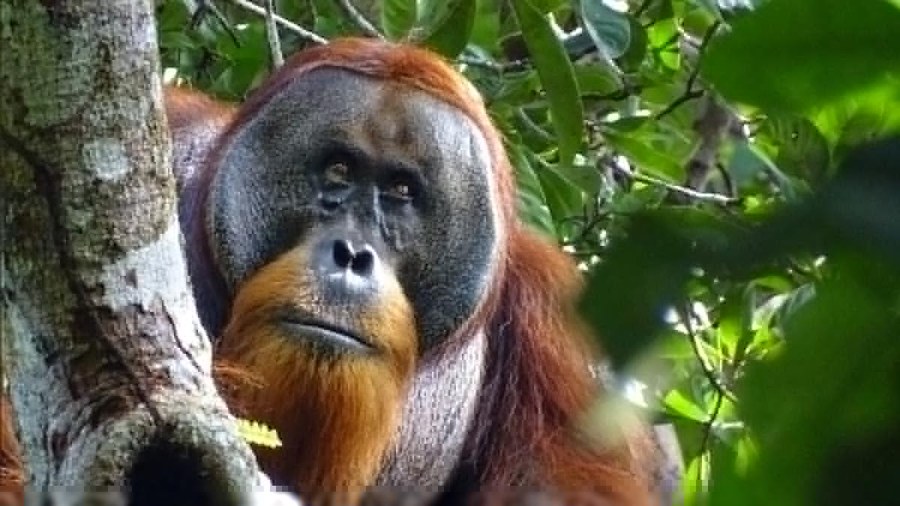
The Sumatran orangutan (Pongo abelii) is critically endangered (IUCN Red List). This 2026 study documents orangutans in Central Kalimantan's Sebangu forest applying medicinal plant pastes — one of the most sophisticated documented cases of animal self-medication. Image: Reuters.
◈ Static Background: Zoopharmacognosy
Zoopharmacognosy (from Greek: zoo = animal, pharmaco = medicine, gnosy = knowledge) refers to the behaviour of animals selecting and using plants, soils, or other substances with medicinal properties to prevent or treat illness. The term was coined by plant biologist Eloy Rodriguez in the 1990s.
- Geophagy: Consumption of clay or soil particles to alleviate pain, absorb toxins, or supplement minerals — documented in elephants, primates, parrots, and many other species.
- Chimpanzees and Desmodium gangeticum: Chimpanzees in Nigeria swallow whole leaves (without chewing, to avoid digesting active compounds) of Desmodium gangeticum (Shalaparni — used in ancient Ayurveda by Sushruta for asthma, haemorrhoids, typhoid) to expel intestinal parasites. The leaves' surface texture physically dislodges worms.
- Elephants and oregano: Common elephants chew oregano leaves for relief from respiratory congestion and phlegm.
- Birds: Known to use herbs to protect nests from bacterial and insect invaders — documented in multiple species (Phil. Trans. R. Soc. B, 2018).
- Ayurvedic connection: Many plants used in ancient Ayurveda — snake plant, ginseng, oregano, Dracaena — are the same ones animals instinctively use, suggesting ancestral knowledge transfer from animal observation to human practice.
The 2026 Orangutan Study: Key Findings
- Species: Bornean orangutans (Pongo pygmaeus) in Sebangu forest, Central Kalimantan, Indonesia
- Plant used: Dracaena sp. (family Asparagaceae, asparagus family) — an evergreen plant with antioxidant, antibacterial, antifungal, and anticancer properties (demonstrated by botanists from Gujarat University, Ahmedabad)
- Method: Orangutans mix saliva with leaf material to create a paste, apply it to the body — apparently to reduce muscle pain and joint discomfort caused by carrying infants
- Significance: One of the most sophisticated documented cases of topical self-medication in non-human primates; also implies transmission of medicinal knowledge across generations within orangutan communities
✎ UPSC Mains Question
Zoopharmacognosy challenges the assumption that medicinal knowledge is uniquely human. Discuss the scientific significance of animal self-medication behaviour, its implications for drug discovery and ethnopharmacology, and what it reveals about the evolutionary continuity of medicinal plant use from primates to human civilisations. 10 marks · 150 words · GS-III
04
Quantum Computing + AI for Cancer Peptide Design: A DTU Proof-of-Concept
GS-III · S&T — Quantum Computing, Artificial Intelligence, Biotechnology, HealthPrelims + MainsThe Hindu · Technical University of Denmark (DTU) · Expert Explains
Researchers at the Technical University of Denmark (DTU) have demonstrated that combining a photonic quantum computer with an AI model to design immune-binding peptides produces better results for rare, data-poor HLA immune types than classical AI alone — a step toward more personalised cancer vaccines.
Figure 5 — IBM Quantum Computer Hardware: Dilution Refrigerator Unit at a Technology Expo

Quantum computers use dilution refrigerators to maintain qubits at temperatures near absolute zero (~15 millikelvin), far colder than outer space. Photonic quantum computers (used in the DTU study) use individual photons as qubits instead of superconducting circuits. Image: IBM / Public domain.
◈ Static Background: Key Concepts
- Classical vs. Quantum computing: Classical computers use bits (0 or 1). Quantum computers use qubits (quantum bits) that exist in superposition — simultaneously 0 and 1 — enabling parallel processing of vastly more possibilities. A photonic quantum computer uses individual light particles (photons) as qubits — it operates at room temperature, unlike superconducting qubits which require near-absolute-zero cooling.
- Peptides and the immune system: Peptides are short chains of amino acids (protein building blocks). The immune system recognises disease when cells display HLA (Human Leukocyte Antigen) molecules on their surface holding peptide fragments. If an immune cell detects a foreign peptide in the HLA groove, it triggers a response. Cancer vaccines work by showing the immune system tumour-specific peptides to train it.
- HLA diversity: HLA genes are among the most variable in the human genome — thousands of versions exist. Some HLA types are well-studied (data-rich); others, often more common in non-European populations, are poorly understood (data-poor) — making AI design harder and creating health equity gaps.
- AI peptide design challenge: Even a short peptide has hundreds of billions of possible amino acid sequences; only a tiny fraction binds well to any given HLA type. AI models learn patterns from known binding data — but for rare HLA types with little training data, AI performance is limited.
The DTU Study: What the Quantum Computer Added
- Standard AI approach: An AI model learns from known immune-binding peptides and proposes new candidates using a random starting distribution generated by a classical computer.
- DTU's innovation: The classical random starting distribution was replaced with samples from a photonic quantum processor — which generates a richer, more correlated kind of randomness that classical machines cannot replicate.
- Effect: The quantum-seeded AI explored a wider, less obvious design space, generating more diverse peptide candidates — especially valuable for rare HLA types where conventional AI converges on familiar, well-known sequences.
- Lab validation results: Peptides synthesised and tested in laboratory — binding confirmed across all three HLA types tested; success rates near 100% for two HLA types and approximately 75% for the most difficult third type.
- Limitation: The technology remains far from clinical use; the study is a proof-of-concept awaiting peer review — not a clinical trial or treatment.
Figure 6 — Classical AI vs. Quantum-Seeded AI for Peptide Design: Process Comparison
Classical AI vs. Quantum-Seeded AI — Peptide Design PipelineCLASSICAL AI APPROACHClassical random starting distribution↓AI designs peptides from known patterns↓Converges on familiar sequences — weak for rare HLAQUANTUM-SEEDED AI (DTU 2026)Photonic quantum processor → correlated distribution↓AI explores wider, less obvious design space↓Better binding for rare HLA types — lab validated ✓Source: DTU proof-of-concept study (awaiting peer review) · The Hindu Expert Explains · 27 July 2026
The quantum computer's role is not to replace the AI but to change its starting material — providing richer, more correlated randomness that pushes the AI toward exploring under-sampled peptide sequences most relevant for poorly studied HLA immune types.
✎ UPSC Mains Question
Quantum computing is increasingly being integrated with artificial intelligence for biological applications. Discuss the concept of quantum-AI convergence in medicine, with reference to the DTU peptide design study, and examine both the potential and the current limitations of this technology for personalised cancer immunotherapy. 10 marks · 150 words · GS-III
05
NASA's PRAXIS Mission: An AI-Driven Robotic Explorer to Sample Planetary Rings
GS-III · S&T — Space Science, NASA, Planetary Exploration, AI in SpacePrelims-orientedThe Hindu · NASA NIAC Programme · 27 July 2026
NASA has selected the PRAXIS mission concept (Planetary Rings Autonomous EXploration with In-situ Sampling) for Phase I funding under its Innovative Advanced Concepts (NIAC) programme — the first mission designed to directly sample particles from planetary ring systems using a bio-inspired, AI-driven robotic explorer.
Figure 7 — Saturn and Its Ring System: JWST View (Target Environment for PRAXIS-Type Missions)

Saturn's ring system as imaged by the James Webb Space Telescope — comprising billions of particles of ice and rock ranging from dust-sized to several metres. PRAXIS would perform the first in-situ sampling of such ring particles using a touch-and-go approach with a deployable boom. Image: NASA/STScI.
◈ Static Background: Planetary Rings and Space Exploration
- Planetary rings: Found around all four outer (Jovian) planets — Saturn (most prominent, discovered by Galileo 1610, confirmed ring structure by Huygens 1655), Jupiter (1979, Voyager 1), Uranus (1977), Neptune (1989, Voyager 2). Ring particles range from micrometres to several metres; composition varies by planet (Saturn: primarily water ice; Uranus/Neptune: darker material).
- Open scientific questions: How do planetary rings form — primordial nebular material, or tidal disruption of captured comets/asteroids? How do they evolve? What exactly are the ring particles composed of — in detail? These are flagged in NASA's Planetary Science Decadal Survey (2023–2032) as priority science questions.
- NASA NIAC Programme: NASA Innovative Advanced Concepts — funds early-stage, visionary research on technologies 10+ years from implementation. Phase I: feasibility studies and simulations; Phase II: physical prototyping.
- Previous ring missions: Cassini-Huygens (1997–2017) studied Saturn's rings remotely and from orbit. No mission has ever physically sampled ring particles in-situ — PRAXIS would be the first to attempt this.
PRAXIS Mission Design: Key Features
- Architecture: Bio-inspired (mimicking biological systems) AI-driven robotic explorer; autonomous — AI model selects target particles and governs manoeuvres without real-time ground control (communication delay rules this out at outer planets)
- Sampling technique: Touch-and-go approach using a long deployable boom — spacecraft grazes the ring plane, making brief physical contact with the surface of target particles rather than flying through rings (collision hazard)
- Analysis tools: Small onboard instruments snag free-floating particles; AI measures particle size, porosity, and elemental/molecular composition
- Current status: NIAC Phase I funding awarded (2026) — team will run simulations and study system design; Phase II would involve physical prototype construction
- UPSC Prelims relevance: Know the NIAC programme, PRAXIS acronym, distinction between bio-inspired design and conventional spacecraft design, touch-and-go sampling technique (also used by JAXA's Hayabusa-2 asteroid mission)
✎ UPSC Mains Question
In-situ exploration of planetary ring systems has so far been limited to remote sensing. Examine the scientific significance of the NASA PRAXIS mission concept, the technological challenges of sampling planetary ring particles, and how AI and bio-inspired robotics are transforming deep space exploration. 10 marks · 150 words · GS-III
International RelationsGeneral Studies Paper II
06
Black Sea Conflict: India Issues Advisory for Seafarers as Ship Attacks Rise
GS-II · IR — India's Diaspora, Maritime Security, Russia-Ukraine ConflictPrelims + MainsThe Hindu · MEA Advisory · 27 July 2026
India's Ministry of External Affairs issued an advisory urging Indian seafarers to assess security risks before accepting employment on commercial vessels in and around the Black Sea, following a projectile strike on the MV AGN Ragnar (with 4 Indian crew) at Odesa, Ukraine, and the deaths of five Indian seafarers in similar incidents since April 2026.
Figure 8 — The Black Sea: Strategic Geography and Key Ports (Map)
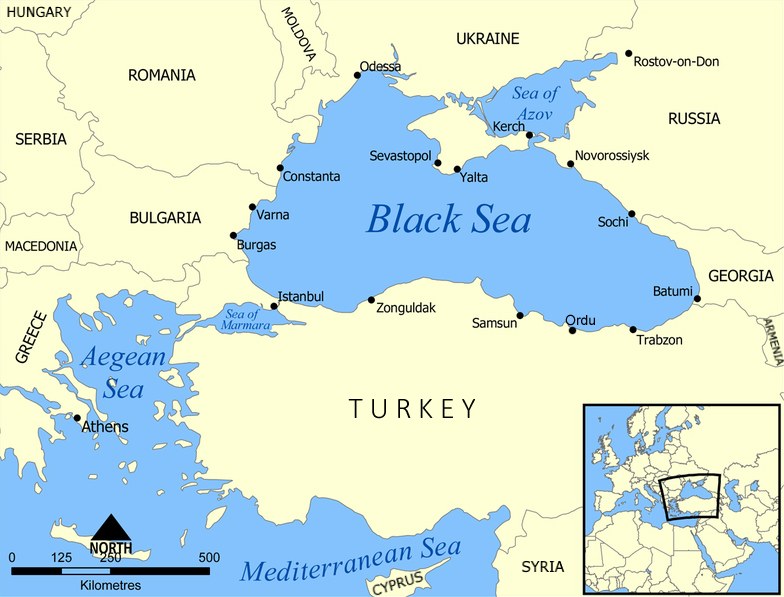
The Black Sea is an inland sea bordered by six nations — Ukraine, Russia, Turkey, Romania, Bulgaria, and Georgia. It connects to the Mediterranean via the Turkish Straits (Bosphorus → Sea of Marmara → Dardanelles), making it a critical corridor for grain, oil, and maritime trade.
◈ Static Background: Black Sea — Geography and Strategic Significance
The Black Sea is a marginal sea of the Atlantic Ocean, connecting to the Mediterranean via the Turkish Straits — the Bosphorus Strait (Istanbul), the Sea of Marmara, and the Dardanelles.
It is bordered by six nations: Ukraine, Russia, Turkey, Romania, Bulgaria, Georgia. It also connects to the Sea of Azov via the Kerch Strait (controlled by Russia since 2014 annexation of Crimea).
- Strategic importance: The Black Sea is the primary maritime exit for Ukrainian and Russian grain exports (Ukraine was the world's 5th-largest wheat exporter before the 2022 war). It carries significant oil and gas pipeline traffic. Control of its ports — especially Odesa (Ukraine) and Sevastopol (Crimea, Russia-controlled) — is central to the conflict.
- Montreux Convention (1936): Governs naval transit through the Turkish Straits. In wartime, Turkey has authority to restrict passage of warships belonging to belligerent states — Turkey invoked this after Russia's 2022 invasion to limit Russian naval reinforcement.
- Russia-Ukraine conflict (from Feb 2022): Russia's full-scale invasion of Ukraine on 24 February 2022 initiated the ongoing conflict. The Black Sea became a warzone — Ukrainian naval drone and missile strikes on Russian warships (including the flagship Moskva, sunk April 2022) and Russian missile/drone strikes on Ukrainian ports and grain infrastructure.
- Black Sea Grain Initiative (2022–2023): UN-Turkey brokered deal allowing Ukraine to export grain through Odesa's port corridors; Russia withdrew from the initiative in July 2023, escalating maritime insecurity.
- Indian seafarers: India is the world's second-largest supplier of maritime officers. Over 240,000 Indian seafarers are employed on international merchant ships — approximately 12% of the global seafarer workforce.
The Incident and India's Advisory
- Incident (26 July 2026): MV AGN Ragnar struck by a projectile at Odesa port; 4 Indian crew on board; 2 confirmed safe, 2 whereabouts unknown at time of advisory.
- Pattern since April 2026: Five Indian seafarers have died in similar Black Sea attacks — an escalating pattern prompting MEA action.
- Advisory issued under: The advisory was issued by the Ministry of External Affairs (not a formal legal instrument); it urges Indian nationals to assess risks, obtain comprehensive voyage information from employers, and ensure employment contracts include medical care, evacuation, repatriation, and compensation provisions.
- Legal framework for seafarer protection: Maritime Labour Convention (MLC) 2006 (ILO) — ratified by India in 2015 — sets minimum standards for seafarer welfare, including evacuation and repatriation rights.
✎ UPSC Mains Question
The ongoing Russia-Ukraine conflict has turned the Black Sea into a zone of acute maritime insecurity, placing Indian seafarers at risk. Critically examine the strategic significance of the Black Sea in global trade, India's interests in the Russia-Ukraine conflict, and the institutional mechanisms for protecting Indian nationals in conflict-affected maritime zones. 15 marks · 250 words · GS-II
07
UNESCO 48th Session: Normandy D-Day Beaches, Mount Olympus, Asuka-Fujiwara Inscribed
GS-I · Culture — Modern World History, UNESCO World HeritageGS-II · IR — Multilateral Bodies, UNESCOPrelims + MainsThe Hindu / AP · UNESCO WHC 48th Session, Busan · 26–27 July 2026
The 48th UNESCO World Heritage Committee session at Busan, South Korea inscribed Normandy's five D-Day beaches (France), Mount Olympus (Greece, mixed cultural-natural site), the Asuka-Fujiwara ancient capitals (Japan), and South Sudan's Boma-Badingilo Migratory Landscape — the latter South Sudan's first World Heritage Site.
Figure 9 — Allied Troops Landing at Normandy Beaches, 6 June 1944 (D-Day)
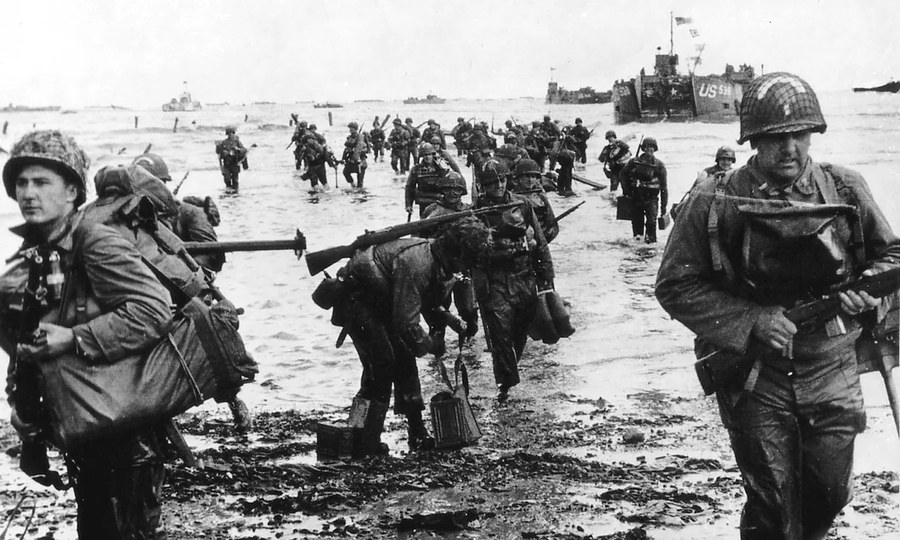
More than 150,000 Allied troops came ashore at five Normandy beaches on 6 June 1944 — Omaha, Utah (US sectors), Gold, Sword (UK), and Juno (Canada). The landing opened the Western Front against Nazi-occupied Europe and is now UNESCO's newest cultural World Heritage property. Image: US National Archives / AP.
Figure 10 — Greece Relief Map: Location of Mount Olympus (Northern Greece)
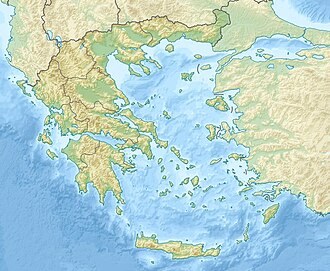
Mount Olympus (2,918 m) — Greece's highest peak — is located in northern Greece near the Aegean coast. Newly inscribed as a mixed cultural and natural UNESCO World Heritage Site after a 12-year Greek nomination effort.
◈ Static Background: The New Inscriptions
- Normandy Landing Beaches (France): Five beaches — Omaha, Utah (US), Gold, Sword (UK), Juno (Canada) — plus Pointe du Hoc assault site. Over 150,000 Allied troops landed on 6 June 1944 in Operation Overlord (the largest amphibious invasion in history). The sites contain German fortifications, bomb-scarred terrain, Allied harbour structures (Mulberry harbours), and sunken vessels — designated under cultural heritage criteria for their role in liberating Western Europe from Nazi occupation. Threats: tourism pressure, rising sea levels, wind farm development.
- Mount Olympus (Greece): Highest peak in Greece at 2,918 m; in Greek mythology, home of the twelve Olympian gods (Zeus, Hera, Poseidon, etc.). Inscribed as a mixed cultural and natural WHS — recognising both its mythological significance and rich biodiversity (endemic species, diverse ecosystems from coastal to alpine). Rewarded a 12-year Greek effort. Greece now has a heightened conservation obligation as a State Party, given the expected surge in tourism.
- Asuka-Fujiwara Ancient Capitals (Japan): 19 archaeological sites in Nara Prefecture covering the 6th–8th century CE capitals of Asuka and Fujiwara — where Japan established its first centralised state modelled on Chinese Tang dynasty administrative systems. Preserve largely buried remains of royal palaces, government offices, Buddhist temples, and imperial tombs that influenced the later capital cities of Nara (710 CE) and Kyoto (794 CE).
- Boma-Badingilo Migratory Landscape (South Sudan): Home to one of the world's largest land mammal migrations (millions of white-eared kob, tiang, and Mongalla gazelle annually). South Sudan's first World Heritage Site inscription — significant as a nation still rebuilding after decades of civil conflict.
✎ UPSC Mains Question
The UNESCO World Heritage Convention (1972) recognises both cultural and natural sites of Outstanding Universal Value. With reference to the 48th WHC inscriptions at Busan (2026), examine the criteria used for heritage designation, the challenges of protecting heritage from climate change and mass tourism, and what South Sudan's first inscription signifies for the role of UNESCO in post-conflict state-building. 15 marks · 250 words · GS-I/GS-II
Polity, Governance & LawGeneral Studies Paper II
08
BitChat Blocked by I4C: Section 79 IT Act, Proportionality, and the Limits of Content Restriction
GS-II · Polity — Fundamental Rights, IT Governance, Judicial Review, Free SpeechPrelims + MainsThe Hindu · I4C Order No. 11072601011432 · IFF Statement · 23–27 July 2026
India's Indian Cyber Crime Coordination Centre (I4C) directed GitHub on 23 July 2026 to remove repositories hosting BitChat — a Bluetooth mesh messaging application requiring no internet or phone number — citing potential misuse for coordinating unlawful assemblies; the Internet Freedom Foundation criticised the order for failing the Supreme Court's proportionality standard from Anuradha Bhasin v. Union of India (2020).
◈ Static Background: Legal Framework for Content Blocking in India
- IT Act, 2000 — Section 69A: Empowers the Central Government to direct blocking of public access to online information on grounds of sovereignty, security, public order, foreign relations, or incitement to cognisable offences. Requires a hearing, reasons recorded in writing, subject to review — the standard blocking mechanism for apps and URLs.
- IT Act, 2000 — Section 79: Provides safe harbour protection to intermediaries (platforms, ISPs) from liability for third-party content, provided they act as neutral conduits and don't initiate or modify content. Section 79(3)(b) conditions safe harbour on the intermediary expeditiously removing content upon government notification that it is being used unlawfully.
- IT (Intermediary Guidelines and Digital Media Ethics Code) Rules, 2021: Rule 3(1)(d) requires intermediaries to "not host, display, upload, modify, publish, transmit, store, update or share" information that is unlawful. The BitChat order was issued under S.79(3)(b) read with Rule 3(1)(d) — a notice-and-takedown mechanism, not a formal Section 69A blocking order.
- Anuradha Bhasin v. Union of India (2020): Supreme Court judgment on the Kashmir internet shutdown (August 2019 onwards). Held that freedom of speech and expression over the internet (Article 19(1)(a)) is a fundamental right. Established the proportionality doctrine for internet restrictions — any restriction must be: (a) prescribed by law; (b) pursue a legitimate aim; (c) be necessary; (d) be the least restrictive measure available. Restrictions must be temporally and territorially limited, with procedures for judicial review.
- Background context — internet shutdowns and BitChat: India leads the world in internet shutdowns — over 60 per year in recent years (Software Freedom Law Centre data). When shutdowns are imposed near protest sites, users turn to decentralised, offline tools. BitChat's design (Bluetooth mesh, no internet, no server, no registration) emerged in this context.
What is BitChat?
- Developer: Jack Dorsey (co-founder of Twitter/X); developed as a decentralised, censorship-resistant communication tool
- Technology: Bluetooth Low Energy (BLE) mesh networking — each device acts as both client and server, discovering nearby peers and relaying messages across multiple "hops" to extend network range; no internet connection, no SIM card, no phone number, no server, no centralised logging
- Design features: Anonymous communication without mandatory user registration; censorship resistance; infrastructure independence (functional during internet outages, natural disasters, protests, low-connectivity regions)
- I4C's objection: Architecture "significantly impedes lawful interception, attribution and investigation by law enforcement"; can be used to coordinate unlawful assemblies, evade surveillance, and facilitate dissemination of misinformation
Legal Analysis: Why the Order is Contested
- Wrong legal basis: The I4C used Section 79(3)(b) — a safe harbour condition provision — rather than Section 69A, which is the proper blocking power and requires a hearing and written reasons. Critics argue that 79(3)(b) cannot be used as an independent blocking authority.
- Anticipatory misuse doctrine: The IFF argues that the order targets the application's potential for misuse, not any identified unlawful content. The Anuradha Bhasin judgment requires restrictions to be proportionate to an actual emergency — not speculative future misuse.
- Three-hour compliance window: Order issued at 11:16 PM with a three-hour response deadline — IFF argues this fails procedural fairness (no time for GitHub to respond or challenge).
- Open-source repository blocking: Blocking GitHub repositories containing open-source code differs from blocking an app from an app store — the code itself is not speech harmful in the constitutional sense.
- The government's position: The order invokes sovereignty, integrity, public order, and national security — grounds that are permissible under Article 19(2) for restricting speech. The balancing question is whether the restriction is the least restrictive measure available.
Figure 11 — India's Content Blocking Framework: Two Pathways Under IT Act
Content Blocking Under India's IT Act, 2000Section 69A — Formal Blocking PowerAuthority: Central GovernmentGrounds: Sovereignty, security, public order,foreign relations, incitement to offences✓ Hearing required✓ Written reasons recorded✓ Subject to review committeeGoverned by IT (Blocking) Rules 2009NOT used in the BitChat orderSection 79(3)(b) — Safe Harbour ConditionAuthority: Appropriate Govt agency (I4C)Mechanism: Notification to intermediarythat content is used unlawfully → expeditiousremoval required✗ No hearing required✗ No written reasons✗ Not a standalone blocking powerUSED in the BitChat order ← contestedSource: IT Act 2000 · IT (Blocking) Rules 2009 · IFF Analysis · Anuradha Bhasin v. UoI (2020)
The BitChat blocking order used Section 79(3)(b) — a safe harbour condition, not a formal blocking power — bypassing the hearing and written-reasons requirements of Section 69A and the IT (Blocking) Rules, 2009. This procedural choice is the core of IFF's legal challenge.
✎ UPSC Mains Question
The state's authority to restrict online communication tools must be balanced against constitutional guarantees of free speech and proportionality. With reference to the BitChat case and the Supreme Court's Anuradha Bhasin judgment, critically examine the legal framework for internet and platform restrictions in India, distinguishing between formal blocking power under Section 69A and the notice-and-takedown mechanism under Section 79(3)(b). 15 marks · 250 words · GS-II