

Contents
30 June 2026
- PM’s State Visit to Seychelles: 50 Years of Diplomatic RelationsGS2
- IAF Gets Final Operational Clearance of Indigenous Netra AEW&C SystemGS3
- Union Minister Launches AI-Enabled Rural Internal Audit PortalGS2
- World’s Fastest Supercomputer 2026: China’s LineShine Tops TOP500GS3
- On the Delay in the India-U.S. Trade DealGS2
- Has RBI Changed the Rules for Scam Compensation?GS3
- Why More Medicines Will Now Have QR Codes on Their PacketsGS2
Article 01
PM’s State Visit to Seychelles: 50 Years of Diplomatic Relations
GS Paper 2 — India and its Neighbourhood; Bilateral Relations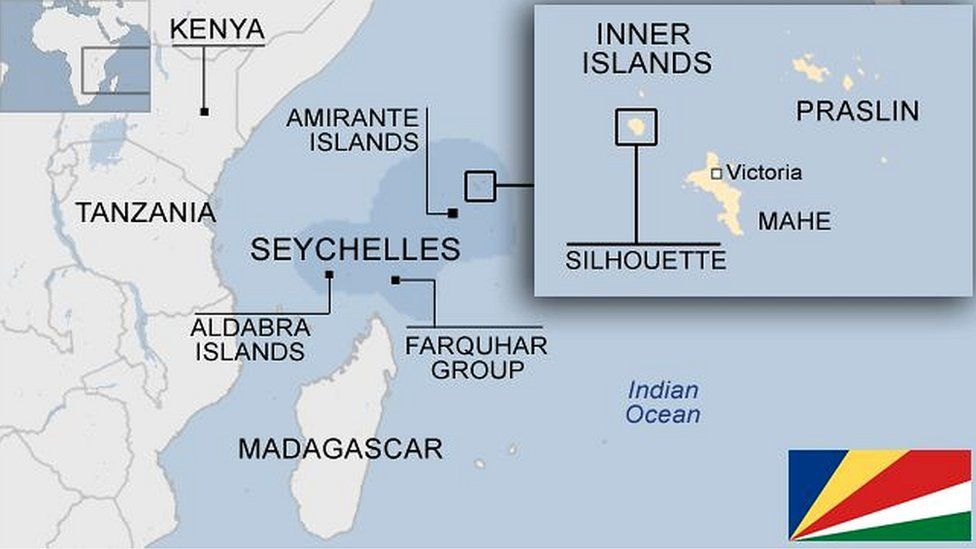
Prime Minister Shri Narendra Modi with President of Seychelles Dr. Patrick Herminie during the State Visit, Victoria, Mahe (27–29 June 2026)
Why in News
Prime Minister Shri Narendra Modi undertook a State Visit to Seychelles from 27–29 June 2026 as the Guest of Honour for the country’s 50th National Day (Golden Jubilee of Independence) celebrations. The visit coincided with the 50th anniversary of India–Seychelles diplomatic relations, during which Prime Minister Shri Narendra Modi and the President of Seychelles, H.E. Dr. Patrick Herminie, unveiled a commemorative logo marking five decades of bilateral ties.
Key Developments
Prime Minister Shri Narendra Modi and President Dr. Patrick Herminie held official talks at the State House in Victoria, Mahe, covering the full spectrum of bilateral relations — health, education, capacity building, digital transformation, sustainable development, social infrastructure, renewable energy, maritime security, and defence. The two leaders also exchanged views on regional and global developments, including challenges in the Indian Ocean Region such as illegal fishing, drug trafficking, and piracy. Both sides expressed satisfaction with progress on projects under India’s Special Economic Package for Seychelles, and Prime Minister Shri Narendra Modi reaffirmed India’s commitment to supporting the development priorities of Seychelles.
Several MoUs and agreements were exchanged across Capacity Building, UPI, Health, Agriculture, Shipping, Space, Extradition, and a Line of Credit worth INR 1,250 crore. Seychelles also announced that it is joining the Coalition for Disaster Resilient Infrastructure (CDRI). Later in the day, Prime Minister Shri Narendra Modi addressed an Extraordinary Sitting of the National Assembly of Seychelles, becoming the first Indian Prime Minister to do so, and called for enhanced parliamentary exchanges between the two democracies. He also met the Leader of Opposition of Seychelles, H.E. Mr. Bernard Georges.
The bilateral trade figure of approximately USD 73 million (2024-25) and the diaspora figures (about 5,000 Persons of Indian Origin and 7,000 Non-Resident Indians) are drawn from the source material and have not been independently verified; they are presented here as reported.
Key Outcomes of the Visit
| Agreement / Outcome | Implementing Body / Detail | Sector |
|---|---|---|
| UPI Deployment | NPCI International Payments Ltd (NIPL) & Central Bank of Seychelles | Digital Payments |
| Umbrella Line of Credit | INR 1,250 crore, extended in rupees | Development Finance |
| Janaushadhi Scheme Export | HLL Lifecare Limited & Ministry of Health, Seychelles | Healthcare |
| New Seychelles National Hospital | Framework MoU for preliminary preparations | Healthcare Infrastructure |
| Extradition Treaty | Legal framework for fugitive extradition | Legal Cooperation |
| Maritime Mobility MoU | Mutual recognition of seafarer training & certification | Maritime Employment |
| Diplomatic Capacity Building | SSIFS & Seychelles MoFAD | Institutional Linkage |
| Space Cooperation MoU | Satellite applications, remote sensing, disaster management | Space |
| Agricultural Research Work Plan (2026-2031) | ICAR & Seychelles Agriculture Department | Agriculture |
| Fast Patrol Vessel ‘PS LESPWAR’ | Built by Goa Shipyard Limited, handed to Seychelles Coast Guard | Defence & Maritime Security |
India also gifted ambulances, utility vehicles, and laser radial boats to support Seychelles’ disaster response, security, and developmental needs. In recognition of his leadership in climate action, Blue Economy promotion, and support for Small Island Developing States, President Dr. Patrick Herminie conferred upon Prime Minister Shri Narendra Modi the ‘Guardian of the Blue Horizon’ — Seychelles’ highest Presidential Distinction. The award explicitly acknowledged India’s global environmental initiatives, including the International Solar Alliance, Mission LiFE, and the International Big Cat Alliance.
Static Background
- Seychelles is an archipelago of 115 islands in the Western Indian Ocean, with its capital Victoria located on Mahe island; it is the smallest country in Africa by population (about 120,000).
- India established diplomatic relations with Seychelles in 1976, the same year Seychelles became independent from the United Kingdom; INS Nilgiri participated in the country’s Independence Day celebrations on 29 June 1976.
- SAGAR (Security and Growth for All in the Region) was articulated by Prime Minister Shri Narendra Modi during his 2015 visit to Seychelles; Vision MAHASAGAR (Mutual and Holistic Advancement for Security and Growth Across Regions) is its expanded 2025 reformulation covering a wider Indian Ocean geography.
- The Information Fusion Centre–Indian Ocean Region (IFC-IOR) is India’s maritime information-sharing hub, established in 2018 at Gurugram, with liaison officers from over twenty countries.
- The Indian Ocean Commission (IOC) is a regional intergovernmental body of five Indian Ocean island states — Comoros, France (Reunion), Madagascar, Mauritius, and Seychelles; India has held Observer status since 2020.
- The Coalition for Disaster Resilient Infrastructure (CDRI) is an India-founded international coalition (2019) promoting disaster-resilient infrastructure development.
Why is Seychelles Strategically Important for India?
- Strategic location: Seychelles lies along key Sea Lanes of Communication and near major maritime chokepoints such as the Mozambique Channel, Bab-el-Mandeb, and the Cape of Good Hope.
- Countering China’s influence: A strong partnership helps India counter China’s ‘String of Pearls’ strategy in the Western Indian Ocean.
- Maritime security cooperation: Seychelles is integrated into India’s Coastal Surveillance Radar Network, with data linked to the IFC-IOR, enhancing maritime domain awareness against piracy, IUU fishing, and drug trafficking.
- SAGAR/MAHASAGAR partner: Seychelles is a key partner in capacity building and sustainable management of its Exclusive Economic Zone, commonly cited at approximately 1.3 million sq km.
- Gateway to Africa: As a member of the African Union and the Indian Ocean Commission, Seychelles serves as a bridge for India’s engagement with East Africa.
The source text cites two different figures for Seychelles’ Exclusive Economic Zone — 1.3 million sq km in one instance and 1.4 million sq km in another. The more commonly cited figure (approximately 1.3 million sq km) has been used above; readers should treat the EEZ size as approximate.
Challenges in India-Seychelles Ties
- The Assumption Island naval project remains stalled over sovereignty concerns within Seychelles.
- Seychelles lacks full capacity to monitor its vast EEZ, leaving it vulnerable to illegal fishing, piracy, and drug trafficking despite Indian assistance.
- Bilateral trade remains modest, constrained by the small Seychellois market and the lack of direct shipping lines.
- Seychelles’ limited administrative and technical workforce can slow implementation of large Indian-funded projects.
- Global supply-chain disruptions, including from the West Asia crisis, have exposed Seychelles’ dependence on external supplies.
Prime Minister Shri Narendra Modi’s State Visit operationalised India’s Vision MAHASAGAR through a model of “Digital and Health Diplomacy,” exporting domestic successes like UPI and the Janaushadhi Scheme rather than relying solely on traditional infrastructure diplomacy. While the visit deepened India’s position as a reliable, non-coercive partner in the Indian Ocean Region, addressing maritime security capacity gaps, limited trade volumes, and the stalled Assumption Island project will be essential to sustaining momentum going forward.
Prelims Pointers
- India-Seychelles diplomatic relations established in 1976, the year of Seychelles’ independence from the UK.
- SAGAR (2015) vs MAHASAGAR (2025) — MAHASAGAR is the expanded version of SAGAR covering a wider Indian Ocean geography.
- IFC-IOR (Information Fusion Centre-Indian Ocean Region) is located at Gurugram, India, established in 2018.
- CDRI (Coalition for Disaster Resilient Infrastructure) was founded by India in 2019; Seychelles joined during this visit.
- NPCI International Payments Ltd (NIPL) is the international arm of India’s NPCI, facilitating UPI’s overseas rollout.
- The Janaushadhi Scheme is India’s flagship generic-medicine affordability programme, now being exported via HLL Lifecare Limited.
- PS LESPWAR is a Fast Patrol Vessel built by Goa Shipyard Limited and gifted to the Seychelles Coast Guard.
- ‘Guardian of the Blue Horizon’ is the highest Presidential Distinction of Seychelles.
- Sushma Swaraj Institute of Foreign Service (SSIFS) is India’s institute for training diplomats.
- ICAR (Indian Council of Agricultural Research) is the nodal Indian agency for the 2026-2031 agricultural research work plan with Seychelles.
- LAMITYE is the biennial joint military exercise between India and Seychelles.
- MILAN is India’s multinational naval exercise, in which Seychelles participates.
- The Indian Ocean Commission (IOC) is a five-member regional body in which India holds Observer status since 2020.
- International Solar Alliance, Mission LiFE, and International Big Cat Alliance are India’s flagship global environmental initiatives cited in the Seychelles award.
Mains Practice Question
“India’s engagement with Seychelles reflects a shift from traditional infrastructure diplomacy towards a model of digital and health diplomacy.” Critically examine this statement in the context of Vision MAHASAGAR and India’s strategic interests in the Indian Ocean Region.
GS Paper 2 · 15 Marks · 250 Words
Practice MCQ
Match List-I (Agreement/Initiative) with List-II (Indian Implementing Agency) during PM Modi’s State Visit to Seychelles, and select the correct answer using the codes given below:
List-I
A. UPI Deployment
B. Janaushadhi Scheme Export
C. Diplomatic Capacity Building
D. Fast Patrol Vessel ‘PS LESPWAR’
List-II
1. Goa Shipyard Limited
2. NPCI International Payments Ltd
3. HLL Lifecare Limited
4. Sushma Swaraj Institute of Foreign Service
- AA-1, B-2, C-3, D-4
- BA-3, B-4, C-1, D-2
- CA-2, B-3, C-4, D-1
- DA-4, B-1, C-2, D-3
Answer: C
UPI deployment was facilitated through NPCI International Payments Ltd (NIPL); the Janaushadhi Scheme export was executed via HLL Lifecare Limited; diplomatic capacity building was institutionalised through the Sushma Swaraj Institute of Foreign Service (SSIFS); and the Fast Patrol Vessel ‘PS LESPWAR’ was manufactured by Goa Shipyard Limited.
Article 02
IAF Gets Final Operational Clearance of Indigenous Netra AEW&C System
GS Paper 3 — Science & Technology; Indigenisation of Defence Technology
Why in News
India’s indigenous Netra Airborne Early Warning and Control (AEW&C) system has received Final Operational Clearance (FOC), marking its readiness for full operational use by the Indian Air Force (IAF). The Defence Research & Development Organisation (DRDO) formally handed over the FOC certificate at a ceremony in Bengaluru on 25 June 2026, presided over by Deputy Chief of the Air Staff Air Marshal Awadhesh Kumar Bharti. The Initial Operational Clearance (IOC) had been granted in 2017.
Key Developments
The ceremony was attended by former Chief of the Air Staff Air Chief Marshal RKS Bhadauria (Retd), former DRDO Chairman Dr S Christopher, and senior DRDO scientists including Outstanding Scientist and Director, Centre for Air Borne Systems (CABS), Smt P Santhya. In his address, the Deputy Chief of the Air Staff highlighted the system’s operational utilisation and reliability during Operation Sindoor and the Balakot strikes, and emphasised that indigenous technologies give the services the flexibility to adapt the system to evolving war scenarios.
Raksha Mantri Shri Rajnath Singh stated that the achievement of FOC marks not only a technological milestone but also a strategic advancement in strengthening India’s airborne surveillance and command-and-control capabilities. Defence Secretary and Chairman DRDO Shri Rajesh Kumar Singh congratulated the team for achieving the milestone.
About Netra AEW&C
- Netra is India’s first indigenously developed airborne surveillance and battle-management system, developed by the Centre for Airborne Systems (CABS) under DRDO.
- India is the 5th country — after the United States, Russia, Israel, and China — to develop an indigenous AEW&C capability.
- The system is integrated on the Brazilian Embraer EMB-145I aircraft platform, functioning as an “eye in the sky” by detecting, tracking, identifying, and monitoring airborne and maritime targets.
- Netra is equipped with an Active Electronically Scanned Array (AESA) radar, Identification Friend or Foe (IFF) system, mission computer, secure communication networks, Electronic Support Measures (ESM), Communication Support Measures (CSM), and self-protection systems.
IOC vs FOC: Clearance Stages
| Clearance Stage | Year Granted | Significance |
|---|---|---|
| Initial Operational Clearance (IOC) | 2017 | Permits limited operational use while trials and validation continue |
| Final Operational Clearance (FOC) | 2026 | Confirms the system meets all Air Staff Qualitative Requirements and is fully combat-ready |
Historical Background
India’s airborne situational awareness programme began in the early 1980s under Project Guardian, using a modified HS-748 Avro aircraft as the Airborne Surveillance Platform. The programme suffered a major setback after the 1999 Arakkonam crash and was later revived in 2004. Netra proved its operational value during the 2019 Balakot strikes and Operation Sindoor in 2025, enhancing the IAF’s surveillance, situational awareness, and network-centric operations.
Future Expansion
The Cabinet Committee on Security (CCS) has approved six more upgraded Netra Mk-1A systems, while the future Netra Mk-2 programme on Airbus A321 aircraft is expected to further strengthen India’s airborne surveillance, network-centric warfare, and defence self-reliance capabilities.
The Embraer EMB-145I airframe used for the existing Netra Mk-1 fleet is no longer in production; reports indicate DRDO and the IAF are exploring secondary-market availability for future Mk-1A airframes. This detail is sourced externally and not part of the original press release, and is included here as background context pending editorial confirmation.
Since Netra is developed indigenously, India retains greater control over its software, source codes, interface documents, and upgrade pathways, enabling confidential capability enhancement without dependence on foreign manufacturers. AEW&C systems act as force multipliers in modern warfare, providing early warning, real-time battlefield awareness, and airborne command-and-control support — making the FOC milestone significant both technologically and strategically for India’s defence self-reliance journey.
Prelims Pointers
- Netra is Sanskrit for ‘eye’; the system is nicknamed India’s “eye in the sky.”
- CABS (Centre for Airborne Systems), located in Bengaluru, is DRDO’s nodal agency for the Netra programme.
- Netra is mounted on the Embraer EMB-145I aircraft platform, of Brazilian origin.
- AESA radar (Active Electronically Scanned Array) steers its beam electronically instead of mechanically rotating, enabling faster and more flexible scanning.
- IOC for Netra was granted in 2017; FOC was granted on 25 June 2026.
- India is the 5th country with indigenous AEW&C capability, after the United States, Russia, Israel, and China.
- Netra played an operational role in the 2019 Balakot strikes and Operation Sindoor (2025).
- The future Netra Mk-2 programme will be mounted on the Airbus A321 aircraft platform.
- The Cabinet Committee on Security (CCS) approved six additional Netra Mk-1A systems.
- ESM (Electronic Support Measures) and CSM (Communication Support Measures) are systems that detect and analyse enemy radar and communication signals.
- IFF stands for Identification Friend or Foe, used to distinguish allied from hostile aircraft.
- India’s airborne surveillance programme originated from ‘Project Guardian’ in the early 1980s, using a modified HS-748 Avro aircraft.
- The 1999 Arakkonam crash caused a major setback to India’s airborne surveillance programme, which was revived in 2004.
Mains Practice Question
Discuss the strategic significance of indigenous Airborne Early Warning and Control (AEW&C) systems for India’s national security. In this context, examine the journey of the Netra programme from Project Guardian to Final Operational Clearance.
GS Paper 3 · 15 Marks · 250 Words
Practice MCQ
Consider the following statements regarding the Netra AEW&C system:
Assertion (A): The Netra AEW&C system significantly enhances India’s network-centric warfare capability.
Reason (R): Netra is built on an indigenously developed AESA radar, giving India full control over its source code and upgrade pathways without dependence on foreign manufacturers.
Select the correct answer using the codes below:
- ABoth A and R are true, and R is the correct explanation of A
- BBoth A and R are true, but R is not the correct explanation of A
- CA is true, but R is false
- DA is false, but R is true
Answer: A
Both statements are true, and the Reason correctly explains the Assertion. Netra’s indigenous development, including its AESA radar and full source-code control, directly enables confidential capability enhancement and seamless integration with India’s network-centric warfare architecture, such as the Integrated Air Command and Control System.
Article 03
Union Minister Launches AI-Enabled Rural Internal Audit Portal
GS Paper 2 — E-Governance, Transparency and Accountability
Why in News
Union Minister for Rural Development Shri Shivraj Singh Chouhan launched the ‘Rural Internal Audit Portal’ during the Rashtriya Gramin Vikas Sammelan at Pusa Campus, New Delhi. The AI-enabled portal is a first-of-its-kind unified digital platform for end-to-end management of internal audits, covering both risk-based and compliance audits, marking a significant step towards transparency, accountability, and technology-driven governance in the Ministry of Rural Development.
Key Developments
Conceived by the Office of the Chief Controller of Accounts (CCA), Ministry of Rural Development, and developed in collaboration with the National Informatics Centre (NIC), the Portal integrates audit planning, execution, reporting, compliance management, monitoring, and analytics within a single digital ecosystem. A pilot implementation was launched in Chandauli district, Uttar Pradesh, on 1 April 2025; following its successful completion, the Portal was progressively expanded, and all core modules became operational from October 2025.
Internal Audit vs Statutory Audit
| Aspect | Internal Audit | Statutory / CAG Audit |
|---|---|---|
| Nature | Management tool for self-assessment of internal controls | External constitutional oversight |
| Authority | Office of Chief Controller of Accounts (CCA), Ministry-level | Comptroller and Auditor General, under Article 148 |
| Scope | Risk-based and compliance audits of programme implementation | Constitutional audit of all Union and State accounts |
Key Features of the Portal
- End-to-end digital audit management: online handling of user registration, audit planning, engagement preparation, audit memoranda, observations, reports, approvals, and record management.
- Action Taken Reports and Para Settlement: auditees submit Action Taken Reports (ATRs) with supporting documents; auditors digitally settle audit paras based on compliance achieved.
- Centralized Audit Repository: maintains comprehensive digital records of audits, observations, reports, and compliance responses for institutional learning and trend analysis.
- Role-Based Governance Framework: dedicated access for auditors, auditees, approving authorities, programme divisions, State Governments, district-level users, and certified internal auditors.
- Real-Time Monitoring and Analytics: interactive dashboards on audit coverage, pending observations, ATR compliance, financial irregularities, and performance trends.
- Geospatial Map View Module: visualises audit activities across India and identifies audit units that have never been audited, enabling targeted, risk-based interventions.
Technology and Security Architecture
The Portal is hosted with technical support from NIC and incorporates Git-based version control and Continuous Integration/Continuous Deployment (CI/CD) workflows, with separate Development, User Acceptance Testing, and Production environments. The security framework includes role-based access control, centralized monitoring, secure API-based integrations, automated exception handling, complete audit logging, periodic security assessments, daily backups, and disaster recovery protocols.
National Recognition
The Office of the Controller General of Accounts (CGA), Ministry of Finance, Department of Expenditure, issued an Office Memorandum dated 9 December 2025, conveying in-principle approval for implementation of the Internal Audit Module across all Principal Chief Controller of Accounts (Pr.CCA), Chief Controller of Accounts (CCA), and Controller of Accounts (CA) offices of Civil Ministries and Departments — recognising the Portal as the first unified digital platform for end-to-end management of both risk-based and compliance audits.
The Office Memorandum number cited in the source (No. I-104/3/2024-ITD-CGA/E-19878/621A) is reproduced as provided and has not been independently verified.
The Rural Internal Audit Portal marks a shift from a fragmented, paper-intensive audit process to a transparent, data-driven management system, and from a compliance-focused exercise into a strategic management tool supporting programme effectiveness. Its planned pan-India adoption across Civil Ministries positions it as a benchmark for digital public financial management, though future success will depend on the depth of AI-driven risk-scoring integration and capacity building among field-level auditors.
Prelims Pointers
- The Rural Internal Audit Portal was launched at the Rashtriya Gramin Vikas Sammelan, Pusa Campus, New Delhi.
- It was conceived by the Office of the Chief Controller of Accounts (CCA), Ministry of Rural Development, and developed with the National Informatics Centre (NIC).
- CGA (Controller General of Accounts) is the apex accounting authority under the Department of Expenditure, Ministry of Finance — distinct from the constitutional CAG (Comptroller and Auditor General) under Article 148.
- The pilot implementation was launched in Chandauli district, Uttar Pradesh, on 1 April 2025.
- All core modules of the Portal became operational from October 2025.
- The Portal covers two audit types: risk-based audits (targeting high-vulnerability areas) and compliance audits (checking rule adherence).
- The Map View Module provides geospatial visualisation of audit activities and identifies units that have never been audited.
- ATR stands for Action Taken Report — the auditee’s formal response to audit observations.
- The CGA Office Memorandum of December 2025 extended the Portal’s framework to all Pr.CCA, CCA, and CA offices across Civil Ministries.
- The technology stack includes Git-based version control and CI/CD workflows, with separate Development, UAT, and Production environments.
- ‘Para settlement’ refers to the formal closure of an audit observation once compliance has been verified.
- Role-based access on the Portal is provided to auditors, auditees, approving authorities, State Governments, district users, and certified internal auditors.
- CCA (Chief Controller of Accounts) is one tier within the Pr.CCA/CCA/CA accounting hierarchy under the Ministry of Finance.
Mains Practice Question
Examine how digital audit platforms such as the Rural Internal Audit Portal can transform internal audit from a compliance-focused exercise into a strategic governance tool. What challenges might hinder their pan-India adoption?
GS Paper 2 · 15 Marks · 250 Words
Practice MCQ
Which of the following statements regarding the Rural Internal Audit Portal is NOT correct?
- AIt was developed in collaboration with the National Informatics Centre.
- BIts pilot was first implemented in Chandauli district, Uttar Pradesh.
- CIt is administered by the Comptroller and Auditor General of India under Article 148 of the Constitution.
- DIts Map View Module identifies audit units that have never been audited.
Answer: C
The Rural Internal Audit Portal is an internal audit mechanism conceived by the Office of the Chief Controller of Accounts (CCA), Ministry of Rural Development, and is distinct from the Comptroller and Auditor General (CAG), which is a constitutional authority under Article 148 conducting external statutory audits. The CGA (Controller General of Accounts), not the CAG, issued the Office Memorandum extending this framework to other Civil Ministries.
Article 04
World’s Fastest Supercomputer 2026: China’s LineShine Tops TOP500 Ranking
GS Paper 3 — Science & Technology; Awareness in IT and Computers
Why in News
China’s LineShine supercomputer has topped the latest TOP500 ranking, replacing El Capitan of the United States as the world’s fastest publicly ranked supercomputer. Frontier ranked third and Aurora ranked fourth, both from the United States, while JUPITER Booster from Germany completed the top five.
Key Developments
LineShine is located at the National Supercomputing Centre in Shenzhen and has achieved a performance of around 2.19 exaflops — meaning it can perform over two quintillion calculations per second. Its debut expands the global exascale club from four to five systems and marks the first time Asia, North America, and Europe simultaneously host HPL exaflop-class supercomputers.
LineShine runs entirely on general-purpose Central Processing Units (CPUs) and is the first TOP500 system to cross two exaflops using a CPU-only architecture, unlike many AI-focused systems that rely heavily on Graphics Processing Units (GPUs). Its design avoids reliance on the most advanced foreign AI chips, a choice tied to ongoing U.S. export restrictions on advanced semiconductor technology. China had not submitted systems to the TOP500 since 2023, a period marked by tightening export controls affecting advanced chip technology and manufacturing tools.
Top 5 TOP500 Systems (June 2026)
| Rank | System | Country | Architecture |
|---|---|---|---|
| 1 | LineShine | China | CPU-only |
| 2 | El Capitan | United States | AMD CPU + GPU-accelerated |
| 3 | Frontier | United States | AMD CPU + GPU-accelerated |
| 4 | Aurora | United States | Intel CPU + GPU-accelerated |
| 5 | JUPITER Booster | Germany | GPU-accelerated |
About TOP500 and the HPL Benchmark
- The TOP500 list has been published twice a year since 1993, ranking the world’s most powerful supercomputers using the High Performance LINPACK (HPL) benchmark.
- HPL measures how quickly machines solve complex, dense systems of linear equations — a standardised stress test for raw computing speed.
- An exaflop equals one quintillion (1018) floating-point operations per second.
- Green500 is a companion ranking measuring energy efficiency (FLOPS per watt) of the same systems, distinct from TOP500’s focus on raw speed.
Applications and Significance
LineShine is used for advanced tasks such as AI-assisted weather forecasting, rainfall prediction across East Asia, and atomic-level simulations of magnetic materials. The achievement reflects the growing merger of traditional High-Performance Computing (HPC) and Artificial Intelligence, as future scientific research increasingly requires systems handling both numerical simulations and machine-learning workloads. China’s last #1 TOP500 ranking before LineShine was with Sunway TaihuLight in 2017.
News-aggregator sidebar content unrelated to the article’s substance (promotional links, donation banners) has been excluded from this analysis, per standard editorial practice.
The idea of a single “fastest supercomputer” has become harder to defend without caveats. TOP500’s HPL methodology rewards structured scientific computation, but large technology companies now build AI clusters optimised for neural networks that often do not appear in official rankings at all. LineShine can therefore claim the top position on a recognised list while sitting outside the most relevant conversation about cutting-edge AI performance — a gap that is becoming increasingly significant as HPC and AI workloads converge.
Prelims Pointers
- LineShine, installed at the National Supercomputing Centre in Shenzhen, China, topped the June 2026 TOP500 ranking.
- TOP500 has been published biannually since 1993, ranking systems via the High Performance LINPACK (HPL) benchmark.
- HPL measures the speed of solving dense systems of linear equations — a standardised computing speed stress test.
- An exaflop equals one quintillion (1018) floating-point operations per second.
- LineShine achieved approximately 2.198 Exaflop/s, the first CPU-only system to cross two exaflops on HPL.
- El Capitan (Lawrence Livermore National Laboratory, USA) was displaced to the world’s #2 position.
- Frontier (Oak Ridge, USA) ranked #3; Aurora (Argonne, USA) ranked #4 on the June 2026 list.
- JUPITER Booster (Germany) ranked #5, remaining Europe’s only exascale-class system.
- China’s last #1 TOP500 ranking before LineShine was Sunway TaihuLight, in 2017.
- China had not submitted systems to TOP500 since 2023, prior to LineShine’s debut.
- LineShine uses domestically designed CPUs, avoiding dependence on foreign GPU technology amid U.S. export controls.
- LineShine’s applications include AI-assisted weather forecasting and atomic-level simulation of magnetic materials.
- Green500 is the companion TOP500 ranking that measures energy efficiency (FLOPS per watt), distinct from raw-speed ranking.
Mains Practice Question
The growing divergence between official supercomputer rankings such as TOP500 and real-world artificial intelligence computing capability raises questions about how “computing power” should be measured. Discuss, with reference to recent developments in global supercomputing.
GS Paper 3 · 15 Marks · 250 Words
Practice MCQ
Consider the following statement: “LineShine, the supercomputer that topped the June 2026 TOP500 ranking, relies primarily on Graphics Processing Units (GPUs) for its computational performance.” Is this statement correct?
- ACorrect, as all top-ranked TOP500 systems use GPU acceleration
- BIncorrect, as LineShine runs entirely on general-purpose CPUs, without GPUs
- CCorrect, as LineShine uses a hybrid CPU-GPU configuration like El Capitan
- DIncorrect, as LineShine relies solely on quantum processing units
Answer: B
LineShine is distinctive precisely because it runs entirely on general-purpose CPUs and is the first TOP500 system to exceed two exaflops using a CPU-only architecture, unlike most top-ranked systems (El Capitan, Frontier, Aurora) which rely on GPU acceleration.
Article 05
On the Delay in the India-U.S. Trade Deal
GS Paper 2 — Bilateral Agreements; International Relations
Why in News
India and the United States, in February 2025, announced they would work towards a comprehensive Bilateral Trade Agreement (BTA) to be finalised by fall 2025. In February 2026, the two sides instead signed a framework agreement for an interim trade deal, targeted for implementation by April–May 2026. Neither deal has come to pass, and the negotiations remain mired in legal and procedural uncertainty.
Timeline of Negotiations
| Date | Development |
|---|---|
| February 2025 | India and U.S. announce intent to finalise a comprehensive BTA by fall 2025 |
| April 2025 | U.S. President announces ‘Liberation Day’ reciprocal tariffs, then pauses them for 90 days |
| July–August 2025 | U.S. raises tariffs on Indian imports to 25%, then 50% (the latter as a penalty for Russian oil imports); negotiations freeze |
| October 2025 | Talks resume after a months-long freeze |
| February 2026 | India and U.S. sign a framework for an interim trade agreement; target implementation April–May 2026 |
| Soon after Feb 2026 | U.S. Supreme Court invalidates the reciprocal tariff system under IEEPA |
| March 2026 | USTR initiates two Section 301 investigations covering India and other trade partners |
| Early June 2026 | U.S. proposes a 12.5% tariff on 54 countries, including India, under the forced-labour investigation |
| 23–24 June 2026 | USTR Jamieson Greer visits India; no deadlines emerge |
| 7 July 2026 | Final hearing on India’s representations regarding the forced-labour tariff investigation |
| Mid-July 2026 | Findings of the excess manufacturing capacity investigation expected |
Why Was the BTA Delayed?
Despite several rounds of talks intensifying after the April 2025 ‘Liberation Day’ tariff announcement, India and the U.S. could not finalise even the first tranche of the BTA. Key sticking points were India’s reluctance to open up its agricultural and dairy sectors, and its continued purchase of oil from Russia. Successive U.S. tariff hikes — to 25% and then 50%, the latter explicitly as a penalty for Russian oil imports — froze negotiations for several months before talks resumed in October 2025.
The Interim Deal and Its Delay
Under the February 2026 framework, the U.S. was to reduce total tariffs on Indian imports to 18%, providing India a competitive advantage over its trade competitors, with both sides committing to preferential market access in “sectors of respective interest.” Commerce Minister Shri Piyush Goyal had expressed confidence that the deal would be completed by April, or at the latest by early May 2026.
Soon after the framework was announced, the U.S. Supreme Court invalidated the reciprocal tariff system itself, ruling that the International Emergency Economic Powers Act (IEEPA) did not authorise such tariffs — removing a major foundation on which the negotiations had taken place. Mr. Trump then announced a flat 10% tariff on imports from all countries under the Trade Act of 1974, intended to last 150 days up to 24 July; the U.S. Court of International Trade deemed this illegal as well, though an appeals court stayed that order.
Fresh Investigations Adding Uncertainty
- In March 2026, the Office of the U.S. Trade Representative (USTR) initiated two Section 301 investigations under the Trade Act of 1974.
- The first, against 16 economies including India, examines whether excess manufacturing capacity is being used to export to the U.S. in a manner harming American businesses.
- The second, against 60 countries including India, examines whether countries have taken “sufficient steps” to prohibit imports of goods produced with forced labour.
- In early June 2026, the U.S. proposed a 12.5% tariff on imports from 54 countries, including India, for having “failed to impose and effectively enforce” forced-labour import prohibitions — this does not allege that India itself uses forced labour, but that it has not stopped imports of goods made using forced labour elsewhere.
India’s Stance
India remains committed to finalising a trade deal but insists on receiving a comparative tariff advantage over its competitors, as agreed in the February 2026 framework. For this, the Section 301 investigations must be completed and tariffs on various countries decided. Meanwhile, the two sides continue negotiating non-tariff aspects: enhanced market access, digital trade, supply chain resilience, reduction of non-tariff barriers, and cooperation in strategic sectors.
The India-U.S. trade negotiation illustrates how domestic legal challenges within a trade partner’s own judicial system — here, the U.S. Supreme Court’s invalidation of IEEPA-based tariffs — can disrupt international economic diplomacy even after a framework has been agreed. With two parallel Section 301 investigations still pending and key findings expected only by mid-July 2026, the timeline for a finalised BTA remains uncertain, underscoring the need for India to diversify its trade partnerships while continuing engagement with the U.S.
Prelims Pointers
- India-U.S. Bilateral Trade Agreement (BTA) negotiations were announced in February 2025; original target was fall 2025.
- ‘Liberation Day’ reciprocal tariffs were announced by the U.S. President in April 2025, then paused for 90 days.
- IEEPA (International Emergency Economic Powers Act) was the legal basis for reciprocal tariffs, later invalidated by the U.S. Supreme Court.
- An interim trade framework was signed in February 2026, with a missed target implementation of April–May 2026.
- Under the interim framework, the U.S. was to reduce tariffs on Indian imports to 18%.
- The Trade Act of 1974 is the legal basis for the flat 10% tariff Trump imposed after the Supreme Court invalidated reciprocal tariffs.
- Section 301 of the Trade Act of 1974 is the basis for the two fresh U.S. investigations into India and other trade partners.
- The forced-labour investigation covers 60 countries including India; a 12.5% tariff has been proposed on 54 of them.
- The excess manufacturing capacity investigation covers 16 economies including India.
- India’s key sticking points in BTA talks: reluctance to open agriculture/dairy sectors, and continued Russian oil imports.
- USTR (United States Trade Representative) is the U.S. institutional counterpart to India’s Ministry of Commerce and Industry.
- U.S. tariffs on Indian imports were raised to 50% in 2025, partly as a penalty linked to Russian oil purchases.
- The final hearing on India’s forced-labour tariff representations is scheduled for 7 July 2026.
- Findings of the excess-capacity investigation are expected by mid-July 2026.
Mains Practice Question
Trace the evolution of India-U.S. trade negotiations since 2025 and analyse how domestic legal and institutional developments within the United States have shaped the trajectory of the proposed Bilateral Trade Agreement.
GS Paper 2 · 15 Marks · 250 Words
Practice MCQ
Consider the following statements regarding the India-U.S. trade negotiations:
1. The reciprocal tariff system was invalidated by the U.S. Supreme Court on the grounds that the IEEPA did not authorise such tariffs.
2. The Section 301 investigations into India cover both excess manufacturing capacity and forced-labour-linked imports.
3. India has accepted the proposed 18% tariff reduction as final under the February 2026 framework.
Which of the statements given above is/are correct?
- A1 and 2 only
- B2 and 3 only
- C1 and 3 only
- D1, 2 and 3
Answer: A
Statements 1 and 2 are correct: the U.S. Supreme Court invalidated reciprocal tariffs on IEEPA grounds, and the two Section 301 investigations indeed cover excess manufacturing capacity and forced-labour-linked imports respectively. Statement 3 is incorrect — India has not accepted the 18% tariff figure as final; it continues to insist that the Section 301 investigations conclude before the comparative tariff advantage promised in the February 2026 framework is treated as settled.
Article 06
Has RBI Changed the Rules for Scam Compensation?
GS Paper 3 — Indian Economy; Banking Regulation
Why in News
The Reserve Bank of India (RBI) has issued fresh rules to protect customers from scam transactions where they lose money to fraudsters and cyberattacks. These directions amend the RBI’s 2017 circular on “Limiting Liability of Customers in Unauthorised Electronic Banking Transactions.” The new rules are a pilot for now, effective from 1 January 2027, and will run for one year, with possible extension.
What Has Changed?
The 2017 framework only made banks liable to compensate customers when transactions were not authorised by the customer at all, such as in a successful hacking incident. The new rules introduce the concept of “fraudulent Electronic Banking Transactions (EBTs)” — covering transactions executed by a third party using credentials obtained through fraudulent means, or executed by the customer under coercion or duress, such as “digital arrest” scams where victims are pressured into paying money, or cases where one-time passcodes (OTPs) are fraudulently stolen.
Customers who ignore fraud-signal warnings, such as alerts on a UPI PIN screen flagging a transaction as a possible scam, remain ineligible for compensation. In cases of third-party hacks, the reporting timeline has been increased from three working days to five calendar days. As under the 2017 rules, if any amount is deducted after a customer reports fraud, the customer bears no liability and is entitled to a full reversal.
2017 Framework vs 2026 Amended Framework
| Aspect | 2017 Framework | 2026 Amended Framework |
|---|---|---|
| Scope | Only unauthorised transactions (e.g. hacking) | Unauthorised transactions + coerced/credential-theft fraud (‘fraudulent EBTs’) |
| Reporting Window | 3 working days (for third-party hacks) | 5 calendar days |
| Draft Effective Date (March 2026 draft) | — | 1 July 2026 (proposed) |
| Final Effective Date | — | 1 January 2027 (pilot, one year) |
| Settlement Timeline | Not specified in source | 45–60 days (60 days for international transactions) |
Compensation Mechanics
For losses up to ₹50,000, individual victims can claim 85% of the amount as compensation, only once in their lifetime, capped at ₹25,000. This means that for any loss amount from roughly ₹29,412 up to ₹50,000, customers receive a flat ₹25,000 — since 85% of any value above that threshold would exceed the cap. Roughly three-fourths of the compensation amount is paid by the RBI itself, while the customer’s bank and the beneficiary bank share the remaining cost equally. A customer must report to the cybercrime helpline (1930) within five days to be eligible. Scams above ₹50,000 are not covered under this framework at all.
Negligence and Liability
Banks retain discretion to waive customer liability even in cases of negligence. If a customer has not kept their latest phone number or email address registered with the bank, this counts as negligence, since the bank would then be unable to send fraud alerts to the correct contact.
Concerns Raised
Dvara Research, a non-profit financial inclusion think tank, has noted that Indians encounter fraud attempts multiple times a week and that these attempts are growing more sophisticated, meaning customers may fall for them more than once. It has argued that vulnerable customers should not be expected to meet high standards of attentiveness, and that under the Indian Contract Act, contracts executed under information asymmetry, external influence, or fraudulent pretext are voidable — suggesting that bundling such different transaction types under a common ‘authorised transaction’ definition may diminish their fundamental legal distinction.
The amended framework represents a meaningful expansion of customer protection by formally recognising coercion-based and credential-theft fraud as compensable, beyond the narrower 2017 scope of purely unauthorised transactions. However, the ₹50,000 loss cap leaves higher-value scams entirely uncovered, and the pilot’s one-year, discretionary nature raises questions about its long-term permanence and the adequacy of protection for India’s most vulnerable digital banking customers.
Prelims Pointers
- The new RBI rules amend the 2017 circular on ‘Limiting Liability of Customers in Unauthorised Electronic Banking Transactions.’
- ‘Fraudulent Electronic Banking Transactions (EBTs)’ is the new concept covering coerced and credential-theft fraud, not just unauthorised transactions.
- Compensation: 85% of the loss for amounts up to ₹50,000, capped at ₹25,000 — meaning losses between roughly ₹29,412 and ₹50,000 all yield a flat ₹25,000.
- Compensation under this framework is available only once in a customer’s lifetime.
- Funding split: roughly 75% (three-fourths) by RBI, with the remainder split equally between the customer’s bank and the beneficiary bank.
- The reporting window for third-party hack cases has been extended from 3 working days (2017) to 5 calendar days (2026).
- Customers must report to the cybercrime helpline (1930) within five days to remain eligible for compensation.
- The pilot framework takes effect from 1 January 2027 and runs for one year.
- The March 2026 draft had proposed a 1 July 2026 effective date, later pushed to 1 January 2027 in the final rules.
- Settlement timelines were extended in the final rules to 45–60 days, with 60 days applying to international transactions.
- ‘Digital arrest’ scams involve coercing victims into paying money through fake law-enforcement impersonation.
- Scams above ₹50,000 are not covered at all under this compensation framework.
- A registered but outdated phone number or email address with the bank counts as customer negligence under the new rules.
Mains Practice Question
Examine the key changes introduced by RBI’s revised framework on scam compensation. Do you think the ₹50,000 loss cap and one-time compensation limit adequately address the rising sophistication of digital financial fraud in India?
GS Paper 3 · 15 Marks · 250 Words
Practice MCQ
Under RBI’s revised scam compensation framework, a customer loses ₹40,000 to a fraudulent transaction and reports it within the eligible window. What is the maximum compensation they can claim?
- A₹40,000 (full reimbursement)
- B₹20,000 (50% of the loss)
- C₹25,000 (the maximum cap, since 85% of ₹40,000 exceeds it)
- DNo compensation, as the loss exceeds ₹50,000
Answer: C
Customers can claim 85% of their loss, capped at ₹25,000, for losses up to ₹50,000. Since 85% of ₹40,000 is ₹34,000 — which exceeds the ₹25,000 cap — the customer receives the flat maximum of ₹25,000, not the full 85% figure.
Article 07
Why More Medicines Will Now Have QR Codes on Their Packets
GS Paper 2 — Health; Government Policies and Interventions
Why in News
The Centre has mandated that all vaccines, antimicrobials, narcotics and addictive drugs, and anti-cancer drugs carry a bar code or QR code to enable tracking of each vial or blister pack of the medicine. This track-and-trace mechanism allows regulators and manufacturers to follow the entire journey of every unit of the product, from the manufacturing plant to the retail store. It is already applicable to 300 top drug brands, including the gastric reflux tablet Aciloc and fever medicines like Calpol.
Implementation Timeline
| Drug Category | Deadline |
|---|---|
| 300 top drug brands (e.g. Aciloc, Calpol) | Already applicable |
| Vaccines, narcotics, anti-cancer drugs | By July 2027 |
| Antimicrobials | By July 2028 |
How the Tracking System Works
In addition to a unique identification number for each blister pack or vial, the QR code or bar code must carry the brand name and generic name of the drug, the manufacturer’s name and address, batch number, dates of manufacturing and expiry, and the manufacturing licence number. While most drugs already carry this information on their packaging, the QR-code-based system additionally requires manufacturers, wholesalers, distributors, and retailers to log these products on specialised track-and-trace platforms. Since each unit carries a unique code that cannot be re-registered once logged, the mechanism makes both AI-generated counterfeit codes and refill-and-resell fraud using original packaging significantly more difficult.
Why Is It Needed?
The primary aim is to prevent counterfeiting, which typically occurs either by releasing products with no active ingredient into the market or by diluting a drug to increase quantities for sale. The track-and-trace mechanism helps regulators identify whether a product was contaminated at the source — the manufacturing plant — or tampered with later in the supply chain. The ability to track every unit also means regulators and companies know exactly where to find their products in case of a recall. The use of this mechanism to track expensive cancer drugs is particularly significant, given past instances where used vials were refilled with other substances and sold to desperate patients — including a documented ring that counterfeited the cancer immunotherapy drug Keytruda.
Implementation Challenges
- Logging delays: if a genuine product’s logging is delayed and a counterfeit gets logged first, the genuine drug may itself appear as counterfeit in the system.
- Cost burden: companies must build mechanisms to generate unique codes and maintain tracking platforms, which is a significant expense, especially for smaller manufacturers.
- Since many Schedule H1 drugs are ‘essential’ medicines under price control, smaller companies may struggle to absorb these costs without government support or some price flexibility.
Impact on Regulatory Oversight
The mechanism is also intended to improve the maturity level of India’s drug regulator as benchmarked by the World Health Organization, which rates regulators based on drug-approval processes, surveillance and testing mechanisms, and recall procedures. For vaccines, the Indian regulator is already at WHO Maturity Level 3 — the second-best tier — and making each vaccine unit traceable is a step towards the highest tier, Maturity Level 4. A higher maturity level makes it easier for medicines from a country to gain acceptance in international markets, as their quality is perceived as more trustworthy.
The phased QR-code mandate — already covering 300 top brands and expanding to vaccines, narcotics, and anti-cancer drugs by 2027 and antimicrobials by 2028 — reflects a broader push to strengthen India’s pharmaceutical regulatory architecture and curb counterfeiting, particularly for high-value and life-saving drugs. Its success will depend on addressing the cost burden for smaller manufacturers of price-controlled essential medicines and ensuring real-time, delay-free logging across the supply chain.
Prelims Pointers
- The track-and-trace QR/bar code mandate covers vaccines, antimicrobials, narcotics and addictive drugs, and anti-cancer drugs.
- The mechanism is already applicable to 300 top drug brands, such as Aciloc and Calpol.
- Deadline: vaccines, narcotics, and anti-cancer drugs by July 2027; antimicrobials by July 2028.
- The QR/bar code must carry: brand name, generic name, manufacturer details, batch number, manufacturing/expiry dates, and manufacturing licence number.
- The WHO Global Benchmarking Tool rates national drug regulators on a Maturity Level scale from 1 (lowest) to 4 (highest).
- India’s vaccine regulation currently stands at WHO Maturity Level 3, the second-highest tier; the goal is Maturity Level 4.
- The Keytruda counterfeiting case, investigated by The Indian Express, is cited as an example of cancer-drug vial refilling fraud.
- Schedule H1 is a drug category under the Drugs and Cosmetics Rules requiring special record-keeping; many such drugs are price-controlled ‘essential’ medicines.
- Two main counterfeiting methods targeted: (a) zero active ingredient products, (b) diluted/under-dosed products.
- A unique code per unit prevents re-registration of the same code, blocking refill-and-resell fraud using original packaging.
- A higher WHO regulatory maturity level eases international market acceptance of a country’s pharmaceutical exports.
- A key implementation challenge is that logging delays can cause genuine products to be misflagged as counterfeit.
- Track-and-trace platforms require manufacturers, wholesalers, distributors, and retailers to digitally log products at each supply-chain stage.
- Cost of implementation is a key challenge, particularly for smaller manufacturers producing price-controlled essential drugs.
Mains Practice Question
Discuss the significance of the track-and-trace mechanism for medicines in curbing pharmaceutical counterfeiting in India. What challenges does its phased implementation present, particularly for smaller manufacturers of price-controlled essential drugs?
GS Paper 2 · 15 Marks · 250 Words
Practice MCQ
Match List-I (Drug Category) with List-II (Implementation Deadline for QR/Bar Code Mandate) and select the correct answer using the codes given below:
List-I
A. Top 300 drug brands
B. Vaccines, narcotics, anti-cancer drugs
C. Antimicrobials
List-II
1. By July 2028
2. Already applicable
3. By July 2027
- AA-1, B-2, C-3
- BA-2, B-3, C-1
- CA-3, B-1, C-2
- DA-2, B-1, C-3
Answer: B
The QR/bar code mandate is already applicable to the top 300 drug brands; vaccines, narcotics, and anti-cancer drugs must comply by July 2027; and antimicrobials have the latest deadline of July 2028, reflecting a phased rollout prioritising the highest-risk drug categories first.