

Content
- IMEC is caught between commerce and geopolitics
- Orbital rivalry — the challenge of China’s space power
IMEC is caught between commerce and geopolitics
Source: The Hindu | Relevance: The Iran conflict has violently exposed global choke-point dependence, making IMEC simultaneously more urgent and more fragile — directly relevant to GS-2 (IR), GS-3 (Infrastructure, Energy Security), Essay, and Interview.
1
Issue in Brief / Central Argument
- The ongoing Iran-Israel-US conflict has shattered the myth that military superiority alone guarantees victory, while simultaneously exposing how dangerously the global economy depends on a handful of narrow maritime passages — the Strait of Hormuz being the most critical example right now.
- IMEC — the India-Middle East-Europe Economic Corridor — was conceived to bypass the Suez Canal and reduce choke-point dependence, but the very West Asian region it must traverse has become a theatre of active conflict, putting the corridor's foundational architecture under severe stress.
- The core argument of the editorial is that IMEC must evolve into a more flexible, multi-route framework — not abandon its vision — by exploring alternative ports and alignments while India and European partners manage the deepening diplomatic fault lines among Gulf partners.
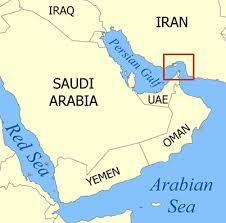
Fig : Strait of Hormuz
2
Static Background
- IMEC was officially announced at the G-20 Summit in New Delhi in September 2023, envisioned as a transformative multimodal corridor integrating railways, ports, highways, energy grids, undersea data cables, and green hydrogen pipelines to connect India with Europe across the Arabian Peninsula.
- The corridor has three distinct legs: the eastern sea link connecting India to the UAE; the central overland route traversing UAE, Saudi Arabia, Jordan, and Israel terminating at the Port of Haifa; and the western sea leg connecting Haifa to various European ports where the continent's own transport network takes over.
- Rival connectivity projects such as the International North-South Transport Corridor (INSTC) and China's Belt and Road Initiative (BRI) were built with a similar logic — to bypass single-point maritime choke points — but both have their own strategic complications and neither fully replaces the India-Europe arc IMEC seeks to serve.
- India's energy vulnerability is acute: the country imports approximately 88% of its crude oil requirements, amounting to about 1.8 billion barrels annually, making disruptions to the Strait of Hormuz — through which roughly 20 million barrels of crude pass daily — a direct economic and strategic threat.
- The Gaza war of October 7, 2023 broke out almost immediately after IMEC was announced, freezing diplomatic momentum and directly compromising the corridor's Israeli nodes. The project has been stalled in varying degrees ever since, with the Iran conflict delivering the latest and most severe blow.
3
Key Dimensions
- Military-strategic dimension: The US reportedly lost 42 aircraft including fifth-generation F-35 stealth fighters, and expended over half its Patriot, Tomahawk, and THAAD missile inventories in the conflict — demonstrating that even overwhelming technological superiority cannot guarantee quick, decisive victory against an asymmetric, resilient adversary like Iran.
- Choke-point and energy dimension: Iran's early imposition of a Strait of Hormuz blockade has virtually paralysed roughly one-third of global daily crude oil supply, delivering a real-time lesson in how dependent the global economy remains on a handful of narrow, militarily vulnerable maritime passages that no insurance policy fully covers.
- Infrastructure vulnerability dimension: Key UAE ports — Jebel Ali and Fujairah — which are central to IMEC's eastern architecture, have been repeatedly targeted by Iranian strikes, exposing the geographic liability of building critical trade infrastructure in close proximity to an active conflict and a contested choke point.
- Saudi-UAE geopolitical faultline: The UAE's exit from OPEC in April 2026, combined with its growing strategic coordination with Israel — including the deployment of Israel's Iron Beam laser defence system — risks deepening mistrust with Saudi Arabia, threatening the seamless cross-border coordination that the central overland leg of IMEC fundamentally depends upon.
- India's diplomatic centrality: PM Modi's May 2026 Europe visit resulted in India and Italy elevating ties to a Special Strategic Partnership and jointly reaffirming commitment to IMEC — signalling that India sees the corridor not merely as a trade route but as a long-term strategic and diplomatic investment worth defending through turbulence.
4
Arguments in Favour of IMEC
- Trade efficiency and cost reduction: By bypassing the Suez Canal and integrating sea, rail, and road links into a seamless multimodal chain, IMEC can significantly reduce freight time and logistics costs between Asia and Europe — making Indian exports more competitive and reducing India's dependence on existing, congestion-prone global shipping routes.
- Energy and digital infrastructure: Unlike conventional transport corridors, IMEC embeds green hydrogen pipelines, energy transmission grids, and undersea high-speed data links — making it a future-facing infrastructure that serves not just today's fossil fuel trade but the emerging clean energy and digital economy of the coming decades.
- Strategic hedge against China's BRI: IMEC offers a democratic, rules-based, multilaterally backed alternative to China's Belt and Road Initiative — one that does not come bundled with debt-trap fears, sovereignty concerns, or opaque financial terms, giving partner countries a genuine choice in infrastructure diplomacy.
- India's centrality in global trade: IMEC positions India as a pivot of the Asia-Europe trade corridor rather than a peripheral node — directly supporting the Atmanirbhar Bharat vision, boosting port-led development, and giving Indian infrastructure projects international visibility and investment appeal.
- Abraham Accords economic operationalisation: IMEC effectively translates the diplomatic normalisation achieved under the Abraham Accords into tangible economic architecture — giving Arab-Israeli normalisation a commercial backbone that could prove more durable than political agreements alone, if successfully implemented.
5
Concerns and Criticisms
- Israel node severely compromised: The Port of Haifa — the critical western terminus of IMEC's central overland leg — sits in a country actively involved in regional conflict, making it politically toxic for Arab partners to engage with openly and logistically vulnerable until a durable peace settlement is achieved.
- UAE infrastructure under direct attack: Jebel Ali and Fujairah — the UAE ports that anchor IMEC's eastern sea link — have been repeatedly targeted during the Iran conflict, revealing that the corridor's foundational nodes are geographically too close to the Strait of Hormuz to be considered reliably safe during any future West Asian escalation.
- Saudi-UAE divergence threatens coordination: IMEC's central overland leg requires seamless cooperation between Saudi Arabia and the UAE, but the UAE's OPEC exit, Israeli defence ties, and growing independent strategic posture risk creating an adversarial dynamic between Riyadh and Abu Dhabi that would make cross-border corridor coordination practically unworkable.
- No binding legal or financial framework: Unlike BRI, which has direct Chinese state financing and bilateral treaty structures, IMEC currently rests on a G-20 declaration with no committed funding pool, no institutional secretariat, and no legally binding obligations on any partner — making it vulnerable to political reversals or benign neglect.
- Competing, more operationally ready alternatives: The INSTC already has active freight movement through Russia and Iran, and China's BRI has established infrastructure across Central Asia and Europe — meaning that for many countries, IMEC must compete against corridors that are already partially functional, not just conceptually superior.
6
Way Forward
- Develop Oman as the alternative eastern gateway: Ports at Salalah, Duqm, and Muscat are located well away from the Strait of Hormuz conflict zone and offer deep-water capacity, making them viable substitute eastern entry points for IMEC that reduce Iran-related risk without fundamentally restructuring the corridor's broader logic.
- Egypt as the western spur until Haifa stabilises: Egypt already possesses the Suez Canal Economic Zone, six operational ports, and four industrial zones specialising in green hydrogen, LNG, and shipbuilding — giving IMEC a ready-made western alternative that bypasses the Israeli node while keeping the corridor commercially functional during the conflict period.
- Institutionalise IMEC with a binding multilateral framework: Move beyond the G-20 declaration toward a formal treaty architecture with a dedicated institutional secretariat, committed financing mechanism, and clear dispute resolution procedures — giving the corridor the legal and financial backbone it currently lacks and making partner commitments more durable.
- India as active diplomatic broker among Gulf partners: India's unique position as a trusted partner of both Saudi Arabia and the UAE must be leveraged proactively to prevent the widening Saudi-UAE faultline from fracturing IMEC's central overland segment — a quiet but consequential diplomatic role that India is well-placed to play.
- Phased, adaptive implementation strategy: Prioritise segments that are currently viable — the India-UAE sea link and the Europe western leg — while maintaining the full corridor alignment as a long-term vision to be activated progressively as conflict subsides and political conditions improve across the region.
7
Data, Reports, and Examples
- US Congressional Research Service report on "Operation Epic Fury": 42 US aircraft lost or damaged, including F-35 stealth fighters; over 240 American targets struck by Iran; more than half of total Patriot, Tomahawk, and THAAD inventories expended — figures that underscore the unprecedented scale and cost of the conflict. (Treat as reported in the editorial; independent verification recommended)
- Strait of Hormuz: Approximately 20 million barrels of crude oil per day — roughly one-third of global supply — passes through this narrow waterway, making any Iranian-imposed blockade an immediate global economic event rather than a regional inconvenience.
- India's crude dependence: Imports approximately 88% of its crude oil needs, amounting to around 1.8 billion barrels annually — placing India among the countries most severely affected by any Hormuz disruption, and underlining why IMEC's energy security dimension is of existential strategic importance.
- UAE OPEC exit, April 2026: A significant geopolitical signal indicating Abu Dhabi's growing strategic independence from the Gulf consensus — with direct implications for Saudi-UAE relations and, by extension, for the viability of IMEC's central overland coordination architecture.
- PM Modi's Europe visit, May 2026: India and Italy announced a Special Strategic Partnership and jointly reaffirmed commitment to IMEC, recognising its transformative potential to reshape global trade — a diplomatic signal that major IMEC partners remain committed despite the ongoing turbulence.
8
Prelims Pointers
- IMEC announced: G-20 Summit, New Delhi, September 2023; officially backed by India, USA, UAE, Saudi Arabia, Jordan, Israel, EU, France, Germany, and Italy.
- Western terminus of IMEC: Port of Haifa, Israel — connects the central overland section to European sea routes via the Mediterranean.
- Strait of Hormuz: Narrow waterway between Iran and Oman; approximately 20 million barrels/day of crude transit; critical global choke point for energy supply.
- INSTC (International North-South Transport Corridor): Multimodal route connecting India to Russia and Europe via Iran, bypassing the Suez Canal; conceived independently of IMEC.
- Iron Beam: Israeli laser-based air defence system designed to intercept drones, rockets, and missiles at low cost per intercept; reportedly deployed in the UAE during the current conflict.
- THAAD: Terminal High Altitude Area Defense — a US Army missile defence system designed to intercept ballistic missiles during their terminal phase; significant inventory reportedly expended in the Iran conflict.
- Oman alternative ports: Salalah (established container hub), Duqm (deepwater, strategic), and Muscat — all located outside the immediate Hormuz risk zone, making them viable IMEC alternative nodes.
- Egypt's infrastructure readiness: Suez Canal Economic Zone + six operational ports + four industrial zones (green hydrogen, LNG, shipbuilding) — positions Egypt as a credible western spur for a reconfigured IMEC.
9
Practice Mains Question
"The India-Middle East-Europe Economic Corridor (IMEC) holds transformative potential for India's trade connectivity and strategic positioning, yet remains hostage to the geopolitical volatility of West Asia. Critically examine the challenges facing IMEC and suggest a viable way forward."(GS Paper 2 / Essay — 250 words)
Answer hint: Open with IMEC's strategic promise → explain structural architecture → examine Gaza and Iran conflict disruptions → analyse the Saudi-UAE faultline as an underappreciated internal threat → propose Oman/Egypt alternatives and flexible realignment → conclude with India's role as diplomatic guarantor, not just a corridor beneficiary.
10
Practice MCQ
Q. With reference to the India-Middle East-Europe Economic Corridor (IMEC), consider the following statements:
- IMEC was announced at the G-20 Summit held in New Delhi in 2023.
- The central overland section of IMEC passes through Iraq and Turkey.
- The Port of Haifa in Israel is envisioned as a key western node of IMEC.
- IMEC includes provisions for green hydrogen corridors and undersea digital data links.
Which of the above statements are correct?
(a) 1 and 3 only(b) 1, 2 and 4 only(c) 1, 3 and 4 only(d) 2, 3 and 4 only
Answer: (c) 1, 3 and 4 only
Explanation: Statement 1 is correct — G-20 New Delhi, September 2023. Statement 2 is incorrect — the central overland leg runs through UAE, Saudi Arabia, Jordan, and Israel; Iraq and Turkey are not part of this alignment. Statement 3 is correct — Haifa is the Mediterranean terminus of IMEC's central section. Statement 4 is correct — IMEC explicitly encompasses green hydrogen pipelines, energy grids, and undersea high-speed data infrastructure as part of its multidimensional design.
Orbital rivalry — the challenge of China’s space power
Source: The Hindu | Relevance: China's rapidly expanding counter-space programme poses a direct threat to India's satellite infrastructure and military ISR capabilities — critical for GS-2 (India's security challenges), GS-3 (Space technology, Defence), and Interview.
1
Issue in Brief / Central Argument
- China is systematically developing offensive counter-space capabilities — kinetic missiles, laser systems, and co-orbital satellites — that blur the line between routine space operations and acts of war, creating a dangerous new theatre of military competition with no adequate international regulatory framework.
- The core argument is that while China cannot yet cripple India's space assets without triggering catastrophic Kessler Syndrome consequences, India's limited satellite redundancy — roughly 60 operational satellites versus 400-plus Chinese military satellites — makes it disproportionately vulnerable to even targeted, limited counter-space strikes.
- India must urgently expand its space industrial base, disaggregate large satellite platforms into resilient constellations, protect ground infrastructure, and clearly define red lines — so that China fully understands the escalation risks before choosing to exploit India's current asymmetry in orbit.
2
Static Background
- Space as a military domain: A single successful strike on critical satellites can simultaneously disrupt communications, power grids, GPS navigation, financial markets, and military C2 (Command and Control) and ISR (Intelligence, Surveillance and Reconnaissance) networks — making space control a decisive first-mover advantage in any future conflict.
- China's satellite programme timeline: In January 2007, China destroyed its own satellite using a ground-launched missile — demonstrating basic ASAT capability. By 2022, it used a robotic spacecraft to push a defunct satellite into graveyard orbit, and in 2024, it demonstrated an orbital dog-fight between co-orbital spacecraft.
- India's Mission Shakti (2019): India successfully conducted an Anti-Satellite (ASAT) missile test, destroying a low-earth orbit satellite and demonstrating basic kinetic counter-space capability — a significant deterrence signal, though the test also generated space debris that raised international concern.
- Kessler Syndrome: A cascading chain reaction where the destruction of one satellite generates debris that destroys others, eventually rendering entire orbital bands unusable — this mutual vulnerability acts as a natural deterrent against large-scale, indiscriminate counter-space attacks by any party.
- NavIC (Navigation with Indian Constellation): India's indigenous satellite navigation system, comprising seven satellites, designed to provide accurate positioning services across India and neighbouring regions — a strategic asset that is simultaneously a vulnerability if targeted by Chinese jammers or laser systems.
- Starlink vs. China's LEO ambition: SpaceX's Starlink operates thousands of LEO satellites; China plans to deploy over 36,000 LEO satellites by 2030 through its Guowang constellation — making low-earth orbit the most immediate and contested zone of the emerging space race.
3
Key Dimensions
- Kinetic dimension: China has developed and tested DN-3 and SC-19 missiles capable of physically destroying satellites in various orbital bands — hard-kill capabilities that can permanently eliminate ISR and communication assets, though at the risk of generating destabilising orbital debris at scale.
- Non-kinetic dimension: Laser-based dazzling and blinding systems can temporarily or permanently disable satellite sensors without generating debris, making them the preferred tool for peacetime harassment or early-conflict disruption — providing China plausible deniability and avoiding immediate escalation thresholds.
- Co-orbital dimension: China's SJ (Shijian) and TJS (Tongxin Jishu Shiyan) series satellites are designed to manoeuvre close to adversary satellites in orbit — capable of interfering with, jamming, or physically dislodging them — representing the most sophisticated and difficult-to-attribute form of counter-space capability.
- Temporal dimension: China's counter-space doctrine aims to blind ISR and communication networks within the first 24–48 hours of a conflict — shaping the battlespace narrative before hard-kill attacks that would trigger immediate international escalation responses from allies and partners.
- India-specific vulnerability dimension: India has approximately 60 operational satellites compared to over 400 Chinese military satellites alone — meaning India has far less redundancy, and losing even five to six satellites (such as the CARTOSAT or RISAT series) could create critical tactical intelligence blind spots for hours or days.
4
Arguments in Favour (of Taking China's Space Threat Seriously)
- Asymmetry is strategically dangerous: India's limited satellite redundancy means China does not need to conduct a large-scale orbital strike to degrade Indian military capability — a few precise, targeted strikes or sustained laser harassment can achieve disproportionate operational impact at acceptable escalation cost for Beijing.
- Taiwan scenario is a direct template for India: If China were to act against Taiwan, it would first conduct soft-kill counter-space operations — blinding ISR and communications — before any hard military move. India faces the same doctrinal threat on a smaller scale along the Line of Actual Control (LAC), making space preparedness inseparable from land border defence.
- China's civilian-military fusion accelerates risk: Chinese space start-ups like LandSpace, iSpace, and OneSpace operate within a system where civilian space assets can be rapidly repurposed for military objectives — blurring the distinction between commercial and military space operations in ways that existing international law cannot adequately regulate.
- Regulatory vacuum intensifies danger: Unlike nuclear weapons (NPT) or chemical weapons (CWC), outer space currently lacks a comprehensive arms control treaty governing counter-space weapons — meaning there are no agreed red lines, no verification mechanisms, and no established escalation management frameworks for space-based conflict.
- Moon and asteroid competition will escalate tensions: If China becomes the first to establish a presence on the far side of the moon or begins exploiting asteroid mineral resources, it could trigger an escalatory dynamic that pulls in the US, India, and others — transforming today's competitive space race into tomorrow's contested space conflict.
5
Concerns and Criticisms
- Mission Shakti's limitations: A single successful ASAT test does not translate into operational reliability or genuine deterrence — India still lacks co-orbital manoeuvring capabilities to counter China's SJ and TJS satellite series, which operate at close range and do not require direct kinetic engagement to cause serious damage.
- India's satellite production bottleneck: ISRO's historically centralised and slow production model means India cannot rapidly replace destroyed satellites in a conflict scenario — the absence of a robust private space industry with surge production capacity leaves India strategically exposed in any prolonged counter-space engagement.
- Ground infrastructure vulnerability: Space capability is only as strong as its terrestrial backbone — India's ground stations, tracking facilities, and satellite control centres remain potentially vulnerable to conventional missile or cyber attacks that could neutralise India's space assets without touching a single satellite in orbit.
- Over-reliance on large satellite platforms: India's dependence on large, expensive, multi-mission satellites like GSAT creates single points of failure — one successful strike on a large platform causes disproportionate capability loss compared to distributed small-satellite constellations that are inherently more resilient and harder to target efficiently.
- Data-sharing gaps with strategic partners: India does not yet have deep, real-time satellite data-sharing arrangements with the US, France, or other strategic partners — meaning that if key Indian satellites are lost, there is no established rapid-restoration pathway through allied commercial or military networks to fill critical intelligence gaps.
6
Way Forward
- Expand and privatise satellite production: India must scale its space industry beyond ISRO by empowering private players under the IN-SPACe framework to dramatically increase satellite manufacturing and launch capacity — because greater numerical redundancy is the single most effective strategic insurance against counter-space attacks.
- Disaggregate large constellations into small-satellite clusters: Replace large, vulnerable platforms like GSAT with distributed small-satellite constellations that spread risk across multiple cheaper units — making it economically and operationally impractical for an adversary to neutralise India's space capability through a limited number of strikes.
- Harden ground space infrastructure: Protect satellite control centres, ground stations, and tracking facilities against conventional missile strikes, cyber intrusions, and electronic warfare attacks — because destroying ground infrastructure can neutralise space assets just as effectively as a direct orbital strike.
- Develop co-orbital counter-space capabilities: India must invest in robotic spacecraft and co-orbital manoeuvring technologies to credibly counter China's SJ and TJS series — establishing the capability to inspect, interfere with, or neutralise threatening co-orbital satellites as part of a graduated deterrence posture.
- Formalise red lines and escalation doctrine: India must publicly or diplomatically define its red lines in the space domain — specifying what level of satellite degradation or attack will trigger a proportionate response — so that Beijing cannot miscalculate India's tolerance threshold during a border crisis or wider military confrontation.
- Institutionalise data-sharing with Quad and strategic partners: Establish real-time satellite data-sharing agreements with the US, Japan, Australia, and France so that if Indian satellites are degraded or destroyed, partner commercial and military networks can restore critical ISR and navigation services within hours rather than days.
7
Data, Reports, and Examples
- China currently operates approximately 1,900 satellites in orbit, compared to over 8,000 American satellites including the SpaceX Starlink constellation — a numerical gap China is aggressively working to close through its planned 36,000-satellite LEO constellation by 2030.
- China's stated long-term space goals: lunar landing by 2036, launch of a nuclear-powered space shuttle by 2040, and establishment of a solar power transmission system from space by 2050 — each representing a major strategic capability that doubles as potential military infrastructure.
- India has approximately 60 operational satellites, while China operates over 400 military satellites alone — a roughly 7:1 asymmetry in military space assets that translates directly into India's lesser redundancy and greater vulnerability to even limited counter-space strikes.
- Mission Shakti (March 2019): India destroyed a low-earth orbit satellite at approximately 300 km altitude using an indigenously developed ASAT missile, becoming only the fourth country after the US, Russia, and China to demonstrate this capability.
- Hypothetical Indian vulnerability: A Chinese strike on the CARTOSAT/RISAT series could cause loss of tactical imagery for hours to days; laser harassment as these satellites pass over the LAC could create temporary blind spots without generating debris or triggering formal escalation responses.
8
Prelims Pointers
- ASAT (Anti-Satellite) weapons: Systems designed to destroy or disable satellites in orbit; categories include kinetic kill vehicles, directed-energy weapons (lasers), co-orbital interceptors, and electronic jammers.
- Mission Shakti: India's March 2019 ASAT test conducted by DRDO; destroyed an Indian satellite at ~300 km LEO altitude; India became the fourth nation to demonstrate this capability after USA, Russia, and China.
- Kessler Syndrome: Scenario proposed by NASA scientist Donald Kessler (1978); cascading satellite collisions generate debris that destroys more satellites, eventually rendering orbital bands permanently unusable.
- DN-3 and SC-19 missiles: Chinese kinetic ASAT systems; DN-3 is assessed to have direct-ascent capability against satellites in medium and higher earth orbits beyond low-earth orbit.
- SJ and TJS satellites: China's Shijian and Tongxin Jishu Shiyan series — co-orbital satellites assessed by analysts to have counter-space roles including proximity operations, jamming, and potential satellite dislodging capability.
- NavIC: India's regional satellite navigation system; seven-satellite constellation providing positioning across India and up to 1,500 km beyond its borders; strategic alternative to GPS but vulnerable to jamming.
- IN-SPACe (Indian National Space Promotion and Authorisation Centre): Established 2020; nodal agency to promote, authorise, and regulate private sector participation in India's space activities under the broader space sector reform.
- CARTOSAT / RISAT series: India's earth observation satellites providing high-resolution optical (CARTOSAT) and all-weather radar (RISAT) imagery — primary tactical ISR assets that would be priority targets in any counter-space strike against India.
- LEO (Low Earth Orbit): Orbital band between approximately 200–2,000 km altitude; hosts ISR, communication, and navigation satellites; most contested zone in the emerging space race between Starlink and China's Guowang constellation.
9
Practice Mains Question
"China's expanding counter-space capabilities pose an asymmetric but underappreciated threat to India's national security. Critically examine the nature of this threat and suggest measures India must adopt to safeguard its strategic interests in outer space."(GS Paper 3 / Essay — 250 words)
Answer hint: Open with space as the new domain of strategic competition → explain China's three-tier counter-space toolkit (kinetic, laser, co-orbital) → establish India's numerical and redundancy asymmetry → apply the Taiwan scenario template to India-China LAC context → propose redundancy, disaggregation, ground hardening, co-orbital capability development, and red line definition → conclude with the regulatory vacuum as the overarching structural problem demanding multilateral engagement.
10
Practice MCQ
Q. With reference to China's counter-space capabilities, consider the following statements:
- China's DN-3 and SC-19 are kinetic anti-satellite missiles capable of physically destroying satellites.
- Co-orbital satellites such as the SJ and TJS series are designed to manoeuvre close to and interfere with adversary satellites in orbit.
- India demonstrated an Anti-Satellite (ASAT) capability through Mission Shakti in 2019, becoming the third country to do so.
- Kessler Syndrome refers to a cascading chain of satellite collisions that could render orbital bands permanently unusable.
Which of the above statements are correct?
(a) 1, 2 and 4 only(b) 2, 3 and 4 only(c) 1 and 4 only(d) 1, 2 and 4 only
Answer: (d) 1, 2 and 4 only