
Published on Apr 8, 2026
Daily Editorials Analysis
Editorials/Opinions Analysis For UPSC 08 April 2026

Content
- Women’s Reservation, Delimitation & Representational Restructuring
- Phule’s Life & Thought: A Constitutional Project
Women’s Reservation, Delimitation & Representational Restructuring
Why in News?
- Debate on implementation of Constitution (106th Amendment) Act, 2023 (Nari Shakti Vandan Adhiniyam) amid reports of delimitation using 2011 Census and Lok Sabha expansion from 543 → ~816 seats (~50% increase).
- Raises concerns on federal balance, electoral fairness, and sequencing of Census–delimitation–reservation reforms.
Relevance
- GS II (Polity & Governance)
- Constitutional amendments, representation, federalism, electoral reforms
- GS I (Society)
- Women empowerment, social justice, regional disparities
Practice Question
Q1.“Women’s reservation in legislatures marks a significant step towards inclusive democracy, but its implementation raises complex constitutional and federal challenges.”Critically examine.(250 Words)
Static Background
- 106th Constitutional Amendment, 2023 mandates 1/3 reservation for women in Lok Sabha and State Assemblies, including SC/ST reserved seats.
- Implementation conditional upon next Census + delimitation exercise, continuing freeze since 1971 Census (42nd & 84th Amendments).
Key Dimensions
- Constitutional Dimension: Amendment introduces Articles 330A, 332A, 334A, institutionalising gender-based political reservation with sunset clause linked to delimitation cycles.
- Sequencing Issue: Original design required Census → Delimitation → Reservation, but proposal suggests decoupling using 2011 Census, raising constitutional propriety concerns.
- Delimitation Debate: Representation based on population principle (Article 81) risks northward seat shift due to higher fertility rates in northern States.
- Federal Balance Concern: Southern States with low fertility and higher economic contribution may face relative political marginalisation despite better governance outcomes.
- Seat Expansion Logic: Proposed ~50% increase in seats (543 → 816) aims to retain proportional balance, but absolute gains favour populous northern States.
- Illustrative Imbalance: UP + Bihar ~180 seats vs Southern States ~195 seats, potentially altering coalition arithmetic and legislative dominance.
- Electoral System Effect: Under First-Past-The-Post (FPTP), numerical advantage translates into disproportionate political power, intensifying regional asymmetry.
- Data Validity Issue: Using 2011 Census data (15-year-old) ignores urbanisation, migration, COVID demographic shifts, risking misaligned constituency representation.
- Caste Census Implication: Upcoming Census likely to include caste enumeration, potentially triggering demands for OBC sub-quota within women’s reservation.
- Social Justice Dimension: Without sub-quotas, elite capture risk within women’s quota, especially under-representation of OBC, Muslim, and marginalised women.
- Governance Dimension: Unclear rotation mechanism of reserved constituencies may affect accountability, continuity, and constituency development incentives.
- Rotation Challenge: Frequent rotation may lead to short-termism, while limited rotation may entrench political monopolies in certain constituencies.
- Political Economy Dimension: Timing suggests electoral strategy, aiming to mobilise women voters (≈48% electorate) before 2027 State elections and 2029 general elections.
- Institutional Capacity: Large-scale delimitation and seat expansion require Elections Commission readiness, infrastructure scaling, and administrative coordination.
- Comparative Perspective: Global evidence (e.g., Rwanda ~60% women MPs) shows quotas improve representation but require institutional safeguards for inclusivity.
- Democratic Deepening: Reform potentially enhances descriptive representation, but risks distorting substantive representation if poorly designed.
Challenges / Criticisms
- Deviation from constitutional sequencing may undermine procedural legitimacy and legal robustness.
- North–South divide may deepen, affecting cooperative federalism and fiscal negotiations.
- Outdated Census data usage risks misrepresentation and electoral inequity.
- Absence of OBC sub-quota clarity may trigger social justice backlash and political contestation.
- Unclear rotation framework could weaken legislative accountability and constituency linkages.
- Potential politicisation of delimitation may erode trust in electoral neutrality.
Way Forward
- Adhere to constitutional sequencing: Census → Delimitation → Reservation, ensuring data-driven legitimacy.
- Establish independent Delimitation Commission with transparent criteria incorporating population + development indicators.
- Introduce sub-quotas for OBC women based on empirical caste data, ensuring inclusive representation.
- Design balanced rotation mechanism (2–3 election cycles) to ensure continuity and accountability.
- Consider proportional representation elements or mixed systems to reduce FPTP distortions.
- Strengthen federal consultation mechanisms (Inter-State Council) to address regional concerns.
Prelims Pointers
- 106th Amendment (2023) = Women’s reservation (1/3 seats)
- Implementation linked to Census + delimitation
- Delimitation freeze since 1971 Census
- Articles 330A, 332A introduced
- FPTP system used in India
Phule’s Life & Thought: A Constitutional Project
Why in News?
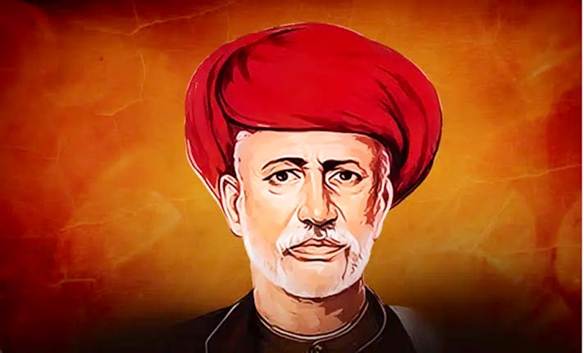
- Bicentenary of Mahatma Jyotirao Phule (11 April 1827–2027) has revived debates on his role as a precursor to constitutionalism, social justice, and anti-caste transformation.
- Relevance in context of ongoing inequalities, caste debates, and inclusive governance frameworks in India.
Relevance
- GS I (Modern Indian History & Society)
- Social reform movements, caste system, women empowerment
- GS II (Polity & Governance)
- Constitutional values, social justice, equality
Practice Question
Q1.“Jyotirao Phule’s ideas laid the foundation for India’s constitutional vision of social justice.”
Discuss.(250 Words)
Static Background
- Jyotirao Phule (1827–1890) was a social reformer, anti-caste thinker, and pioneer of women’s education, founder of Satyashodhak Samaj (1873).
- Key works: Gulamgiri (1873) and Shetkaryacha Asud (1883) highlighting caste oppression and agrarian exploitation.
Key Dimensions
Constitutional–Philosophical Dimension:
- Phule conceptualised society based on equality, dignity, and redistribution of power, anticipating constitutional morality before formal Constitution (1950).
- Influenced by Thomas Paine’s “Rights of Man (1791)”, asserting natural rights (by existence) and civil rights (by membership of society).
- Viewed governance as instrument for “general happiness”, aligning with modern welfare state principles and Directive Principles of State Policy (DPSP).
Social Justice Dimension:
- Critiqued graded inequality of caste system, exposing Brahmanical domination and structural exclusion of Shudras and Ati-Shudras.
- Advocated education as emancipatory tool, establishing schools for women and lower castes (1848 onwards)—first such initiative in India.
- Promoted widow remarriage and opposed child marriage, advancing gender justice decades before constitutional guarantees.
Economic Dimension:
- In Shetkaryacha Asud (1883), analysed agrarian exploitation, linking caste hierarchy with economic deprivation of farmers.
- Highlighted denial of access to education and resources, showing intersection of caste + class oppression.
Governance Dimension:
- Criticised colonial state indifference, noting lack of administrative responsiveness to peasant distress and social inequalities.
- Advocated state-led interventions, including compulsory education up to age 12 and targeted scholarships for backward communities (Education Commission, 1882).
Global–Comparative Dimension:
- In Gulamgiri (1873), linked caste oppression with global struggles like abolition of slavery in the USA, indicating transnational constitutional imagination.
- Emphasised universal principles of equality and emancipation, aligning Indian struggles with global human rights discourse.
Constitutional Legacy Dimension:
- Ideas influenced Dr. B.R. Ambedkar, reflected in Fundamental Rights, abolition of untouchability (Article 17), and affirmative action policies.
- Phule’s vision anticipated substantive equality (not merely formal equality) embedded in Indian Constitution.
Ethical Dimension:
- Emphasised human dignity, rationality, and social reform over ritualism, aligning with constitutional morality (Ambedkarian concept).
Challenges / Limitations
- Persisting caste inequalities despite constitutional safeguards indicate gap between ideals and implementation.
- Educational and economic disparities among marginalised groups continue, reflecting unfinished agenda of Phule’s reforms.
- Elite capture within affirmative action frameworks raises concerns similar to Phule’s critique of power concentration.
- Weak grassroots governance and social awareness limit transformative potential of constitutional values.
Way Forward
- Strengthen substantive equality frameworks through targeted social justice policies (education, health, livelihoods).
- Promote inclusive education reforms inspired by Phule’s vision of universal and equitable access.
- Deepen constitutional literacy and social reform movements to internalise values of equality and dignity.
- Enhance state accountability mechanisms ensuring governance addresses structural inequalities.
- Integrate intersectional approach (caste + gender + class) in policymaking.
Prelims Pointers
- Jyotirao Phule founded Satyashodhak Samaj (1873)
- Gulamgiri (1873) compares caste with slavery
- Advocated compulsory education (Hunter Commission, 1882)
- Pioneer of women’s education in India (1848 schools)