
Published on Apr 22, 2026
Daily Editorials Analysis
Editorials/Opinions Analysis For UPSC 22 April 2026

Content
- India must draw a red line on U.S. unilateral sanctions
- Lunar governance should be multilateral
India must draw a red line on U.S. unilateral sanctions
Why in News?
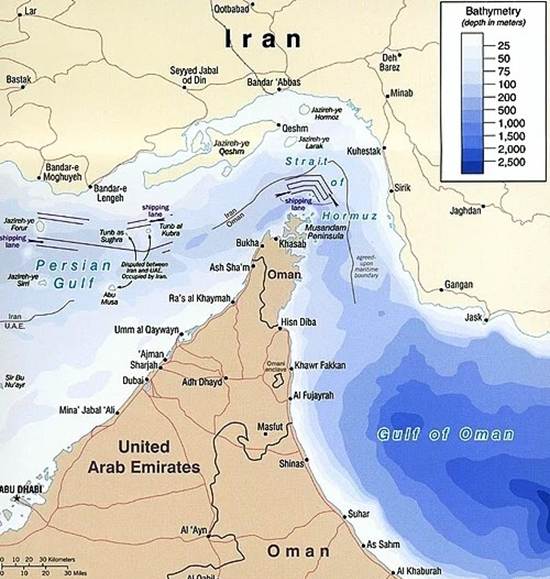
- Escalation involving United States–Israel conflict with Iran and ‘double blockade’ of Strait of Hormuz has triggered energy price shocks, supply disruptions, and macroeconomic stress for India.
- Debate intensifies on India’s continued compliance with U.S. unilateral sanctions, especially amid economic slowdown, export decline (–7% in March), and rupee depreciation.
Relevance
GS II (International Relations)
- Strategic autonomy vs alignment with major powers
- Sanctions diplomacy, coercive economic statecraft
- India–U.S. relations, Global South positioning
GS III (Economy)
- Energy security, current account deficit, inflation
- External sector vulnerability (exports, currency, oil shocks)
Practice Question
Q1.“Unilateral sanctions undermine strategic autonomy and economic stability of developing countries.”Discuss in the context of India’s foreign policy. (250 words)
Static Background
- Economic sanctions: Coercive foreign policy tools restricting trade, finance, or technology flows, often unilateral (U.S.) or multilateral (United Nations Security Council).
- Secondary sanctions: Penalise third countries engaging with sanctioned nations, affecting sovereign policy autonomy.
- Key legislations: Countering America’s Adversaries Through Sanctions Act, Iran sanctions regime, OFAC enforcement.
- Strait of Hormuz: Handles ~20% of global oil trade, critical for India’s ~85% crude import dependence.
- India’s doctrine: Strategic autonomy—balancing great power relations while preserving independent decision-making.
Core Issue & Key Findingsc
- Conflict impact on India:
- Rising energy import bills, higher shipping and insurance costs, disrupting current account balance.
- Exports declined by 7% (March), indicating external demand and logistics disruptions.
- Inflationary pressures rising, weakening domestic consumption and growth momentum.
- Rupee depreciation contributed to India slipping from 4th to 6th largest economy ranking (IMF projection).
- Sanctions compliance trends:
- India halted Iranian and Venezuelan oil imports (post-2019) under U.S. pressure.
- Temporarily reduced Russian oil imports (2025–26) under tariff threats.
- Strategic infrastructure affected:
- Chabahar Port and INSTC connectivity projects constrained by sanctions uncertainty.
Overview
- Persistent compliance with unilateral sanctions undermines India’s energy security strategy, limiting diversification across Iran, Venezuela, Russia.
- Sanction volatility (“whack-a-mole”) creates uncertainty, discouraging long-term investment and supply contracts in critical sectors.
- Evidence suggests compliance invites further coercion, while selective defiance (e.g., S-400 purchase despite CAATSA) did not attract penalties.
- Opportunity costs significant:
- Loss of discounted crude imports and inability to build strategic petroleum reserves, unlike China.
- Disruptions in Chabahar and INSTC corridors increase dependence on Strait of Hormuz chokepoint, heightening vulnerability.
- Sanctions weaken multilateralism, bypassing UNSC legitimacy, eroding rules-based order India supports.
- Economic spillovers include imported inflation, currency volatility, and trade imbalances, affecting macroeconomic stability.
- Geopolitically, compliance risks alignment perception with U.S. bloc, constraining India’s Global South leadership and multi-alignment strategy.
Challenges & Concerns
- Energy dependence (~85% imports) makes India highly vulnerable to external shocks and chokepoints.
- Lack of robust alternative payment mechanisms limits bypassing of dollar-dominated financial systems.
- Private sector risk aversion due to fear of sanctions restricts diversification initiatives.
- Institutional gaps in strategic reserves, logistics, and infrastructure preparedness.
- Balancing India-U.S. strategic partnership (Quad, Indo-Pacific) with autonomy remains complex.
- Limited coordination among BRICS and Global South to counter unilateral sanctions effectively.
Key Takeaways
- Tension between strategic autonomy and geopolitical alignments.
- Highlights external vulnerabilities and macroeconomic transmission channels.
- Demonstrates importance of diversification, resilient supply chains, and alternative financial architectures.
- Illustrates evolution of economic statecraft and sanctions diplomacy in global politics.
Prelims Pointers
- Strait of Hormuz handles ~one-fifth of global oil trade, critical chokepoint.
- CAATSA allows U.S. to impose sanctions on countries dealing with Russia, Iran, North Korea.
- OFAC (U.S. Treasury) administers sanctions across 23+ countries and multiple regimes.
- Chabahar Port provides India access to Afghanistan and Central Asia, bypassing Pakistan.
- INSTC connects India–Iran–Russia–Europe, reducing transport cost and time.
- JCPOA (2015) temporarily eased Iran sanctions, enabling increased Indian oil imports.
Lunar governance should be multilateral
Context: Why in News?
- Artemis II Earthrise imagery coincides with U.S.–Israel strikes on Iran, raising concerns about disconnect between technological progress and global ethical conduct.
- Renewed debate on credibility of U.S.-led global governance, especially in space law, human rights, and multilateral institutions.
Relevance
GS II (International Relations)
- Multilateralism vs unilateralism
- Global commons governance (space, oceans, climate)
GS III (Science & Technology)
- Space governance, resource utilisation, emerging tech geopolitics
Practice Question
Q1.“Outer space is a global commons, but emerging geopolitical competition threatens its equitable governance.”Discuss. (250 words)
Static Background
- Outer Space Law Framework:
- Outer Space Treaty: Space as global commons, prohibits sovereignty claims.
- Moon Agreement: Advocates equitable sharing of lunar resources via international regime.
- International Humanitarian Law (IHL):
- Protects civilians and non-combatants during conflict, enforced by International Committee of the Red Cross.
- Global Trade Governance:
- World Trade Organization ensures rules-based trade; dispute settlement weakened due to Appellate Body paralysis.
- International Criminal Accountability:
- International Criminal Court and International Court of Justice adjudicate war crimes and genocide allegations.
Core Issue & Key Findings
- Simultaneous developments:
- Advanced space missions (Artemis II) projecting scientific leadership and global cooperation narrative.
- Allegations of civilian casualties and violations of IHL in Iran and Gaza conflicts.
- Institutional contradictions:
- ICC arrest warrants against Israeli leadership met with U.S. sanctions on ICC officials.
- WTO rules allegedly violated through tariff impositions under IEEPA, with dispute resolution blocked.
- Domestic governance concerns:
- Reports of mass deportations (~6 lakh migrants) and due process violations flagged by U.S. Supreme Court.
Overview
- The juxtaposition reflects normative inconsistency—promotion of universalism in space exploration while undermining international legal commitments on Earth.
- Weakening of institutions like WTO and ICC erodes rules-based global order, encouraging power-based unilateralism.
- Artemis Accords, though promoting peaceful use, risk creating de facto property rights via “safety zones”, contradicting spirit of non-appropriation principle.
- Early movers (U.S. and partners) may monopolise scarce lunar resources (water ice at south pole), shaping future space economy inequities.
- Bypassing UN Committee on the Peaceful Uses of Outer Space undermines multilateral consensus-building, favouring plurilateral arrangements.
- U.S. actions reflect realist foreign policy prioritising national interest, but weaken credibility as a global norm-setter.
- Raises broader concern: whether global commons (space, oceans, climate) will be governed by cooperative multilateralism or competitive geopolitics.
Challenges & Concerns
- Absence of binding international regime on space resource utilisation, leading to legal ambiguity and contestation.
- Risk of space resource militarisation and geopolitical rivalry, especially involving U.S. and China.
- Weak enforcement capacity of international legal institutions, reducing deterrence against violations.
- Fragmentation of global governance, with parallel regimes replacing universal frameworks.
- Ethical dilemma: technological advancement without corresponding accountability mechanisms.
Key Takeaways
- Highlights erosion of multilateralism and rise of unilateralism.
- Emerging issues in space governance and resource exploitation.
- Demonstrates tension between global commons principle vs national interest-driven policies.
Prelims Pointers
- Outer Space Treaty (1967) prohibits national appropriation of celestial bodies.
- Moon Agreement (1979) proposes international regime for resource sharing, not widely ratified.
- Artemis Accords are non-binding bilateral agreements led by the U.S..
- UNCOPUOS is primary UN body for peaceful use of outer space governance.
- IEEPA (U.S.) used for imposing economic sanctions and tariffs.
- WTO Appellate Body non-functional since 2019 due to U.S. blocking appointments.