

Contents01
The New Digital Slavery Needs Constitutional Guardrails
Shashi Tharoor, MP & Chairman, Parliamentary Standing Committee on External Affairs · AI governance, data rights, democratic resilience
GS 2 — Governance & IRGS 3 — Science & TechEssay
02
Sharing Waters — The Tungabhadra Dam
The Hindu Editorial · Inter-State river water cooperation, dam safety, cooperative federalism
GS 1 — GeographyGS 2 — FederalismGS 3 — Water Resources
Editorial 01 of 02
Article 01
The New Digital Slavery Needs Constitutional Guardrails
Shashi Tharoor — Fourth-term MP (Lok Sabha), Thiruvananthapuram; Chairman, Parliamentary Standing Committee on External Affairs · The Hindu
Relevance: GS 2 (e-governance, IR, AI governance frameworks, vulnerable sections), GS 3 (science & technology, internal/cyber security), GS 4 (ethics in AI) and Essay (technology and human dignity) — built around Pope Leo XIV's encyclical on AI as an entry point into the constitutional stakes of unregulated technology.
GS 2 — Governance & IRGS 3 — Science & TechEssay — Technology & Human Dignity
1 — Issue in Brief
- Pope Leo XIV's first encyclical, Magnifica Humanitas ("Magnificent Humanity"), signed 15 May 2026 and released 25 May 2026, frames unchecked artificial intelligence as risking a "new form of digital slavery" through the commodification of personal data — a direct challenge to human dignity rooted in Catholic social doctrine.
- The Pope's core demand is that AI governance rest on binding law rather than voluntary corporate ethics, on independent public oversight rather than self-regulation by technology firms, and on a clear requirement that a human being remains accountable wherever an automated system decides access to credit, jobs, healthcare or education.
- The author extends this into a constitutional argument for India: because AI can distort truth, polarise society and erode voter autonomy, its governance is not a merely technical matter but a constitutional imperative, tied to the fundamental rights to life, liberty and free expression.
- The deeper structural problem the editorial identifies: law moves slower than mathematics — a parliament can regulate conduct but cannot forbid an equation, theorem or algorithm from being discovered, meaning regulation is structurally condemned to lag behind technological capability.
2 — Static Background
- Magnifica Humanitas is the first encyclical of Pope Leo XIV's pontificate, deliberately released on the 135th anniversary of Pope Leo XIII's Rerum Novarum (1891) — positioning AI-era concerns about labour and dignity in direct continuity with the Church's original social-doctrine response to industrialisation.
- EU Artificial Intelligence Act (Regulation (EU) 2024/1689): published in the Official Journal 12 July 2024, entered into force 1 August 2024; prohibitions on "unacceptable risk" AI systems (social scoring, manipulative AI, real-time biometric surveillance) took effect 2 February 2025; high-risk system obligations apply from 2 August 2026 — the world's first comprehensive horizontal AI law.
- UK Online Safety Act, 2023 imposes statutory duties on platforms to tackle illegal content and protect children online, enforced by Ofcom — cited by the author as another instance of landmark legislation that took years to debate and pass while the underlying technical harms continued to evolve.
- Deepfakes and synthetic media have reached a level of fidelity at which manual detection by the human eye or ear is no longer reliable, and have been documented being deployed strategically during election cycles to manipulate voter perception and fabricate scandals.
- India's context: rapid digital adoption via the Aadhaar–DBT–UPI stack has outpaced commensurate growth in digital and media literacy, leaving the country exposed both to domestic algorithmic polarisation and to externally orchestrated information-warfare operations.
3 — Key Dimensions
- The regulatory-lag problem: legislation is inherently reactive; both the EU AI Act and the UK Online Safety Act took years from proposal to enforcement, by which time the specific harms they targeted had already mutated — a structural rather than merely administrative weakness in democratic lawmaking.
- Platform business-model risk: engagement-maximising algorithms systematically reward outrage, fear and sensationalism because these generate the highest click-through rates, amplifying hyper-partisan content and accelerating echo-chamber formation and radicalisation as a profit-driven, not incidental, outcome.
- Epistemic erosion as a democratic threat: democratic governance presupposes a shared factual baseline from which public debate and electoral choice can flow; AI-generated disinformation and high-fidelity deepfakes attack this baseline directly, making the threat existential rather than purely regulatory.
- Weaponisation by hostile actors: modern information warfare has moved beyond crude bot-driven spam to targeted, AI-driven psychological operations that covertly exploit pre-existing religious, ethnic or socio-economic fault lines within a target nation, adding a direct national-security dimension atop the governance one.
- The free-speech tightrope: any regulatory architecture aimed at disinformation risks becoming a tool of state censorship unless it is carefully bounded to structural platform mechanics — such as bot networks and deepfake origination — rather than the policing of individual ideological speech.
- Five-pillar framework proposed for India: (i) a rights-based data-autonomy and consent framework with anti-discrimination safeguards in employment, credit and healthcare; (ii) platform accountability through algorithmic audits and removal of blanket safe-harbour immunity; (iii) free-speech-protective, structure-focused regulation; (iv) mass media-literacy education; (v) cross-sector early-warning systems against coordinated disinformation.
4 — Critical Analysis
- In favour — Moral weight strengthens the case for binding law: the Pope's framing elevates AI governance above industry self-regulation by tying it to inviolable human dignity, lending political legitimacy to stronger statutory intervention that might otherwise be resisted as anti-innovation overreach.
- In favour — Structural regulation is a defensible middle path: focusing on bot networks, deepfake-origination tools and algorithmic amplification mechanics, rather than individual posts, offers a workable balance between unregulated platforms and outright content censorship.
- In favour — Constitutional anchoring strengthens durability: treating data autonomy as a constitutional-grade right rather than a purely statutory one would, in India's context, build on the Supreme Court's recognition of privacy as part of the right to life and personal liberty, giving such a framework firmer long-term traction than ordinary legislation.
- In favour — Root-cause orientation: the early-warning and media-literacy pillars address underlying societal vulnerability rather than only symptoms, building resilience that is harder for bad actors to circumvent than purely technical or legal fixes.
- Against — The core tension remains unresolved: if law structurally cannot keep pace with mathematics and innovation, framing AI governance as a "constitutional imperative" raises expectations no legal instrument — however elevated — can fully satisfy; the editorial diagnoses the lag clearly but offers no mechanism to close it, only to manage its consequences.
- Against — Accountability and free speech pull in opposite directions: "structural liability for algorithmic amplification" is conceptually appealing but operationally blurry, since virality is amplification by definition, making it technically and legally contested to separate ordinary algorithmic ranking from culpable design choice.
- Against — Global coordination problem: AI development spans jurisdictions "from Silicon Valley to Shenzhen"; a national or even EU-level regulatory framework cannot constrain actors operating beyond its reach, limiting the real-world bite of any single country's unilateral regulation.
- Against — Risk of institutional misuse: any apparatus empowered to judge "coordinated disinformation" or harmful "algorithmic amplification" could, in weaker institutional settings, be turned against legitimate political dissent — a risk the editorial itself flags as a guardrail requirement but does not fully resolve.
5 — Way Forward
- Operationalise data protection as a constitutional-grade right in India, building on the existing data protection law with stronger consent protocols and explicit algorithmic-discrimination safeguards in credit, employment and healthcare access.
- Mandate structural transparency obligations on large platforms — independent audit access to recommendation engines — without extending this into content-level censorship powers, preserving the free-speech firewall the editorial insists upon.
- Build a sustained, state-backed media and digital literacy curriculum across schools, universities and rural community centres, treating cognitive resilience as a parallel track to legal reform rather than a substitute for it.
- Establish cross-sector early-warning systems combining state security agencies, independent fact-checking networks and technical researchers for real-time detection of coordinated information operations, especially around election cycles.
- Pursue plurilateral coordination with the EU and other like-minded democracies on baseline AI-governance norms, since no single jurisdiction can effectively regulate a globally distributed technology acting alone.
6 — Data and Key Facts
2026Year Pope Leo XIV released his first encyclical, Magnifica Humanitas, on AI and human dignity
Aug 2024EU AI Act entered into force — world's first comprehensive horizontal AI law
Feb 2025EU AI Act prohibitions on "unacceptable risk" AI systems took effect
Aug 2026Date from which EU AI Act high-risk system obligations become enforceable
135 yrsGap between Rerum Novarum (1891) and Magnifica Humanitas (2026)
2023Year of the UK Online Safety Act, enforced by Ofcom
- Magnifica Humanitas: first encyclical of Pope Leo XIV's pontificate; centres on safeguarding human dignity from AI-driven data exploitation and algorithmic decision-making without human accountability; calls for binding law over voluntary corporate ethics.
- EU AI Act (Regulation (EU) 2024/1689): risk-based regulatory framework; phased implementation from 2024 to 2027; sets the global benchmark the editorial implicitly references when discussing landmark legislation that lags behind innovation.
7 — Prelims Pointers
Magnifica Humanitas — Pope Leo XIV's first encyclical; signed 15 May 2026, released 25 May 2026; marks the 135th anniversary of Rerum Novarum (1891, Pope Leo XIII)
EU AI Act — Regulation (EU) 2024/1689; in force from 1 August 2024; world's first comprehensive horizontal AI law; high-risk obligations apply from 2 August 2026
UK Online Safety Act, 2023 — imposes platform duties on illegal/harmful online content; enforced by Ofcom
Right to Privacy — recognised by the Supreme Court as intrinsic to the right to life and personal liberty under Article 21
Digital Personal Data Protection Act, 2023 — India's comprehensive personal data protection law
Deepfakes / synthetic media — AI-generated audio-video forgeries now near-indistinguishable from genuine recordings to the human eye and ear
Exam note: Do not confuse the EU AI Act's entry into force (1 August 2024) with full applicability — high-risk system obligations are phased in only from 2 August 2026. The Act's prohibitions on "unacceptable risk" AI took effect earlier, from 2 February 2025.
8 — Practice Mains Question
"AI governance cannot remain merely regulatory or technical; it must be elevated to a constitutional imperative." Critically examine this assertion in the context of India's digital governance challenges.GS 2 / Essay · 15 marks · ~250 words · Technology, Governance & Constitutional Rights
- Intro: Frame the structural mismatch between the pace of AI innovation and the pace of democratic lawmaking, introducing the constitutional-imperative argument as a response to this lag.
- Body 1 — The case for constitutionalising AI governance: threats to epistemic foundations of democracy, algorithmic discrimination in credit/employment/healthcare, and the precedent of privacy as a fundamental right.
- Body 2 — Limits and challenges: the inherent lag between law and mathematical innovation, the global and cross-jurisdictional nature of AI development, and the risk of regulatory overreach into free speech. Avoid one-sided analysis.
- Conclusion: A multi-pillar approach — structural platform accountability, constitutional data rights, media literacy and early-warning systems — operating together, since no single legal instrument can fully close the law-technology gap.
9 — Practice MCQ
Consider the following statements regarding the European Union's Artificial Intelligence Act (Regulation (EU) 2024/1689):
1. It entered into force in August 2024.
2. It is the world's first comprehensive horizontal legal framework specifically regulating artificial intelligence.
3. All its provisions, including those for high-risk AI systems, became enforceable immediately upon entry into force.
Which of the statements given above is/are correct?
(a) 1 only(b) 1 and 2 only(c) 2 and 3 only(d) 1, 2 and 3
Editorial 02 of 02
Article 02
Sharing Waters — The Tungabhadra Dam
The Hindu Editorial
Relevance: GS 1 (rivers, dams), GS 2 (inter-State relations, cooperative federalism, Article 262) and GS 3 (water resource management, dam safety) — built around the June 2026 inauguration of the dam's new crest gates as a model of inter-State water cooperation.
GS 1 — GeographyGS 2 — Inter-State RelationsGS 3 — Water Resource Management
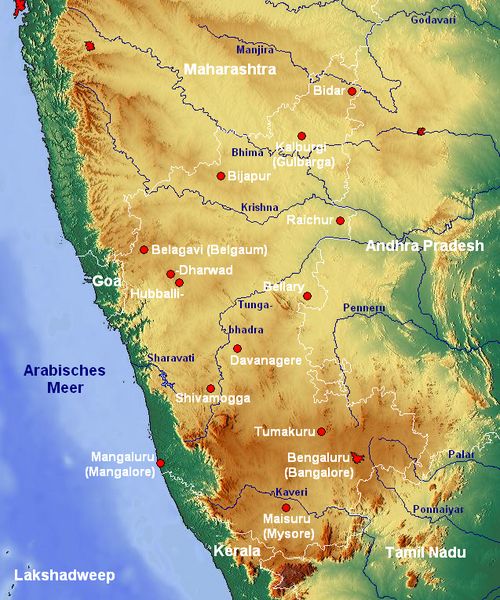
Tungabhadra dam — newly installed spillway crest gates, Koppal district, Karnataka
1 — Issue in Brief
- Chief Ministers of Karnataka (D.K. Shivakumar), Telangana (A. Revanth Reddy) and Andhra Pradesh (N. Chandrababu Naidu), with Union Jal Shakti Minister C.R. Patil, jointly inaugurated 33 newly installed spillway/crest gates of the Tungabhadra dam at Munirabad, Koppal district, Karnataka, on 25 June 2026.
- The event is significant beyond ceremony: it reflects rare three-State consensus on a historically contentious resource — river water — with the leaders pledging deeper cooperation and the Union government proposing a High-Level Committee for a lasting water-sharing resolution.
- Background trigger: on 10 August 2024, Crest Gate No. 19 was washed away when its operating chain snapped under heavy inflow, releasing an estimated 70,000–1,00,000 cusecs in an uncontrolled discharge — the dam's first major structural failure in roughly seven decades of operation.
- Following a National Dam Safety Authority (NDSA) recommendation, all 33 gates were replaced with high-grade steel gates at a cost of ₹51 crore, completed within about 123 days, ahead of the monsoon — restoring the dam's full storage capacity of 105 TMC.
2 — Static Background
- The Tungabhadra River is formed by the confluence of the Tunga and Bhadra rivers (originating in the Western Ghats) at Kudli near Shivamogga, flows about 531 km, forms parts of the Karnataka–Andhra Pradesh and Andhra Pradesh–Telangana borders, and joins the Krishna River at Sangamaleshwaram, Andhra Pradesh.
- The dam, located in Karnataka's Koppal district, is built of stone masonry — one of only two major non-cement dams in India, the other being the Mullaperiyar dam.
- Water-sharing is governed by the Krishna Water Disputes Tribunal (KWDT-I, 1969), chaired by Justice R.S. Bachawat; its final order (gazetted 31 May 1976) fixed a 65:35 sharing ratio between Karnataka and undivided Andhra Pradesh for Tungabhadra water and evaporation losses.
- The Tungabhadra Board, constituted by the President on 1 October 1953, manages the dam's operations and water releases under the Tribunal's award.
- Following the 2014 bifurcation of Andhra Pradesh, Telangana holds an allocated entitlement of 15.9 TMC from the Tungabhadra system, accessed partly via the ageing Rajolibanda Diversion Scheme (RDS) canal.
- Article 262 of the Constitution empowers Parliament to bar Supreme Court jurisdiction over inter-State river water disputes — operationalised through the Inter-State River Water Disputes (ISRWD) Act, 1956, under which tribunals like the KWDT are constituted.
- Original reservoir capacity was 133 TMC, reduced to about 106 TMC due to siltation — a recurring problem across Indian reservoirs that the editorial flags as needing urgent national attention.
3 — Key Dimensions
- A rare success story in inter-State water relations: unlike the long-running Cauvery dispute (Karnataka–Tamil Nadu) or simmering Krishna-basin tensions, the Tungabhadra has remained comparatively dispute-free due to an established sharing formula plus a functioning joint regulatory body — illustrating that institutional design, not just legal allocation, prevents conflict.
- Disaster response as a trust-building exercise: the emergency response to the 2024 gate failure — a rapid temporary fix followed by a complete, accelerated permanent overhaul — demonstrates that competent crisis management can convert a structural failure into a cooperative-federalism success rather than a flashpoint.
- Unresolved friction beneath the cooperative optics: the Upper Bhadra project, a Karnataka lift-irrigation scheme upstream of the Tungabhadra dam, remains a point of contention for Andhra Pradesh and Telangana, who fear it will reduce inflows into the shared reservoir.
- Centre's shifting posture: the Union government had budgeted ₹5,300 crore for the Upper Bhadra project in 2023-24 (ahead of Karnataka Assembly elections) but subsequently withdrew it from central schemes, leaving it to be implemented by a Karnataka State undertaking — raising questions about consistent Central facilitation of inter-State water issues.
- Dam safety as a national, not just regional, concern: the gate failure exposed risks in ageing dam infrastructure; with rehabilitation projects under way in 19 States, the episode underlines the need for proactive monitoring rather than reactive repair.
- Telangana's assertiveness on RDS entitlements: even amid the cooperative optics, Telangana's irrigation department has pushed to assert its water-sharing rights on the Rajolibanda Diversion Scheme, signalling that underlying distributional questions persist.
4 — Critical Analysis
- In favour — Demonstrates cooperative federalism is achievable: a clear, tribunal-backed sharing formula (65:35) and an empowered joint body (the Tungabhadra Board) already exist, providing a possible template for other inter-State river disputes that lack such institutional scaffolding.
- In favour — Swift, competent disaster response built political capital: completing a 33-gate replacement in about 123 days, ahead of the monsoon, shows that technical execution under pressure can produce a tangible trust dividend among otherwise rival State governments.
- In favour — Joint platform signalling: three Chief Ministers from different parties sharing a stage and agreeing to a Union-proposed High-Level Committee reflects a genuine, if cautious, willingness to de-politicise water as an issue, especially significant given the historically charged nature of southern river disputes.
- Against — The success so far is about infrastructure repair, not the harder distributional question: the Upper Bhadra dispute and Telangana's RDS claims show that deeper allocation conflicts remain unresolved beneath the ceremonial cooperation on display.
- Against — Centre's inconsistency: budgeting and then withdrawing support for the Upper Bhadra project suggests Central engagement with inter-State water issues can be politically opportunistic rather than institutionally driven, undermining the durability of any new High-Level Committee.
- Against — Siltation and capacity loss are structural, not solved by gate replacement: with capacity down from 133 to about 106 TMC, the cooperative spirit on display does not yet address the dam's long-term storage decline, which the editorial itself flags as needing urgent attention.
- Against — A single-incident failure highlights deeper national vulnerability: that a roughly 70-year-old gate could fail catastrophically points to a broader pattern of deferred maintenance across India's ageing dam stock, of which the Tungabhadra is only one instance.
5 — Way Forward
- Use the Tungabhadra model — a tribunal-fixed sharing ratio plus a standing joint board — as a template to strengthen institutional mechanisms in other unresolved inter-State river disputes.
- Operationalise the proposed High-Level Committee to resolve the Upper Bhadra and Rajolibanda Diversion Scheme frictions before they escalate, rather than letting cooperative optics substitute for distributional clarity.
- Expedite desilting and capacity-restoration programmes for the Tungabhadra reservoir alongside similar dam rehabilitation projects across the 19 States currently undertaking such work.
- Strengthen the National Dam Safety Authority's monitoring mandate so that structural risk assessment is continuous and preventive rather than reactive to failures like the 2024 gate collapse.
- Ensure consistent Central co-financing for inter-State infrastructure — avoiding the Upper Bhadra budget-then-withdraw pattern — to sustain the trust built through the 2026 joint inauguration.
6 — Data and Key Facts
33Crest/spillway gates of the Tungabhadra dam inaugurated on 25 June 2026
₹51 CrCost of replacing all 33 gates with high-grade steel, completed in ∼123 days
105 TMCFull storage capacity restored after the gate replacement
65:35Tungabhadra water-sharing ratio between Karnataka and undivided Andhra Pradesh (KWDT-I)
133 → 106 TMCOriginal vs current reservoir capacity, reduced due to siltation
15.9 TMCTelangana's allocated entitlement from the Tungabhadra system post-2014 bifurcation
- Gate No. 19 failure: washed away on 10 August 2024 when its operating chain snapped under heavy inflow pressure, releasing an estimated 70,000–1,00,000 cusecs in an uncontrolled discharge — the dam's first major structural failure in roughly seven decades.
- KWDT-I (Bachawat Tribunal): constituted 1969; final order gazetted 31 May 1976; fixed the 65:35 Tungabhadra sharing ratio and allocated about 230 TMC for utilisation against the original 134 TMC capacity, since the reservoir fills more than once a year.
7 — Prelims Pointers
Tungabhadra dam — Koppal district, Karnataka; stone-masonry construction (one of only two major non-cement dams in India, with Mullaperiyar)
KWDT-I (Bachawat Tribunal), 1969 — fixed 65:35 Tungabhadra water-sharing between Karnataka and undivided Andhra Pradesh; final order gazetted 31 May 1976
Tungabhadra Board — constituted 1 October 1953 by the President; manages dam operations and releases
Article 262 — bars Supreme Court jurisdiction over inter-State river disputes if Parliament so provides; basis for the ISRWD Act, 1956
Telangana's Tungabhadra entitlement — 15.9 TMC, post-2014 bifurcation; accessed via the Rajolibanda Diversion Scheme (RDS)
Tungabhadra River — formed by confluence of Tunga and Bhadra near Shivamogga; joins the Krishna at Sangamaleshwaram, Andhra Pradesh
Exam note: Do not confuse the Tungabhadra Board (constituted 1953, manages dam operations) with the KWDT/Bachawat Tribunal (constituted 1969, fixed the water-sharing ratio). Also recall Article 262 as the constitutional basis for inter-State river dispute tribunals, distinct from ordinary Supreme Court litigation.
8 — Practice Mains Question
The Tungabhadra dam episode illustrates both the promise and the limits of cooperative federalism in inter-State river water management. Discuss, with reference to institutional mechanisms for resolving such disputes in India.GS 2 · 15 marks · ~250 words · Inter-State Relations & Cooperative Federalism
- Intro: Introduce the June 2026 joint inauguration of the Tungabhadra dam's new crest gates as a rare instance of three-State consensus on a historically contentious resource.
- Body 1 — The institutional success: the role of the KWDT-I sharing formula and the standing Tungabhadra Board in keeping the basin comparatively dispute-free, and the swift joint disaster response to the 2024 gate failure.
- Body 2 — The limits: unresolved friction over the Upper Bhadra project, Telangana's RDS claims, inconsistent Central co-financing, and the unaddressed structural problem of reservoir siltation. Avoid one-sided analysis.
- Conclusion: Institutional design (tribunal-backed formulas plus joint river boards) is necessary but not sufficient; sustained Central facilitation and resolution of upstream disputes are needed to convert ceremonial cooperation into durable federal trust.
9 — Practice MCQ
With reference to the Tungabhadra river and dam, consider the following statements:
1. The Tungabhadra Board was constituted under the Inter-State River Water Disputes Act, 1956.
2. The Krishna Water Disputes Tribunal (KWDT-I) fixed the Tungabhadra water-sharing ratio between Karnataka and undivided Andhra Pradesh.
3. The Tungabhadra dam is one of the few major dams in India built of stone masonry rather than cement.
Which of the statements given above are correct?
(a) 1 and 2 only(b) 2 and 3 only(c) 1 and 3 only(d) 1, 2 and 3