
PIB Summaries 12 June 2026
12 June 2026 · Legacy IAS
Contents01
Panchayati Raj Initiatives Win Gold & Silver at National e-Governance Awards 2026
Ministry of Panchayati Raj · PIB, 11 June 2026
GS 2GS 3
02
Network Survey Vehicles: AI-Powered Digital Monitoring for National Highways
Ministry of Road Transport & Highways · PIB, 11 June 2026
GS 3
03
12 Years of Social Justice: DoSJE Review — Scholarships, SMILE, NAMASTE & More
Dept. of Social Justice & Empowerment · PIB, 11 June 2026
GS 2Essay
Article 01
Article 01
Panchayati Raj Initiatives Shine at National e-Governance Awards 2026
Ministry of Panchayati Raj · PIB, 11 June 2026
Syllabus Relevance: GS 2 — Local Government, Devolution of Powers, e-Governance; GS 3 — Digital India, Technology in Governance. Relevant to questions on Panchayati Raj Institutions, 73rd Amendment, and grassroots service delivery.
GS 2GS 3
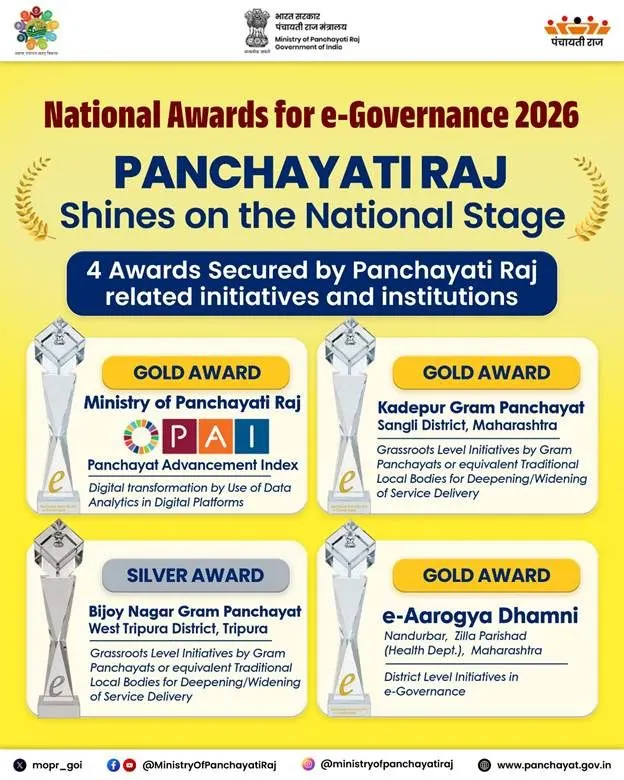
29th National Conference on e-Governance, Jaipur, 1–2 July 2026. Theme: Viksit Bharat 2047: AI-Enabled, Data-Driven and Secure Digital Governance.
Key Data at a Glance
4Panchayati Raj initiatives awarded out of 17 total projects
₹10LIncentive for Gold Awardees; ₹5L for Silver Awardees
1.65L+Gram Panchayats participated in NAeG 2026 from 30 States
1,355+Services delivered online by Kadepur GP to 4,300+ beneficiaries
88.55PAI 2.0 score (Grade A) of Bijoy Nagar GP — 38% improvement over PAI 1.0
194%Growth in Own Source Revenue (OSR) of Bijoy Nagar Gram Panchayat
Issue in Brief
- National Awards for e-Governance (NAeG) 2026 recognised 4 Panchayati Raj initiatives out of 17 projects across 7 categories, highlighting the growing role of Gram Panchayats in digital governance.
- Awards will be conferred at the 29th National Conference on e-Governance in Jaipur, Rajasthan, on 1–2 July 2026, jointly organised by DARPG (Department of Administrative Reforms and Public Grievances), MeitY (Ministry of Electronics and Information Technology), and the Government of Rajasthan.
- Conference theme: "Viksit Bharat 2047: AI-Enabled, Data-Driven and Secure Digital Governance" — reflecting the government's push toward AI, data-driven decisions, and cybersecurity in public services.
- Distribution of awards: 10 Gold, 6 Silver, 1 Jury Award across 17 projects in 7 categories.
Static Background
- Panchayati Raj Institutions (PRIs) form the third tier of governance under the 73rd Constitutional Amendment Act, 1992, which gave constitutional status to local self-government and mandated devolution of the 3Fs — Functions, Functionaries, and Funds.
- Article 243G of the Constitution empowers state legislatures to endow Panchayats with authority to prepare plans for economic development and social justice.
- The dedicated Gram Panchayat category under NAeG was introduced for the first time at NAeG 2025, following advocacy by the Ministry of Panchayati Raj to recognise online citizen service delivery at the grassroots level.
- NAeG 2025 saw 1.45 lakh entries from 26 States/UTs; NAeG 2026 saw 1.65 lakh+ GPs from 30 States — reflecting sustained capacity-building and digital adoption.
Key Dimensions
- Panchayat Advancement Index (PAI) — Gold Award: The PAI is the Ministry of Panchayati Raj's flagship performance measurement tool for Gram Panchayats, assessing them on indicators aligned with the nine themes of Localised Sustainable Development Goals (LSDGs) — India's grassroots-level adaptation of the UN SDG framework. Won Gold under the category Digital Transformation by Use of Data Analytics.
- Kadepur Gram Panchayat, Sangli District, Maharashtra — Gold: Delivers 1,355+ services fully online through a paperless e-Office; uses 8 AI-powered applications, Blockchain-based record management, and GIS-based property geo-tagging. Notably, it is the only GP in India with formally approved policies on AI, Blockchain, Nanotechnology, Biotechnology, and Robotics.
- Bijoy Nagar Gram Panchayat, West Tripura — Silver: PAI 2.0 score of 88.55 (Grade A) — a 38% improvement over PAI 1.0; Own Source Revenue (OSR) grew by 194%; 100+ services online; the Gram Barta platform enables real-time voice communication with every household; achieved 100% digital literacy among women.
- Zilla Parishad Nandurbar, Maharashtra — Gold (District Level): Initiative e-Aarogya Dhamni deploys digital tools to extend fast, quality healthcare to tribal and remote areas of Nandurbar, a predominantly tribal (Schedule V) district — won Gold under the category District-Level Initiatives in e-Governance.
Critical Analysis
- The rapid growth in GP participation (1.45L → 1.65L in one year) reflects sustained Ministry-led capacity building and growing digital readiness among PRIs — a positive institutional signal.
- Kadepur and Bijoy Nagar are outlier success stories, not yet systemic transformation; the gap between award-winning GPs and the average GP — in terms of internet access, trained staff, and fiscal autonomy — remains wide.
- Despite constitutional mandates, actual devolution of funds and functionaries to PRIs remains incomplete in most states; digital tools cannot substitute for absent administrative capacity.
- PAI is a valuable data tool, but quality of self-reported data by GPs may vary without independent verification; high PAI scores may not always fully reflect ground realities.
- Bijoy Nagar's 194% OSR growth is commendable but should be read with context — base OSR for most GPs is extremely low, making high percentage growth figures potentially misleading without absolute figures.
- AI, Blockchain, and GIS adoption at GP level — while impressive — risks deepening inequalities between tech-savvy, urban-adjacent GPs and resource-poor, remote ones without deliberate bridging support.
Way Forward
- Scale replication models: Document Kadepur and Bijoy Nagar best practices in accessible, language-neutral formats for adaptation by GPs across India.
- Complete 3Fs devolution: States must accelerate genuine transfer of funds, functions, and functionaries — digital tools are only as effective as the administrative structure supporting them.
- Strengthen OSR frameworks: Provide GPs with legal and technical tools (e.g., property tax reform, GIS-based assessment) for sustainable revenue growth.
- Independent audit of PAI data: Third-party verification of PAI scores would strengthen the credibility and policy utility of the index.
- Digital equity focus: Target digital literacy programs — especially for women, as demonstrated at Bijoy Nagar — as a prerequisite for meaningful e-governance adoption in lagging GPs.
Prelims Pointers
NAeG 2026
17 projects, 7 categories; 10 Gold, 6 Silver, 1 Jury Award
Gold / Silver Incentive
₹10 lakh (Gold); ₹5 lakh (Silver) — for project implementation
29th e-Governance Conference
1–2 July 2026, Jaipur; jointly by DARPG + MeitY + Govt. of Rajasthan
PAI (Panchayat Advancement Index)
Measures GP performance on 9 LSDG themes; Ministry of Panchayati Raj
LSDGs
Localised Sustainable Development Goals — India's village-level SDG framework
73rd Amendment / Article 243G
Constitutional basis for PRIs; mandates 3Fs devolution
GP NAeG Category
Introduced for first time at NAeG 2025
e-Aarogya Dhamni
ZP Nandurbar's digital health initiative for tribal areas; Gold Award 2026
Gram Barta
Real-time voice communication platform used by Bijoy Nagar GP, Tripura
OSR (Own Source Revenue)
Key fiscal autonomy metric for GPs; Bijoy Nagar grew OSR by 194%
Mains Practice Question
"Digital governance initiatives at the Panchayat level, though promising, risk widening intra-rural inequalities without structural reforms." Critically examine this statement in the context of India's Panchayati Raj Institutions.
GS Paper 2 · Local Government, Governance · 250 words
Practice MCQ
Q. Consider the following statements regarding the Panchayat Advancement Index (PAI):
1. PAI is administered by the Ministry of Electronics and Information Technology.
2. It assesses Gram Panchayats on indicators aligned with Localised Sustainable Development Goals (LSDGs).
3. The number of LSDG themes used in PAI assessment is nine.
Which of the above statements is/are correct?
A) 1 and 2 onlyB) 2 and 3 onlyC) 1 and 3 onlyD) 1, 2 and 3
Article 02
Article 02
Network Survey Vehicles: AI-Powered Digital Monitoring for National Highways
Ministry of Road Transport & Highways (MoRTH) · PIB, 11 June 2026
Syllabus Relevance: GS 3 — Infrastructure, Technology and Innovation, Road Safety, AI in Governance. Relevant to questions on NHAI, highway maintenance, and data-driven public administration.
GS 3
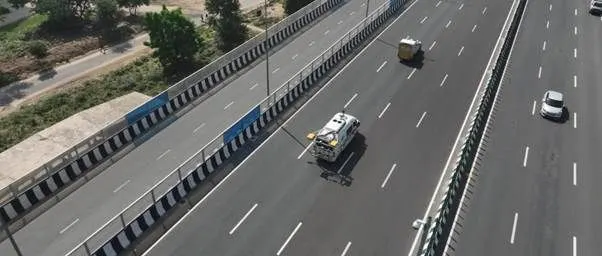
A Network Survey Vehicle equipped with 3D laser sensors, GPS, and high-resolution cameras scans a National Highway corridor.
Key Data at a Glance
300 kmSurvey coverage per day (up from 20–80 km/day earlier)
48 hrsTime for encrypted raw data transmission to central NSV centre
10 daysTime to convert raw data to actionable insights (earlier: 4–6 months)
5 ZonesExpert monitoring teams strategically deployed across India
6 monthsFrequency of NSV surveys on National Highways
2–8 laneScope: all National Highways from 2-lane to 8-lane across terrains
Issue in Brief
- MoRTH (Ministry of Road Transport and Highways) has deployed Network Survey Vehicles (NSVs) equipped with advanced 3D laser-based systems across all states to modernise highway monitoring and maintenance.
- NSVs represent a decisive shift from reactive road repair to proactive, data-driven, AI-assisted highway maintenance — reducing the time from defect detection to corrective action.
- The initiative integrates with NHAI's AI-based Data Lake portal and includes a mobile app for field inspectors, closing the accountability loop until defects are 100% rectified.
Static Background
- NHAI (National Highways Authority of India) is the statutory body established under the National Highways Authority of India Act, 1988, responsible for development, maintenance, and management of National Highways.
- India's National Highway network is one of the largest in the world; road accidents remain a major public health challenge — India accounts for a disproportionately high share of global road fatalities (WHO Global Road Safety Report).
- Bharatmala Pariyojana is the flagship national highway development programme driving NH expansion across India.
Key Dimensions
- What is an NSV? A specialised vehicle fitted with laser profilers, 3D laser sensors, GPS, and high-resolution cameras that scans road surfaces for cracks, potholes, ruts, and unevenness — transforming highways into living digital maps.
- 3-Step Centralised Data Flow: (1) Encrypted raw data transmitted to the central NSV centre within 48 hours; (2) Expert teams in five zones monitor and report systematically; (3) Actionable insights generated within 10 days — a process that previously took 4–6 months.
- AI Integration via Data Lake: All NSV data is uploaded to NHAI's AI-based Data Lake portal, enabling expert teams to analyse findings quickly and take evidence-backed maintenance decisions without delay.
- Digital Accountability — Mobile App: Site inspectors can view NSV findings in real time, post geo-stamped photos, and track rectifications directly on-site, ensuring transparency and accountability at every step.
- 100% Rectification Mandate: Unlike earlier monitoring systems, the new NSV framework considers the process complete only after defects are fully rectified — road maintenance agencies are held accountable until full resolution.
- Coverage and Frequency: Covers 2–8 lane National Highways across diverse terrains — freight corridors, high-traffic stretches, weather-prone regions — at six-month intervals.
Critical Analysis
- The reduction in data-to-insight time from 4–6 months to 10 days is operationally transformative — near-real-time defect detection can meaningfully reduce accident risk on highways.
- The 100% rectification accountability mandate addresses a long-standing governance gap where earlier systems stopped at monitoring without ensuring actual repair.
- Centralisation risk: Five-zone monitoring structures are positive, but over-centralisation of data analysis may create processing bottlenecks if zone teams are understaffed or under-resourced.
- Last-mile implementation gap: Technology at the monitoring end must be matched by adequate field capacity in road maintenance agencies — the PIB article does not address whether contractual enforcement mechanisms are in place to compel timely repairs.
- Transparency deficit: Digital notices to "stakeholders" are mentioned, but there is no indication of public disclosure — whether citizens can access defect-to-rectification data would be essential for genuine accountability.
- Limited scope: NSVs cover National Highways only; State Highways and rural roads — which carry significant traffic and record worse safety outcomes — remain outside this framework.
Way Forward
- Extend to state highways: MoRTH should work with states under cooperative federalism to extend NSV-type monitoring to State Highway networks.
- Public dashboard: Make defect detection and rectification data publicly accessible to enable citizen oversight and reduce political interference in repair prioritisation.
- Strengthen PBMCs: Performance-Based Maintenance Contracts should legally enforce NSV-identified defects as mandatory repair obligations on highway contractors.
- Accident data integration: Cross-reference NSV defect maps with MoRTH accident data to prioritise repairs at high-mortality stretches first.
- Capacity building in zones: Ensure zonal expert teams are adequately staffed and trained so that data bottlenecks do not simply shift from technology to human processing.
Prelims Pointers
NSV (Network Survey Vehicle)
3D laser, GPS, cameras; scans NH surface defects
NHAI
Statutory body under NHAI Act, 1988; manages National Highways
Coverage speed
Up to 300 km/day (earlier: 20–80 km/day)
Data processing time
10 days (earlier: 4–6 months); raw data sent to centre in 48 hrs
Zonal monitoring
5 zones across India for expert analysis
Data Lake portal
NHAI's AI-based platform for highway data analysis
Survey frequency
Every 6 months on all 2–8 lane NHs
PBMC
Performance-Based Maintenance Contract — key enforcement tool
Bharatmala Pariyojana
Flagship NH expansion programme; context for NHAI's role
Mobile App
Enables real-time findings, geo-stamped photos, on-site rectification tracking
Mains Practice Question
"Technology-based road monitoring systems like Network Survey Vehicles are necessary but not sufficient for improving highway safety in India." Analyse the statement, highlighting the strengths of such systems and the structural gaps that need to be addressed.
GS Paper 3 · Infrastructure, Technology in Governance · 250 words
Practice MCQ
Q. With reference to the Network Survey Vehicles (NSVs) deployed by MoRTH on National Highways, which of the following statements are correct?
1. NSVs use 3D laser sensors, GPS, and high-resolution cameras to assess road surface conditions.
2. Survey data is converted into actionable insights within 24 hours of collection.
3. All NSV data is uploaded to NHAI's AI-based Data Lake portal.
4. NSVs conduct surveys on National Highways at six-month intervals.
Select the correct answer using the codes given below:
A) 1, 3 and 4 onlyB) 1 and 3 onlyC) 2, 3 and 4 onlyD) 1, 2, 3 and 4
Article 03
Article 03
12 Years of Social Justice: DoSJE Review — Scholarships, SMILE, NAMASTE & More
Department of Social Justice & Empowerment (DoSJE) · PIB, 11 June 2026
Syllabus Relevance: GS 2 — Welfare Schemes, Social Justice, Vulnerable Sections, Mechanisms for Weaker Sections; Essay — Empowerment and Social Change. Relevant to questions on scholarship schemes, SC/ST Act, transgender rights, manual scavenging, and DBT reforms.
GS 2Essay
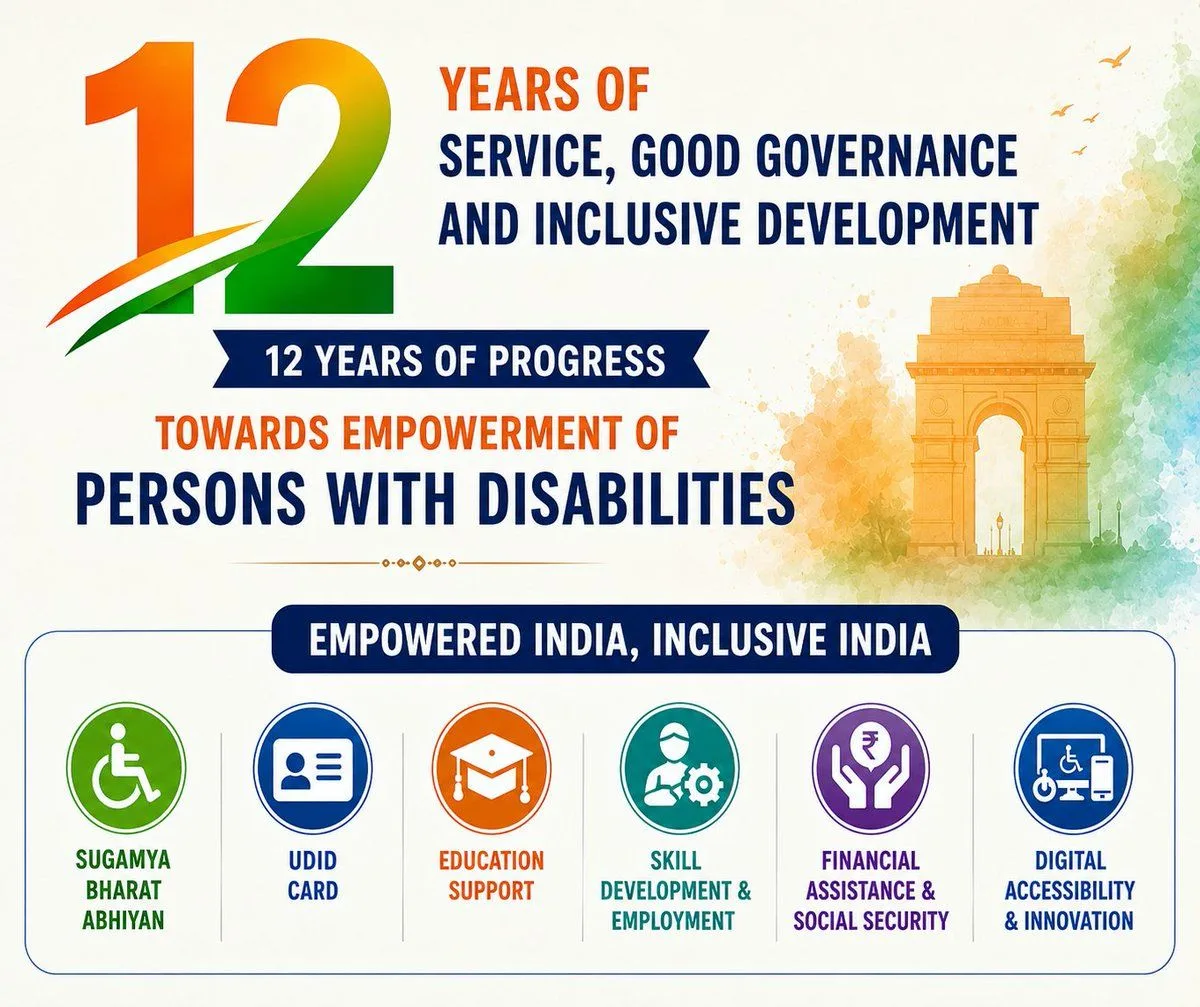
The Department of Social Justice and Empowerment (DoSJE) released a 12-year achievement review highlighting welfare, education, and empowerment outcomes from 2014 to 2026.
Key Data at a Glance
11 Cr+Total beneficiaries claimed across all schemes since 2014
₹71,000 Cr+Total social justice spending across all schemes
6.12 CrStudents supported under Post-Matric Scholarship for SCs; ₹46,581 Cr released
1,069 LakhStudents benefited under PM-YASASVI (OBC/EBC/DNT); ₹15,555 Cr
7.26 LakhAtrocity victims supported; ₹5,012 Cr released since 2014
3.42 LakhSanitation workers covered under NAMASTE scheme
Issue in Brief
- The Department of Social Justice and Empowerment (DoSJE) released a 12-year achievement review (2014–2026) claiming direct impact on over 11 crore beneficiaries across marginalised communities including SCs, OBCs, senior citizens, transgender persons, and sanitation workers.
- Total outlay highlighted: ₹71,000+ crore across multiple schemes spanning education, atrocity prevention, de-addiction, senior citizen welfare, transgender rights, SC/BC entrepreneurship, and elimination of manual scavenging.
- The review marks a claimed shift from basic welfare to active empowerment, anchored by Direct Benefit Transfer (DBT) reforms and legislative strengthening.
Static Background
- The Ministry of Social Justice and Empowerment is the nodal ministry for welfare of Scheduled Castes (SCs), Other Backward Classes (OBCs), Economically Backward Classes (EBCs), Denotified and Nomadic Tribes (DNTs), senior citizens, and transgender persons.
- Key constitutional provisions: Articles 15, 16 (non-discrimination); Article 17 (abolition of untouchability); Article 46 (DPSP — educational and economic interests of weaker sections).
- Key legislation: SC/ST (Prevention of Atrocities) Act, 1989 (amended 2015 and 2018); Transgender Persons (Protection of Rights) Act, 2019; Prohibition of Employment as Manual Scavengers and their Rehabilitation Act, 2013.
Key Dimensions
- Education — DBT Scholarship Reform: Post-Matric Scholarship (PMS) for SCs — 6.12 crore students; ₹46,581.54 crore. Pre-Matric Scholarship — 2.99 crore students; ₹4,893.03 crore. Fully shifted to Aadhaar-linked DBT from FY 2021–22 to eliminate leakages. PM-YASASVI — covers OBC, EBC, and DNT communities; 1,069 lakh students; ₹15,555.53 crore in financial aid, hostel infrastructure, and premier school placements.
- Atrocity Prevention — SC/ST Act Strengthening: Amendments established Exclusive Special Courts and Victim Rights frameworks; raised relief amounts. ₹5,012.17 crore released supporting 7.26 lakh atrocity victims since 2014.
- De-Addiction — NMBA: Nasha Mukt Bharat Abhiyan (NMBA) reached 26.28 crore citizens including 9.56 crore youth through awareness campaigns with spiritual organisations and digital dashboards.
- Senior Citizens — AVYAY: Under Atal Vayo Abhyudaya Yojana (AVYAY), 8.53 lakh elderly persons received 46.32 lakh free assistive devices through Rashtriya Vayoshri camps. National Elderline (14567) resolved over 29 lakh calls.
- Transgender Persons — SMILE Scheme: SMILE (Support for Marginalised Individuals for Livelihood and Enterprise) issues legal identity certificates via a unified National Portal; 33,189 certificates issued. Garima Greh shelters operationalised. Gender-affirmation procedures integrated into Ayushman Bharat PM-JAY.
- SC/BC Entrepreneurship — VCF: Venture Capital Fund for Scheduled Castes (VCF-SC) and VCF-BC (Backward Classes) collectively approved ₹750 crore+ for competitive businesses, generating direct employment.
- Manual Scavenging Elimination — NAMASTE: NAMASTE (National Action for Mechanised Sanitation Ecosystem) deploys ₹2,383.06 crore in concessional finance for mechanisation of sewer cleaning, covering 3.42 lakh sanitation workers.
Critical Analysis
- The shift to Aadhaar-linked DBT for scholarships from FY 2021–22 is a genuine structural improvement that reduces leakage and middlemen; however, the late transition also raises questions about pre-reform underpayments to eligible students.
- The "11 crore beneficiaries" figure is a cumulative, multi-scheme count across 12 years; overlap between beneficiaries and source self-reporting by the Ministry mean it requires independent verification (e.g., CAG audit, NIPFP assessment) for full credibility.
- Manual scavenging persists despite multiple legislative prohibitions under the Manual Scavengers Act, 2013; sewer deaths continue to be reported. NAMASTE's coverage of 3.42 lakh workers must be assessed against the actual scale of the problem, which is widely considered undercounted in official data.
- Transgender inclusion under SMILE is a step forward, but 33,189 certificates represent a small fraction of India's estimated transgender population; stigma, documentation barriers, and healthcare access gaps remain significant on the ground.
- SC/ST Act conviction rates remain very low despite increased financial relief — pointing to systemic failures in police investigation and prosecution that financial support alone cannot address.
- NMBA's claim of reaching 26.28 crore citizens through awareness campaigns involves a counting methodology that is difficult to independently audit — the figure should be treated with analytical caution.
Way Forward
- CAG and parliamentary oversight: Parliament's Standing Committee on Social Justice should conduct beneficiary-level outcome audits — not just expenditure tracking — across all major schemes.
- Disaggregate beneficiary data: Publish scheme-wise, state-wise, and gender-disaggregated beneficiary data publicly to enable meaningful civil society accountability.
- Strengthen SC/ST Act enforcement: Invest in dedicated prosecution infrastructure — special public prosecutors, fast-track courts — beyond financial relief to victims.
- Complete manual scavenging elimination: Implement real-time sewer entry tracking, impose strict penalties on Urban Local Bodies (ULBs) permitting manual entry, and prioritise genuine rehabilitation for affected workers.
- Expand transgender outreach: Ground-level outreach through community organisations is essential to increase certificate uptake and healthcare access under SMILE and PM-JAY.
Prelims Pointers
Post-Matric Scholarship (PMS-SC)
6.12 Cr students; ₹46,581 Cr; full DBT from FY 2021–22
PM-YASASVI
OBC/EBC/DNT; 1,069 lakh students; ₹15,555 Cr; hostels + premier schools
AVYAY
Atal Vayo Abhyudaya Yojana; senior citizen welfare; free assistive devices
Elderline — 14567
National helpline for senior citizens; 29 lakh+ calls resolved
SMILE Scheme
Support for Marginalised Individuals for Livelihood and Enterprise; transgender persons
Garima Greh
Shelter homes for transgender persons; set up under SMILE
NAMASTE
National Action for Mechanised Sanitation Ecosystem; 3.42 lakh sanitation workers
VCF-SC / VCF-BC
Venture Capital Funds for SC and BC entrepreneurs; ₹750 Cr+ approved
NMBA
Nasha Mukt Bharat Abhiyan; de-addiction awareness; 26.28 Cr citizens reached
SC/ST Act Amendments
2015 & 2018; added Exclusive Special Courts; raised relief; Victim Rights framework
Mains Practice Question
"Welfare schemes alone cannot achieve social justice without simultaneous strengthening of institutional accountability and enforcement mechanisms." Critically examine this statement in the context of policies for Scheduled Castes and marginalised communities in India.
GS Paper 2 · Social Justice, Welfare Schemes, Governance · 250 words
Practice MCQ
Q. Which of the following schemes are correctly matched with their target groups?
1. SMILE — Transgender persons
2. NAMASTE — Manual scavenging / sanitation workers
3. PM-YASASVI — Scheduled Castes only
4. AVYAY (Atal Vayo Abhyudaya Yojana) — Senior citizens
Select the correct answer using the codes given below:
A) 1, 2 and 4 onlyB) 1 and 4 onlyC) 2 and 3 onlyD) 1, 2, 3 and 4