
In-Depth PIB Analysis3 Items
Core TopicImportantConcise
International Relations & DefenceGS Paper II · III
01Garuda Shakti — India–Indonesia Special Forces Exercise
Economy & EntrepreneurshipGS Paper III
02National Startup Awards 6.0 — Ten Years of Startup India
Society & Social JusticeGS Paper I · II
03Atal Vayo Abhyuday Yojana — India’s Ageing & Silver Economy
International Relations & DefenceGeneral Studies Papers II & III
01
Exercise Garuda Shakti: India and Indonesia’s Special Forces Train Together in East Java
ImportantGS-II · IR — India and its Extended Neighbourhood (ASEAN, Indo-Pacific)GS-III · Security — Defence CooperationPrelims-orientedPIB · Ministry of Defence · 27 Oct 2026
The 11th edition of Garuda Shakti, the India–Indonesia joint Special Forces exercise, is under way at Banyuwangi, Indonesia from 27 October to 6 November 2026. India is represented by the Parachute Regiment (Special Forces).
Figure 1 — Indonesia: the world’s largest archipelagic state
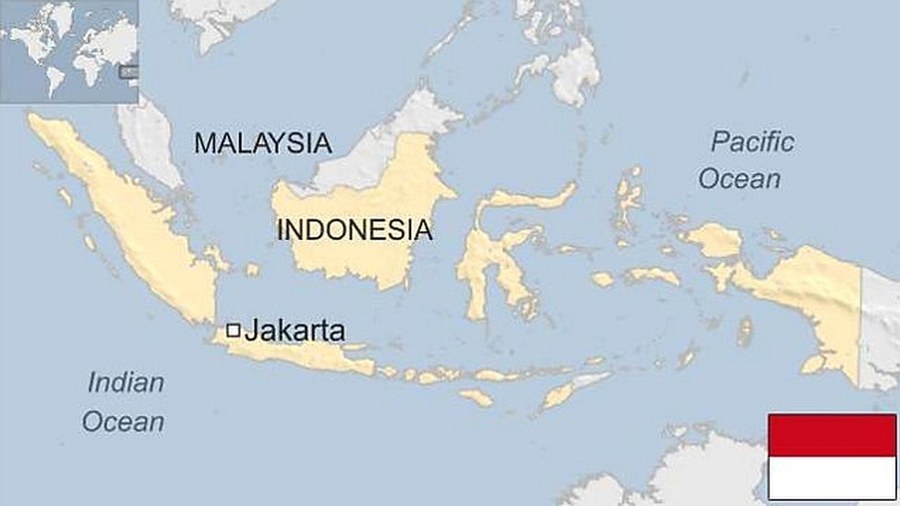
Indonesia straddles the Indian and Pacific Oceans; Banyuwangi lies at the eastern tip of Java, facing Bali. Schematic map; not to scale. Map reproduced with credit for educational use.
◈ Static Background — Indonesia and India
- Geography: more than 17,000 islands; main ones Sumatra, Java, Kalimantan (Borneo), Sulawesi and Papua. Capital Jakarta; a new capital, Nusantara, is being built in East Kalimantan.
- Chokepoints: Indonesia borders the Strait of Malacca and controls the Sunda and Lombok straits — vital sea lanes between the Indian Ocean and the Pacific.
- Maritime neighbour: India’s Andaman & Nicobar Islands lie close to Sumatra; Indonesia’s Sabang port is near India’s southernmost point, Indira Point.
- Groupings: founding member of ASEAN (1967), member of the G20 and, since 2025, of BRICS; the world’s most populous Muslim-majority country.
- Ties: Comprehensive Strategic Partnership (2018); a Shared Vision of Maritime Cooperation in the Indo-Pacific (2018); Indonesia’s President was Chief Guest at Republic Day 2025.
- Cultural links: Ramayana and Mahabharata traditions in Java and Bali; Odisha’s Bali Jatra festival commemorates ancient Kalinga–Bali trade.
▤ Exercise at a Glance
- Edition: 11th; Indonesian side drawn from its Special Forces.
- Focus: special operations in jungle terrain — obstacle crossing, combat marksmanship, mountaineering, air assault and combat-hardening; exchange of expertise on weapons and equipment.
- Culmination: a validation exercise simulating realistic operational scenarios.
- Aim: mutual understanding, interoperability and stronger bilateral defence cooperation.
India–Indonesia Military Exercises — Prelims Map
- Garuda Shakti — Army Special Forces.
- Samudra Shakti — bilateral naval exercise.
- Ind-Indo CORPAT — coordinated naval patrols along the International Maritime Boundary Line, held since 2002.
- Name trap: “Garuda” alone is the India–France air force exercise — do not confuse it with Garuda Shakti.
Why It Matters
- Act East and Indo-Pacific: Indonesia is central to India’s Act East Policy and its vision of a free, open, inclusive Indo-Pacific; both champion ASEAN centrality.
- Maritime security: proximity of the Andamans to the Malacca Strait makes cooperation on piracy, smuggling and sea-lane security a shared interest.
- Defence industry: growing interest in Indian platforms and joint production creates scope for defence exports.
- Counter-terrorism: special-forces training builds skills for jungle and counter-insurgency operations relevant to both countries.
✎ Mains Practice Question
Indonesia is India’s closest maritime neighbour in Southeast Asia. Examine the strategic significance of India–Indonesia relations for India’s Act East Policy and Indo-Pacific vision. 10 marks · 150 words
Economy & EntrepreneurshipGeneral Studies Paper III
02
National Startup Awards 6.0 Launched as Startup India Completes a Decade
ImportantGS-III · Economy — Industrial Policy, Startups, InnovationPrelims + MainsPIB · Ministry of Commerce & Industry (DPIIT) · 27 Oct 2026
The Department for Promotion of Industry and Internal Trade (DPIIT) has opened applications for the 6th National Startup Awards (27 October–20 November 2026), with 20 sectoral and 3 special categories — including 12 new sectors and a first-ever Student Innovator award.
◈ Static Background — Startup India
- Launched: 16 January 2016; 16 January is now observed as National Startup Day. Nodal department: DPIIT.
- Who is a “startup”: a private limited company, registered partnership or LLP, up to 10 years from incorporation, with annual turnover not above ₹100 crore in any year, working on innovation or a scalable business model.
- Funding support: Fund of Funds for Startups (₹10,000 crore, managed by SIDBI; a second fund announced in 2025); Startup India Seed Fund Scheme (2021); Credit Guarantee Scheme for Startups (2022).
- Tax and regulation: income-tax holiday for 3 of the first 10 years (Section 80-IAC) for eligible startups; the so-called “angel tax” was abolished in 2024; self-certification under labour and environmental laws.
- Scale: India is among the world’s three largest startup ecosystems by number of startups and unicorns.
▤ NSA 6.0 at a Glance
- Organiser: DPIIT, Ministry of Commerce & Industry, under Startup India; awards running since 2019.
- Categories: 20 sectoral + 3 special — Women-Led Startups, North-East Startups and the new Student Innovator / Aspiring Entrepreneur award.
- New sectors (12): include Biomanufacturing, Defence & Security, Electronics & Semiconductors, Ocean & Blue Economy, Space-Tech, Drones & Aerospace, and Rural Economy & Traditional Industries.
- Prize: ₹25 lakh per category for winning startups; a ₹25 lakh pool across four sub-categories for the student award.
- Beyond cash: mentorship, investor and market access, and visibility; outreach to Tier-2 and Tier-3 cities.
Prelims Hooks — Terms in the Category List
- Orange Economy: the creative economy — media, design, content, arts and culture.
- Blue Economy: sustainable use of ocean resources for growth, livelihoods and ecosystem health.
- Biomanufacturing: using living systems (microbes, cells) to make products — a focus of the BioE3 policy (2024).
- Deep-tech: startups built on significant scientific or engineering advances (AI, quantum, semiconductors, space).
The Critical View
- Concentration: startups and funding cluster in a few metros (Bengaluru, Delhi-NCR, Mumbai); Tier-2/3 outreach is welcome but needs local incubation and finance.
- Funding cycles: private funding fell sharply after the 2021 peak; awards cannot substitute for patient, long-term capital, especially for deep-tech.
- Inclusion: women-led startups remain a small share of the total and of funding.
- Balanced view: sector categories mirror national priorities (defence, semiconductors, space, oceans), signalling where public support and procurement may flow.
✎ Mains Practice Question
A decade after its launch, evaluate the achievements and limitations of the Startup India initiative in building an inclusive, innovation-driven entrepreneurial ecosystem. 15 marks · 250 words
Society & Social JusticeGeneral Studies Papers I & II
03
Atal Vayo Abhyuday Yojana: India’s Umbrella Scheme for an Ageing Population and the Silver Economy
Core TopicGS-I · Society — Population, AgeingGS-II · Welfare of Vulnerable Sections (Senior Citizens)Prelims + MainsPIB Backgrounder · Ministry of Social Justice & Empowerment · 27 Oct 2026
India’s elderly population is projected to rise from 10.38 crore (Census 2011) to about 23 crore by 2036. The Atal Vayo Abhyuday Yojana (AVYAY), the Centre’s umbrella scheme for senior citizens, released ₹77.98 crore to 755 projects for the quarter ending September 2026 — a moment to examine how ready India is for ageing.
◈ Static Background — Ageing in India
- Who is a senior citizen: a person aged 60 years or above (Maintenance and Welfare of Parents and Senior Citizens Act, 2007).
- Demographic shift: falling fertility and longer life expectancy mean the elderly share — about 8.6% in 2011 — is rising fast; UNFPA’s India Ageing Report 2023 projects it to exceed 20% by 2050.
- Features: feminisation of ageing (more elderly women, many widowed), rising share of the oldest old (80+), and wide State variation — southern States and Himachal Pradesh are ageing fastest.
- Evidence base: the Longitudinal Ageing Study in India (LASI), Wave 1 (2017–18), by IIPS Mumbai for MoHFW, surveyed people aged 45+ on health, economic and social well-being; it found widespread chronic illness and functional limitations.
- Social change: urbanisation, migration and nuclear families are weakening traditional family care.
Figure 2 — India’s elderly population (60+), crore
10.385.11 M5.27 F2011 (Census)~23*2036 (projected)more than doublesM = men, F = women (crore) · *projection cited by MoSJE
Elderly women already outnumber elderly men. Chart recreated by Legacy IAS from Census 2011 and MoSJE figures.
◈ Constitutional & Legal Framework
- Article 41 (DPSP): the State shall make effective provision for public assistance in old age, sickness, disablement and unemployment, within its economic capacity.
- Seventh Schedule: “relief of the disabled and unemployable” — Entry 9, State List; “social security and social insurance” — Entry 23, Concurrent List.
- Maintenance and Welfare of Parents and Senior Citizens Act, 2007: children and relatives must maintain parents/seniors; claims decided by Maintenance Tribunals (capped at ₹10,000 a month); abandonment is punishable.
- BNSS, Section 144 (old CrPC Section 125): maintenance orders for parents unable to maintain themselves.
- Policy: National Policy on Older Persons, 1999.
▤ Scheme at a Glance — AVYAY
- Launched: 2021, subsuming the National Action Plan for Senior Citizens (NAPSrC).
- Nodal Ministry: Ministry of Social Justice & Empowerment (Department of Social Justice and Empowerment).
- Guiding ideas: “Ageing with Dignity” and “Ageing in Place” — supporting seniors to live safely in their own homes and communities.
- Delivery: grants-in-aid to NGOs, Panchayati Raj Institutions and local bodies; State action plans; District Committees chaired by the District Collector select beneficiaries and monitor homes.
- Coverage under IPSrC: 764 senior citizen homes, 13 continuous care homes, 17 mobile medicare units and 3 physiotherapy clinics.
- Latest release: ₹77.98 crore to 755 projects (quarter ending 30 September 2026).
Figure 3 — Developmental objectives of AVYAY
Nine objectives span security, care, rights and productive ageing. Infographic courtesy PIB / MoSJE, 27 October 2026; reproduced with credit for educational use.
Building Blocks of AVYAY
Figure 4 — AVYAY as an umbrella scheme
AVYAY (2021)Ministry of Social Justice & EmpowermentIPSrCOld-age homes, carehomes, MMUs via NGOs;RRTCs for trainingSAPSrCState action plans;caregivers, cataractdrives (≤20% own ideas)Rashtriya VayoshriAssistive devicesvia ALIMCO;10.45 lakh+ beneficiariesElderline 14567National helpline(Oct 2021); 8.66 lakhactionable callsSAGEElder-care startups;equity up to ₹1 croreSCOPEJob-matching portalfor seniorsPM-SPECIALFree training ofgeriatric caregiversJEEVAN · SHATAYUApp + caregiverdashboard (May 2026)
Top row: care and assistance; bottom row: silver economy, engagement and digital tools. Diagram drawn by Legacy IAS from MoSJE information.
- IPSrC (Integrated Programme for Senior Citizens): the main arm — grants to NGOs and local bodies for homes and care facilities; it evolved from the Integrated Programme for Older Persons (1992). Regional Resource and Training Centres get ₹19.58 lakh a year each for training, research and inspections.
- SAPSrC: grants to States and UTs; up to 20% can be used for State-specific innovations, and States are expected to add their own funds.
- Rashtriya Vayoshri Yojana (2017): assistive living devices for eligible seniors, distributed by ALIMCO (a PSU under MoSJE) through camps and PM Divyasha Vayoshri Kendras — over 55 lakh devices to 10.45 lakh+ seniors.
- SHATAYU dashboard: lists 30,151 trained caregivers — 23,334 women and 6,817 men.
- Intergenerational bonding: an MoU (1 September 2026) with Ramakrishna Math and Mission for a school-based programme in 200 pilot schools.
Figure 5 — Rashtriya Vayoshri Yojana: eligibility and devices
Eligibility: BPL seniors or those with monthly income up to ₹15,000. Infographic courtesy PIB / MoSJE, 27 October 2026; reproduced with credit for educational use.
Related Schemes Beyond AVYAY
- Indira Gandhi National Old Age Pension Scheme (NSAP, 1995): monthly central pension of ₹200 (60–79 years) and ₹500 (80+) for BPL elderly, topped up by States.
- Ayushman Bharat PM-JAY: extended in 2024 to all citizens aged 70+, regardless of income (Ayushman Vay Vandana card).
- National Programme for Health Care of the Elderly (2010–11): geriatric care through the public health system.
- Global anchors: Madrid International Plan of Action on Ageing (2002); UN Decade of Healthy Ageing (2021–2030); 1 October — International Day of Older Persons.
The Critical View
- Scale gap: fewer than 800 supported homes and about 30,000 registered caregivers are small against a population of over 10 crore elderly — demand will more than double by 2036.
- Income security: the central old-age pension of ₹200 has not been revised in years; most elderly lack contributory pensions, especially women and informal workers.
- Health costs: chronic disease and high out-of-pocket spending dominate elderly vulnerability; geriatric specialists and long-term care are scarce.
- Implementation: grant-in-aid models depend on NGO quality and timely releases; monitoring and standards for homes need strengthening.
- Elder abuse and loneliness: under-reported; awareness of the 2007 Act and Maintenance Tribunals is low.
- Opportunity side: the silver economy — assistive tech, care services, senior housing, re-employment — can create jobs, especially for women caregivers.
Way Forward
- Build a long-term care policy combining home-based care, community centres and regulated assisted living.
- Revise and index old-age pensions; expand contributory schemes for informal workers.
- Geriatric capacity: train more caregivers, add geriatric wards and specialists, and integrate with primary health care.
- Strengthen enforcement of the 2007 Act and use digital tools (Elderline, JEEVAN) for outreach and grievance redress.
- Promote age-friendly cities — accessible transport, public spaces and housing.
✎ Mains Practice Question
India is ageing faster than it is preparing for old age. Critically examine the adequacy of India’s policy framework for senior citizens, including the Atal Vayo Abhyuday Yojana, and suggest measures to build a comprehensive system of elderly care. 15 marks · 250 words