

Content
- Digital Governance in India: Challenges in the Era of 31 GB Data Consumption
- India’s Macroeconomic Contradiction & Oil–Fiscal Vulnerability
- India’s Semiconductor Push: Sanand as “Bridge to Silicon Valley”
- Space Debris & Orbital Governance Crisis: “Failure of Governance, Not Engineering”
- Maternal Mortality in India: Progress, Gaps, and 2030 Challenge
- Artemis II Mission: Human Return to Lunar Orbit
- INS Dunagiri (Project 17A): Boost to Aatmanirbhar Naval Capability
Digital Governance in India: Challenges in the Era of 31 GB Data Consumption
Why in News?
- India’s average monthly mobile data consumption reached 31 GB per user in 2025, rising sharply from 27.5 GB in 2024 (Nokia MBiT Report).
- India now has world’s second-largest 5G subscriber base and 5G data consumption, indicating rapid digital expansion.
- Highlights emerging paradox: high data consumption coexists with structural governance, infrastructure, and inclusion challenges.
Relevance
GS II (Polity & Governance)
- Digital India & e-governance reforms
- Service delivery & last-mile governance gaps
- Digital inclusion & accessibility issues
- State capacity & governance efficiency
GS III (Science & Technology + Economy)
- Digital Public Infrastructure (DPI)
- 5G expansion & telecom infrastructure
- Digital divide & rural connectivity gaps
- Data economy & platform governance
Practice Question
Q1. India’s rising digital consumption has not translated into equitable digital governance outcomes.Critically examine. (250 words)
Context
- India’s digital ecosystem is expanding rapidly with 5G rollout, AI-driven services, and digital public infrastructure platforms.
- Growth in data consumption is driven by video streaming, AI applications, digital governance services, and cloud-based platforms.
- However, governance systems face challenges in translating digital access into meaningful inclusion and administrative empowerment.
Digital India Programme
- Launched in 2015 to transform India into a digitally empowered society and knowledge economy.
- Focus areas include:
- Digital infrastructure as a core utility
- Governance and services on demand
- Digital empowerment of citizens
Digital Public Infrastructure (DPI)
- India’s DPI stack includes:
- Aadhaar (identity)
- UPI (payments)
- DigiLocker (documents)
- Aims to enable scalable, interoperable, and inclusive governance systems.
Infrastructure Gap: The “31 GB Challenge”
- Rapid increase in data usage to 31 GB/user places heavy pressure on rural telecom infrastructure and middle-mile connectivity systems.
- 5G traffic remains concentrated in metros, with 58% of metro data traffic on 5G, while rural areas depend on congested 4G networks.
- Around 35,000 Gram Panchayats face dark fiber issues, where optical fiber exists but remains non-operational.
- Creates digital inequality where urban users access high-speed AI services, while rural users face latency and connectivity disruptions.
India’s Macroeconomic Contradiction & Oil–Fiscal Vulnerability
Why in News?
- Rising global oil prices amid West Asia tensions have exposed India’s structural fiscal vulnerability to external energy shocks.
- Empirical estimates and recent fiscal responses highlight simultaneous pressures on inflation, fiscal deficit, and current account balance.
- Debate intensifies on India’s “growth vs resilience” contradiction, where strong GDP coexists with deep macroeconomic stress.
Relevance
GS III (Economy)
- Fiscal policy & FRBM framework
- Inflation, Current Account Deficit (CAD), and growth linkages
- Energy security & oil import dependence
- External sector vulnerabilities
Practice Question
Q1. Examine how global oil price shocks affect India’s fiscal stability, inflation, and growth trajectory. (250 words)
Context
- India’s macroeconomy shows divergence between robust headline indicators (growth, forex reserves) and underlying vulnerabilities (oil shocks, consumption stress, fiscal pressures).
- Increasing reliance on transaction-based taxes and infrastructure-led expenditure has made fiscal system more sensitive to external shocks.
- Energy dependence (85–87% crude imports) acts as primary transmission channel of global instability into domestic economy.
Static Background
Fiscal Architecture of India
- Fiscal policy guided by FRBM Act, targeting fiscal deficit consolidation while maintaining growth-supportive expenditure.
- Revenue sources:
- Direct taxes (income, corporate)
- Indirect taxes (GST, excise duties)
- Expenditure pattern includes:
- Capital expenditure (infrastructure)
- Revenue expenditure (subsidies, welfare schemes)
External Sector Linkages
- Current Account Deficit (CAD) reflects difference between imports and exports of goods and services.
- Oil imports constitute largest share of India’s import bill, making CAD highly sensitive to crude price fluctuations.
Core Macroeconomic Contradiction
- India recorded strong GDP growth (~8.1% in Q3 FY26) and high forex reserves (~$709 billion), indicating macroeconomic stability.
- Simultaneously, rupee depreciation (~₹95/$), FPI outflows ($8 billion+), and oil price surge (~$156/bbl) indicate external vulnerabilities.
- Fiscal consolidation target (4.3% by FY27) coexists with rising subsidy burdens and revenue losses due to tax cuts.
- Suggests shift from stable growth model → shock-sensitive growth model dependent on global conditions.
Oil–Fiscal Transmission Mechanism
- India imports 85–87% of crude oil, making economy directly exposed to global price volatility and geopolitical disruptions.
- A $10 per barrel increase typically:
- Raises CPI inflation by ~0.2 percentage points
- Widens CAD by $9–10 billion (~0.4% of GDP)
- Reduces GDP growth by ~0.5 percentage points
- Oil shocks increase subsidy burden (fertiliser, LPG), transport costs, and inflation-linked expenditure simultaneously.
Recent Evidence of Transmission
- Crude prices rose from ~$59/bbl (2019) to over $120/bbl (2022), triggering fiscal and inflationary pressures.
- Government reduced excise duties on petrol and diesel, causing ₹2.2 lakh crore revenue loss between 2021–2022.
- Energy subsidies surged, with fertiliser and LPG support pushing total subsidies to ~₹3.2 lakh crore.
- Current projections suggest oil at $100/bbl could increase government expenditure by ₹3.6 trillion and widen CAD.
Structural Shifts in Fiscal System
Revenue Side Vulnerability
- Increasing reliance on GST and transaction-based taxes (~₹22.8 lakh crore FY25) makes revenue highly sensitive to consumption cycles.
- Oil shocks reduce consumption through inflation, thereby lowering GST buoyancy and tax collections.
- Limited expansion of direct tax base reduces stability and counter-cyclical capacity of fiscal system.
Expenditure Side Rigidity
- Shift towards infrastructure-led growth with capex around ₹17.15 lakh crore (Budget 2026–27).
- Reduced fiscal flexibility for welfare spending during shocks, as seen in constrained allocations to schemes like MGNREGA.
- Creates trade-off between long-term growth investment and short-term consumption stabilisation.
Household Sector Vulnerability
- Private consumption contributes ~61.4% of GDP, making household demand critical for growth sustainability.
- Household liabilities increased from ~36–37% of GDP (2022) to over 41% (2025), indicating rising leverage.
- Consumption increasingly sustained through credit rather than income growth, making households vulnerable to inflation shocks.
- Net financial savings declined to 3–4% of GDP before recovering to ~7.6%, reflecting volatility in financial resilience.
Transmission to Households
- LPG import dependence (>60%) exposes households to supply disruptions and price volatility.
- Rising energy costs increase household expenditure on essentials, reducing discretionary consumption.
- Impact visible in sectors like food delivery and small businesses, where demand contractions affect livelihoods.
Industrial and Structural Concerns
- Growth concentrated in capital-intensive and high-tech sectors (46% of manufacturing value added).
- Labour-intensive sectors remain weak, limiting employment generation and inclusive growth.
- Industrial structure becomes less resilient to demand shocks due to limited diversification and employment absorption capacity.
Implications
- Fiscal system faces double squeeze:
- Revenue decline due to lower consumption
- Expenditure increase due to subsidies and inflation
- External shocks simultaneously affect CAD, inflation, fiscal deficit, and growth, reducing macroeconomic stability.
- Household stress can weaken domestic demand, undermining growth sustainability despite high investment levels.
- Narrowing fiscal space reduces government’s ability to respond to future shocks, affecting long-term resilience.
Challenges
- High dependence on imported energy exposes economy to uncontrollable geopolitical and price shocks.
- Limited diversification of tax base increases reliance on volatile transaction-based revenues.
- Weak income growth and rising household debt create fragile consumption patterns.
- Trade-off between fiscal consolidation and welfare spending constrains policy flexibility.
- Structural imbalance between capital-intensive growth and employment generation persists.
Way Forward
- Promote energy diversification through renewables, green hydrogen, and domestic production to reduce oil import dependence.
- Broaden direct tax base and improve compliance to enhance revenue stability and counter-cyclical fiscal capacity.
- Strengthen income-led growth through employment generation and wage growth in labour-intensive sectors.
- Maintain balanced fiscal strategy combining capex with targeted welfare spending for demand stabilisation.
- Build fiscal buffers during stable periods to enhance shock absorption capacity during crises.
- Improve household financial resilience through savings incentives, credit regulation, and social protection mechanisms.
Data & Facts for Answers
- Oil import dependence: 85–87% of total crude requirement.
- $10 increase in crude:
- Inflation +0.2 percentage points
- CAD +$9–10 billion
- GDP growth –0.5 percentage points
- Excise duty cuts led to ₹2.2 lakh crore revenue loss (2021–22).
- Energy subsidies reached ~₹3.2 lakh crore during oil shock period.
- Household liabilities increased to 41% of GDP (2025).
Prelims Pointers
- CAD reflects difference between imports and exports of goods and services.
- GST is indirect tax based on consumption and transactions, sensitive to demand fluctuations.
- FRBM Act governs fiscal deficit targets and macro-fiscal discipline in India.
- Oil price shocks affect inflation, growth, and fiscal balance simultaneously in import-dependent economies.
India’s Semiconductor Push: Sanand as “Bridge to Silicon Valley”
Why in News?
- Prime Minister inaugurated ₹3,300 crore Kaynes Semiconductor ATMP facility in Sanand, Gujarat, marking major milestone under India Semiconductor Mission.
- Sanand projected as global node connecting India’s manufacturing ecosystem with Silicon Valley supply chains.
- Signals India’s strategic shift from chip consumer → trusted semiconductor supplier amid global supply chain realignments.
Relevance
GS III (Science & Technology + Economy)
- Semiconductor ecosystem & strategic technologies
- Industrial policy & manufacturing (Make in India)
- Global supply chains & China+1 strategy
- Innovation, R&D, and high-tech employment
GS II (International Relations)
- Technology partnerships & trusted supply chains
- Strategic alliances (US-led initiatives like Pax Silica)
Practice Question
Q1. Evaluate India’s semiconductor mission in enhancing technological self-reliance and economic resilience. (250 words)
Context
- Semiconductor shortages during COVID-19 and geopolitical tensions exposed global supply chain fragility and overdependence on few countries.
- India aims to leverage China+1 strategy and trusted supply chain partnerships to position itself in semiconductor value chain.
- Initiative complements India’s broader goal of high-value manufacturing-led growth to offset macroeconomic vulnerabilities.
Static Background
India Semiconductor Mission (ISM)
- Launched in 2021 with $10 billion incentive package to develop semiconductor and display manufacturing ecosystem.
- Focus areas include:
- Fabrication units (fabs)
- Assembly, Testing, Marking, Packaging (ATMP)
- Semiconductor design ecosystem
Global Semiconductor Value Chain
- Segmented into:
- Design (US-dominated)
- Fabrication (Taiwan, South Korea)
- ATMP (China, Southeast Asia)
- India currently strong in chip design talent, but weak in manufacturing and fabrication infrastructure.
Key Developments
Sanand Semiconductor Hub
- Emerging as India’s semiconductor manufacturing cluster, building on its industrial base in automobiles and electronics.
- Kaynes Semicon facility focuses on ATMP segment, which is less capital-intensive and entry point for new players.
- Acts as integration point between domestic production and global supply chains, especially with US-based tech ecosystem.
Market Expansion
- India’s semiconductor market currently valued at ₹4.5 lakh crore, projected to reach ₹9 lakh crore (~$100 billion) by 2030.
- Driven by demand from:
- Electronics manufacturing
- Automotive sector (EVs, smart systems)
- AI, IoT, and telecom infrastructure
Pax Silica Initiative
- US-led coalition aimed at securing supply chains for semiconductors, AI, and rare earth elements.
- India’s participation strengthens position within “trusted geographies” network, reducing exposure to geopolitical disruptions.
- Enhances resilience against shocks similar to those affecting energy supply chains.
Significance
- Positions India as reliable alternative in global semiconductor supply chains, reducing dependence on East Asian concentration.
- Supports transition towards high-value manufacturing and export diversification, improving current account stability.
- Generates high-skill employment and technology spillovers, boosting innovation ecosystem.
- Strengthens strategic autonomy in critical technologies like AI, defence electronics, and telecommunications.
- Aligns with vision of “Techade” where technology-driven growth becomes key economic driver.
Link with Macroeconomic Challenges
- Semiconductor push acts as counterbalance to oil-driven macroeconomic vulnerabilities by shifting economy toward knowledge-intensive sectors.
- High-value exports from semiconductor ecosystem can stabilise CAD and reduce dependence on volatile service exports.
- Expands formal, high-income workforce, helping broaden direct tax base and reduce reliance on transaction-based taxes.
- Less sensitive to commodity price shocks, providing structural resilience against global energy volatility.
Challenges
- Semiconductor fabrication requires extremely high capital investment, advanced technology, and stable supply of water and power.
- India currently lacks ecosystem depth in upstream segments like wafer fabrication and advanced node manufacturing.
- Dependence on imports for critical inputs such as semiconductor-grade silicon and rare earth materials persists.
- Skill gaps in specialised semiconductor manufacturing and research areas may constrain scaling.
- Global competition intense, with countries offering aggressive subsidies and incentives to attract semiconductor investments.
- Geopolitical risks could affect supply chain integration despite participation in alliances like Pax Silica.
Way Forward
- Focus on gradual value chain integration, starting from ATMP and moving towards advanced fabrication capabilities.
- Strengthen ecosystem through R&D investments, semiconductor design hubs, and academic-industry collaboration.
- Ensure policy stability and competitive incentives to attract global semiconductor firms and investments.
- Develop supporting infrastructure including reliable power, water, logistics, and semiconductor-grade industrial clusters.
- Build strategic partnerships for technology transfer and supply chain resilience within trusted global alliances.
- Promote skill development through specialised training programmes in semiconductor engineering and manufacturing.
Data & Facts for Answers
- Kaynes Semiconductor facility: ₹3,300 crore investment in Sanand.
- India semiconductor market:
- Current: ₹4.5 lakh crore
- Target: ₹9 lakh crore by 2030
- India among largest adopters of AI and digital technologies, supporting semiconductor demand growth.
Prelims Pointers
- India Semiconductor Mission launched in 2021 to develop semiconductor ecosystem.
- ATMP refers to Assembly, Testing, Marking, and Packaging segment of semiconductor value chain.
- Pax Silica is a US-led initiative focusing on secure supply chains for semiconductors and critical technologies.
- Semiconductor industry critical for electronics, AI, telecom, defence, and automotive sectors.
Space Debris & Orbital Governance Crisis: “Failure of Governance, Not Engineering”
Why in News?
- Rapid expansion of private satellite constellations and declining launch costs have intensified orbital congestion and space debris risks.
- Lack of enforceable global mechanisms to verify compliance with debris mitigation norms has exposed serious governance gaps in space sustainability.
- Renewed debate on need for binding international regulations as existing frameworks remain outdated and voluntary.
Relevance
GS III (Science & Technology + Security)
- Space technology & satellite ecosystem
- Space debris & Kessler Syndrome
- Global commons governance
- Space situational awareness
GS II (International Relations)
- Outer Space Treaty & global governance gaps
- Need for international regulatory frameworks
Practice Question
Q1. Space debris is increasingly becoming a governance challenge rather than a technological one.
Discuss. (250 words)
Context
- Earth’s orbital space is increasingly crowded due to commercial satellite launches, mega-constellations, and dual-use strategic assets.
- Shift from state-dominated space activities to multi-actor ecosystem involving private companies and emerging space nations.
- Governance frameworks have failed to keep pace with technological acceleration and commercialisation of space.
Static Background
Outer Space Treaty (1967)
- Article VI: States responsible for national activities, including private actors in space.
- Article VII: Liability for damage caused by space objects.
- Designed for state-centric era, lacking provisions for cumulative harm, congestion, and sustainability obligations.
Liability Convention (1972)
- Provides compensation framework for damage caused by space objects.
- Focuses on post-damage liability rather than preventive governance mechanisms.
Space Debris & Kessler Syndrome
- Even small debris (<1 cm) travelling at ~7–8 km/s can destroy satellites due to high kinetic energy.
- Collisions generate cascading debris (Kessler Syndrome), potentially making orbits unusable for generations.
Core Governance Gap
Pre-Launch Promises vs Post-Launch Reality
- Regulators rely on self-declared compliance by satellite operators before launch, without mechanisms for post-launch verification.
- No global system exists to confirm:
- Satellite de-orbiting
- Passivation
- Collision avoidance compliance
- Creates accountability vacuum where responsibility remains unclear after deployment.
Information Asymmetry
- Space situational data (orbital positions, collision risks) is:
- Unevenly distributed across countries
- Often restricted due to national security or commercial interests
- Prevents creation of global space traffic management system, increasing collision risks.
Regulatory Arbitrage
- Different countries impose varying licensing standards for satellite operations.
- Operators register in lenient jurisdictions (“flags of convenience”) to avoid strict debris mitigation norms.
- Leads to uneven compliance and race to the bottom in regulatory standards.
Monitoring and Enforcement Vacuum
- No “orbital policing authority” to monitor compliance with debris mitigation commitments.
- Difficulty in tracking small debris makes enforcement technically challenging.
- Liability often determined only after damage occurs, and even then with limited attribution certainty.
Technical Challenges
- Majority of dangerous debris remains untrackable due to size and velocity limitations of current tracking systems.
- Identification of debris source often possible only after collision, complicating accountability mechanisms.
- Increasing satellite density raises probability of collision cascades and long-term orbital instability.
Legal and Ethical Limitations
- Existing treaties do not address:
- Cumulative environmental harm in orbit
- Long-term sustainability and stewardship obligations
- No defined threshold for:
- Acceptable congestion
- Duty of care in space operations
- Voluntary guidelines dominate, leading to weak compliance and lack of sanctions.
Implications
- Risk of Kessler Syndrome could render critical orbits (LEO) unusable, affecting communication, navigation, and defence systems.
- Increasing collisions threaten global digital infrastructure dependent on satellites.
- Creates “Tragedy of Commons” situation where individual actors maximise usage while collective sustainability deteriorates.
- Weak governance undermines equitable access for future generations and emerging space nations.
Role of Environmental Governance Principles
- Precautionary Principle: Lack of certainty should not delay preventive action against orbital debris risks.
- Intergenerational Equity: Current exploitation should not compromise future access to orbital resources.
- Proportionality: Balance between commercial utilisation and sustainability obligations must be ensured.
India’s Strategic Opportunity
- India is developing national space legislation and expanding commercial participation through IN-SPACe and private sector reforms.
- Opportunity to embed:
- Mandatory debris mitigation standards
- Verifiable end-of-life disposal requirements
- Data-sharing obligations for space situational awareness
- Can position itself as leader in ethical and sustainable space governance frameworks.
Way Forward
- Establish global Space Traffic Management (STM) system for real-time tracking and collision avoidance coordination.
- Standardise international licensing norms with uniform debris mitigation thresholds and compliance verification mechanisms.
- Mandate data-sharing protocols to reduce information asymmetry and improve situational awareness.
- Develop enforceable legal frameworks incorporating duty-of-care standards and penalties for non-compliance.
- Promote active debris removal technologies and incentivise sustainable satellite design practices.
- Integrate space governance with international environmental law principles to ensure long-term sustainability.
Data & Facts for Answers
- Orbital velocity: ~7–8 km/s, making even millimetre-sized debris highly destructive.
- Thousands of new fragments generated per collision, increasing exponential risk.
- Growing number of private satellite constellations significantly increasing orbital congestion.
Prelims Pointers
- Outer Space Treaty (1967) governs international space law and assigns responsibility to states for space activities.
- Liability Convention (1972) deals with compensation for damage caused by space objects.
- Kessler Syndrome refers to cascading collisions of space debris leading to unusable orbits.
- Space situational awareness involves tracking objects in orbit to prevent collisions.
Maternal Mortality in India: Progress, Gaps, and 2030 Challenge
Why in News?
- A 2026 study (Lancet) highlights India’s difficulty in achieving SDG target of reducing Maternal Mortality Ratio (MMR) below 70 by 2030.
- Despite major long-term decline, progress has slowed in recent years, raising concerns about last-mile health delivery.
- India still contributes ~10% of global maternal deaths, reflecting scale and structural challenges.
Relevance
GS II (Social Justice + Governance)
- Public health systems & service delivery
- Women’s health & gender equity
- Regional disparities in development
- SDG implementation
GS III (Economy – Human Capital)
- Human development indicators
- Health outcomes & productivity linkages
Practice Question
Q1. Despite significant progress, India faces challenges in achieving SDG targets on maternal mortality.Analyse the reasons and suggest measures. (250 words)
Context
- India reduced maternal deaths from 1.19 lakh (1990) to 24,700 (2023), demonstrating substantial public health progress.
- MMR declined from 508 (1990) to 116 (2023), but pace of decline is insufficient to meet SDG targets.
- Challenge now lies in addressing regional disparities and preventable causes of maternal deaths.
Static Background
Maternal Mortality Ratio (MMR)
- Defined as number of maternal deaths per 1 lakh live births due to pregnancy-related causes within one year of pregnancy termination.
- Indicator of:
- Health system effectiveness
- Women’s health status
- Socio-economic development
SDG Target (Goal 3.1)
- Reduce global MMR to less than 70 per 1 lakh live births by 2030.
- Focus on:
- Universal access to maternal healthcare
- Skilled birth attendance
- Emergency obstetric care
Key Trends & Data
- MMR declined from 508 (1990) → 116 (2023), reflecting long-term improvement in maternal healthcare access.
- India recorded 24,700 maternal deaths in 2023, down significantly from earlier decades.
- SRS data shows further improvement to 88 (2021–23), indicating possible data variation across sources.
- Global context:
- Total maternal deaths: 2.4 lakh globally (2023)
- India accounts for ~10% share
- Around 100 out of 204 countries already achieved SDG target, while India remains in 100–140 MMR category.
Regional Disparities
- Southern states and some advanced regions are close to or have achieved SDG targets due to better health infrastructure.
- High-burden states such as:
- Assam (MMR ~110)
- Uttar Pradesh (MMR ~141)
continue to pull down national averages.
- Reflects inter-state inequality in healthcare access, infrastructure, and socio-economic conditions.
Causes of Maternal Mortality
- Nearly 40% of deaths due to preventable causes:
- Haemorrhage (excessive bleeding)
- Hypertensive disorders (eclampsia)
- Other contributing factors:
- Sepsis and infections
- COVID-19 related complications (2020–21 period)
- Delayed access to emergency care
- Indicates gap not in knowledge, but in timely and effective implementation of care.
Key Challenges
Slowing Momentum
- Initial gains achieved through institutional deliveries and schemes like JSY, but further reductions require systemic strengthening.
- Marginal improvements now require addressing complex structural and behavioural barriers.
Weak Primary Healthcare Systems
- Inadequate availability of:
- Skilled birth attendants
- Emergency obstetric care in rural and tribal areas
- “Last-mile delivery gap” similar to other governance sectors affects maternal outcomes.
Data Discrepancies
- Variation between Lancet (116) and SRS (88) creates uncertainty in assessment and policy targeting.
- Differences arise due to:
- Methodology
- Sample size
- Inclusion criteria
- Weakens evidence-based policymaking.
Socio-economic Determinants
- High fertility rates, malnutrition, early marriage, and low female literacy increase maternal risk.
- Household vulnerability and lack of financial access delay healthcare utilisation.
Regional Inequality
- Concentration of high MMR in few states suggests uneven policy implementation and governance capacity.
- National averages mask sub-national disparities and pockets of high vulnerability.
Implications
- Failure to meet SDG targets affects India’s global health commitments and human development rankings.
- High maternal mortality undermines women’s health, productivity, and intergenerational outcomes.
- Reflects broader governance challenge where access does not translate into effective service delivery.
Integrated Approach (Virtuous Cycle)
- Reducing child mortality leads to lower fertility rates, reducing lifetime maternal risk exposure.
- Lower fertility enables better healthcare access per pregnancy and improved maternal outcomes.
- Strengthened primary healthcare creates multiplier effect across health indicators.
Way Forward
- Strengthen primary healthcare systems with focus on:
- Skilled birth attendance
- Emergency obstetric care
- Referral transport systems
- Target high-burden states through region-specific interventions and resource prioritisation.
- Improve data systems by harmonising SRS, NFHS, and global estimates for accurate monitoring.
- Address socio-economic determinants through:
- Female education
- Nutrition programmes
- Delay in age of marriage
- Enhance community awareness and institutional delivery through ASHA and frontline health workers.
- Integrate maternal health with broader reproductive and child health programmes for holistic outcomes.
Data & Facts for Answers
- MMR: 508 (1990) → 116 (2023)
- Maternal deaths: 1.19 lakh (1990) → 24,700 (2023)
- India’s share: ~10% of global maternal deaths
- Preventable causes account for ~40% of deaths
- SDG target: <70 per 1 lakh live births by 2030
Prelims Pointers
- MMR measures maternal deaths per 1 lakh live births.
- SDG Goal 3.1 focuses on reducing maternal mortality globally.
- Sample Registration System (SRS) provides official estimates of mortality indicators in India.
- Major causes: haemorrhage, hypertensive disorders, infections.
Artemis II Mission: Human Return to Lunar Orbit
Why in News?
- NASA is launching Artemis II, first crewed lunar mission since Apollo era (1972), marking return of humans to Moon’s vicinity.
- Mission will carry four astronauts on a 10-day flyby, testing systems before planned lunar landing mission (Artemis III).
- Represents major milestone in global space race, deep-space exploration, and human spaceflight capability revival.
Relevance
GS III (Science & Technology)
- Space exploration & human spaceflight
- Deep space missions & technological advancements
- Comparative space strategies (NASA vs ISRO)
GS II (International Relations)
- Global space race & strategic competition
- International collaboration in space missions
Practice Question
Q1. Discuss the significance of Artemis II mission in shaping the future of human space exploration. (250 words)
Context
- Artemis programme aims to establish sustained human presence on Moon and enable future Mars missions.
- Artemis II follows Artemis I (2022 uncrewed mission), which validated Space Launch System (SLS) and Orion spacecraft.
- Mission signifies shift from exploration-only approach → long-term space habitation strategy.
Static Background
Artemis Programme
- NASA-led initiative with international collaboration (ESA, JAXA, CSA).
- Objectives:
- Return humans to Moon
- Establish Lunar Gateway space station
- Enable future Mars exploration
Apollo Missions (1969–1972)
- Last human Moon mission: Apollo 17 (1972).
- Used Saturn V rockets, still considered most powerful rockets ever built.
- Focused on short-term exploration, not long-term sustainability.
Mission Profile of Artemis II
Nature of Mission
- Crewed lunar flyby mission without landing, designed to test life-support, navigation, and safety systems.
- Serves as precursor to Artemis III, which aims for human lunar landing (expected ~2028).
Trajectory & Path
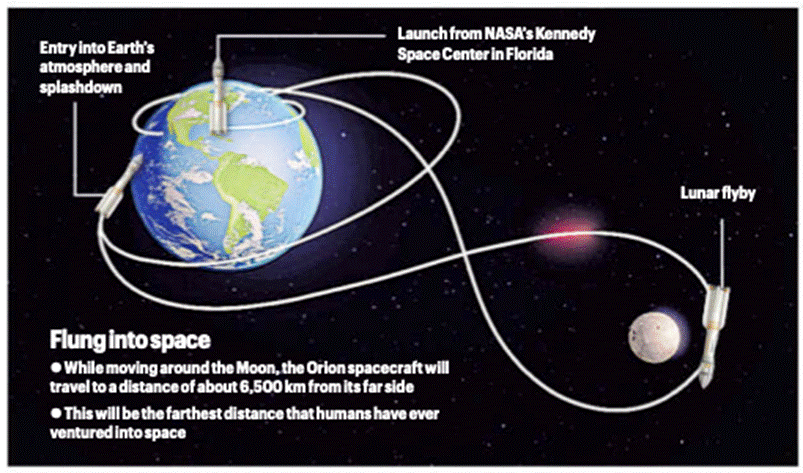
- Spacecraft will orbit Earth twice before entering Trans-Lunar Injection (TLI) trajectory toward Moon.
- Takes 3–4 days to reach Moon’s vicinity, similar to Apollo missions due to high-energy trajectory.
- Orion spacecraft will travel around Moon and return to Earth, completing mission in about 10 days.
Distance & Exploration Milestone
- Orion will travel ~6,500 km beyond far side of Moon, the farthest distance humans have ever reached in space.
- Apollo missions reached only ~110 km above lunar surface on far side during orbit.
- Expands human operational envelope in deep space exploration.
Technology & Systems
Space Launch System (SLS)
- Most powerful operational rocket currently available to NASA.
- Designed for:
- Heavy payloads
- Deep space missions
- Enables faster trajectory compared to fuel-efficient but slower missions.
Orion Spacecraft
- Crew capsule designed for deep-space missions beyond low Earth orbit.
- Equipped with:
- Advanced life-support systems
- Radiation protection
- High-speed re-entry capability
- First time used for crewed mission after successful uncrewed Artemis I validation.
Trajectory Choice: Faster vs Fuel-Efficient
- Artemis II uses shorter, high-energy trajectory, reaching Moon in 3–4 days.
- Requires powerful rockets like SLS, increasing fuel consumption but reducing travel time.
- In contrast, missions like Chandrayaan-3 use longer, fuel-efficient orbits, taking weeks to reach Moon.
- Reflects trade-off between cost efficiency and mission urgency/complexity.
Significance
- Marks return of human spaceflight beyond low Earth orbit after five decades.
- Demonstrates technological advancement in deep-space navigation, life-support systems, and crew safety.
- Strengthens US leadership in global space race amid competition from China and emerging space powers.
- Provides foundation for:
- Lunar base development
- Resource utilisation (helium-3, water ice)
- Enables future interplanetary missions, especially Mars exploration.
Challenges
- High cost of Artemis programme raises concerns about sustainability of long-term human space missions.
- Technical risks associated with deep-space radiation, life-support reliability, and re-entry safety.
- Dependence on international collaboration may create geopolitical and coordination challenges.
- Space debris and orbital congestion add risks to mission safety during launch and return phases.
Implications for India
- Highlights need for India to strengthen Gaganyaan programme and future deep-space ambitions.
- Opportunity to expand collaboration in Artemis Accords and lunar exploration initiatives.
- Reinforces importance of developing heavy-lift launch vehicles and human-rated spacecraft systems.
- Opens avenues for India in space economy, technology partnerships, and lunar resource exploration.
Data & Facts for Answers
- Mission duration: ~10 days
- Travel time to Moon: 3–4 days
- Distance beyond Moon: ~6,500 km (farthest human travel)
- Artemis I duration: ~25 days (uncrewed)
- Last human Moon mission: 1972 (Apollo 17)
Prelims Pointers
- Artemis II is NASA’s first crewed lunar mission after Apollo era.
- SLS is NASA’s heavy-lift rocket for deep space missions.
- Orion spacecraft designed for human spaceflight beyond low Earth orbit.
- Chandrayaan missions use fuel-efficient trajectories, unlike high-energy Artemis missions.
INS Dunagiri (Project 17A): Boost to Aatmanirbhar Naval Capability
Why in News?
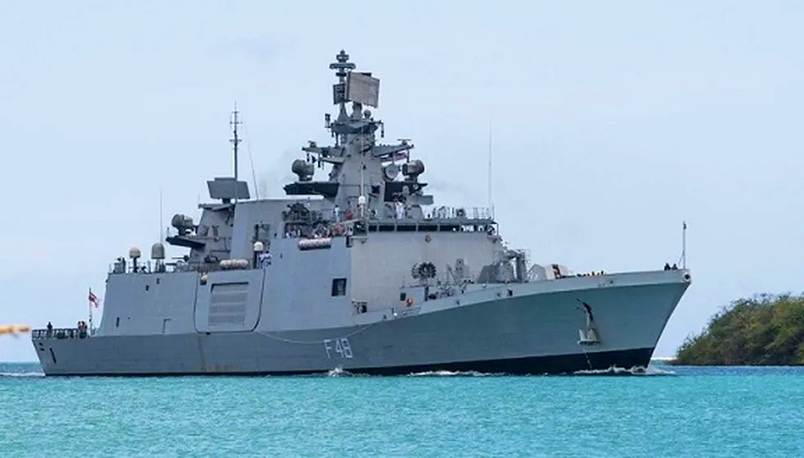
- Indian Navy received INS Dunagiri, fifth Nilgiri-class (Project 17A) stealth frigate, built indigenously at GRSE, Kolkata.
- Marks major milestone in self-reliance in warship design, construction, and advanced naval combat capability.
- Demonstrates progress in indigenisation (75%) and reduced shipbuilding timelines, strengthening defence manufacturing ecosystem.
Relevance
GS III (Security + Economy)
- Defence modernisation & maritime security
- Aatmanirbhar Bharat in defence manufacturing
- Blue economy & Indian Ocean Region (IOR) security
- Military technology & indigenisation
Practice Question
Q1. Examine the role of indigenous warship development in enhancing India’s maritime security and strategic autonomy. (250 words)
Context
- India is strengthening naval capabilities amid rising strategic competition in the Indian Ocean Region (IOR) and need to secure sea lanes.
- Shift towards Aatmanirbhar Bharat in defence aims to reduce import dependence and build domestic industrial capacity.
- Project 17A represents next-generation upgrade over earlier Shivalik-class (Project 17) stealth frigates.
Static Background
Project 17A (Nilgiri Class)
- Follow-on project to Project 17 (Shivalik class) with improved:
- Stealth features
- Automation
- Weapon systems
- Total 7 ships being constructed at:
- Mazagon Dock Shipbuilders Ltd (MDL)
- Garden Reach Shipbuilders & Engineers (GRSE)
Aatmanirbhar Bharat in Defence
- Focus on:
- Indigenous design and manufacturing
- MSME participation
- Import substitution
- Supported by policies like:
- Defence Acquisition Procedure (DAP)
- Positive Indigenisation Lists
Key Features of INS Dunagiri
Advanced Stealth & Design
- Incorporates low radar cross-section design and stealth technologies, making detection difficult in modern naval warfare.
- Represents generational improvement in survivability, signature reduction, and combat readiness.
Integrated Construction Methodology
- Built using modular construction techniques, reducing build time to 80 months compared to 93 months for lead ship.
- Enhances efficiency, scalability, and industrial capability in warship manufacturing.
Propulsion System (CODOG)
- Combined Diesel or Gas propulsion system allows:
- Fuel-efficient cruising on diesel
- High-speed combat manoeuvres using gas turbine
- Provides operational flexibility across mission profiles.
Weapons & Combat Systems
- Equipped with advanced multi-layered combat capabilities:
- BrahMos supersonic cruise missiles for surface strike
- MRSAM air defence system with MFSTAR radar for aerial threats
- 76 mm Super Rapid Gun Mount and close-in weapon systems
- Anti-submarine warfare capability using torpedoes and rockets
- Capable of addressing surface, air, and sub-surface threats simultaneously.
Integrated Platform Management System (IPMS)
- Automates control and monitoring of onboard systems, enhancing:
- Operational efficiency
- Crew safety
- Damage control capability
Significance
- Strengthens India’s ability to operate as a blue-water navy with multi-mission combat platforms.
- Enhances maritime security in IOR, including protection of Sea Lines of Communication (SLOCs).
- Reduces dependence on foreign suppliers, improving strategic autonomy in defence sector.
- Supports high-technology manufacturing ecosystem, aligning with Make in India and defence indigenisation goals.
- Demonstrates India’s capability in complex systems engineering and advanced naval architecture.
Economic & Industrial Impact
- High indigenisation level (75%) ensures domestic value addition and reduced import bill.
- Involvement of 200+ MSMEs strengthens defence supply chain and industrial ecosystem.
- Generates employment:
- ~4,000 direct jobs
- ~10,000 indirect jobs
- Builds long-term capabilities in precision engineering, electronics, and defence manufacturing.
Strategic Relevance
- Enhances India’s deterrence capability amid:
- Increasing Chinese naval presence in IOR
- Growing maritime security challenges
- Supports India’s role in Indo-Pacific security architecture and QUAD cooperation.
- Critical for safeguarding energy imports and trade routes, especially during geopolitical instability in West Asia.
Challenges
- High capital costs and long gestation periods of warship projects may strain defence budgets.
- Dependence on some imported subsystems persists despite high indigenisation levels.
- Need for continuous technological upgrades to match rapid advancements in naval warfare systems.
- Skilled manpower and R&D ecosystem need further strengthening for next-generation platforms.
Way Forward
- Increase indigenisation beyond 75% through domestic development of critical subsystems and electronics.
- Strengthen public-private partnerships and encourage private sector participation in shipbuilding and defence production.
- Invest in R&D for:
- Next-generation propulsion
- AI-enabled naval systems
- Autonomous maritime platforms
- Enhance export potential of indigenous warships to position India as global defence manufacturing hub.
- Integrate naval modernisation with broader maritime strategy under SAGAR (Security and Growth for All in the Region).
Data & Facts for Answers
- INS Dunagiri: 5th Project 17A frigate, delivered March 2026.
- Build time reduced to 80 months from 93 months for first ship.
- Indigenisation level: ~75%.
- MSME participation: 200+ units.
- Employment: 4,000 direct and 10,000 indirect jobs.
Prelims Pointers
- Project 17A refers to Nilgiri-class stealth frigates of Indian Navy.
- CODOG propulsion combines diesel engine and gas turbine for operational flexibility.
- BrahMos is supersonic cruise missile used for surface strike capability.
- MFSTAR radar used for multi-function surveillance and threat detection.