
Published on Mar 2, 2026
Daily Current Affairs
Current Affairs 02 March 2026

Content
- Integrated Air & Missile Defence in West Asia – Strategic & Technological Analysis
- How Do Astronauts Return from Space and Survive Re-entry?
- Why Key to Coconut Cultivation Today is Sustainability, Not Productivity
- Salar de Pajonales: Mars Analogue
- Nagpur Explosives Factory Blast (March 2026) – Industrial Safety & Governance Analysis
- Antibiotics & Liver Damage – IIT Bombay Study Explained
- Disruption at Strait of Hormuz – India Covered, For Now
- Africa’s Green Economy Summit (AGES) 2026 – Circular Transition & Investment Scale-Up
Integrated Air & Missile Defence in West Asia
I. Why in News? / Context
- Fresh hostilities between a U.S.-led coalition (U.S., Israel, UAE) and Iran have triggered deployment of a newly integrated regional air and missile defence network, surpassing the June 2025 “12-day war” configuration.
- The 2025 conflict witnessed over 500 ballistic missiles and more than 1,000 suicide drones launched by Iran, severely testing alliance interceptor inventories and production capacity.
- The UAE has activated the Cheongung II, while the U.S. has deployed upgraded THAAD and Patriot missile system systems.
Relevance
GS II – International Relations
- West Asian strategic realignments (Israel–UAE–US coordination).
- Regional security architecture & informal defence coalitions.
- Implications for India’s diaspora & energy security.
GS III – Internal Security
- Missile defence, drone warfare, saturation tactics.
- Hypersonic threats & layered defence doctrine.
- AI-enabled battle management systems.
Practice Question
- “Integrated missile defence systems are reshaping deterrence and escalation dynamics in West Asia.” Analyse.(250 Words)
II. What is Missile Defence?
- Missile defence refers to systems that detect, track, and destroy incoming ballistic or cruise missiles before impact, using space-based sensors, ground radars, and interceptor missiles.
- The architecture includes detection (satellites, radar), tracking (fire-control systems), engagement (interceptors), and battle damage assessment, forming a layered shield against aerial threats.
- Interceptors operate either via proximity warhead detonation (shrapnel destruction) or hit-to-kill kinetic impact, the latter offering higher precision against ballistic and hypersonic threats.
III. Layered Defence During the 12-Day War (2025)
1. Exo-Atmospheric Layer
- Israel’s Arrow 3 intercepted medium-range ballistic missiles in space before atmospheric re-entry, forming the first defensive shield.
- U.S. Navy destroyers deployed SM-3 missiles from Mediterranean and Red Sea, marking their heaviest combat use until then.
2. Endo-Atmospheric Layer
- The U.S. deployed THAAD, while Israel used Arrow 2 for high-altitude interception within the atmosphere.
- David’s Sling with Stunner interceptors provided mid-tier defence, while Patriot formed the final shield against terminal-phase threats.
3. Counter-Drone & Short-Range Layer
- Israel used Iron Dome (Tamir interceptors) and the laser-based Iron Beam to counter drone swarms.
- Air-to-air missiles from U.S., U.K., and French aircraft supported drone interception, demonstrating coalition integration and joint air defence operations.
IV. Post-War Adjustments – Production & Rationing
- U.S. Department of Defense quadrupled production orders for PAC-3 MSE and THAAD interceptors, yet replenishment of THAAD stocks may require at least 1.5 years at current capacity.
- Analysts highlight that interceptor production remains far slower than high-intensity combat usage, reflecting decades of under-scaled defence manufacturing.
- Rationing of expensive interceptors, such as PAC-3 MSE costing ~ $4 million per shot, has become central to operational doctrine amid Iranian saturation tactics.
V. Iran’s Air & Missile Defence Network
- Iran’s advanced system Bavar-373 reportedly intercepts targets beyond 300 km, using Sayyad-4B missiles.
- The newly unveiled Arman BMD claims 360° radar coverage against short- and medium-range ballistic missiles.
- Sevom-e-Khordad counters cruise missiles and stealth aircraft, while Russian-origin Tor-M1 protects against precision-guided munitions.
- However, reports of strikes in Tehran and Isfahan suggest volume-based saturation attacks overwhelm reload cycles, exposing temporary defensive gaps.
VI. What Makes Cheongung II Different?
- The UAE’s Cheongung II employs Vertical Launch System (VLS) with rotating multi-function radar, enabling 360° engagement without launcher rotation, crucial in Gulf’s compressed threat geography.
- Unlike older Patriot radars scanning 120° cones, Cheongung II’s rotating radar ensures rapid reaction against multi-vector attacks from coastal Iran.
- Its interceptor includes an active radar seeker in the nose, enabling terminal guidance independent of ground radar, useful against low-flying “sea-skimming” cruise missiles.
VII. Interceptor Effectiveness – Empirical Record
- Iron Dome claims 80–97% success rate against short-range rockets, though such targets are simpler and slower compared to ballistic missiles.
- Patriot recorded 100% interception of six Kinzhal hypersonic missiles (May 2023, Kyiv), but overall success dropped to ~10% against modified Iskander-M with decoys and manoeuvres.
- U.S. Ground Based Midcourse Defense system has 55% test success rate, underscoring technological limitations even in scripted conditions.
VIII. Strategic & Economic Dimensions
- Iran employs saturation attacks, firing large volumes of relatively inexpensive missiles and drones to exhaust costly interceptors of adversaries.
- Cost asymmetry is stark: $4 million PAC-3 MSE versus significantly cheaper drones, forcing coalition forces to prioritise rationing and deployment of cheaper alternatives.
- Directed-energy weapons like Iron Beam reduce marginal cost per shot, signalling shift toward cost-effective layered defence for prolonged conflicts.
IX. Security Implications
- Emergence of integrated Gulf air defence architecture reflects informal regional security alignment among Israel, UAE, and U.S., reshaping West Asian strategic balance.
- Missile defence systems enhance deterrence by denying adversaries assured retaliation effectiveness, yet may also fuel arms race and missile modernisation.
- India, dependent on Gulf energy flows and hosting diaspora, must monitor implications for maritime security and energy supply stability.
X. Challenges & Limitations
- Production bottlenecks constrain sustainability of high-tempo interception operations.
- Radar and interceptor vulnerabilities to stealth, decoys, and hypersonic manoeuvres persist.
- Reload gaps create exploitable windows during saturation attacks.
- Financial sustainability concerns due to high interceptor costs.
XI. Way Forward – Global Trends
- Scaling defence industrial capacity for sustained high-intensity conflict scenarios.
- Greater deployment of directed-energy systems to counter drone swarms economically.
- Integration of AI-enabled threat prediction and automated battle management systems.
- Enhanced multinational interoperability in sensor and interceptor networks.
XII. Prelims Pointers
- Arrow 3: exo-atmospheric interceptor.
- THAAD: terminal high-altitude atmospheric interceptor.
- Iron Dome: short-range rocket defence.
- Cheongung II: South Korean VLS-based 360° missile defence.
- Hit-to-kill vs proximity fuse mechanisms.
XIII. Concluding Analytical Insight
- The evolving West Asian missile defence network illustrates a shift toward integrated, multi-layered, and cost-conscious air defence systems, balancing deterrence with sustainability amid saturation warfare.
- Technological sophistication alone does not guarantee dominance; industrial scale, cost asymmetry management, and adaptive doctrine increasingly determine strategic resilience in missile warfare.
How do astronauts return from space and survive re-entry?
I. Why in News? / Context
- With India preparing for its first human spaceflight mission under Gaganyaan, attention has focused on the crew module’s atmospheric re-entry, arguably the most thermally and structurally demanding phase of human spaceflight.
- ISRO validated critical re-entry technologies through the Space Capsule Recovery Experiment (2007) and Crew Module Atmospheric Re-entry Experiment (2014), demonstrating thermal protection and parachute systems.
Relevance
GS III – Science & Technology
- Re-entry physics (7.8 km/s velocity; plasma sheath).
- Thermal Protection Systems (ablative vs insulative).
- Semi-ballistic vs ballistic entry.
Practice Question
- Explain the scientific principles governing atmospheric re-entry of spacecraft.(150 Words)
II. Physics of Re-entry – Battle Against Energy
- An orbiting spacecraft travels at approximately 7.8 km/s (Low Earth Orbit velocity), possessing enormous kinetic energy that must be safely dissipated during re-entry.
- More than 98% of this energy is dissipated through atmospheric interaction, converting kinetic energy into heat via compression and friction in the upper atmosphere.
- Early aerospace theories predicted structural melting during re-entry, but the blunt body theory demonstrated that a rounded forebody deflects shock-heated plasma away from the capsule.
III. Thermal Protection Systems (TPS)
- Re-entry generates temperatures exceeding 1,500–3,000°C near the shock layer, requiring advanced thermal protection systems (TPS) to protect crew and avionics.
- Ablative shields char and erode in a controlled manner, carrying heat away from the structure through sacrificial material loss.
- Insulative shields use low thermal conductivity materials to reduce heat transfer into the pressure vessel, maintaining survivable cabin temperatures.
IV. Deorbit Burn & Re-entry Corridor
- To exit orbit, spacecraft perform a deorbit burn, rotating 180° and firing thrusters opposite to travel direction, reducing velocity and allowing gravity to dominate.
- The spacecraft must enter a narrow re-entry corridor, a precise atmospheric entry window balancing between overshoot and undershoot limits.
- If entry angle is too shallow, the capsule may skip off the atmosphere; if too steep, excessive deceleration and heating can destroy the vehicle.
V. Ballistic vs Semi-Ballistic Re-entry
- A purely ballistic body descends passively, controlled only by drag, limiting steering ability and increasing landing dispersion.
- A semi-ballistic body intentionally offsets its centre of gravity, generating aerodynamic lift, allowing controlled banking and cross-range manoeuvres.
- Lift modulation enables precise targeting of landing zones and reduces peak deceleration loads on astronauts.
VI. Communication Blackout – Plasma Sheath
- At hypersonic speeds, air molecules ionise into plasma, forming a plasma sheath that blocks radio signals, causing temporary communication blackout.
- Blackout occurs because ionised plasma reflects electromagnetic waves, isolating crew from ground control for several minutes.
- Relay satellite systems, such as NASA’s TDRSS, mitigate blackout by transmitting signals through thinner plasma regions.
VII. Parachute-Assisted Landing
- After aerobraking slows the capsule, velocity remains hundreds of km/h, still unsafe for impact without further deceleration systems.
- Multi-stage parachute systems progressively reduce velocity to safe splashdown levels, ensuring redundancy against single-point failure.
- Splashdown in water, such as the Bay of Bengal, cushions impact and simplifies recovery logistics.
VIII. Gaganyaan Re-entry Profile
- The Gaganyaan Orbital Module comprises a Crew Module (CM) and Service Module (SM); SM performs deorbit burn before separating and burning up.
- The CM maintains trajectory within the re-entry corridor, operating as a semi-ballistic body, modulating lift via bi-propellant thrusters.
- A three-stage redundant parachute system ensures controlled descent and safe splashdown in the Bay of Bengal, the primary recovery zone.
IX. Technological & Strategic Significance
- Mastery of controlled re-entry places India among elite human spaceflight nations alongside the U.S., Russia, and China.
- Re-entry capability strengthens India’s ambitions in space stations, reusable launch vehicles, and deep-space missions.
- Indigenous TPS, guidance systems, and parachute validation enhance self-reliance under Atmanirbhar Bharat in Space.
X. Challenges & Risks
- Maintaining precise entry angle within narrow corridor requires robust guidance, navigation, and control systems.
- Thermal shield integrity must withstand peak heating loads without structural compromise.
- Plasma blackout complicates real-time contingency management during critical re-entry phase.
XI. Way Forward
- Continued high-altitude drop tests and uncrewed orbital missions to validate redundancy.
- Development of advanced reusable thermal protection materials to reduce long-term mission costs.
- Integration of satellite relay communication systems to reduce blackout duration.
- Progress toward semi-lifting body or reusable crew vehicles for improved cross-range landing flexibility.
XII. Prelims Pointers
- Re-entry heating primarily due to compression of air ahead of shock wave, not simple friction alone.
- Blunt body theory reduces heat transfer to structure.
- Plasma sheath causes radio communication blackout.
- Semi-ballistic entry generates aerodynamic lift.
- Deorbit burn reduces orbital velocity to initiate descent.
XIII. Conclusion
- Atmospheric re-entry represents the most thermally and dynamically hostile phase of spaceflight, demanding precise physics, material science, and control engineering integration.
- Successful re-entry of Gaganyaan will mark India’s transition from launch-capable nation to a human spaceflight power, consolidating technological sovereignty and strategic prestige.
Why key to coconut cultivation today is sustainability, not productivity
I. Why in News? / Context
- The Union Budget 2026–27 announced a Coconut Promotion Scheme aimed at rejuvenating old plantations with high-yield varieties and expanding coastal cultivation, responding to climate stress and disease outbreaks.
- India remains the world’s largest producer and consumer of coconut, yet faces climate-induced productivity risks and widespread root wilt disease, particularly in Kerala and Tamil Nadu.
Relevance
GS III – Agriculture
- Climate stress (1.6–3.2°C projected rise).
- Root wilt disease impact.
- Vapour pressure deficit & crop stress.
GS III – Environment
- Climate adaptation in plantation crops.
- Alignment with NAPCC & SDG 13.
Practice Question
- “Climate resilience, not yield maximisation, should guide India’s plantation crop policy.” Discuss with reference to coconut.(250 Words)
II. Static Background – Coconut Economy in India
- India leads global coconut production, with productivity per palm already higher than Sri Lanka, Indonesia, and the Philippines, especially in hybrid varieties like Dwarf × Tall palms yielding 250–300 tender coconuts per tree.
- The Coconut Development Board has expanded cultivation into non-traditional regions like Gujarat and Assam, partially offsetting disease-driven decline in Kerala.
- Coconut supports livelihoods of millions of smallholders across Kerala, Tamil Nadu, Karnataka, Andhra Pradesh, and coastal regions, making it socio-economically critical plantation crop.
III. Climate & Ecological Concerns
- Research by Central Plantation Crops Research Institute projects temperature rise of 1.6–2.1°C by 2050 and up to 3.2°C by 2070 in plantation zones.
- Higher temperatures without proportional rainfall increase vapour pressure deficit, intensifying drought stress and reducing nut setting and palm longevity.
- Studies warn that interior Karnataka, Andhra Pradesh, southern Tamil Nadu, and parts of east coast may become less suitable for coconut cultivation due to climate stress.
IV. Disease Burden – Root Wilt Crisis
- Traditional coconut belts along the Western Ghats remain climatically suitable but are severely affected by root wilt disease, devastating landscapes in Alappuzha and Pollachi.
- Root wilt reduces nut yield, weakens palms, and diminishes long-term viability, threatening farmer incomes and regional agro-economies.
- Current scheme design risks overemphasising productivity enhancement without prioritising wilt-tolerant and climate-resilient varieties.
V. Governance & Institutional Dimensions
- The Coconut Promotion Scheme overlaps with existing interventions under the Coconut Development Board, risking duplication without harmonised guidelines and monitoring metrics.
- The National Horticulture Board’s Cluster Development Programme (₹150 crore outlay) struggled due to high compliance burdens and limited FPO participation.
- Variation in subsidy rates across schemes creates confusion among farmers, FPOs, and private investors, reducing scheme uptake and credibility.
VI. Production Strategy – Beyond Seed Distribution
- Scheme must prioritise mass multiplication of climate-resilient and wilt-tolerant genotypes, rather than mere distribution of high-yield seedlings.
- Large land tracts under State horticulture departments and universities can establish mother palm gardens to supply certified, resilient planting material.
- Strengthening research institutions like CPCRI and Tamil Nadu Agricultural University is essential for breeding heat-tolerant, drought-resistant varieties.
VII. Financing & Input Delivery Reform
- Distribution of subsidised microbial inputs and micronutrients often suffers from poor storage and reduced biological viability, limiting effectiveness at farm level.
- Direct Benefit Transfers (DBT) may be preferable, enabling farmers to allocate funds toward irrigation, soil health, labour for rejuvenation, or disease management based on local need.
- Trust-based financing aligns with farmer autonomy and reduces leakage or inefficiencies associated with centrally procured inputs.
VIII. Value Addition & Market Linkages – Structural Issues
- Domestic coconut prices have increased three-fold since 2024, reflecting strong demand, limiting surplus availability for processing investments.
- Encouraging FPOs to invest in processing units without assured marketing channels exposes them to financial risk; existing equipment under earlier schemes remains underutilised.
- The CDB already offers 25% capital subsidy for coconut value-addition industries; overlapping NHB schemes create regulatory redundancy and compliance burden.
IX. Economic & Federal Dimensions
- Coconut economy contributes to rural employment, agro-processing, and export earnings; failure to ensure climate resilience risks long-term decline in India’s global leadership.
- Plantation crop policies require Centre–State coordination, particularly in Kerala, Tamil Nadu, and Karnataka, where agro-climatic realities vary significantly.
- Climate adaptation investments in plantation crops align with National Action Plan on Climate Change (NAPCC) and SDG 13 (Climate Action).
X. Lessons from Failed Clusters
- The banana cluster in southern Tamil Nadu remains largely on paper, illustrating risks of centrally designed, large-scale cluster models lacking grassroots ownership.
- High investment thresholds prevented FPOs and cooperatives from meaningful participation, limiting decentralised enterprise development.
- Marketing partnerships with established FMCG firms like Amul or ITC Limited could provide assured procurement and branding support.
XI. Way Forward – Climate-Resilient & Farmer-Centric Model
- Shift scheme focus from productivity-centric to climate resilience-centric, prioritising heat-tolerant, drought-resistant, and wilt-resistant varieties.
- Develop smaller, location-specific pilot clusters in regions like Tiptur (ball copra), Anaimalai (tender coconut), and Pollachi (coconut oil) with strong marketing tie-ups.
- Harmonise Coconut Promotion Scheme with NHB Cluster Programme to streamline subsidy architecture and avoid duplication.
- Establish transparent evaluation metrics based on yield stability, disease reduction, farmer income growth, and market integration rather than fund utilisation reports.
- Integrate real-time climate data and advisory services to support adaptive management practices at farm level.
XII. Prelims Pointers
- CPCRI is under ICAR.
- Root wilt is a major coconut disease in Kerala.
- Vapour pressure deficit increases plant water stress.
- DBT improves subsidy efficiency.
- Plantation crops are sensitive to micro-climatic changes.
XIII. Conclusion
- The Coconut Promotion Scheme represents a critical policy window to safeguard India’s global leadership in coconut production amid climate volatility and disease threats.
- Productivity enhancement alone is insufficient; climate resilience, institutional coordination, farmer autonomy, and realistic market integration must guide implementation to ensure long-term sustainability.
Salar de Pajonales: Mars analogue
I. Why in News? / Context
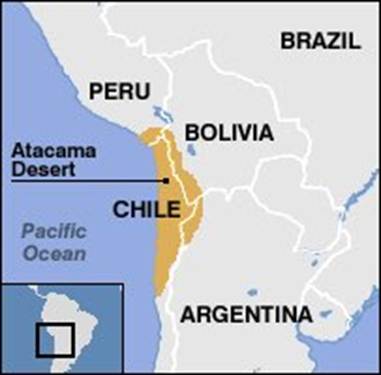
- A recent study at Salar de Pajonales in Chile’s Atacama Desert examined gypsum-based stromatolites, identifying protective microhabitats that could guide future life-detection missions on Mars.
- The Salar, located at 3.5 km altitude, experiences extreme aridity, freezing temperatures, and intense ultraviolet radiation, making it a near-perfect Mars analogue environment.
Relevance
GS III – Science & Tech
- Gypsum (CaSO₄·2H₂O) & evaporite minerals.
- Stromatolites as biosignatures.
- Mars exploration & astrobiology.
GS III – Space & Research
- Role of Earth analogues in planetary missions.
- Mineral-protected biosignatures.
Practice Question
- Discuss how Earth-based analogue studies aid planetary exploration and life-detection missions.(250 Words)
II. Static Background – Why Atacama is a Mars Analogue ?
- The Atacama Desert is among the driest places on Earth, with hyper-arid zones receiving negligible rainfall, resembling Martian surface desiccation.
- High elevation increases UV radiation exposure, simulating Mars’ thin atmosphere and lack of protective ozone layer.
- Saline deposits and evaporitic minerals in Salar regions resemble Martian mineralogy detected by orbiters and rovers.
III. Gypsum – Mineralogical & Astrobiological Importance
- Gypsum (CaSO₄·2H₂O) is a hydrated calcium sulphate mineral found both on Earth and Mars, indicating past aqueous environments.
- Martian orbiters and rovers have identified extensive gypsum deposits, suggesting historical water activity critical for habitability.
- Gypsum’s translucent crystalline structure allows partial light penetration while filtering harmful radiation, creating microhabitats suitable for microbial survival.
IV. Stromatolites – Biological Structures
- Stromatolites are layered sedimentary structures formed by microbial communities, often cyanobacteria, over long geological timescales.
- They represent some of the oldest evidence of life on Earth (over 3.5 billion years old), serving as biosignatures in astrobiology.
- In Salar de Pajonales, stromatolites embedded in gypsum provide both current microbial refuge and fossil preservation records.
V. Dual Protective Role of Gypsum
1. Shelter for Living Microbes
- Researchers found living microbes millimetres below gypsum surface, protected from lethal UV radiation while still receiving sufficient sunlight for photosynthesis.
- Gypsum traps microscopic moisture pockets, sustaining life despite extreme surface dryness and temperature fluctuations.
2. Preservation of Fossils
- Deeper stromatolite layers contained fossilised remains and chemical biosignatures, sealed and preserved by gypsum crystallisation processes.
- This indicates gypsum can act as a long-term geological archive, preserving traces of past life even in hostile environments.
VI. Implications for Mars Exploration
- Mars hosts extensive gypsum deposits, detected by missions of NASA and other international space agencies.
- If gypsum shelters microbes and preserves biosignatures on Earth’s harshest desert, similar deposits on Mars could harbour preserved evidence of ancient life.
- Future Mars missions may prioritise gypsum-rich terrains for drilling and sampling in life-detection strategies.
VII. Science & Technology Dimension
- Identifying mineral-protected biosignatures enhances precision in rover landing site selection and subsurface drilling priorities.
- Analytical tools such as Raman spectroscopy and organic molecule detection instruments become critical for gypsum-targeted missions.
- Mars Sample Return missions could focus on evaporite minerals to maximise probability of detecting preserved organic compounds.
VIII. Broader Astrobiological Overview
- The study reinforces principle that life can persist in micro-niches within extreme macro-environments, expanding definitions of planetary habitability.
- Suggests extraterrestrial life, if present, may exist below visible surface, shielded by mineral matrices rather than exposed environments.
- Demonstrates importance of Earth analogue studies for reducing uncertainty in interplanetary exploration.
IX. Prelims Pointers
- Gypsum formula: CaSO₄·2H₂O (hydrated calcium sulphate).
- Stromatolites are formed by microbial activity.
- Atacama Desert is a Mars analogue site.
- Evaporite minerals indicate past presence of water.
- UV radiation levels are high in high-altitude deserts.
X. Concluding Analytical Insight
- The Salar de Pajonales findings strengthen the hypothesis that mineralogical shelters like gypsum could preserve biosignatures beyond Earth, reshaping Mars exploration priorities.
- By bridging geology, microbiology, and planetary science, such analogue studies bring humanity closer to answering one of science’s most profound questions: Did life ever exist on Mars?
Nagpur Explosives Factory Blast
I. Why in News? / Context
- A blast at an explosives factory near Nagpur, Maharashtra, killed 18 workers (mostly women) and injured 24, highlighting grave concerns regarding industrial safety compliance and labour protection mechanisms.
- The accident occurred in a packing unit of SB Energy Limited, triggering investigations under the Explosives Rules and raising questions about regulatory oversight by Petroleum and Explosives Safety Organisation and State authorities.
Relevance
GS II – Governance
- Article 21 & safe working conditions.
- Regulatory oversight (PESO & State agencies).
- Preventive vs reactive enforcement.
GS III – Internal Security
- Hazardous industries & risk management.
- Industrial disaster preparedness.
Practice Question
- Industrial disasters reflect regulatory failure more than accidental risk. Examine.(250 Words)
II. Constitutional & Legal Dimensions
- Article 21 (Right to Life) includes safe working conditions, making workplace safety a constitutional obligation of both State regulators and private employers.
- Regulation of hazardous industries flows from central laws like the Explosives framework and State-level enforcement by Directorate of Industrial Safety and Health, reflecting concurrent governance responsibilities.
- Registration of culpable homicide charges against factory management indicates possible criminal negligence beyond routine industrial accidents.
III. Governance & Administrative Issues
- The blast site reportedly had operations underway during the explosion, raising concerns about standard operating procedures (SOPs) and compliance audits.
- Post-incident investigations by PESO and State safety directorates highlight reactive enforcement rather than preventive, risk-based inspection systems.
- Delays in emergency medical response and absence of adequate in-house safety protocols reveal systemic weaknesses in disaster preparedness within hazardous units.
IV. Gender & Labour Dimensions
- Majority of victims were women workers, reflecting feminisation of low-wage, hazardous packing work in informalised industrial segments.
- Extended shifts reportedly exceeding 8-hour norms suggest possible violations of labour standards and occupational health safeguards.
- Women’s concentration in high-risk segments without adequate safety gear reflects gendered labour segmentation and structural vulnerability.
V. Industrial Safety & Regulatory Gaps
- Explosives manufacturing involves handling volatile chemicals requiring strict adherence to storage limits, humidity controls, and blast-resistant infrastructure.
- Recurrent accidents in fireworks and explosives sectors indicate weak compliance culture and inadequate periodic third-party safety audits.
- Fragmented oversight between Central and State agencies often results in diluted accountability and regulatory overlap without clarity.
VI. Economic & Social Impact
- Explosives and fireworks industries provide livelihood in semi-urban and rural belts, often employing economically vulnerable communities with limited bargaining power.
- Fatal industrial accidents impose long-term socio-economic distress on families, increasing dependency, poverty risks, and social insecurity.
- Compensation from disaster relief funds cannot substitute for systemic reforms in industrial risk governance.
VII. Environmental & Safety Concerns
- Explosives accidents release toxic emissions and particulate matter, posing secondary environmental hazards to nearby settlements.
- Absence of mandatory environmental and safety impact revalidation during licence renewals increases cumulative industrial risk exposure.
VIII. Comparative Perspective
- Globally, hazardous industries adopt process safety management systems, real-time sensor monitoring, and independent compliance verification to minimise catastrophic risks.
- India’s inspection regime remains largely document-driven rather than technology-enabled risk analytics based.
IX. Challenges Identified
- Weak enforcement capacity and inspection shortages.
- Informal labour engagement without adequate insurance cover.
- Insufficient training and periodic safety drills.
- Inadequate coordination between disaster management and industrial safety agencies.
X. Way Forward
- Introduce risk-based digital inspection systems integrating real-time compliance dashboards for explosives units.
- Mandate periodic third-party structural and safety audits, especially in high-risk chemical and explosives sectors.
- Ensure compulsory occupational insurance and gender-sensitive safety training for all hazardous industry workers.
- Strengthen coordination between PESO, State safety directorates, and district disaster authorities for integrated emergency response planning.
XI. Prelims Pointers
- Explosives regulation involves Central licensing and State enforcement.
- Hazardous industries fall under concurrent regulatory supervision.
- Occupational safety connects to Article 21 jurisprudence.
- PESO regulates storage and handling of explosives and petroleum products.
XII. Conclusion
- The Nagpur blast underscores the urgent need to transition from reactive compensation-based responses to proactive, technology-driven industrial safety governance, ensuring constitutional protection of workers’ lives in hazardous sectors.
Antibiotics & Liver Damage – IIT Bombay Study Explained
I. Why in News? / Context
- A study by Indian Institute of Technology Bombay found that antibiotic-induced liver toxicity depends on how drugs interact with cell membranes, not merely on dosage or class.
- The research compared two antibiotics — Teicoplanin and Oritavancin — revealing why similar drugs show markedly different toxicity profiles.
Relevance
GS III – Science & Tech
- Drug-induced liver injury (DILI).
- Membrane-centric toxicity paradigm.
- Rational drug design.
GS II – Health Governance
- Pharmacovigilance & CDSCO oversight.
- AMR & drug safety.
Practice Question
- How can advances in molecular biophysics improve drug safety and public health outcomes?(250 Words)
II. Static Background – Drug-Induced Liver Injury (DILI)
- Drug-Induced Liver Injury (DILI) is a leading cause of acute liver failure globally and a frequent reason for drug withdrawal post-approval.
- Liver is highly vulnerable because it metabolises xenobiotics via cytochrome enzymes, producing reactive intermediates that may damage hepatocytes.
- Antibiotics are among the most common drug classes associated with liver enzyme elevation and hepatotoxicity.
III. Core Scientific Finding
- Earlier assumption: liver damage correlates with extent of cell membrane rupture caused by drugs.
- New finding: toxicity depends on where and how antibiotics embed within lipid bilayers of cell membranes.
- Drug–membrane interactions alter membrane structure, fluidity, and protein function, indirectly affecting cell survival.
IV. Comparative Analysis – Teicoplanin vs Oritavancin
- Both antibiotics are chemically similar and treat Gram-positive bacterial infections, yet differ significantly in liver toxicity.
- Oritavancin disrupted membrane structure more aggressively, altering packing and surface charge, thereby impairing vital cellular processes.
- Teicoplanin left membranes comparatively stable, interacting less intensely with structural lipids, resulting in milder toxicity.
V. Mechanism – Membrane-Centric Toxicity
- Cell membranes are composed of phospholipid bilayers embedded with proteins essential for transport and signalling.
- Deep insertion of antibiotic molecules can alter lipid packing density, affect membrane curvature, and disrupt embedded enzymes.
- Even subtle membrane disruptions may impair intracellular signalling pathways, leading to hepatocyte stress and inflammation.
VI. Scientific & Technological Significance
- Shifts drug toxicity paradigm from organ-level outcomes to molecular biophysics of membranes.
- Provides scalable laboratory assays to evaluate membrane interaction profiles during early drug development.
- Enables rational drug design aimed at reducing off-target cellular toxicity.
VII. Public Health & Regulatory Dimension
- Safer antibiotics reduce burden on healthcare systems already facing antimicrobial resistance (AMR) and drug safety challenges.
- Early detection of membrane-related toxicity can prevent costly late-stage clinical failures.
- Findings support strengthening pharmacovigilance under agencies like Central Drugs Standard Control Organisation.
VIII. Broader Implications for Drug Development
- Encourages integration of biophysical membrane studies into standard preclinical toxicity testing frameworks.
- Could help design antibiotics that selectively target bacterial membranes while sparing human hepatocyte membranes.
- Aligns with precision medicine approach where molecular-level understanding informs therapeutic safety.
IX. Challenges
- Translating laboratory membrane models to complex in vivo liver physiology remains challenging.
- Inter-patient variability in liver enzyme expression may influence toxicity outcomes.
- Regulatory frameworks may need updating to incorporate membrane-interaction metrics.
X. Way Forward
- Institutionalise membrane interaction screening as part of drug discovery pipelines.
- Promote interdisciplinary research combining biophysics, pharmacology, and molecular biology.
- Strengthen national drug safety surveillance and adverse event reporting mechanisms.
XI. Prelims Pointers
- Liver toxicity often linked to drug metabolism in hepatocytes.
- Phospholipid bilayer forms structural basis of cell membrane.
- Gram-positive bacteria differ structurally from Gram-negative.
- Antibiotics can have off-target effects on human cells.
XII. Concluding Insight
- The IIT Bombay study reframes antibiotic safety from a dosage-centric to a membrane-interaction-centric model, opening pathways for designing safer drugs and reducing avoidable liver injury.
Disruption at Strait of Hormuz – India Covered, For Now
I. Why in News? / Context
- Escalating conflict involving Iran, the U.S., and Israel has raised fears of disruption in the Strait of Hormuz, a critical artery for global oil and LNG trade.
- The Strait handles roughly 20% of global oil trade and around 2.5–2.7 million barrels per day (bpd) of regional crude flows, making it central to global energy stability.
Relevance
GS II – International Relations
- Geopolitics of chokepoints.
- Maritime security in Indian Ocean Region.
GS III – Economy
- 85–88% crude import dependence.
- CAD, inflation, rupee pressure.
- Strategic Petroleum Reserves.
Practice Question
- Assess India’s vulnerability to disruptions in the Strait of Hormuz.(250 Words)
II. Strategic Importance of the Strait of Hormuz
- The Strait connects the Persian Gulf to the Gulf of Oman and Arabian Sea, with navigable lanes just two miles wide in each direction, creating high vulnerability.
- Major exporters dependent on this route include Iraq, Saudi Arabia, UAE, Kuwait, and Iran, accounting for significant global crude and LNG exports.
- Even temporary disruption can trigger speculative spikes in oil prices due to low short-term elasticity in global supply chains.
III. India’s Energy Exposure
- India is the third-largest oil consumer globally, importing nearly 85–88% of its crude oil needs, making maritime security critical to macroeconomic stability.
- Approximately half of India’s oil imports originate from West Asia, transiting through the Strait of Hormuz.
- India imports 80–85% of LPG requirements, much of which transits through Hormuz, increasing vulnerability to short-term shipping disruptions.
IV. Immediate Impact – Why India Is “Covered for Now” ?
- India maintains around 90 days of strategic and commercial crude reserves, providing short-term insulation from immediate supply shocks.
- Refiners hold roughly 1–2 weeks of operational inventory, offering limited buffer against logistical disruptions.
- Diversification toward Russian crude imports since 2022 has reduced dependence on West Asian suppliers relative to pre-Ukraine war levels.
V. Structural Vulnerabilities
- While crude oil can be diversified through spot markets, LNG and LPG supply chains are more geographically rigid and contract-bound.
- Limited pipeline alternatives and constrained shipping capacity could intensify supply bottlenecks if Strait closure persists.
- Insurance premiums and freight costs typically surge during geopolitical instability, raising landed crude costs even without physical blockage.
VI. Economic Implications
- Every $10 per barrel rise in crude oil increases India’s import bill significantly, widening the current account deficit (CAD) and pressuring the rupee.
- Sustained crude above $100 per barrel historically correlates with inflationary spikes and fiscal stress due to fuel subsidy burdens.
- Elevated oil prices transmit through logistics, fertilisers, aviation fuel, and food supply chains, amplifying headline CPI inflation.
VII. Likely Duration & Price Trajectory
- Analysts suggest a full closure of Hormuz is unlikely to be prolonged, as it would also severely damage Iran’s own oil export revenues.
- Short-term disruption could push oil prices toward $90–100 per barrel, while prolonged conflict could escalate prices beyond $120 per barrel.
- Market response will depend on duration, alternative routing capacity, and OPEC spare production capability.
VIII. Geopolitical & Maritime Dimensions
- Closure attempts could invite multinational naval intervention, escalating conflict into broader maritime confrontation.
- Gulf states rely heavily on uninterrupted oil exports, making prolonged blockade politically and economically unsustainable.
- The Strait’s vulnerability underscores the strategic relevance of the Indian Ocean Region (IOR) for India’s maritime doctrine.
IX. India’s Policy Options
Short-Term
- Release calibrated volumes from Strategic Petroleum Reserves (SPR) to stabilise domestic markets.
- Engage in diplomatic coordination with Gulf producers and major consumers.
- Enhance naval surveillance in Arabian Sea under maritime security frameworks.
Medium-Term
- Accelerate diversification of crude sourcing beyond West Asia.
- Expand SPR capacity beyond current levels to buffer extended crises.
- Increase renewable energy share to reduce fossil fuel import intensity.
Long-Term
- Strengthen energy transition roadmap under Nationally Determined Contributions (NDCs).
- Promote electric mobility and green hydrogen to structurally reduce oil dependence.
X. Prelims Pointers
- Strait of Hormuz connects Persian Gulf to Gulf of Oman.
- India imports ~85–88% of crude oil.
- Strategic Petroleum Reserves act as supply buffer.
- Narrowest navigable width is about 2 nautical miles per lane.
- West Asia accounts for roughly half of India’s oil imports.
Africa’s Green Economy Summit 2026 calls for shift to circular economy and scaled-up green investments
I. Why in News? / Context
- The Africa’s Green Economy Summit (AGES) 2026, held in Cape Town, called for accelerating transition toward circular economy models and scaling green and blue economy investments across Africa.
Relevance
GS II – International Relations
- Global South climate leadership.
- AfCFTA & mineral diplomacy.
- Just Energy Transition models.
GS III – Environment & Economy
- Circular economy & resource efficiency.
- Blue economy ($300 bn; 46 mn jobs).
- Green jobs & climate finance.
Practice Question
- Discuss how circular economy models can support sustainable development in emerging economies.(250 Words)
II. Summit Significance – From Ambition to Action
- AGES is a pan-African platform convening policymakers, financiers, and industry leaders to translate climate frameworks into implementable projects, addressing Africa’s execution deficit.
- Theme: “From Ambition to Action: Scaling Opportunities in Africa’s Green and Blue Solutions”, reflecting urgency amid climate vulnerability and geopolitical supply chain shifts.
- Focus on operationalising climate pledges into investment-ready pipelines rather than policy announcements.
III. Circular Economy – Core Policy Shift
- Circular economy model emphasises reuse, recycling, redesign, and resource efficiency, aiming to decouple economic growth from natural resource depletion.
- African industries currently extract resources beyond ecosystem regeneration capacity, intensifying land degradation and water stress.
- Transition reduces dependence on virgin raw materials, enhancing resilience amid supply-chain disruptions and climate unpredictability.
IV. Blue Economy – Untapped Potential
- Africa’s blue economy contributes approximately $300 billion annually and supports 46 million jobs, spanning fisheries, marine transport, and coastal tourism.
- Despite scale, sector remains underfinanced and technologically underdeveloped, limiting value addition and sustainability outcomes.
- Investment in marine conservation, port modernisation, and sustainable aquaculture could unlock productivity gains and export potential.
V. Green Economy – Growth & Employment
- Global green economy projected to unlock $10 trillion in economic value over the next decade, offering Africa strategic positioning opportunity.
- Africa’s youthful demography could generate up to 300 million green jobs, especially in renewable energy, sustainable agriculture, and low-carbon industries.
- Transition aligns economic diversification with climate commitments under Paris Agreement and SDG 13.
VI. Energy Transition & Reform
- South Africa’s Just Energy Transition Partnership (JETP) demonstrates international financing collaboration for coal-to-clean energy transition.
- The Renewable Energy Independent Power Producer Procurement Programme (REIPPPP) showcases public-private renewable energy scaling model.
- Shift from brownfield (fossil-based) to greenfield (renewable-based) investments critical for long-term decarbonisation.
VII. Skill Development & Institutional Capacity
- Closing green skills gap essential for scaling renewable technologies, circular business models, and climate-smart agriculture.
- Collaboration between academia, industry, investors, and governments required to build workforce capacity in emerging green sectors.
- Skills retention critical to prevent brain drain and ensure domestic industrial competitiveness.
VIII. Sustainable Agriculture & Water Stress
- South Africa faces escalating water crisis exacerbated by climate change, necessitating water-efficient farming practices and soil conservation.
- Promotion of alternative fertilisers, including green hydrogen-based fertilisers (e.g., Kenyan innovation), reflects technological frontier for sustainable agriculture.
- Scaling such innovations requires addressing high commercialisation and infrastructure costs.
IX. Transport & Emissions
- Transport accounts for 20–25% of global greenhouse gas emissions, with road transport as primary contributor.
- Expansion of public transport, e-mobility, and small-scale innovations such as e-cargo bikes and green freight logistics can reduce urban carbon footprints.
- Integrating transport electrification with renewable energy grids ensures emissions reduction across value chain.
X. Trade, Value Addition & Global South Strategy
- Minister urged leveraging African Continental Free Trade Area (AfCFTA) to strengthen intra-African value chains and reduce raw commodity export dependence.
- Africa’s mineral reserves are gaining strategic importance amid global demand for energy-transition minerals (lithium, cobalt, rare earths).
- Moving toward local beneficiation and value addition increases export revenues, job creation, and technological upgrading.
XI. Financing & Investment Reform
- Affordable climate finance remains a bottleneck; blended finance models and multilateral partnerships essential to de-risk green investments.
- Need to reform regulatory environments to attract private capital while ensuring environmental safeguards.
- Scaled-up green investments must integrate social inclusion to avoid inequality in energy transition.
XII. Challenges
- High upfront capital costs and debt vulnerabilities in African economies.
- Limited technological transfer and R&D capacity.
- Institutional weaknesses in translating frameworks into implementation.
- Climate adaptation financing gap relative to mitigation focus.
XIII. Way Forward
- Institutionalise circular economy legislation across African states with measurable resource-efficiency targets.
- Expand AfCFTA-linked green industrial corridors focused on mineral beneficiation and renewable manufacturing.
- Mobilise climate finance through global green funds, carbon markets, and South-South cooperation.
- Integrate green skills training within national education and vocational curricula.
XIV. Prelims Pointers
- Blue economy includes fisheries, marine transport, coastal tourism.
- Circular economy aims at resource efficiency and waste minimisation.
- Transport contributes ~20–25% of global GHG emissions.
- AfCFTA seeks to enhance intra-African trade integration.
XV. Concluding Insight
- AGES 2026 underscores Africa’s shift from climate ambition to execution, positioning circular economy and green industrialisation as twin pillars of sustainable growth.
- If aligned with skill development, value addition, and financing reform, Africa’s green transition can become both a climate necessity and a demographic dividend opportunity.