

Content
- Govt. withdraws order to install Sanchar Saathi app
- Why is volcanic ash a safety concern for flights?
- SC flags issues in payouts, free care for acid attack survivors
- Haircuts, asset valuation
- Why a landmark US lawsuit is accusing big brands of engineering addictive, unhealthy foods
Govt. withdraws order to install Sanchar Saathi app
Why is this in News?
- The Department of Telecommunications (DoT) has withdrawn its earlier order directing smartphone manufacturers to mandatorily pre-install the Sanchar Saathi app on all new devices from 2025.
- The withdrawal follows:
- Public and civil society backlash
- Concerns over privacy, surveillance, and regulatory overreach
- Opposition objections in Parliament
- Leaks showing the order was never publicly released
- Government now argues the app’s rising voluntary downloads mean a mandatory preload is unnecessary.
Relevance
GS-II: Governance
- Executive power, regulatory overreach
- Transparency in rule-making
- Digital governance frameworks
- Centre vs private sector regulation under TIUE
GS-II: Polity
- Fundamental Right to Privacy (Puttaswamy judgment)
- Proportionality in restrictions
- State surveillance concerns
GS-III: Internal Security
- Cyber fraud detection (CEIR, TAFCOP)
- Telecom-based security infrastructure
- Digital identity misuse prevention
What is the Sanchar Saathi App?
A DoT-developed platform aimed at consumer security in telecom.
Includes:
- CEIR (Central Equipment Identity Register) — block stolen phones
- TAFCOP — identify SIMs issued in one’s name
- Fraud reporting tools
- SIM misuse detection
Core purpose: prevent cyber fraud, identity misuse, and phone theft.
What Triggered the Controversy?
A. Mandatory Preinstallation Directive (Not Publicly Released)
- DoT issued a confidential direction to smartphone makers:
“Preload Sanchar Saathi on all devices from 2025.”
B. Why It Alarmed Citizens?
- Appeared to be:
- Forced installation of a government app
- Without user consent
- On all smartphones sold in India
- Raised fears under:
- Privacy rights (K.S. Puttaswamy judgment)
- Overbroad surveillance capabilities
- No explicit parliamentary oversight
Legal Backdrop: TIUE Rules (Telecommunication Identifier User Entities)
DoT recently granted itself new powers to regulate TIUEs, meaning ANY entity that uses mobile numbers—
including:
- Banks
- E-commerce platforms
- Payment apps
- Smartphone manufacturers
These rules allow DoT to directly issue binding directives to private businesses beyond telecom operators.
The Sanchar Saathi preload order was one of the first major exercises of these expanded powers.
The Opposition & Civil Society Concerns
1. Surveillance & Privacy
- Mandatory government app on all devices could enable:
- Data harvesting
- Behavioural tracking
- Expanded profiling through telecom identifiers
- Lacked a legal necessity test under Puttaswamy proportionality.
2. Regulatory Overreach
- TIUE rules allow DoT to intervene in non-telecom sectors using mobile numbers.
- Critics argue this creates a “backdoor” regulatory expansion.
3. Lack of Transparency
- The order was not public, but leaked.
- No consultation with:
- Industry
- Citizens
- Cybersecurity experts
4. Precedent for Mandatory Digital Tools
Similar concerns were raised earlier with:
- Aarogya Setu mandatory requirements
- Mandatory KYC updates
- Aadhaar-related device integrations
6. Government’s Defence
Communications Minister Jyotiraditya Scindia stated:
- 1.5 crore fraudulent mobile connections disconnected
- 26 lakh lost phones recovered
- “We only aimed to make the app accessible to every citizen.”
- However, admitted:
“This app’s success is premised on public support; if feedback demands changes, we are ready.”
The eventual withdrawal demonstrates a conciliatory shift.
Why the Withdrawal Happened?
- Massive surge in voluntary downloads in recent months.
- DoT claims mandatory preload became “unnecessary”.
- Attempt to defuse political and public backlash.
- Avoid conversations around:
- Overreach of TIUE rules
- Digital surveillance fears
- Discretionary executive power
Broader Implications
A. Digital Governance
- Shows tension between security-driven digital policy and privacy rights.
B. Regulatory Process
- Highlights need for:
- Transparency
- Public consultation
- Clear legal authority
C. Precedent for Future Digital Mandates
Government may revisit similar mandates for:
- Security
- KYC
- Device-level integrations
depending on political climate.
D. Scope of TIUE Rules
These rules may significantly expand DoT’s influence over non-telecom sectors—likely to be debated in courts or by data protection bodies.
Why is volcanic ash a safety concern for flights?
Why is this in News?
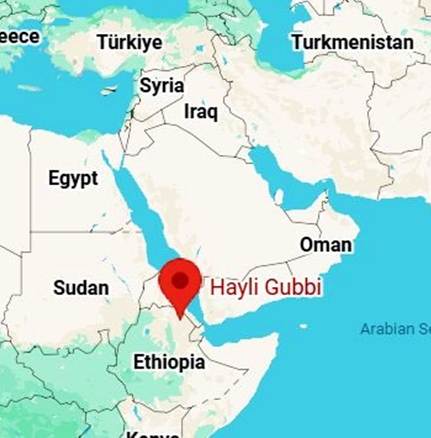
- The Hayli Gubbi volcano in northern Ethiopia erupted on November 23, 2025, for the first time in nearly 12,000 years.
- It released massive ash plumes up to 14 km altitude, which travelled across the Red Sea, Middle East, and drifted into India’s western airspace on November 24–25.
- The DGCA (India’s aviation regulator) issued an advisory to airlines and airports due to the risk volcanic ash poses to aircraft engines and flight safety.
- Several Indian carriers (Air India, Akasa) cancelled flights to West Asian destinations.
Relevance
GS-I: Geography
- Volcanism
- Atmospheric circulation
- Transboundary ash transport
GS-III: Science & Tech
- Jet engine functioning
- Impact of foreign particles on aviation systems
- Safety protocols
What Is Volcanic Ash? Why Is It Dangerous?
Volcanic ash is NOT like soft household ash.
It is a mixture of:
- Silicate glass particles
- Pulverised rock and minerals
- Sulphur dioxide (SO₂)
- Abrasive, microscopic, sharp-edged materials
These particles are hard, abrasive, and heat-resistant.
Ash clouds spread due to:
- High-altitude winds (jet streams)
- Updrafts that carry particles tens of thousands of feet up
- Long-range atmospheric transport (sometimes global)
Ash Movement from Ethiopia to India — What Happened?
- The eruption shot ash 14 km upwards.
- Winds carried the plume across the Red Sea → Yemen → Oman → Iran → India.
- Plume altitude: 15,000–25,000 feet
- Speed: 100–120 km/hour
- Entered Indian airspace:
- Nov 24, 5.50 pm (Rajasthan border)
- Passed over Gujarat, Delhi-NCR, Punjab, UP
- Exited India: Nov 25, 10.30 pm, towards China.
This rapid transboundary movement triggered aviation safety concerns.
How Volcanic Ash Damages Aircraft Engines (The Science)
A jet engine:
- Sucks air in
- Compresses it
- Mixes with fuel
- Burns it at ~1,600°C
- Produces thrust
Why ash is dangerous:
- Silicate ash melts at high temperature, forming glass-like deposits.
- These stick on hot engine parts, blocking:
- cooling air passages
- turbine blades
- fuel nozzles
- sensors
- Result:
- Engine overheating
- Compressor stall
- Power loss
- Complete engine shutdown
Even small amounts of ash can cause millions of dollars in engine damage.
Ash also:
- Sandblasts the cockpit windshield, making it opaque
- Damages sensors (like pitot tubes)
- Contaminates cabin air
- Scratches fuselage and fan blades
Historical Incidents Proving the Risk
1. British Airways Flight 9 (1982) – Mount Galunggung, Indonesia
- Boeing 747 flew through ash at 37,000 ft.
- All 4 engines failed.
- Cabin lost pressure → oxygen masks deployed.
- Aircraft descended 25,000 ft before pilots restarted engines.
- Cockpit windscreens became opaque from ash.
2. KLM Flight 867 (1989) – Mount Redoubt, Alaska
- Boeing 747-400 hit ash at 24,000 ft.
- All 4 engines shut down.
- Restarted after multiple attempts.
- Aircraft saved, but US$ 80 million engines were scrapped.
These events are central case studies in global aviation safety.
What Did DGCA Order in India?
The DGCA issued a safety advisory to:
1. Airlines
- Avoid ash-affected regions and altitudes.
- Modify flight routes/levels.
- Report:
- engine performance anomalies
- cabin smoke/odour
- suspected ash ingestion
2. Airports
- Inspect runways for ash deposits.
- Suspend or restrict operations if contamination detected.
- Be ready with emergency protocols.
3. Flight Operations
- Adjust air traffic flow to prevent aircraft from entering ash zones.
- Maintain updated volcano advisories (VAAC alerts).
4. Carriers’ Response
- Air India cancelled nine flights (Dubai, Doha, Dammam etc.).
- Akasa cancelled flights to/from Jeddah, Kuwait, Abu Dhabi.
How Has the Eruption Affected Global Flights?
- Airlines across West Asia and East Africa altered flight paths.
- Some flights experienced delays due to routing changes.
- VAACs (Volcanic Ash Advisory Centres) issued continuous warnings.
- Indian carriers took precautionary cancellations to avoid risk.
Broader Implications
Aviation Safety
- Reinforces global standards:
- “Avoid all visible ash” (ICAO)
- Highlights vulnerability of long-haul and Middle East-bound flights.
Climate & Atmospheric Concerns
- Ash clouds can cool regions temporarily.
- SO₂ emissions can cause acid rain.
Regional Cooperation
- Need for coordinated:
- meteorological services
- VAAC advisories
- air navigation planning across nations
SC flags issues in payouts, free care for acid attack survivors
Why is this in News?
- The Supreme Court has decided to re-examine why acid attack survivors—mostly young women—
- are not receiving the minimum ₹3 lakh compensation, and
- are still being denied free emergency treatment by private hospitals,
despite clear Supreme Court directions for more than a decade.
- The case was heard by a Bench led by Justice B.V. Nagarathna.
- The Court has sought detailed data from NALSA on compensation disbursed across States.
Relevance
GS-II: Polity & Governance
- Failure of State machinery to enforce SC orders
- Role of NALSA, SLSAs, DLSAs
- Victim compensation schemes
- Criminal justice system reforms
- Rights of vulnerable groups
GS-II: Social Justice
- Gender-based violence
- Intersection of poverty, disability, and violence
- Rehabilitation of victims
- Access to healthcare
Background: How Did SC Start Intervening?
A. Landmark 2006 Beginning → Laxmi Case
- In 2006, SC took suo motu cognisance after hearing Laxmi, an acid attack survivor.
- Recognised:
- the lifelong physical, mental, and social trauma survivors face
- State’s obligation to rehabilitate victims
B. Key SC Orders (2013 & 2015)
The Supreme Court issued binding directions:
- Minimum ₹3 lakh compensation for every acid attack survivor
- ₹1 lakh within 15 days
- Remaining ₹2 lakh within 2 months
- Ban on over-the-counter sale of acid
- Acid to be sold only with ID proof and justification.
- Mandatory free treatment for survivors
- Private hospitals criminally liable for refusal
- Immediate stabilisation + referral to specialised facilities
- District Legal Services Authorities (DLSAs)
- To function as Criminal Injuries Compensation Boards
- To process claims and disburse compensation quickly
C. March 20, 2024 Order
- Survivors can approach:
- State Legal Services Authorities (SLSA)
- District Legal Services Authorities (DLSA)
when compensation is delayed or denied.
What Is the Issue Now? What Did Petitioners Say?
The NGO Acid Survivors Saahas Foundation submitted:
- States (especially Maharashtra and Uttar Pradesh) are giving only the initial ₹1 lakh.
- The remaining ₹2 lakh is not being paid at all.
- Private hospitals are refusing treatment until full payment is made.
- Survivors face:
- catastrophic medical costs
- repeated surgeries
- disability & loss of livelihood
- long rehabilitation periods
The NGO said this is a humanitarian failure and a violation of multiple SC orders.
Why Compensation & Free Treatment Matter (Basics)
Acid attacks cause:
- Severe burns, disfigurement, blindness
- Loss of facial function, mobility
- 20–30 corrective surgeries
- Long-term psychological trauma
- Inability to work for months or years
Thus, immediate compensation and free emergency care are vital for survival.
What Did the Supreme Court Observe Now?
A. SC Will Examine Why Years of Orders Are Not Followed
- The Court noted:
- Compensation remains unpaid
- Private hospitals continue to deny treatment
- Monitoring by States is weak
B. SC Issued Notice to NALSA
- NALSA to gather:
- State-wise data on compensation paid
- Cases where payment is pending
C. NALSA Statement in Court
- Between March 2024 – April 2025, approx. ₹484 crore has been disbursed.
- SC seeks detailed breakup to assess compliance.
D. Direction to Chief Secretaries
- Bring all judicial orders to their attention.
- Ensure funds are released promptly to:
- State Legal Services Authorities
- District Legal Services Authorities
E. Next hearing scheduled for February 3, 2026
Why the Problem Persists (Structural Issues)
1. Delays in State funding
- Budgets for victim compensation often inadequate.
2. Weak District Legal Services Authorities
- Slow verification
- Lack of coordination with police and hospitals
3. Poor enforcement against private hospitals
- No criminal cases filed
- Survivors forced to pay out-of-pocket
4. Acid sale continues informally
- Black-market sales persist
- Poor implementation of SC ban
5. No nationwide rehabilitation framework
- Limited shelters, counselling services, skill training
- Survivors abandoned after initial treatment
Broader Social Implications
- Acid attacks are gendered crimes—targeting women rejecting advances or asserting autonomy.
- Survivors face:
- lifelong stigma
- social isolation
- difficulty finding employment
- Delays in compensation deepen inequality and exploitation.
Haircuts, asset valuation
Why is this in News?
- A Parliamentary Standing Committee on Finance has expressed serious concern about:
- Excessive haircuts in many Insolvency and Bankruptcy Code (IBC) cases
- Opaque valuation practices
- Low recovery rates
- Delays in resolution
- The observations were made while examining the IBC Amendment Bill 2025.
- Committee said these issues may be undermining creditor confidence and IBC’s long-term credibility as a resolution framework.
Relevance
GS-III: Indian Economy
- Bankruptcy reforms
- Bad loans & NPAs
- Role of IBC in improving credit flows
- Haircuts, recovery rates, asset valuation
- Banking sector stability
- Insolvency infrastructure & NCLT reforms
GS-II: Governance
- Parliamentary oversight
- Accountability in regulatory institutions (IBBI, IPs)
What is the Insolvency and Bankruptcy Code (IBC)?
- Enacted in 2016 to:
- Consolidate insolvency laws
- Prioritise creditor control (CoC)
- Enable time-bound resolution of distressed firms
- Improve credit discipline
- Key timelines:
- 180 days + 90-day extension = maximum 330 days
- But many cases exceed these timelines.
What is a “Haircut”?
Definition
A haircut refers to the difference between:
- Total amount owed by the debtor, and
- Actual amount recovered by creditors through an IBC resolution.
Formula
Example:
If a company owes ₹1,000 crore and creditors recover ₹200 crore →
Haircut = 80%
Why Do Haircuts Happen?
- Borrower distress leading to low enterprise value
- Deterioration of assets during long insolvency timelines
- Poor management or diversion of funds
- Low interest of bidders
- Inefficient information memorandum
- Litigation & delays reducing asset value
- Liquidation value being low for many stressed assets
Why Haircuts Are Controversial?
- Creditors (especially banks) incur massive losses
- Taxpayer money indirectly suffers (public sector banks)
- Questions about:
- valuation integrity
- conflict of interest among valuers
- collusion between bidders and promoters
- misuse of Section 29A loopholes
- High haircuts reduce trust in the insolvency ecosystem.
What the Parliamentary Committee Flagged?
1. Excessive Haircuts
- Several cases show 95–99% haircuts.
- Example trends noted:
- Average recovery rate under IBC is only 32.8% of admitted claims.
- This is far below original expectations.
2. Concerns about Asset Valuation
- Allegations of:
- Inconsistent valuation methodologies
- “Forced sale value” ambiguities
- Lack of transparency in the valuers’ work
- In some cases, resolution value < liquidation value, indicating inefficiency.
3. Delay in Resolution
- Delays erode enterprise value and increase haircuts.
4. Inefficiency among Insolvency Professionals (IPs)
- Questions about skill levels, oversight, and accountability.
5. Low bidder participation
- Due to:
- litigation risks
- lack of clarity in asset value
- uncertain timelines
Why Are Haircuts Rising?
Economic Factors
- Many companies reach IBC at terminal stage, assets eroded.
- Bad loans often unresolved for years before IBC.
Institutional Weakness
- IPs overloaded
- CoC not always equipped to evaluate business viability
- Poor documentation by debtors
Legal Issues
- Endless litigation in NCLT/NCLAT/Supreme Court
- Promoters resisting takeover
- Challenges to eligibility of bidders
Valuation Problems
- Discrepancies between two mandatory valuers
- Assets often overvalued pre-IBC, undervalued during IBC
- Information asymmetry hurting bidder interest
What the Committee Recommended ?
1. Reduce Haircuts through Better Monitoring
- Strengthen oversight on resolution professionals and valuation firms.
2. Improve Transparency in Valuation
- Standardised procedures
- Independent audits of valuation in major cases
- Use of tech-based tools + AI for forensic valuation
3. Ensure Time-Bound Resolution
- Strict enforcement of 330-day limit
- Fast-track disposal of litigation
4. Strengthen Information Flow
- Digitised data rooms
- Standardised info memorandum
5. Improve Cross-Border Insolvency Mechanisms
- Critical for foreign creditor confidence.
Current IBC Performance Snapshot (As of March 2023 / 2024 Updates)
- 1,940 cases resolved under IBC.
- Average recovery: 32.8% of admitted claims, up to 68% of enterprise value.
- Banks have realised ₹3.89 lakh crore, but haircuts remain large.
- High-profile cases (Essar Steel, Bhushan Steel) performed better; others have not.
Why This Matters for the Indian Economy?
A. Bank Balance Sheets
- High haircuts → high losses → poor credit growth.
B. Investor Confidence
- Lower foreign investment because of uncertain recoveries.
C. Credit Culture
- Borrowers may exploit delays.
D. Industrial Revival
- Faster resolution = revival of productive assets.
Why a landmark US lawsuit is accusing big brands of engineering addictive, unhealthy foods
Why is this in News?
- San Francisco has filed a first-of-its-kind lawsuit against 10 major global food companies—including Coca-Cola, PepsiCo, Nestlé, Mondelez, Kellogg—accusing them of:
- Deliberately engineering ultra-processed foods (UPFs) to be addictive
- Hiding scientific evidence on health impacts
- Deceptive and predatory marketing, especially targeting children
- Creating a public health crisis similar to the tobacco and opioid epidemics
- The legal action is globally significant as UPF-related obesity and diabetes are rising in India too.
Relevance
GS-II: Governance
- Consumer protection
- Public health regulation
- Corporate accountability
- Comparative regulatory models (tobacco, opioids)
- Judicial interventions in health crises
GS-III: Public Health & Economy
- NCD burden in India
- Ultra-processed foods and metabolic diseases
- Food safety standards (FSSAI)
- Behavioural addiction science
- Market failures in food systems
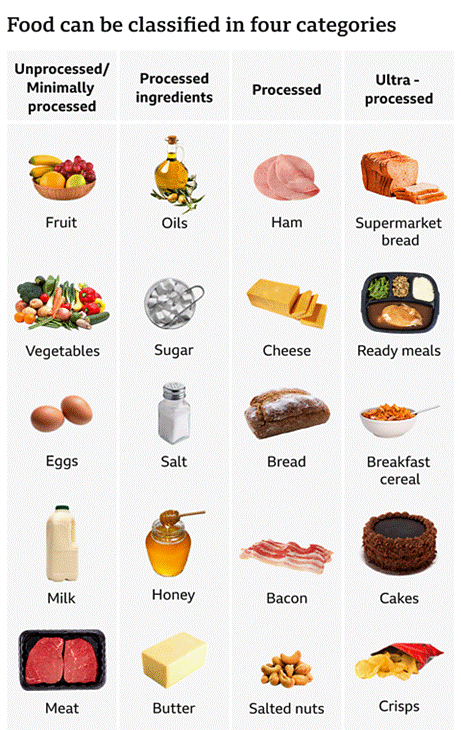
What Are Ultra-Processed Foods (UPFs)?
Defined under the NOVA classification system as industrially manufactured edible products made from food-derived substances, not whole foods.
Characteristics
- High content of:
- Added sugars (fructose, HFCS, maltodextrin)
- Modified fats
- Refined starches
- Salt
- Artificial flavours, colours, emulsifiers
- Low in:
- Fibre
- Protein quality
- Essential micronutrients
Purpose
- Maximise palatability, shelf life, sales volumes, and brand loyalty.
- Designed to replace real food in diets.
Examples
- Chips, biscuits, namkeen
- Soft drinks, energy drinks
- Breakfast cereals
- Sweetened yoghurts, processed meats
- Ice creams, ready-to-eat snacks
Why Are UPFs Considered “Engineered Addictive”?
UPFs use precise combinations of salt + sugar + fat + additives to trigger brain reward pathways.
Mechanisms
- Stimulate dopamine release similar to addictive substances.
- Increase cravings and reduce satiety, promoting overeating.
- Artificial flavours trick the brain into expecting nutrition that the food does not deliver → nutritional mismatch.
- Highly soft textures reduce chewing → faster calorie intake.
- Marketing reinforces habit-loop behaviours.
Evidence
- Global meta-analyses: UPF addiction prevalence 14–20% (similar to alcohol-use disorder rates).
- Linked to:
- Obesity, diabetes
- Cardiovascular disease
- Dementia
- Depression
- Cancer
What Does the Lawsuit Claim?
Filed under California’s Unfair Competition Law and Public Nuisance Law.
Core Allegations
- Deliberate Engineering of Addictive Food Products
Companies knowingly created UPFs designed to trigger compulsive overeating. - Deceptive Marketing
Targeting children, minorities, low-income families with ads emphasising fun, sports, and happiness. - Withholding Evidence
Comparing companies to:- Tobacco firms — hiding dangers of cigarettes
- Opioid manufacturers — downplaying addiction risks
- Public Health Damage
UPFs linked to:- soaring rates of obesity
- diabetes & metabolic syndrome
- mental health disorders
- Government Cost Burden
The city seeks:- restitution for public health expenses
- civil penalties
- injunctions restricting marketing tactics
Why Is This Considered a Landmark Case?
- First lawsuit directly accusing the global food industry of creating addictive edible products.
- Could shape global regulations similar to:
- tobacco warning labels
- trans-fat bans
- sugar taxes
- May compel food companies to disclose:
- formulation data
- internal research papers
- addiction-related documentation
Global Context & Public Health Crisis
A. Obesity Epidemic
- US adult obesity: nearly 42%
- India: obesity and diabetes rising sharply (urban + rural)
B. UPF Dominance
- UPFs now constitute:
- 58% of US calories
- 25–30% of India’s urban calorie intake (and rising)
C. Low-income households disproportionately affected
- UPFs are cheaper, heavily marketed, require no cooking.
Why the India Link Matters ?
India faces:
- Rising NCDs (non-communicable diseases)
- High soft-drink, biscuit, chips consumption among youth
- Weak front-of-pack labelling norms
- No regulation on additives linked to overeating
- Aggressive marketing by multinational and domestic brands
- School food environments dominated by UPFs
UPFs are now a public health challenge for India too.
Possible Implications for India
Regulatory
- Could push India to adopt:
- warning labels
- front-of-pack nutrition grading
- restrictions on advertising to children
Judicial
- Indian courts may soon face PILs challenging:
- aggressive UPF marketing
- misleading health claims
- school availability
Economic
- Reformulation costs may increase for FMCG companies.
Health Systems
- Escalating NCD expenditure if consumption trends continue.