

Content
- How the Mahad satyagraha(s) shaped constitutional discourse
- Mahad Satyagraha (1927)
- U.S. Deportations of Indian Nationals (2025)
- Digital Addressing Reform: DHRUVA and DIGIPIN
- Airborne Microplastics in India
- India’s Rising Road Fatalities (2024)
- Flex Fuel Vehicles After E20 Rollout
How the Mahad satyagraha(s) shaped constitutional discourse
Why is this in news?
- New scholarship foregrounds Mahad as the birthplace of one of India’s earliest human rights movements, led by Dr. B. R. Ambedkar in 1927.
- Highlights how Mahad shaped:
- India’s constitutional ethics
- Discourse on water democracy, caste annihilation, and gender equality
- December 25 (Manusmriti Dahan) is increasingly viewed as Indian Women’s Liberation Day.
Relevance
GS-1 (Society & Social Movements)
- Caste system, untouchability, Bhakti–Dalit reform movements.
- Social justice movements and their historical roots.
- Intersection of caste and gender.
GS-2 (Polity & Constitution)
- Evolution of constitutional morality.
- Foundations of Article 17, equality, dignity, and Fundamental Rights.
- Human rights discourse and Ambedkarian constitutional philosophy.
Basic understanding
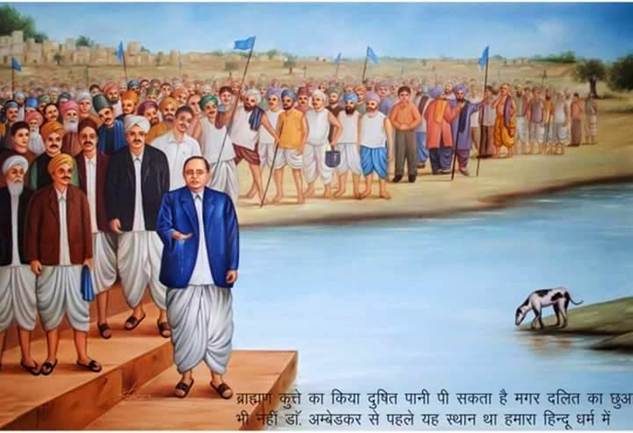
- Mahad Satyagraha was launched by Ambedkar in 1927 at Chavadar Tank (Mahad) to assert Dalit right to access public water.
- It operationalised the 1923 S. K. Bole Resolution permitting untouchables to use public tanks.
- It marked the shift from reformist charity to rights-based mobilisation.
Social and regional background
- Mahad, in the Bombay Presidency, had rigid caste norms and denial of public water to Dalits.
- Region had a reformist legacy: Gopalbaba Walangkar, N. M. Joshi, Sambhaji Gaikwad, and later R. B. More.
- Local incidents at Goregaon and Dasgaon showed early resistance by untouchables.
The Bole Resolution (1923)
- Recommended allowing untouchable communities to use all public water bodies funded or maintained by public authorities.
- Directly challenged Brahmanical control over public resources.
- Gave Ambedkar a legal and legislative foundation for Mahad.
Mahad 1.0 (March 19–20, 1927)
- Thousands followed Ambedkar to assert water rights.
- Local caste groups denied access despite the 1923 resolution.
- Dalits had to purchase water for ₹40, illustrating extreme exclusion.
- Upper castes carried out purification rituals after Dalits touched the tank.
Significance
- First mass assertion of dignity, equality, and human rights by Dalits.
- Ambedkar compared it to the French Revolution for its transformative ethos.
The phase between Mahad 1.0 and 2.0
- Court issued a stay claiming the tank was privately owned → blocked Dalit access legally.
- Ambedkar launched Bahishkrut Bharat, articulating democratic and human rights ideals.
- Violent reprisals in the region → creation of Ambedkar Seva Dal.
- Ambedkar engaged in the Ambabai Temple Satyagraha.
Mahad 2.0 (December 25–26, 1927)
- Ambedkar avoided direct satyagraha due to ongoing court case.
- The gathering became a philosophical and political intervention.
- The Manusmriti was burned, symbolising a break with Brahmanical patriarchy and graded inequality.
- Ambedkar addressed women explicitly, foregrounding gender as central to human rights.
Ambedkar’s gendered imagination of the nation
- Ambedkar’s 1916 paper theorised caste as a system sustained through control of women.
- At Mahad 2.0, women and men gathered as equal participants—an embryonic National Assembly of the oppressed.
- Contrasted with the French Revolution, which excluded women; Mahad corrected this gap.
- Rights were framed through Buddhist ethics of maitri, manuski, liberty, equality, fraternity.
Intellectual significance
- Mahad redefined political struggle as a human rights movement, not a reformist appeal.
- Key ideas that emerged:
- Dignity as a non-negotiable right
- Equality independent of religious sanction
- Fraternity as a social ethic, not sentiment
- repudiation of scriptures that legitimised hierarchy
- Formed the ethical foundation of:
- Article 17
- Constitutional morality
- Fundamental Rights framework
Why Mahad marks a turning point ?
- First organised movement asserting human rights in modern India.
- Introduced the idea of water as a democratic right.
- Brought women into the rights discourse, preceding global constitutional feminism.
- Transformed anti-caste struggle into a constitutional ethic.
- Provided Ambedkar the philosophical base for a republic rooted in dignity, equality, and fraternity.
U.S. Deportations of Indian Nationals
Why is this in news?
- The External Affairs Minister informed the Rajya Sabha that 3,258 Indian nationals were deported from the U.S. in 2025, the highest since 2009.
- The case of 73-year-old Harjit Kaur, reportedly maltreated in U.S. detention, triggered questions on deportee treatment, women’s safety, and bilateral coordination on migration issues.
- Deportation trends have intensified after a new U.S. policy (April 2025) causing visa cancellations and pressure on students to self-deport.
Relevance
GS-2 (International Relations)
- India–U.S. diplomatic engagements on migration and consular protection.
- Sovereignty vs. human rights in immigration enforcement.
- Diaspora issues.
GS-2 (Governance)
- State responsibility towards citizens abroad.
- Data privacy and surveillance concerns (public social-media vetting).
- Deportation processes and legal safeguards.
Key facts
- Total deportees since 2009: 18,822 Indians.
- Deportees in 2025: 3,258, highest in 16 years.
- Transportation mode:
- 2,032 (62.3%) on commercial flights
- 1,226 (37.6%) on ICE/US Customs–charter flights
- Issue of maltreatment in detention raised formally by India.
- U.S. visa scrutiny increasing:
- Applicants being asked to make social media profiles public.
- New April 2025 policy triggered cancellations even for minor offences.
- Students faced pressure to self-deport.
Background: Why deportations are rising
- The U.S. has tightened vetting, linking even minor infractions to immigration risk.
- Post-pandemic labour adjustments and domestic political pressure on immigration.
- Enhanced digital surveillance of migrants, including social media monitoring.
- Stricter student visa compliance and checks to prevent misuse of F-1 visas.
Case study: Harjit Kaur (73 years old)
- Not handcuffed but maltreated in ICE detention before deportation.
- Issues reported:
- Slept on floor despite double knee replacements
- Denied appropriate food
- Given ice instead of proper support for medication
- 60–70 hours in uncomfortable detention conditions
- India raised the issue strongly with U.S. authorities and the U.S. Embassy.
Major issues emerging
1. Treatment of deportees
- Instances of women and elderly migrants facing harsh detention environments.
- Raises concerns over compliance with international human rights standards.
2. Student visa vulnerability
- Minor infractions triggering visa cancellations.
- Pressure to self-deport undermines due process.
- Impact on India’s large student community in the U.S. (current estimates: 2.7 lakh+).
3. Sovereignty vs. diplomacy
- Visa issuance is a sovereign right, but India can raise concerns regarding:
- Detention conditions
- Discrimination
- Deportation processes
4. Surveillance expansion
- Requirement to make social media public indicates:
- Data-intensive vetting
- Lower privacy thresholds for visa applicants
- Potential misuse of digital footprints in immigration decisions
5. Humanitarian concerns
- Elderly, women, and undocumented workers most vulnerable.
- Charter flights suggest deportations of individuals held in longer detention cycles.
Implications for India–U.S. relations
- Migration is becoming a sensitive bilateral issue, alongside trade and technology.
- India must balance:
- Protecting diaspora interests
- Respecting U.S. immigration laws
- Ensuring due process and humane treatment
- Could push for:
- Consular access protocols
- Humanitarian detention standards
- Better notification mechanisms before deportation
Digital Addressing Reform: DHRUVA and DIGIPIN
Why is this in news?
- The Department of Posts released a draft amendment to the Post Office Act, 2023 proposing a new digital addressing system called DHRUVA (Digital Hub for Reference and Unique Virtual Address).
- The system aims to replace textual addresses with UPI-like labels (e.g., name@entity) and standardise digital addresses across services.
- The proposal includes a DIGIPIN, rolled out earlier in March 2025, as the foundational layer for precise geolocation-based addressing.
Relevance
GS-2 (Governance)
- Digital public infrastructure (DPI).
- Consent-based data architecture, privacy frameworks.
- Citizen service delivery modernisation.
GS-3 (Economy & Technology)
- Logistics efficiency, e-commerce, gig-economy enablement.
- Standardising geolocation systems; technological innovation.
GS-3 (Disaster Management)
- Last-mile identification for emergency services.
- Improving reliability of address databases for crisis response.
Basic understanding
- DHRUVA is a proposed interoperable, user-centric digital addressing system.
- Users would receive address labels (similar to UPI IDs), which act as proxies for their physical locations.
- Firms and platforms can access the actual address via a consent-based architecture managed by address information agents (AIAs).
- Intended to reduce repetitive manual entry of addresses across e-commerce, delivery, gig platforms, and government services.
Key features of DHRUVA
Address as a digital label
- Users can choose labels like name@entity, comparable to UPI handles.
- Labels can be shared instead of full addresses.
Consent-driven sharing
- The user authorises an entity for a specified duration.
- After expiry, re-authorisation is required to access the address again.
Governance structure
- A Section 8 not-for-profit entity will implement the system under government oversight.
- Modeled on institutions like the National Payments Corporation of India which oversees UPI.
Role for private companies
- E-commerce, logistics, gig platforms, and hyperlocal delivery apps are expected to be early adopters.
DIGIPIN: the underlying technology
Nature of DIGIPIN
- A 10-character alphanumeric code derived mathematically from latitude and longitude.
- Encodes an area of roughly 14 sq. metres.
- Designed for locations where textual addresses are ambiguous or absent, especially in rural regions.
Scale
- Potential for around 228 billion unique DIGIPINs across Indian territory.
Open-source origin
- Developed and open-sourced by the postal department to encourage adoption and interoperability.
Why this system matters ?
Current limitations in India’s addressing
- Non-standard, inconsistent, and often missing addresses.
- Delays and errors in delivery services.
- Inefficiencies in logistics, disaster response, last-mile governance.
DHRUVA’s intended benefits
- Standardisation of addresses across sectors.
- Streamlined onboarding for e-commerce and delivery firms.
- Reduced friction for users: no repeated address entry.
- Potential integration with digital public infrastructure frameworks.
Consent and privacy architecture
- Users control who sees their address, and for how long.
- AIAs mediate access between the label and actual geographical coordinates.
- Designed to prevent centralised misuse of location data.
Challenges and open questions
- Adoption by private firms is voluntary; success depends on network effects similar to UPI.
- Data security and risks of geolocation misuse need rigorous safeguards.
- Public trust must be built around the consent mechanism.
- Integration with state/local addressing databases may be complex.
Airborne Microplastics in India
Why is this in news?
- Over 80 Padma awardee doctors issued a joint national advisory warning that airborne microplastics and nanoplastics have become a major emerging health threat in India.
- They urged authorities to take immediate action amid rising air pollution and evidence of plastic particles infiltrating the human body, increasing risks of cardiovascular disease, diabetes, inflammation, organ damage, and insulin resistance.
- Advisory highlights a shift from seasonal smog concerns to all-year health crisis, especially affecting infants, elderly, pregnant women, and those with chronic illness.
Relevance
GS-3 (Environment)
- Emerging contaminants, air pollution science.
- Waste mismanagement, microplastic pathways.
- Intersections between environment and public health.
GS-2 (Health)
- NCDs of environmental origin (cardiac, metabolic, endocrine disorders).
- Public health advisories and regulatory gaps.
- Vulnerable populations: elderly, infants, pregnant women.
Basic understanding: What are airborne microplastics?
- Microplastics are plastic fragments <5 mm; airborne variants include particles <10 microns, small enough to enter lungs, bloodstream, and organs.
- Sources include:
- Vehicle tyre wear
- Road dust
- Broken plastic waste
- Synthetic textiles
- Industrial emissions
- Once airborne, they mix with fine particulate matter (PM2.5), enhancing toxicity.
Key scientific concerns raised by Padma doctors
Exposure and infiltration
- Airborne microplastics detected in Delhi’s traffic-heavy corridors at some of the highest global concentrations.
- Particles <10 microns can penetrate deep into lungs, enter bloodstream, and reach organs.
Role as carriers of pathogens
- Research shows microplastics can carry bacteria, viruses, and toxic chemicals adsorbed on their surfaces.
Direct health impacts
- Inflammation
- Oxidative stress
- Tissue and organ damage
- Hormonal disruption
- Gut microbiota imbalance
- Potential neurotoxicity
Emerging medical linkages highlighted
1. Cardiovascular risk
- Microplastics associated with higher risk of heart disease and stroke.
- Example: 4.5× increased risk of stroke within 3 years in certain exposure cohorts.
2. Diabetes and metabolic disorders
- Doctors note a strong connection between air pollution, microplastics, and rising diabetes.
- India has 10 crore+ diabetics, and 3 crore prediabetics.
- Inflammation and endocrine disruption from microplastics may be contributing in overlooked ways.
3. Insulin resistance
- Microplastics & related chemicals (e.g., BPA) linked to impaired glucose metabolism.
4. Immune and hormonal disruption
- Chronic exposure damages cellular function, elevates chronic disease risk.
Structural and environmental sources
Urban concentration
- High levels in commercial areas, traffic corridors, markets, and construction-heavy zones.
Indoor risk
- Indoor air often contains synthetic fiber particles from furnishings, carpets, and plastic materials.
Accumulation pattern
- Microplastics do not degrade; they accumulate in human organs, causing long-term chronic damage.
Why doctors call this an “unmanageable scale” crisis ?
- Microplastics are now infiltrating multiple pathways: air, food, water, indoor environments.
- Unlike traditional pollutants, they are persistent, invisible, chemically complex, and difficult to filter.
- India’s existing air pollution crisis amplifies microplastic exposure intensity.
- Infants, children, and elderly face disproportionate harm due to lower physiological resilience.
Advisory by Padma awardee doctors: Recommended precautions
At household level
- Use air purifiers when possible
- Reduce plastic use
- Mop and wipe surfaces to reduce dust
- Avoid microwaving food in plastic containers
- Improve kitchen ventilation
At community level
- Aim for cleaner indoor air
- Enhance waste management to prevent fragmentation of plastic litter
- Promote alternatives to single-use plastics
At policy level
- Recognise microplastics as an air pollutant category
- Strengthen monitoring systems (like AQI) to capture microplastic load
- Promote R&D on health impacts and mitigation technologies
India’s Rising Road Fatalities
Why is this in news?
- The Union Minister for Road Transport and Highways informed Lok Sabha that 1.77 lakh people died in road accidents in 2024, an increase of 2.31% over 2023.
- India missed its target to reduce road accidents, despite a global commitment (Stockholm Declaration, 2020) to halve road traffic deaths by 2030.
- India recorded 4.80 lakh accidents in 2024, indicating a persistent upward trend after a temporary pandemic dip.
Relevance
GS-2 (Governance)
- Public safety, policy implementation constraints.
- Institutional gaps in enforcing the Motor Vehicles Act.
- Centre-State coordination on road safety.
GS-3 (Infrastructure & Economy)
- Transport infrastructure, logistics efficiency.
- Economic cost of road accidents (~3% of GDP).
- Technology adoption: e-DAR, intelligent transport systems.
Basic understanding
- India has the highest number of road accident deaths globally.
- Road safety depends on the “4Es”:
- Education (awareness & behaviour)
- Engineering (safer roads & vehicles)
- Enforcement (laws & compliance)
- Emergency care (golden hour response)
- India’s road safety ecosystem consistently struggles across all four pillars.
Key facts from the report
Fatalities (2023 → 2024)
- 2023: 1,72,809 deaths
- 2024: 1,77,177 deaths
- Rise: 2.31%
States with highest fatalities (2024)
- Uttar Pradesh – 24,118
- Tamil Nadu – 16,932
- Maharashtra – 17,870
- Madhya Pradesh – 12,987
- Karnataka – 11,727
Global comparison
- Highest road deaths: India, followed by China and the U.S.
Other observations
- India’s road crash rate per lakh population: 43.4
- World average: lower than India
- U.S.: 11.89
- U.K.: 3.13
Why are fatalities increasing?
1. Rapid motorisation without corresponding road safety infrastructure
- Increased vehicle ownership, especially 2-wheelers.
- Poorly designed intersections, absence of pedestrian infrastructure.
2. Weak enforcement
- Overspeeding, drunk driving, helmet non-compliance, seatbelt violations remain common.
- Low deterrence due to inconsistent policing.
3. Engineering gaps
- Blackspots remain uncorrected.
- Inadequate signage, poor road maintenance, lack of crash barriers.
4. Behavioural challenges
- Risky driving culture, fatigue among truck drivers, phone usage while driving.
5. Emergency care deficits
- Limited golden-hour response; absence of standardised trauma-care systems.
6. Pandemic rebound effect
- After 2020–21 dips, traffic volumes surged sharply.
Government’s position & ongoing measures
Investment pattern
- Funds allocated for road safety constitute 2.21%–5.10% of total development expenditure for National Highways construction.
Electronic Detailed Accident Report (e-DAR)
- Real-time accident data from police; operational but evolving.
Toll collection modernisation
- Existing system to be replaced with a new electronic mechanism within a year for smoother traffic flow.
Expansion of new road safety system
- Rolled out in 10 locations, to be scaled nationally.
Promotion of cleaner vehicles
- Minister mentioned experimentation with biofuels, green hydrogen, and Toyota’s Mirai hydrogen fuel-cell car.
Structural policy gaps
- No nationwide Unified Road Safety Authority.
- Fragmented responsibilities between Centre, States, and local bodies.
- Insufficient monitoring of post-crash response.
- Weak implementation of the Motor Vehicles (Amendment) Act, 2019 due to States not enforcing enhanced penalties.
- Data inconsistencies between police reporting and hospital/emergency-care systems.
Why India is missing the 2030 Stockholm target ?
- Fatalities still rising instead of declining.
- Behavioural change is slow.
- States vary widely in enforcement intensity.
- Vehicle safety compliance remains uneven, especially among 2- and 3-wheelers.
- Infrastructure expansion (expressways, high-speed corridors) outpaces safety design upgrades.
Flex Fuel Vehicles After E20 Rollout
Why is this in news?
- With E20 fuel (20% ethanol–petrol blend) now mandatory across India, Toyota Kirloskar Motor’s country head Vikram Gulati stated that the next policy priority should be the promotion of flex fuel vehicles (FFVs).
- He argued that global experience shows countries move to flex fuels after stabilising initial ethanol blends, and that India is now at that juncture.
- The discussion is significant for India’s goals of reducing oil import dependence, supporting the ethanol economy, and decarbonising transport.
Relevance
GS-3 (Economy)
- Import substitution and energy security.
- Ethanol economy, rural income, diversification of farmers’ revenue streams.
GS-3 (Environment & Climate Change)
- Low-carbon transport transition.
- Biofuel policy, lifecycle emissions, cleaner combustion.
GS-3 (Science & Tech)
- FFV engine technology, ethanol compatibility.
- Technological pathways in transport decarbonisation.
What are flex fuel vehicles (FFVs)?
- FFVs can run on any blend of petrol and ethanol, from E20 to E85 or even E100, depending on design.
- The engine, fuel system, and electronic controls are adapted to handle higher ethanol concentrations.
- Ethanol has:
- higher octane number
- lower greenhouse gas emissions
- lower cost in countries with strong biofuel sectors
India’s current stage: E20 rollout
- India mandated E20-compatible vehicles starting 2023; nationwide availability is expanding.
- E20 reduces emissions and cuts fuel import bills, but requires vehicle & fuel system modifications.
- Gulati notes that once a country successfully reaches this stage, global trends indicate transition to FFVs.
Why push for flex fuels now?
1. Global evidence
- Countries like Brazil moved to FFVs once ethanol blends stabilised.
- Brazil mandates that E100 (ethanol) is cheaper than petrol by around 30%, driving consumer uptake.
2. Consumer economics
- Pricing parity between E20 and petrol is insufficient; FFVs allow higher ethanol use, reducing running cost.
- Flex fuels become viable only when ethanol is consistently cheaper than petrol at retail level.
3. Industry readiness
- Automotive firms (Toyota, Honda, others) are aligned that the next disruption in India will be FFVs, not merely higher ethanol blends.
- Small EVs face cost issues; hybrid EVs and FFVs can bridge the transition.
4. Technology maturity
- Legacy vehicles risk compatibility issues as ethanol percentages rise.
- FFVs reduce uncertainty and avoid frequent re-testing/re-homologation as blends evolve.
Key challenges highlighted
1. Legacy vehicles and compatibility
- Increasing ethanol blends affect older vehicles’ materials, seals, pumps, and combustion characteristics.
- Without FFVs, retrofitting or re-homologation costs rise.
2. Taxation and GST issues
- India taxes vehicles primarily based on size, not fuel technology.
- Better taxation differentiation is needed to make FFVs competitive.
3. Pricing regulation
- For mass adoption, ethanol blends must be consistently cheaper than petrol at the pump.
- The Brazilian model succeeded because the government ensured favourable pricing.
4. Need for policy incentives
- Without targeted GST rationalisation, FFVs may remain niche.
- Stakeholders want a clear roadmap similar to the push given to EVs.
Why flex fuels matter for India ?
Energy security
- India imports ~85% of its crude oil.
- Scaling ethanol helps cut import bills and diversifies fuel sources.
Farmer income & rural economy
- Ethanol is produced from sugarcane, grains, and agri-residues.
- Higher ethanol demand creates predictable markets for farmers.
Cleaner combustion
- Ethanol has lower CO₂ emissions and particulate output.
- Supports India’s climate commitments under NDCs.
Industrial diversification
- Encourages investment in:
- first-generation ethanol
- second-generation ethanol (agri-waste)
- biomass refineries
Bridge technology
- FFVs act as a transition between ICE engines and electric mobility, suited to India’s current infrastructure realities.
What the government needs to consider going forward ?
1. Differential fuel pricing
- Guarantee ethanol blends (E85/E100) at a significant discount to petrol.
2. Taxation framework
- GST rationalisation for FFVs.
- Reduced GST for flex fuel-compatible components and hybrids.
3. National FFV roadmap
- Clear timelines for:
- increasing blend levels
- phasing in FFV norms for OEMs
- developing high-ethanol fueling infrastructure
4. Consumer awareness
- Highlight lower running costs and environmental benefits.
5. Coordination between ministries
- Petroleum, Transport, Agriculture, and Environment must align on pricing, supply, and infrastructure.