

Content
- Govt. to Streamline Its Public Communications Framework
- Judges Are Conscious, Won’t Let AI Overpower Judicial Process: Supreme Court
- Health Security → National Security Cess Bill, 2025 Passed
- Right to Disconnect Bill Introduced in Lok Sabha
- India–Russia Reiterate $100-Billion Trade Target by 2030
- DRDO Successfully Conducts Indigenous Dynamic Ejection Test
Govt. to streamline its public communications framework
Why is this in News?
- Centre has initiated a system-wide overhaul of India’s public communication architecture.
- Reforms span human resources restructuring, technology upgrades, and real-time media response mechanisms.
- A major proposal in advanced stages: Cadre restructuring of the Indian Information Service (IIS) to increase intake and reorganise roles.
- Rising number of ministries, digital platforms, and citizen-facing schemes require a unified, data-driven communication system.
- Last restructuring of IIS occurred in 2016; expansion of government communication needs has outpaced current cadre strength.
Relevance
GS-II: Governance, Polity
- Government communication reforms.
- Accountability, transparency, citizen–state interface.
- Rights: privacy, information, media freedom.
- Ethical public communication.
GS-III: Internal Security
- Combatting misinformation/disinformation.
- Crisis communication readiness.
What is the Indian Information Service (IIS)?
- A Central Group ‘A’ service under Ministry of Information & Broadcasting.
- Functions:
- Government communication & public information dissemination.
- Media management across print, TV, digital.
- Press Information Bureau (PIB), Bureau of Outreach and Communication (BOC), DD News, AIR News roles.
- Crisis communication, fact-checking, public campaigns.
- Recruitment: UPSC CSE.
What is Cadre Restructuring?
- Change in sanctioned strength, hierarchy, and distribution of posts.
- Objectives:
- Modernise workforce.
- Improve promotion avenues.
- Add new roles, abolish outdated ones.
- Align cadre with contemporary needs (digital, analytics, multilingual outreach).
What Exactly Is Being Revamped?
1. Human Resource Overhaul
- Increase intake of IIS officers to cover growing ministries and communication responsibilities.
- Reorganising functions:
- Creation of posts in digital media, strategic communication, data analytics, behavioural insights.
- Phasing out traditional press-centric roles.
- Improving career progression to attract and retain talent.
2. Technological Infrastructure Upgradation
- Real-time media monitoring systems.
- Rapid misinformation tracking and counter-response architecture.
- AI and analytics for campaign design, sentiment mapping, impact evaluation.
3. Unified Public Communication System
- Integration of all departmental communication wings under a single coordinated framework.
- Standardisation of messaging, tone, factual accuracy, and crisis protocols.
Why the Revamp Now?
- Information ecosystem transformation:
- 800+ million internet users; explosive growth of social media.
- Decline of print-first communication model.
- Government expansion:
- New ministries, schemes, and regulatory bodies → each requires specialised communication specialists.
- Misinformation and national security concerns.
- Global trend:
- UK Government Communication Service (GCS), US Public Affairs Model rely heavily on data-led messaging.
Key Objectives
- Real-time public communication.
- Data-driven policy messaging.
- Crisis communication readiness.
- Unified narrative building across ministries.
- Higher professionalisation of government communication.
Expected Implications
- Faster misinformation response, aiding national security and public order.
- Improved scheme awareness and behavioural change outcomes.
- Professional, evidence-based policy communication.
- Enhanced transparency if executed with accountability.
- Better citizen engagement through multilingual, digital-first outreach.
Challenges / Criticisms
- Risk of state propaganda if transparency safeguards are weak.
- Centralisation may reduce autonomy of departmental communication teams.
- Increased intake requires high-quality training in digital analytics, communication ethics, behavioural science.
- Need to balance proactive messaging with citizens’ Right to Information (RTI) and privacy.
Constitutional & Governance Lens
- Article 19(1)(a): Citizens’ right to information.
- Supreme Court: “Right to know is essential for democracy.”
- Public communication reforms must balance freedom of press, privacy, and state accountability.
- Aligns with SMART Governance, Good Governance Indicators, and Participatory Democracy.
Comparison with Global Models
- UK GCS: Highly centralised, analytics-heavy communication; rapid response unit.
- US Federal Public Affairs Officers: Decentralised but coordinated; emphasis on transparency laws.
- India’s model is moving closer to UK’s centralised GCS.
Judges are conscious, won’t let AI overpower judicial process: SC
Why is this in News?
- Supreme Court observed that judges are “very conscious, even overconscious” about risks of generative AI (GenAI) in judicial work.
- SC emphasised that AI will not be allowed to overpower judicial administration.
- Comments were made while hearing a petition seeking guidelines or a policy regulating GenAI use in courts, tribunals, and quasi-judicial bodies.
- Petitioner highlighted dangers such as:
- AI hallucinations (inventing fictitious case law)
- Bias propagation
- Opaque data systems
- Fake rulings generated by AI tools
- Court allowed the plea to be withdrawn but permitted the petitioner to take the matter to the administrative side of the SC.
- Issue arises amidst global debate over AI use in justice delivery systems.
Relevance
GS-II: Judiciary
- Judicial independence & oversight
- Regulation of AI in judicial administration
- Natural justice and due process
GS-II: Polity
- Article 14 (equality), Article 21 (fair procedure), Article 19(1)(a) (legal clarity)
- Administrative vs. judicial domain governance
GS-III: Science & Technology
- Ethical AI, algorithmic bias
- AI hallucinations and explainability concerns
What is Generative AI in the judicial context?
- AI tools capable of producing text, summaries, legal research, and even draft judgments.
- Uses:
- Case summarisation
- Research referencing
- Transcription (already used via SUVAAS, Vidhik Anuvaad)
- Predictive analytics (risk of misuse)
What is AI Hallucination?
- AI generating non-existent judgments, false precedents, or invented statutes—a major legal risk.
3. Judicial Administration
- Includes research, drafting, decision-making, case management, court records, and adjudication.
Core Concerns Raised (As per petition)
1. Fake Judgments & Fictitious Case Law
- GenAI can create fabricated citations, leading to wrong legal conclusions.
2. Bias Amplification
- AI trained on biased data may perpetuate caste, gender, religious or socio-economic biases.
3. Lack of Transparency
- Proprietary AI systems lack explainability → violates principles of natural justice and reasoned decision-making.
4. Data Ownership & Accountability
- Judicial data must be:
- free of bias
- stored transparently
- accountable to stakeholders.
5. Risk to Fundamental Rights
- Arbitrary use of opaque AI tools may compromise:
- Article 14 (equality)
- Article 21 (due process, privacy)
- Article 19(1)(a) (access to information, legal clarity)
What the Supreme Court said ?
- Judges are “overconscious” of risks.
- AI cannot replace judicial reasoning or adjudication.
- Judges and judicial officers must verify all AI outputs, especially research.
- Training camps are being conducted to familiarise judicial officers with risks and proper use of AI tools.
- Instances of subordinate courts citing non-existent SC judgments were flagged as cautionary lessons.
Judicial Philosophy behind the Position
1. Human oversight is non-negotiable
- Judicial discretion, empathy, context, and reasoning cannot be automated.
2. Rule of law requires interpretative judgment, not algorithmic output
- AI cannot exercise conscience, proportionality analysis, or balancing of rights.
3. Protecting constitutional morality
- Courts must prevent technological systems from undermining constitutional values.
Present State of AI in Judiciary
Already deployed:
- SUVAS: Judicial translation system
- SUPACE (SC): AI-assisted research (suspended over ethical concerns earlier)
- National Judicial Data Grid (NJDG): Data analytics for pendency
Not deployed:
- AI-driven decision-making systems (explicitly rejected by SC)
Governance and Policy
1. Need for Uniform National Guidelines
- No statutory framework exists for AI use in:
- subordinate courts
- tribunals
- quasi-judicial authorities.
2. Administrative vs Judicial Domain
- SC suggested this issue is better handled on the administrative side than through litigation.
3. Regulatory Vacuum
- India lacks:
- Standards on AI explainability
- Accountability frameworks
- Data protection enforcement (DPDP Act partially applicable).
4. Comparative Global Context
- EU AI Act: classifies justice-related AI as “high-risk”.
- US Federal Courts: require disclosure if AI-assisted.
- Canada: strict transparency mandates.
India has no comparable regulatory architecture yet.
Risks of Unregulated AI
1. Miscarriage of Justice
- Fake case law may lead to wrongful convictions, incorrect civil rulings.
2. Data Bias
- Sentencing or bail recommendations generated from biased data harm marginalised groups.
3. Accountability Failure
- If a judgment uses AI reasoning, who is responsible for error?
4. Erosion of Public Trust
- Justice system credibility depends on human deliberation, not probabilistic output.
5. Confidentiality Breach
- AI tools may process sensitive case data without adequate safeguards.
Why the debate matters?
Article 21 – Fair Procedure
- Automated, opaque decision-making violates due process.
Article 14 – Right to Equality
- Algorithmic discrimination breaches equal protection guarantees.
Natural Justice
- Right to reasoned decision → algorithms cannot provide judicial justification.
Benefits of regulated AI
- Faster case summarisation.
- Reducing pendency in procedural stages.
- Improved access to legal information.
- Assistance for judges, not replacement.
Real Policy Question
How to use AI as a tool without compromising judicial independence, fairness, and constitutional rights?
What should be the guidelines?
1. Mandatory human oversight
- AI cannot draft judgments; must only assist research.
2. Verification requirement
- Every AI output must be independently checked.
3. Transparency norms
- Mandatory disclosure when AI tools are used in submissions or drafting.
4. Data governance
- Only vetted, bias-audited datasets allowed.
5. Ethical and legal accountability
- A responsibility matrix for errors arising from AI-assisted work.
6. Clear prohibition zones
- No AI use in:
- bail decisions
- sentencing
- adjudication of rights
- constitutional interpretation
7. Regular training for judges
- Handling AI tools safely, understanding limitations.
Implications for the Indian Justice System
Positive (with safeguards)
- Efficiency gains in drafting/non-adjudicatory tasks.
- Reduction in backlog.
- Better multilingual access.
Negative (if unsupervised)
- Threat to judicial independence.
- Risk of fabricated precedents.
- Erosion of citizens’ trust in the justice delivery system.
Health Security → National Security Cess Bill, 2025
Why is this in News?
- Lok Sabha passed the Health Security se National Security Cess Bill, 2025 by voice vote.
- The Bill levies a new cess on manufacturing units of paan masala and gutkha, with revenue earmarked for:
- Strengthening national security, and
- Improving public health.
- Finance Minister clarified that defence modernisation is capital-intensive, and India must find additional internal resources.
- Debate triggered due to:
- Rising defence costs (precision weapons, autonomous systems, space assets, cyber warfare).
- Public health hazards from paan masala/gutkha.
- Ethical questions on funding defence via “sin goods.”
Relevance
GS-III: Economy
- Taxation structure (cess), fiscal federalism
- Resource mobilisation for defence expenditure
- Pigouvian taxes and sin goods
GS-III: Security
- Defence modernisation & capital-intensive warfare
- National security financing models
GS-II: Governance
- Public health policy (tobacco regulation)
- Parliament’s role in budgetary decisions
BASICS
1. What is a Cess?
- A cess is a tax levied for a specific purpose, over and above existing taxes.
- Not part of divisible pool → not shared with states (goes to Consolidated Fund but is earmarked).
- Used earlier for: Swachh Bharat Cess, Krishi Kalyan Cess, Health & Education Cess.
2. What is “Health Security se National Security” Cess?
- Conceptually links public health risk mitigation with resource mobilisation for defence.
- Levy on “harmful, addictive products” → paan masala & gutkha manufacturing.
KEY FEATURES
1. Target of the Cess
- Manufacturing units of paan masala & gutkha.
2. Intended Use of Funds
- National security preparedness, including:
- Modern weapons
- Surveillance systems
- Cyber defence
- Space assets
- Upgradation & modernisation of armed forces
- Public health improvement, addressing hazards of tobacco-based products.
3. Fiscal Rationale
- Defence is capital-heavy → “precision weapons are not cheap.”
- Defence allocation needs predictable, insulated revenue sources to avoid budget shocks.
WHY GOVERNMENT SAYS THIS IS NECESSARY ?
1. Modern Warfare = High Cost
- Precision missiles, drones, autonomous systems, AI-driven warfare, space-based ISR are extremely capital-intensive.
- India’s military modernisation is lagging relative to technological shifts.
2. National Security is Public Good
- Cannot be compromised by cyclical budget pressures.
- FM cited Operation Shakti, Kargil experience and the 1990s budget crisis, when only “70–80% of authorised weapons/equipment” could be procured.
3. Defence Sovereignty
- Long-term self-reliance (Aatmanirbharta in Defence) requires sustained funding.
4. Public Health Justification
- Paan masala & gutkha are linked to oral cancers, addiction, and large public health costs.
- Higher taxation reduces consumption and funds treatment/prevention.
PUBLIC HEALTH DIMENSION
- India has one of the highest global burdens of oral cancer, heavily linked to smokeless tobacco & gutkha.
- A targeted cess aligns with WHO-recommended strategy: tax harmful goods + invest revenue in healthcare.
- Addresses dual problems:
- Reduce harmful consumption
- Generate revenue for public goods (health + security)
NATIONAL SECURITY DIMENSION
1. Precision Warfare Era
- Conflicts today require:
- Hypersonics
- Long-range precision strikes
- Electronic warfare
- Cyber resilience
- Space-based surveillance
- These drastically increase defence costs.
2. Need for Predictable Funding
- Capital acquisitions must be multi-year; cess creates a dedicated non-shareable revenue pool.
ECONOMIC & GOVERNANCE ANALYSIS
Advantages
- Pigouvian taxation: Taxing socially harmful goods to fund national goods.
- Reduces public health burden.
- Earmarks revenue for sectors often under fiscal strain (health + defence).
- Politically more acceptable than broad-based tax increases.
Concerns
- Regressivity: Cess may disproportionately affect lower-income consumers.
- Narrow tax base: Revenue potential is limited; cannot substitute mainstream defence budgeting.
- Centre–State tension: Cess is not shareable → States may lose potential revenue streams.
- Moral argument: Linking defence funding to addictive substances may attract ethical criticisms.
- Industry impact: Paan masala/gutkha units (many in MSME sector) may face higher compliance costs.
POLITICAL CONTEXT
- Some MPs urged withdrawal of national awards from celebrities endorsing gutkha.
- Widening debate on:
- Tobacco advertising ethics
- Public health priorities
- “Sin tax” governance
- Bill passed despite objections, signalling strong government push for defence-capex financing.
STRATEGIC SIGNIFICANCE FOR INDIA
1. Defence Modernisation Push
- Aligns with India’s shift from manpower-heavy forces to technology-centric forces.
2. Health–Security Linkage
- Recognises that national security is not only defence, but includes public health resilience (post-COVID learning).
3. Fiscal Innovation
- Part of a global trend: countries using targeted levies for security preparedness.
POTENTIAL IMPACT
ON HEALTH
- Higher prices → reduced consumption → lower disease burden.
- More resources for cancer screening, awareness, PHC strengthening.
ON DEFENCE
- Dedicated revenue stream for:
- procurement
- research
- ammunition stocks
- modernisation pipeline
ON INDUSTRY
- Market contraction for paan masala & gutkha; may encourage diversification.
CRITICISMS & CHALLENGES
- Cess proliferation creates non-shareable pools, weakening federal fiscal balance.
- Should defence be funded via a stable tax base rather than “sin goods revenue”?
- Risk of creating dependency on consumption of harmful products to fund essential sectors.
- Implementing cess effectively requires tight monitoring to prevent tax evasion and illicit manufacturing.
Right to Disconnect Bill
WHY IS THIS IN NEWS?
- NCP (SP) MP Supriya Sule introduced a Private Member’s Bill in Lok Sabha proposing an employees’ Right to Disconnect — i.e., the legal right to ignore work-related calls, emails, and messages outside official working hours.
- Bill seeks to address the modern crisis of overwork, blurred boundaries between home and workplace, and mental-health deterioration in an always-connected digital economy.
- India currently has no statutory right to disconnect, despite rising cases of burnout, information overload, and 24×7 digital surveillance tools used by employers.
- The Bill aligns with global moves (France, Portugal, Ireland) recognising disconnecting as a fundamental labour right necessary for work-life balance.
Relevance
GS-II: Social Justice
- Labour rights, workplace dignity
- Mental health and well-being as part of Article 21
GS-II: Governance
- Regulation of digital-era work culture
- Rights of gig workers and remote workers
GS-III: Economy & Technology
- Digital tools, algorithmic management
- Productivity vs. overwork dynamics
BASICS
1. What is the Right to Disconnect?
- A labour right allowing employees to refuse work communications after official hours without penalty.
- Protects personal time, rest, leisure, health, and family life.
- Based on the principle:
“Work must end when working hours end.”
2. Why is this needed today?
- Remote work, hybrid models, smartphones, and collaboration tools (WhatsApp, Teams, Slack) make employees perpetually reachable.
- Overwork →
- Sleep deprivation
- Burnout
- Anxiety & depression
- Reduced productivity
- Health disorders (cardiac risk, obesity, cognitive overload)
- Especially severe in IT, finance, e-commerce, gig work, and start-up ecosystems.
3. Why a legal right?
Voluntary corporate guidelines lack enforceability; without law, employees cannot refuse after-hours work pressures.
KEY FEATURES OF SULE’S RIGHT TO DISCONNECT BILL, 2025
1. Right to ignore after-hour work communications
- Employees cannot be penalised for not responding to:
- Calls
- Emails
- Messages
- Official digital monitoring tools
Outside notified working hours.
2. Employer obligations
- Cannot force employee availability beyond hours unless mutually agreed.
- Failure → penalties up to 1% of the company’s total remuneration bill.
3. Employees’ Welfare Authority (new regulatory body)
- To frame rules for:
- Work-hour boundaries
- Digital communication limits
- Monitoring compliance
- To mediate disputes between employer and employee on work-after-hours issues.
4. Mandatory counselling services
- Large workplaces must offer mental-health support for overworked employees.
5. Data collection & audit
- Authority to set baseline metrics for continuous assessment of work-related stress and time-use patterns.
6. Negotiation committees
- When Parliament is in session, employers must discuss and finalise disconnection norms with workers’ unions or representatives.
THE PROBLEM: WHY SUCH A BILL IS EMERGING NOW
1. Digital capitalism has erased boundaries
- Employees remain “on-call” 24×7.
- Increased notifications → cognitive overload (“info-obesity”).
2. Gig and remote work expansion
- India has ~8–10 million gig workers; they face unregulated, unpredictable hours.
3. Mental health crisis
- Burnout is classified as an occupational phenomenon (WHO).
- Work-from-home during COVID accelerated the trend.
4. Feminisation of stress
- Women face “double burden”: paid work + domestic labour.
5. India’s labour codes silent on digital after-hours work
- Occupational Safety, Health and Working Conditions (OSH) Code doesn’t address digital-era work overload.
GLOBAL CONTEXT
France (2017)
- First country to legally recognise the right to disconnect.
- Companies with >50 employees must negotiate digital boundaries.
Portugal (2021)
- Employers banned from contacting workers after hours except in emergencies.
Ireland, Italy, Spain, Belgium
- National guidelines + statutory protections for workers’ digital disengagement.
Learning for India:
Legal frameworks help institutionalise mental-health protections and enforce predictable working hours.
GOVERNANCE & POLICY ANALYSIS
1. Labour Rights Perspective
- Reinforces constitutional values under Article 21 (right to live with dignity, mental well-being).
- Supports ILO principles on decent work.
2. Public Health Governance
- Sleep deprivation & burnout are public health concerns → increase NCD risks and reduce national productivity.
3. Economic Impact
- Balanced work regimes → higher productivity, innovation, employee retention.
- Helps companies reduce burnout-driven attrition, especially in IT-BPM sector.
4. Technology Governance
- Addresses ethical use of digital monitoring tools and employee surveillance.
- Encourages transparency in algorithmically scheduled work.
CRITICISMS & CHALLENGES
1. Compliance cost for employers
- SME/MSME sector may struggle to formalise strict digital boundaries.
2. Sectoral differences
- Emergency services, healthcare, logistics, and 24×7 operations may require flexible norms.
3. Enforcement gap
- Private Member’s Bills rarely become law (only ~14 passed since Independence).
- Implementation may be difficult without strong trade unions.
4. Global competitiveness concerns
- Some argue it may reduce responsiveness in highly competitive export sectors.
5. Cultural barrier
- India’s corporate culture often normalises long hours → legal right alone may not fix mindset.
IMPLICATIONS IF THE BILL IS ADOPTED
Positive
- Improved mental and physical health outcomes.
- Clearer work-life boundaries.
- Reduced information overload & burnout.
- Better employee satisfaction and retention.
- Progressive labour policy signalling globally.
Negative
- Possibility of informal pressure continuing outside legal frameworks.
- New compliance burden may deter startups.
India–Russia Trade Target of $100 Billion by 2030
WHY IS THIS IN NEWS?
- India and Russia, during high-level meetings involving PM Modi and President Putin (BRICS & Annual Summit frame), reaffirmed their commitment to achieve USD 100 billion bilateral trade by 2030.
- Russia emphasised it is a reliable supplier of fuel and will continue uninterrupted shipments to India.
- Comes amid US-imposed tariffs and increasing Western scrutiny of India–Russia economic ties, especially following the Ukraine conflict.
- India also pushed for rapid conclusion of the FTA with the Eurasian Economic Union (EAEU) to reduce tariff and non-tariff barriers.
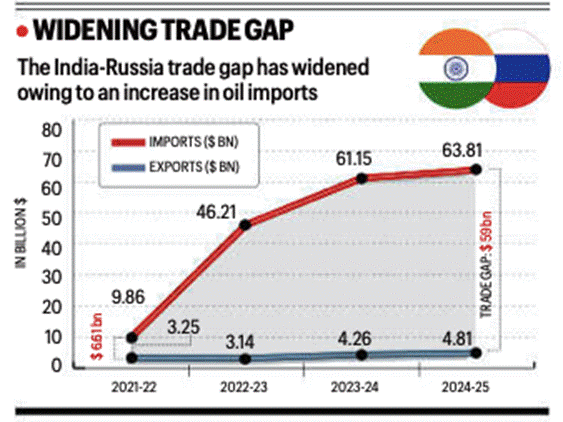
- Trade gap has sharply widened due to surging Russian oil imports and falling Indian exports.
Relevance
GS-II: International Relations
- India–Russia strategic partnership
- Energy security, defence cooperation
- Multilateral linkages (EAEU, BRICS)
- Navigating sanctions environment
GS-III: Economy
- Bilateral trade imbalance
- Currency settlement (rupee–rouble)
- Oil imports and global supply chains
GS-III: Security
- Defence logistics and spare parts dependency
- Strategic autonomy
BASICS
1. What is the India–Russia trade relationship?
- Traditionally driven by defence, energy, nuclear cooperation, fertilizers, and diamonds.
- Post-2022, Russia became India’s largest crude oil supplier, radically altering the trade composition.
2. What is the Eurasian Economic Union (EAEU)?
- A regional economic bloc led by Russia including Belarus, Kazakhstan, Armenia, and Kyrgyzstan.
- Negotiating an FTA with India since 2017.
3. Why are US tariffs mentioned?
- The US introduced tariffs and sanctions related to geopolitical tensions, indirectly affecting global supply chains and trade flows with Russia.
- India’s continued high-volume trade with Russia is closely watched by Western partners.
DATA: THE WIDENING TRADE GAP (Commerce Ministry)
Imports from Russia (largely crude oil):
- 2021–22: $6.9 bn
- 2022–23: $46.2 bn
- 2023–24: $61.15 bn
- 2024–25 (Apr–Aug): $63.81 bn (annualised trend)
Exports to Russia:
- Remain under $4 billion, flat for years.
Result:
- Massive trade imbalance, driven by discounted Russian crude flows.
CURRENT DRIVERS OF INDIA–RUSSIA TRADE
1. Crude Oil as the Dominant Component
- India imported heavily discounted Russian oil after 2022.
- Russia now accounts for 35–40% of Indian crude imports at times.
2. Use of National Currencies
- About 96% of trade settlements in rupees and roubles, reducing dollar dependency.
- Helps bypass sanctions-related transaction bottlenecks.
3. Russia’s role as a stable fuel supplier
- Putin reassured India of continuous & uninterrupted shipments.
4. Defence & High-tech cooperation
- Components, spares, joint ventures, and nuclear energy (Kudankulam) remain core areas.
WHY BOTH SIDES WANT THE $100-BILLION TARGET ?
India’s perspective
- Secure long-term energy supplies.
- Diversify away from Gulf dependence.
- Gain favourable pricing in oil & gas.
- Expand exports: pharma, agricultural products, machinery, engineering goods.
- Promote India’s presence in Russia’s Far East through connectivity initiatives (INSTC, Chennai–Vladivostok route).
Russia’s perspective
- Pivot to Asian markets after Western sanctions.
- Stable buyer for oil, coal, fertilizers.
- Attract Indian investments in infrastructure, mining, and energy in the Far East.
- Strengthen geopolitical partnership amid global realignment.
STRUCTURAL CHALLENGES
1. Huge Trade Imbalance
- India imports far more from Russia → unsustainable gap.
- Indian exporters face logistical, payment & certification hurdles.
2. Payment & Currency Issues
- Rupee accumulation in Russian banks is large; Russia wants to use rupees to buy Indian goods, but supply is limited.
- Exchange rate volatility & currency convertibility constraints.
3. Logistics Bottlenecks
- INSTC (International North-South Transport Corridor) still not fully optimised.
- Limited maritime connectivity.
4. Sanctions Environment
- Western sanctions complicate shipping insurance, banking channels, and trade finance.
- Indian entities must navigate compliance risks.
5. Limited Indian Market Penetration
- Lack of market awareness, limited brand presence in Russia, certification & regulatory hurdles.
FTA WITH THE EURASIAN ECONOMIC UNION (EAEU)
India wants a swift conclusion because:
Benefits
- Reduced tariffs → boost Indian exports.
- Address non-tariff barriers (phytosanitary, certification).
- Improve predictability in bilateral trade.
- Help in rupee-rouble settlement mechanisms.
- Strategic foothold in the Eurasian region.
Hurdles
- Complex negotiation environment due to sanctions.
- Sensitive sectors (metals, fertilizers) require careful balancing.
- Logistics & standards harmonisation needed.
GEOPOLITICAL SIGNIFICANCE FOR INDIA
1. Balancing Act Between West and Russia
- India seeks strategic autonomy:
- Buys Russian oil
- Cooperates with Russia in defence
- Deepens Quad partnership with US
- Maintaining diversified partnerships mitigates geopolitical risks.
2. Energy Security
- Russian crude provides price stability, reducing India’s import bill.
3. Defence Readiness
- Russia remains major supplier of critical defence spares & technologies.
4. Strategic Presence in Eurasia
- Connectivity corridors with Russia strengthen India’s Eurasian footprint vis-à-vis China.
ECONOMIC IMPLICATIONS FOR INDIA
Positive
- Lower energy costs due to discounted Russian oil.
- Opportunity to expand export base in pharmaceuticals, agriculture, textiles, auto components.
- Investment openings in the Far East → minerals, hydrocarbons, infrastructure.
Risks
- Overdependence on Russian energy.
- Exposure to secondary sanctions.
- Trade imbalance if exports don’t rise substantially.
POLICY RECOMMENDATIONS
1. Build strong export support mechanisms
- Market intelligence cells for Russia
- Certification/standards harmonisation
- Export credit, logistics subsidies
2. Accelerate INSTC operationalisation
- Reduce transit time and cost via Iran & Caspian Sea.
3. Diversify beyond crude
- Promote IT services, engineering goods, medical devices.
4. Currency mechanism innovation
- Expand rupee-rouble convertibility windows
- Explore digital currency settlement channels
DRDO Successfully Conducts Indigenous Dynamic Ejection Test
WHY IS THIS IN NEWS?
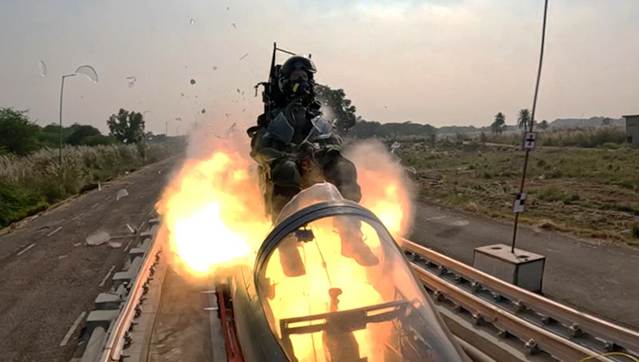
- DRDO announced the successful dynamic ejection test of a new indigenous fighter aircraft crew escape module (ejection system).
- The test took place at the Rail Track Rocket Sled (RTRS) facility at Terminal Ballistics Research Laboratory (TBRL), Chandigarh.
- This marks a technological milestone in India’s defence aviation ecosystem, enhancing safety for pilots during emergencies such as high-speed crashes, mid-air failures, or loss of control.
- The development strengthens India’s move toward self-reliance in advanced aerospace safety technologies, previously dominated by foreign suppliers.
Relevance
GS-III: Security / Defence
- Defence R&D, aerospace indigenisation
- Pilot safety and combat readiness
- Support for indigenous fighter programmes (Tejas, AMCA, etc.)
GS-III: Science & Technology
- High-speed aerodynamics
- Rocket sled testing, flight safety systems
- Indigenous engineering capabilities
GS-II: Governance
- Aatmanirbhar Bharat in defence manufacturing
- Reducing reliance on foreign suppliers
BASICS
1. What is an Ejection System?
- A system designed to save a pilot’s life when the aircraft experiences catastrophic failure.
- Includes:
- Ejection seat
- Explosive charges/rockets to propel the pilot out
- Parachute deployment system
- Survival kit
2. Dynamic Ejection Test
- A high-speed test that simulates real-life aircraft escape conditions, including:
- Aerodynamic loads
- High-speed airflow
- Changing acceleration forces
- Seat–pilot interaction
- Conducted on a “rocket sled track” to mimic aircraft speed.
3. Why dynamic tests matter?
- Static tests cannot reproduce real conditions like:
- High wind blast
- Instability
- G-forces
- Canopy fragmentation
- Pressure variations
- Dynamic tests help validate crew survivability under extreme operational conditions.
THE TEST: KEY DETAILS
- Conducted by DRDO’s Aeronautical Development Establishment (ADE) and TBRL.
- Rocket sled propelled the ejection seat & dummy at simulated aircraft speeds.
- System was tested for ensuring:
- Pilot safe separation
- Stable trajectory
- Correct sequencing of explosive & rocket elements
- Proper parachute deployment envelope
- Involved:
- Canopy fragmentation or breaking
- Safe clearance from aircraft body
- Avoiding seat tumbling
- Ensuring steady descent
TECHNOLOGICAL CHALLENGES
1. Simulating High-Speed Ejection
- Faster aircraft (modern fighters reach >1.6 Mach) → greater aerodynamic forces.
2. Complex escape sequence
- Canopy must shatter/jet away → seat rockets fire → seat stabilizes → parachute deploys.
- Each step must occur within milliseconds.
3. Dummy behaviour
- Human-like crash dummies mimic:
- Body movements
- Neck/torso response
- Pressure effects
- Ensures realistic data on spinal loads and shock absorption.
4. All-weather complexity
- Ejections may occur:
- At low altitude
- High altitude
- Low speed
- Very high speed
- System must handle flight-envelope extremes.
5. Safety margins
- Preventing neck injuries, fractures, and uncontrolled spinning.
WHY THIS MATTERS: STRATEGIC IMPORTANCE ?
1. Critical for Indigenous Fighter Programmes
The ejection system is essential for:
- LCA Tejas variants
- AMCA (Advanced Medium Combat Aircraft)
- LCA Mk-2
- Twin-engine deck-based fighter (TEDBF)
- Future trainer and combat aircraft
2. Reduces Dependence on Foreign Suppliers
- India historically relied on:
- Martin-Baker (UK)
- Russian K-36 systems
- Indigenous system → cost reduction + strategic autonomy.
3. Enhances Pilot Safety
- Pilot survivability affects:
- National morale
- Training costs
- Military readiness
- Losing pilots to avoidable ejection failures is unacceptable in modern Air Forces.
4. Boosts Aatmanirbhar Bharat in Defence
- High-tech R&D ecosystem strengthened.
- Spinoff benefits for space, missile, and aerospace sectors.
5. Supports High-Speed Future Platforms
- AMCA, unmanned–manned teaming, and future air combat platforms will need advanced escape systems.
ADDITIONAL CONTEXT FROM THE ARTICLE
1. First-of-its-kind achievement
- Rare capability globally; dynamic ejection tests require sophisticated rail-track rocket facilities.
2. Avoiding 1990s setbacks
- Earlier generations of Indian aviation depended on foreign imports for survival equipment.
- This test helps India avoid bottlenecks in supply chains due to geopolitical pressures.
3. Data gathered
- Test generated critical data:
- Oscillation dynamics
- Parachute stability
- Dummy kinematic response
- Used to adjust seat design.
4. Actual dummy test
- Test used a human-like dummy fitted with sensors that tracked:
- Pressure
- Acceleration
- Impact loads
- Flight dynamics
IMPLICATIONS FOR INDIA’S DEFENCE CAPABILITY
1. Improves Aircraft Certification
- Safe escape systems are mandatory for aircraft clearance.
2. Enhances Export Potential
- Indigenous fighters with indigenous safety systems become more attractive for foreign buyers.
3. Strengthens R&D Infrastructure
- RTRS facility’s success encourages more flight-safety and airframe-testing experiments.
4. Boosts confidence of IAF & Navy pilots
- Reliable ejection systems improve operational confidence during risky missions.