
Published on Feb 10, 2026
Daily Current Affairs
Current Affairs 10 February 2026

Content
- On Gravity’s Role in the Earth’s Journey Through Space
- India and Greece Agree to Strengthen Defence Industrial Cooperation in Five-Year Road Map
- Remembering Leo D’Souza, Who Transformed the Cashew Industry
- Bonded Labour Continues Despite 50 Years of Its Abolition
- From Maritime to Digital: India–Seychelles Give Ties a Shot in the Arm
- Rs 54,000 Crore Lost in Digital Arrests, This is Dacoity: Supreme Court
On Gravity’s Role in the Earth’s Journey Through Space
Source : The Hindu
Gravity — The Fundamental Force
Newtonian Gravity
- Isaac Newton (1687, Principia) formulated universal gravitation: every mass attracts another with force F = Gm₁m₂/r², explaining falling bodies, planetary motion, and tides under one framework.
Why We Stay on Earth ?
- Earth’s mass ≈ 5.97 × 10²⁴ kg produces surface gravity g ≈ 9.8 m/s², strong enough to hold oceans, atmosphere, and living beings against thermal motion and escape.
Relevance
- GS I (Geography – Physical Geography)
Earth–Sun dynamics, revolution, seasons, tides, and planetary motion basics. - GS III (Science & Tech – Space Science)
Gravity, inertia, vacuum, relativity, satellite orbits, escape velocity concepts.
Practice Question
- Explain how gravity governs planetary motion and tides.(150 Words)
Gravity and Orbital Motion
Gravity as Centripetal Force
- For orbits, gravity supplies centripetal force (mv²/r), continuously bending motion into a curve; objects move forward by inertia while gravity pulls inward, creating stable revolutions.
Earth–Sun System
- Average Earth–Sun distance ≈ 149.6 million km (1 AU); Earth’s orbital speed ≈ 29.8 km/s (~1,07,000 km/h) keeps it bound without spiralling into or escaping the Sun.
Scale of Earth’s Space Journey
Annual Distance Traveled
- Earth’s orbital path length ≈ 2πr ≈ 940–1,000 million km/year, meaning our planet travels ~1 billion km annually, far exceeding everyday terrestrial travel scales.
Human Perspective
- At 100 km/h, covering 1 billion km would take ~1 million hours (~114 years) of non-stop driving; Earth completes it in 365.25 days due to vacuum and inertia.
Motion Without Fuel
Inertia in Vacuum
- In near-vacuum space, negligible drag allows uniform motion without continuous energy input; per Newton’s first law, velocity persists unless acted upon by external forces.
Why Cars Need Fuel ?
- On Earth, friction and air drag dissipate kinetic energy, requiring fuel to maintain speed; planets face minimal resistance, so no “fuel” is needed to keep moving.
The Aether Hypothesis and Its Demise
Aether Idea
- 19th-century physics proposed luminiferous aether as a medium for light and planetary motion, assuming space wasn’t empty but filled with an invisible substance.
Michelson–Morley Experiment (1887)
- Precision interferometry found no directional change in light speed, delivering a null result that undermined aether and paved the way for Einstein’s relativity.
Beyond Newton — Modern View
General Relativity
- Einstein (1915) described gravity as spacetime curvature caused by mass–energy; orbits follow geodesics, explaining perihelion precession and gravitational lensing.
Tides and Stability
- Solar–lunar gravity drives tides, redistributing oceans and affecting Earth’s rotation slightly; long-term orbital stability arises from conserved angular momentum and energy.
Astrophysics and Indian Contributions
Jayant Narlikar
- Prof. Jayant Narlikar, cosmologist and IUCAA founding director, advanced theoretical cosmology and public science; honoured with Padma Vibhushan (2004) for contributions.
Scientific Temper
- Public outreach combating superstition aligns with Article 51A(h) duty to develop scientific temper, linking astrophysics education with constitutional values.
India and Greece Agree to Strengthen Defence Industrial Cooperation in Five-Year Road Map
Source : The Hindu
Strategic Context of India–Greece Relations
Civilisational and Maritime Legacy
- India and Greece are ancient seafaring civilisations with historical maritime trade links across the Mediterranean–Indian Ocean continuum, shaping long-standing cultural familiarity and strategic maritime consciousness.
Strategic Partnership Framework
- Bilateral ties elevated to a Strategic Partnership (2023), reflecting convergence in defence, shipping, energy, and connectivity, and Greece’s support for India’s stronger engagement with Europe and the Mediterranean.
Relevance
- GS II (International Relations)
Strategic partnerships, defence diplomacy, Indo-Pacific–Mediterranean linkages. - GS III (Security & Defence)
Defence indigenisation, military cooperation, maritime security.
Practice Question
- Analyse the role of defence diplomacy in strengthening India’s strategic autonomy. (150 Words)
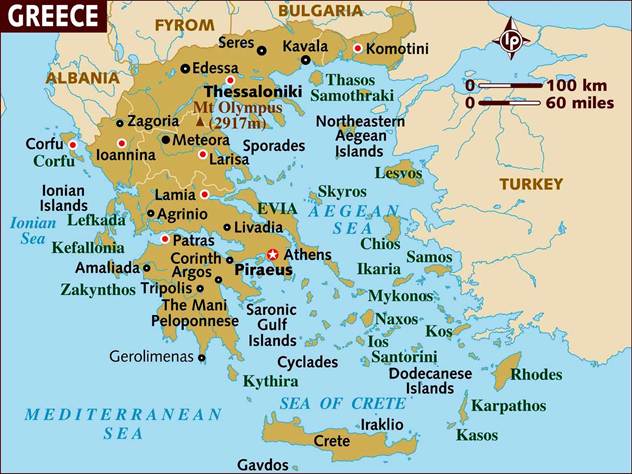
Defence & Security Cooperation
Defence Industrial Collaboration
- Signing of a Joint Declaration of Intent launches a five-year defence industrial roadmap, aligning India’s Aatmanirbhar Bharat with Greece’s Agenda 2030 defence reforms to co-develop capabilities.
Military-to-Military Engagement
- A Bilateral Military Cooperation Plan (2026) institutionalises joint exercises, training, and staff talks, promoting interoperability and professional exchanges between armed forces.
Maritime Dimension
Convergence on Maritime Security
- Both nations share interest in secure Sea Lanes of Communication (SLOCs), freedom of navigation, and rule-based maritime order, vital for energy and trade flows.
IFC-IOR Cooperation
- Greece deploying a Liaison Officer at IFC-IOR (Gurugram) strengthens information-sharing on piracy, trafficking, and maritime incidents across the Indian Ocean Region.
Geopolitical Significance
Mediterranean–Indo-Pacific Link
- Greece offers India a strategic gateway to the Eastern Mediterranean and EU defence markets, while India provides reach into the Indo-Pacific security architecture.
Balancing Regional Dynamics
- Cooperation reflects shared interest in stable multipolar order, maritime security, and diversified defence partnerships amid shifting global power balances.
Defence Industrial Relevance
Make in India in Defence
- Collaboration supports India’s push to raise defence manufacturing and exports (target USD 5 billion annually) through technology partnerships and co-production.
Niche Technology Scope
- Potential areas include naval systems, aerospace components, shipbuilding, and electronics, where Greece has specialised maritime-industrial expertise.
Challenges
Scale Constraints
- Greece’s relatively small defence market and fiscal limits may restrict scale, requiring focused niche collaboration rather than broad-spectrum projects.
Regulatory Complexities
- Defence deals must navigate export controls, technology transfer norms, and EU regulatory frameworks, affecting speed of implementation.
Way Forward
Institutionalisation
- Regular defence dialogues, industry-to-industry linkages, and joint R&D platforms can convert declarations into tangible outcomes.
Maritime & Tech Focus
- Prioritising maritime domain awareness, shipbuilding, and defence electronics can yield quick, mutually beneficial results.
Remembering Leo D’Souza, Who Transformed the Cashew Industry
Source : The Hindu
Cashew in India — Agronomic & Historical Context
Origin and Agro-Ecology
- Cashew (Anacardium occidentale), native to Brazil, was introduced by the Portuguese in the 16th century to stabilise lateritic coastal soils, later evolving into a high-value plantation crop.
Geographic Spread
- Cultivated mainly in Kerala, Karnataka, Goa, Maharashtra, Andhra Pradesh, Odisha, and West Bengal, suited to tropical climate, 600–3500 mm rainfall, and poor lateritic soils.
Relevance
- GS III (Agriculture & S&T)
Plantation crops, biotechnology, tissue culture, value chains. - GS I (Society)
Women in agro-processing, rural livelihoods.
Practice Question
- Discuss the role of biotechnology in improving plantation crop productivity. (150 Words)

Economic Significance of Cashew
Area and Production
- India has historically had ~5 lakh hectares under cashew (1980s baseline); today India remains among the top global producers and processors, though yield per hectare remains below potential.
Export and Value Chain
- India is a major exporter of cashew kernels and cashew nut shell liquid (CNSL) used in paints and lubricants; sector supports processing, packaging, and export-oriented MSMEs.
Constraints in Cashew Productivity
Biological Limitations
- Conventional propagation via seeds and grafting leads to genetic variability, uneven yield, and long gestation periods, limiting uniform orchard productivity.
Structural Issues
- Challenges include ageing plantations, pest attacks (tea mosquito bug), climate variability, and smallholder dominance, reducing economies of scale.
Role of Tissue Culture in Cashew
Scientific Principle
- Tissue culture (micropropagation) produces genetically identical, disease-free plants under sterile conditions, enabling rapid multiplication of elite varieties and uniform orchard management.
Why Cashew is Difficult ?
- Cashew is recalcitrant to tissue culture due to phenolic compound release that damages cells, making lab-to-soil transfer technically challenging compared to crops like banana or sugarcane.
Leo D’Souza’s Contribution
Early Biotech Pioneer
- Established a tissue culture lab in 1975 (pre-DBT era), showing how individual scientific leadership can overcome institutional scarcity and build frontier research in developing countries.
Landmark Breakthrough
- Achieved world’s first successful lab-to-soil transfer of tissue-cultured cashew in 1990, published in Plant Cell, Tissue and Organ Culture (1992) — a global scientific milestone.
Socio-Economic Sensitivity
Women-Centric Industry
- Cashew processing historically employed 80%+ women workers, often informal and underpaid; productivity gains can directly affect women’s incomes and rural welfare.
Farmer Livelihoods
- Higher-yielding, uniform plants can stabilise farmer incomes, reduce risk, and improve raw nut supply for processors, strengthening the entire value chain.
Static Policy Linkages
Agricultural R&D Importance
- Case underlines role of ICAR, State Agricultural Universities, and DBT in crop improvement, biotechnology diffusion, and plantation crop research.
Blue Economy & Coastal Development
- Cashew fits into coastal livelihood systems, agro-forestry, and soil conservation, linking with sustainable coastal development policies.
Bonded Labour Continues Despite 50 Years of Its Abolition
Source : The Hindu
Concept & Legal Framework
What is Bonded Labour ?
- Bonded labour refers to forced labour arising from debt, advance payments, or social obligations, where workers lose freedom of employment, mobility, and wages until debts—often inflated—are “repaid”.
Legal Abolition
- The Bonded Labour System (Abolition) Act, 1976, abolished bonded labour, extinguished bonded debts, criminalised enforcement, and mandated rehabilitation, release certificates, and legal protection for victims.
Relevance
- GS II (Polity & Social Justice)
Article 23, Bonded Labour Abolition Act, welfare state obligations. - GS I (Society)
Poverty, migration, caste-based vulnerability.
Practice Question
- Why does bonded labour persist despite legal abolition? Suggest reforms. (250 Words)
Constitutional & Human Rights Dimension
Constitutional Violations
- Bonded labour violates Article 23 (prohibition of forced labour), Article 21 (right to life with dignity), and Directive Principles on humane working conditions and social justice.
International Commitments
- India is signatory to ILO Conventions 29 and 105, obligating elimination of forced labour, making continued prevalence a breach of international labour and human rights norms.
Scale & Data Evidence
Sectoral Spread
- Bonded labour persists in brick kilns, construction, agriculture, mining, domestic work, garment units, and small manufacturing, largely within informal and subcontracted production chains.
Regional Data
- West Bengal alone has ~11,000 brick kilns employing ~8 lakh workers (2020 estimate); between 2019–2024, 143 bonded labourers were rescued in multiple operations.
Socio-Economic Drivers
Poverty and Migration
- Seasonal distress migration from Bihar, Jharkhand, Odisha, and Chhattisgarh fuels bondage, as migrants accept advances due to poverty, landlessness, and lack of social security.
Wage and Work Conditions
- Low wages, long hours, restricted movement, workplace confinement, and denial of maternity and health benefits trap families into intergenerational bonded labour cycles.
Intergenerational & Child Bondage
Second-Generation Bondage
- Children inherit debt obligations, leading to second-generation bonded labour, violating Child Labour (Prohibition and Regulation) Act, 1986 and Right to Education (Article 21A).
Recent Cases
- In March 2025, 28 children were rescued from brick kilns in South 24 Parganas, underscoring persistence of child bondage despite statutory safeguards.
Governance & Implementation Gaps
Weak Enforcement
- Poor inspections, delayed FIRs, low conviction rates, and local employer–official nexus weaken deterrence under the 1976 Act and IPC provisions.
Rehabilitation Failures
- Delays in release certificates, inadequate compensation, poor livelihood support, and weak inter-state coordination lead to re-bondage after rescue.
Federal & Administrative Challenges
Source–Destination Disconnect
- Bonded labour involves inter-state migration, but weak coordination between source states (Bihar, Jharkhand) and destination states (West Bengal, Tamil Nadu) hampers monitoring and rehabilitation.
Informal Economy Blind Spots
- Informality, subcontracting, and cash payments allow employers to evade labour laws, inspections, and digital wage tracking mechanisms.
Ethical & Social Justice Dimensions
Dignity of Labour
- Persistence of bondage reflects failure to uphold human dignity, equality, and freedom, reducing citizens to instruments of production rather than rights-bearing individuals.
Structural Inequality
- Caste hierarchies, tribal marginalisation, illiteracy, and gender vulnerability deepen exploitation, making bonded labour a structural injustice, not an isolated crime.
Way Forward
Legal & Institutional
- Strengthen district vigilance committees, mandate time-bound release certificates, enhance convictions, and impose strict liability on principal employers and supply-chain beneficiaries.
Rehabilitation & Prevention
- Ensure ₹20,000–₹3 lakh rehabilitation packages, link victims to MGNREGA, PDS, housing, skilling, and create migration support systems in source regions.
From Maritime to Digital: India–Seychelles Give Ties a Shot in the Arm
Source : The Indian Express
Strategic Context of India–Seychelles Relations
Indian Ocean Geopolitics
- Seychelles’ location in the Western Indian Ocean near key Sea Lanes of Communication (SLOCs) makes it strategically vital for monitoring maritime traffic between Africa–Middle East–Asia corridors.
SAGAR Framework
- Engagement aligns with India’s SAGAR (Security and Growth for All in the Region, 2015) vision, emphasising maritime security, capacity building, and cooperative regional order in the Indian Ocean.
Relevance
- GS II (IR)
SAGAR, Indian Ocean diplomacy, small island partnerships. - GS III (Security)
Maritime security, MDA, anti-piracy.
Practice Question
- Evaluate the significance of island nations in India’s Indian Ocean strategy. (150 Words)
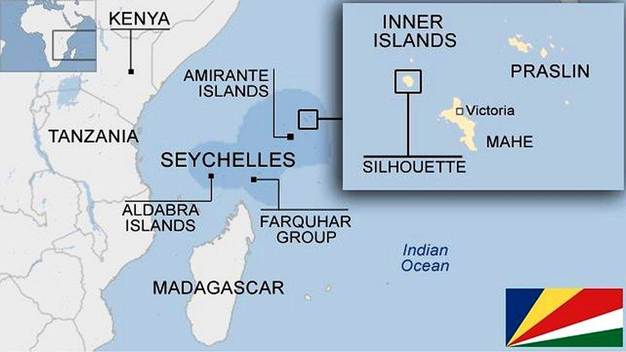
Maritime & Security Cooperation
Colombo Security Conclave
- Seychelles joining the Colombo Security Conclave (CSC)—with India, Sri Lanka, Maldives, Mauritius, Bangladesh—strengthens regional architecture on maritime safety, counter-terrorism, cyber security, and HADR.
Defence Collaboration
- India supports Seychelles via coastal surveillance radars, patrol vessels, hydrographic surveys, and training, enhancing Maritime Domain Awareness (MDA) against piracy, trafficking, and illegal fishing.
Digital & Development Partnership
Digital Public Infrastructure
- Cooperation in digital governance, data-sharing, and digital transformation leverages India’s DPI model (Aadhaar, UPI, DigiLocker) to strengthen Seychelles’ public service delivery systems.
Capacity Building
- Agreements on training, technical cooperation, and institutional capacity-building help Seychelles improve governance capability, maritime research, and disaster preparedness.
Economic & Development Dimension
Special Economic Assistance
- India announced a USD 15 million assistance package, including a USD 12 million Line of Credit and USD 3 million grant, targeting infrastructure, mobility, and maritime development.
Blue Economy Linkages
- Cooperation supports blue economy sectors like fisheries, marine resources, and eco-tourism, aligning with Seychelles’ ocean-based economy and India’s Indo-Pacific outreach.
Political & Diplomatic Significance
High-Level Engagement
- Seychelles President’s visit within 100 days of assuming office signals priority to India ties; reflects mutual trust and continuity in diplomatic engagement.
Shared Democratic Values
- Both nations emphasise rule-based order, sovereignty, and democratic governance, strengthening normative alignment in regional diplomacy.
Regional & Global Implications
Countering Extra-Regional Influence
- Strong India–Seychelles ties balance extra-regional naval presence in the Indian Ocean, ensuring smaller island states retain strategic autonomy and diversified partnerships.
Western Indian Ocean Stability
- Cooperation contributes to stability in a region prone to piracy, trafficking, and climate vulnerabilities, reinforcing India’s role as a net security provider.
Challenges
Capacity Constraints
- Seychelles’ small population (~1 lakh) and limited fiscal capacity require sustained external support, making project execution and maintenance long-term challenges.
Strategic Sensitivities
- Island states often balance multiple partners; India must ensure cooperation is transparent, demand-driven, and sovereignty-respecting to avoid perception of strategic overreach.
Way Forward
Institutionalised Cooperation
- Regular CSC exercises, joint patrols, and intelligence-sharing can institutionalise gains beyond leadership-level diplomacy.
Sustainable Development Focus
- Integrating climate resilience, renewable energy, and coastal management into cooperation can align ties with SDG 14 (Life Below Water) and island sustainability needs.
Rs 54,000 Crore Lost in Digital Arrests, This is Dacoity: Supreme Court
Source : Then Indian Express
Understanding Digital Arrest Frauds
Modus Operandi
- Digital arrest scams involve fraudsters impersonating police, CBI, ED, or RBI officials, using video calls, fake notices, and psychological pressure to coerce victims into transferring funds to “safe accounts”.
Scale and Trend
- Reported losses of ₹54,000+ crore indicate cyber fraud’s systemic scale; NCRB data shows cybercrime cases rising annually, with financial fraud forming the largest category of complaints.
Relevance
- GS III (Internal Security/Cyber Security)
Cyber fraud, digital economy risks, financial security. - GS II (Governance)
RBI regulation, institutional coordination.
Practice Question
- Examine the rise of cyber financial frauds and regulatory challenges in India. (250 Words)
Constitutional & Legal Dimensions
Property and Due Process
- Coerced fund transfers violate Article 300A (right to property) and principles of natural justice, since deprivation occurs without lawful authority, consent, or judicial procedure.
Statutory Provisions
- Offences fall under IPC cheating, extortion, criminal intimidation, and IT Act Sections 66C/66D; yet low conviction rates reflect jurisdictional and evidentiary challenges in cybercrime.
Banking Regulation & RBI Oversight
Fiduciary Duty of Banks
- Supreme Court termed banks “trustees of public money”, implying higher duty of care in monitoring abnormal transactions, beyond profit-driven facilitation of high-volume digital transfers.
KYC–AML Framework
- Under PMLA and RBI Master Directions on KYC (2016, updated periodically), banks must detect unusual patterns, but real-time interdiction remains uneven across institutions.
Governance & Institutional Gaps
Fragmented Response
- Cyber fraud control spans RBI, commercial banks, state police, I4C (MHA), CERT-In, but fragmented databases and delayed coordination weaken rapid fund-freezing within critical time windows.
Recovery vs Prevention Bias
- Court criticism that banks act as loan recovery agents highlights asymmetry: robust systems to recover bank dues versus limited urgency in safeguarding depositors’ funds.
Technology Dimension
AI-Based Detection
- AI and machine learning can flag velocity anomalies, mule accounts, and behavioural red flags, enabling automated pauses, step-up authentication, and alerts before high-risk transfers.
Adoption Constraints
- Uneven deployment of RBI-backed analytics tools and fear of customer inconvenience reduce proactive blocking, allowing fraudsters to rapidly layer and disperse stolen funds.
Economic & Social Impact
Trust in Digital Economy
- Large-scale fraud undermines confidence in UPI and digital payments, potentially slowing India’s fintech growth and financial inclusion drive in a country processing billions of UPI transactions monthly.
Household Vulnerability
- Victims often include elderly, retirees, and first-generation digital users, meaning losses hit life savings, affecting consumption, health security, and social stability.
Ethical Dimensions
Profit vs Protection
- Ethical dilemma arises if banks prioritise ease and transaction volume over safeguards; fiduciary institutions must balance innovation with depositor protection.
State Responsibility
- As per welfare-state principles, regulators must ensure safe digital financial architecture, since individual citizens cannot counter sophisticated, transnational cyber networks alone.
Way Forward
Regulatory Reforms
- Mandate real-time risk scoring, cooling-off periods for large transfers, and compulsory alerts for first-time high-value payments to new beneficiaries across banks.
Institutional Strengthening
- Create time-bound fund-freezing protocols, statutory liability norms for negligence, and unified cyber-fraud command centres linking banks, telecoms, and law enforcement.