

Content
- India, New Zealand wind up FTA talks, set to boost trade
- Forests can’t be used for non-forestry purposes: Supreme Court
- India tops global doping list for the third consecutive year
- On the Right to a Healthy Environment
- How are we protecting astronauts from deadly space debris?
India, New Zealand wind up FTA talks, set to boost trade
Why in News ?
- India and New Zealand concluded negotiations on a Free Trade Agreement on Monday.
- Negotiations completed in ~9 months (March–December 2025) — among India’s fastest FTAs.
- FTA expected to:
- Provide tariff-free access for Indian goods to New Zealand.
- Bring USD 20 billion investments over 15 years.
- Double bilateral trade to USD 5 billion within 5 years.
- Formal signing targeted in first half of 2026.
Relevance
- GS II (International Relations):
- Bilateral relations, Indo-Pacific strategy
- GS III (Economy):
- Trade policy, FTAs, agriculture protection
- Investment flows and services exports
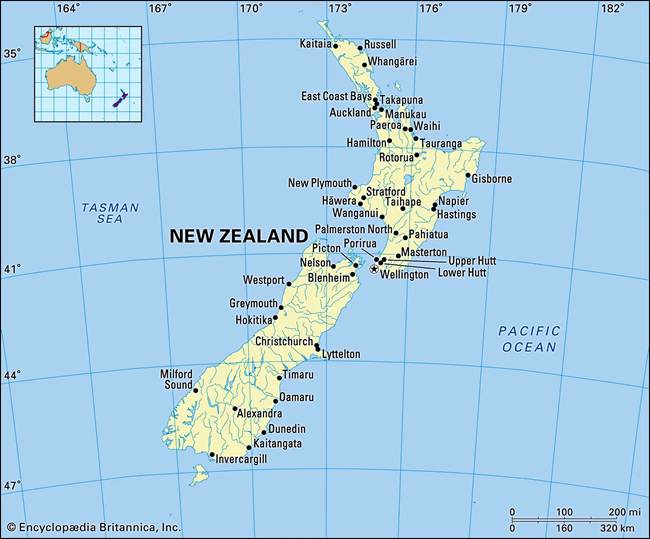
India–New Zealand Economic Context
- New Zealand economy:
- GDP (nominal): ~USD 250 bn
- Per capita income: ~USD 49,000
- Highly export-oriented, agriculture-heavy
- India–NZ trade (pre-FTA):
- Bilateral trade: ~USD 2.5–2.7 bn
- Trade balance: broadly balanced
- Indian diaspora in NZ:
- ~300,000 persons of Indian origin
- ~5% of NZ population → strong socio-economic bridge
Core Trade Architecture of the FTA
A. Tariff Liberalisation
- 95% of New Zealand exports to India:
- Tariffs removed or reduced
- Includes: timber, apples, kiwifruit, wine, wool, forestry products
- India’s export gains:
- Tariff-free access for:
- Pharmaceuticals
- Textiles & apparel
- Engineering goods
- IT & business services
- Generic medicines
- Tariff-free access for:
B. Sensitive Sector Protection (India’s Red Lines)
- No market access conceded in politically and livelihood-sensitive sectors:
- Dairy products
- Rice & wheat
- Sugar
- Onions
- Spices
- Edible oils
- Rubber
- Soya products
- Reflects calibrated trade liberalisation, not blanket opening.
Union Commerce Minister Piyush Goyal explicitly stated that farmer and dairy interests were fully protected.
Mobility & Services: A Strategic Gain for India
- Temporary employment visas for Indian professionals:
- Quota: 5,000 annually
- Duration: Up to 3 years
- Coverage: Skilled occupations
- Significance:
- Boosts India’s Mode-4 (movement of natural persons) interests.
- Reinforces India’s strength in human capital exports.
- Supports remittance flows and skill upgrading.
Investment Dimension: USD 20 Billion Over 15 Years
- Expected inflows into:
- Renewable energy
- Agri-processing & food logistics
- Dairy technology (without product import liberalisation)
- Education and vocational training
- Digital services and fintech
- Strategic value:
- Long-term, patient capital, not volatile portfolio flows.
- Supports India’s manufacturing + services ecosystem.
Strategic & Geoeconomic Significance
A. Indo-Pacific & Oceania Pivot
- Strengthens India’s economic footprint in the Pacific–Oceania region.
- Complements India’s:
- Act East Policy
- Indo-Pacific Oceans Initiative (IPOI)
- Counters excessive trade dependence on:
- China-centric supply chains
- Traditional Western markets
B. Continuity in India’s Trade Diplomacy
- Part of a sequence:
- India–EFTA TEPA (2024)
- India–UK CETA (2025)
- India–Oman CEPA (2025)
- Signals:
- Shift from defensive trade posture to selective openness.
- Emphasis on speed + safeguards.
Risks & Challenges
- Implementation risks:
- Non-tariff barriers (SPS standards, quality norms)
- Mutual recognition of standards
- Domestic adjustment:
- Competition for select agri-exports (fruits, timber)
- Global uncertainty:
- Commodity price volatility
- Shipping & logistics disruptions
Overall Assessment
- The India–New Zealand FTA is:
- Trade-expanding but politically prudent
- Investment-oriented, not just tariff-centric
- Strong on services and mobility
- Represents India’s evolving FTA template:
- Protect core livelihoods
- Leverage market access + talent mobility
- Anchor long-term strategic partnerships
Conclusion
A fast, calibrated FTA that deepens India’s Pacific engagement while ring-fencing farmers and leveraging India’s core strengths — services, skills, and scale.
Forests can’t be used for non-forestry purposes: Supreme Court
Why in News ?
- The Supreme Court of India ruled that forest land cannot be diverted for non-forestry purposes (including agriculture) without prior statutory approvals.
- The ruling came while cancelling cultivation permissions granted by district authorities in Gujarat to a cooperative farming society over 134 acres of forest land.
Relevance
GS II (Polity & Governance)
- Federalism
- Rule of law
- Judicial review of executive action
GS III (Environment)
- Forest conservation
- Environmental legislation
- Sustainable development
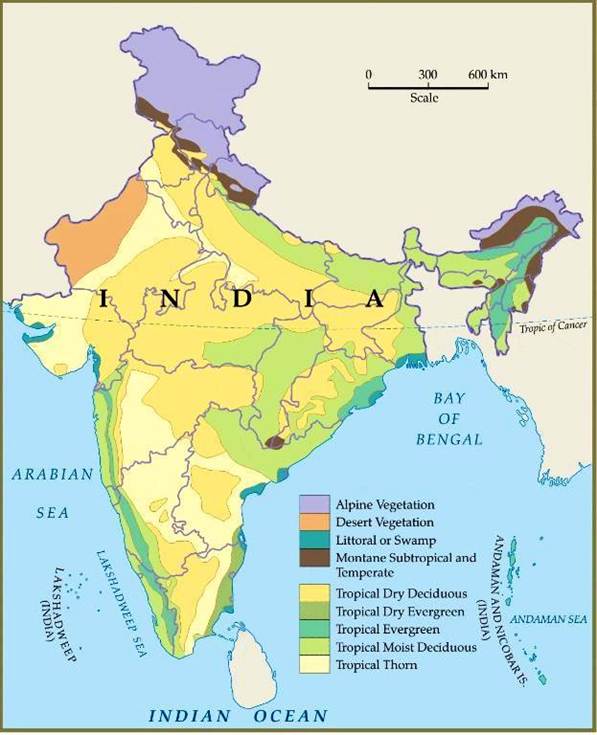
Legal Background: The Forest (Conservation) Framework
- Core law: Forest (Conservation) Act, 1980.
- Section 2 of the Act:
- Prohibits:
- De-reservation of forests
- Use of forest land for non-forest purposes
- Unless prior approval of the Central Government is obtained.
- Prohibits:
- “Non-forest purpose” explicitly includes:
- Agriculture
- Mining
- Industry
- Infrastructure
- Commercial plantations (other than permitted forestry activities)
What the Supreme Court Held ?
- Mandatory Central approval is a jurisdictional requirement, not a procedural formality.
- District collectors / state authorities:
- Have no independent power to permit non-forest use.
- Cannot bypass or dilute Section 2 safeguards.
- Cultivation on forest land, even if:
- Cooperative-led
- Livelihood-oriented
- Administratively sanctioned
→ remains illegal without central clearance.
Key Constitutional & Jurisprudential Principles Reinforced
A. Environmental Rule of Law
- Statutory environmental protections override executive discretion.
- Administrative convenience ≠ legal authority.
B. Doctrine of Public Trust
- Forests are held by the State in trust for present and future generations.
- Cannot be alienated or repurposed casually.
C. Sustainable Development
- Economic activity allowed only within ecological limits.
- Agriculture ≠ environmentally benign by default if it degrades forests.
Federal Dimension: Centre–State Balance
- Forests fall under Concurrent List (42nd Constitutional Amendment).
- Central oversight under the Forest (Conservation) Act ensures:
- Uniform national ecological standards.
- Prevention of competitive forest diversion by states.
- Judgment reaffirms central supremacy in forest diversion approvals.
Administrative Lapses Highlighted
- District authorities:
- Granted cultivation rights without legal competence.
- Ignored statutory clearance procedures.
- Reflects systemic issues:
- Weak legal literacy at district level.
- Pressure to regularise encroachments post-facto.
- Tension between short-term livelihoods and long-term ecology.
Implications of the Judgment
A. Governance Implications
- Strengthens enforcement of forest laws.
- Curtails discretionary misuse of land records and revenue powers.
- Signals zero tolerance for “administrative regularisation” of illegality.
B. Environmental Implications
- Protects forest cover from:
- Gradual agricultural creep.
- Fragmentation and biodiversity loss.
- Reinforces India’s climate commitments (carbon sinks).
C. Livelihood & Social Implications
- Raises concerns for:
- Communities dependent on forest land.
- However:
- Livelihood solutions must flow through legal routes:
- Forest Rights Act, 2006
- Agro-forestry policies
- Rehabilitation & alternative land allocation
- Livelihood solutions must flow through legal routes:
Interface with Forest Rights Act (FRA), 2006
- Judgment does not dilute FRA rights.
- Distinction:
- Recognised forest rights (individual/community) → legally protected.
- Administrative cultivation permissions without FRA process → invalid.
- Reinforces need for:
- Proper Gram Sabha-led FRA recognition, not executive shortcuts.
Critical Evaluation
- Strengths:
- Upholds ecological constitutionalism.
- Prevents piecemeal erosion of forest law.
- Concerns:
- Requires parallel strengthening of:
- FRA implementation
- Livelihood alternatives
- Administrative capacity at local levels
- Requires parallel strengthening of:
Conclusion
The Supreme Court has drawn a hard legal line: forests are ecological assets governed by statute, not revenue land open to administrative discretion—even for agriculture.
India tops global doping list for the third consecutive year
Why in News ?
- World Anti-Doping Agency (WADA) released its 2024 Anti-Doping Testing Figures Report.
- India recorded the highest number of doping offenders globally for the third consecutive year.
- Contextually sensitive as India:
- Is preparing to host the 2030 Commonwealth Games
- Aspires to host the 2036 Olympic Games
Relevance
GS II (Governance)
- Institutional accountability
- Global regulatory compliance
GS III (Sports )
- Integrity in sports
- Public policy and youth development
What is Doping?
- Doping: Use of prohibited substances or methods to artificially enhance athletic performance.
- Governed globally by:
- World Anti-Doping Code
- Prohibited List (updated annually)
- Violations include:
- Presence of banned substances
- Refusal to submit samples
- Tampering
- Trafficking or administration
India’s Doping Numbers: Key Data (2024)
A. Absolute Numbers
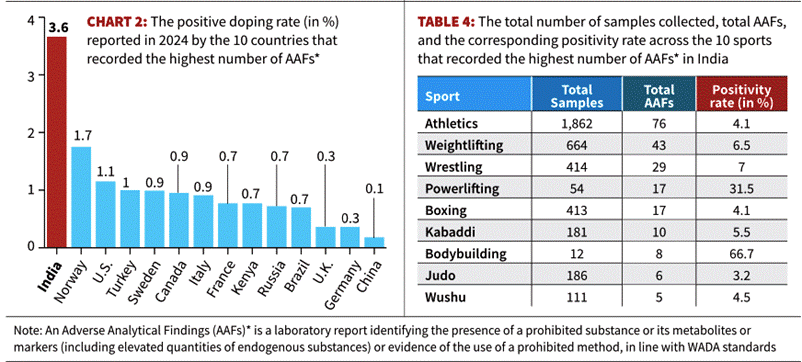
- Samples tested: 7,113
- Positive cases: 260
- Global rank: 1st (highest absolute violations)
B. Positivity Rate
- India: 3.6%
- Global comparison:
- Norway: 1.75%
- USA: 1.15%
- No other country crossed 1.75%
 India’s positivity rate is more than double the next highest country.
Global Comparison: Why India Stands Out ?
A. Absolute Violations (2024)
- India: 260
- France: 91
- Italy: 85
- USA: 76
- Russia: 76
- Germany: 54
- China: 43
India exceeds the second-highest country by nearly 3 times.
B. Testing Volume vs Violations
- China:
- Tests conducted: >24,000
- Violations: 43
- India:
- Tests conducted: 7,113
- Violations: 260
Despite 3× fewer tests, India reports 6× more violations than China.
Inference:
India’s problem is not under-testing alone, but high prevalence of doping.
Sport-wise Distribution in India (2024)
| Sport | Positive Cases |
| Athletics | 76 |
| Weightlifting | 43 |
| Wrestling | 29 |
| Boxing | 17 |
| Powerlifting | 17 |
| Kabaddi | 10 |
Pattern
- Endurance & strength-based sports dominate
- Long-standing trend across multiple years
- Indicates:
- Performance pressure
- Inadequate medical supervision
- Normalisation of substance use at lower levels
Elite & Grassroots Signals
A. Elite Level
- Reetika Hooda:
- Under-23 world champion
- Paris Olympics quarter-finalist
- Tested positive; provisionally suspended (July 2025)
- Signals that doping is not confined to fringe athletes.
B. Grassroots Level
- University Games 2025:
- Athletes reportedly withdrew from events after anti-doping officials arrived.
- Suggests:
- Fear of testing
- Low deterrence credibility
- Poor awareness of banned substances
Institutional Response: India’s Defence
A. National Anti-Doping Agency (NADA)
- National Anti-Doping Agency argues:
- Higher numbers reflect better detection, not higher drug use.
- Claims strengthened testing, intelligence, and enforcement.
B. Critical Assessment
- Argument partially valid, but:
- Countries with higher testing volumes show lower positivity
- Indicates a structural doping culture, not merely detection bias
International Pressure
A. International Olympic Committee (IOC)
- International Olympic Committee:
- Expressed concern over widespread doping in India
- Urged authorities to “set their house in order”
B. Indian Olympic Association (IOA)
- Indian Olympic Association:
- Constituted a new anti-doping panel (August 2025)
Legal & Policy Response
National Anti-Doping (Amendment) Bill, 2025
- Recently passed by Parliament.
- Aligns Indian law with WADA compliance requirements.
- Key provisions:
- Explicit prohibition of doping
- Institutionalised testing & enforcement
- Clear adjudication and appeal mechanisms
- Objective:
- Restore international credibility
- Prevent sanctions or compliance downgrades
Structural Causes Behind India’s Doping Crisis
- Early specialisation & medal pressure
- Low sports science penetration
- Poor supplement regulation
- Coaches as informal medical advisors
- Weak athlete education, especially at state & university levels
- Reward-heavy incentive structures without ethical safeguards
Implications for India
A. Sporting Credibility
- Threatens India’s image as a clean sporting nation
- Risk to hosting ambitions (CWG 2030, Olympics 2036)
B. Athletes
- Career-ending bans
- Loss of sponsorships
- Psychological stress and stigma
C. Governance
- Potential WADA non-compliance scrutiny
- Increased international monitoring
Way Forward
- Mandatory anti-doping education from junior level
- Coach certification linked to doping compliance
- Regulation of supplements & gym culture
- Independent testing at state & university events
- Shift from medal-centric to athlete-welfare-centric model
Conclusion
India’s doping crisis is not a detection anomaly but a systemic integrity failure—posing a direct challenge to its sporting credibility and global ambitions unless structural reform follows legal tightening.
On the Right to a Healthy Environment
Why in News ?
- Recurring winter smog in Delhi–NCR with severe AQI levels has revived debate on whether the right to a clean and healthy environment should be explicitly constitutionalised.
- Existing protection relies largely on judicial interpretation of Article 21, not an express fundamental right.
- Raises questions of state responsibility, enforceability, and environmental federalism.
Relevance
GS II (Polity & Governance)
- Article 21 expansion
- Directive Principles vs Fundamental Rights
- Judicial activism
GS III (Environment)
- Air pollution
- Environmental governance
- Climate change law
The Problem Context: Air Pollution as a Rights Issue
A. Delhi–NCR Air Quality Reality
- Winter AQI frequently enters “Severe” (401–500) or “Severe+” category.
- PM2.5 concentrations often exceed:
- WHO guideline: 5 µg/m³ (annual)
- Delhi winter peaks: 150–300 µg/m³ (30–60× WHO limit).
- Health impacts:
- Stroke, ischemic heart disease, lung cancer, COPD.
- Children disproportionately affected due to lung development.
B. Major Sources of Pollution
- Fossil fuel combustion (power plants, vehicles)
- Transport emissions (diesel dominance)
- Construction & demolition dust
- Waste burning
- Industrial emissions
- Agricultural residue burning
Particulate Matter (PM) is the single most lethal pollutant.
Understanding Particulate Matter (Scientific Basis)
| Type | Size | Health Impact |
| PM10 | ≤10 microns | Enters respiratory tract |
| PM2.5 | ≤2.5 microns | Penetrates lungs, bloodstream |
| DPM (Diesel PM) | <1 micron | Neuro, cardiac, pulmonary damage |
- Diesel particulate matter (DPM) forms a sub-category of PM2.5.
- High toxicity even at low exposure levels.
- No safe threshold scientifically established.
Regulatory Response: GRAP & CAQM
- Commission for Air Quality Management (CAQM) amended the Graded Response Action Plan (GRAP).
- Key changes:
- Mandatory school closures under GRAP Phases 3 & 4.
- Removal of state discretion.
- Staggered working hours for public offices under Phase 3.
- Significance:
- Recognises pollution as a public health emergency, not a seasonal inconvenience.
Constitutional Evolution of Environmental Rights
A. Original Constitution
- No explicit environmental provisions.
- Environmental protection inferred from:
- Natural justice
- Welfare state philosophy
- Directive Principles
B. Judicial Expansion via Article 21 (Right to Life)
Landmark Cases
- Maneka Gandhi v. Union of India
- Expanded “life” to mean life with dignity, not mere animal existence.
- Rural Litigation and Entitlement Kendra v. State of U.P.
- First recognition of healthy environment as part of Article 21.
- M.C. Mehta v. Union of India (1987)
- Explicitly held that pollution-free environment is part of the right to life.
- Subhash Kumar v. State of Bihar
- Read Articles 48A + 51A(g) with Article 21.
- State has a constitutional obligation to protect air and water.
Explicit Environmental Provisions in the Constitution
A. Directive Principles
- Article 48A:
- State shall protect and improve the environment.
- Emphasises compatibility of agriculture and ecology.
B. Fundamental Duties
- Article 51A(g):
- Duty of citizens to protect the natural environment.
Limitation:
Neither is directly enforceable in courts like Fundamental Rights.
Judiciary as Environmental Regulator (Post-1980s)
- Liberalisation & privatisation increased ecological stress.
- Courts intervened using:
- Public Interest Litigations (PILs) under Articles 32 & 226.
- Judiciary became:
- Environmental rule-maker
- Environmental enforcer
- Environmental adjudicator
Environment Protection Act, 1986
- Section 2(a) defines environment broadly:
- Air, water, land
- Inter-relationship with humans, flora, fauna, microorganisms.
- Reinforces:
- Right to live free from disease and infection as part of dignity.
Disaster Jurisprudence & Environmental Liability
A. Absolute Liability
- Introduced in M.C. Mehta v. Union of India (Oleum Gas Leak).
- Key features:
- No exceptions
- Liability regardless of fault or negligence
- Stronger than strict liability.
B. Core Environmental Principles
Precautionary Principle
- Explained in Vellore Citizens’ Welfare Forum v. Union of India.
- Lack of scientific certainty cannot delay preventive action.
- Part of Indian law.
Polluter Pays Principle
- Polluters must:
- Bear cost of remediation
- Compensate for environmental harm
- Shifts burden from state to violators.
Public Trust Doctrine
- Explained in M.C. Mehta v. Kamal Nath.
- State acts as trustee of natural resources.
- Cannot transfer or exploit for private gain.
Constitutional Anchors
- Article 39(b): Community ownership of material resources.
- Article 39(c): Prevent concentration of means of production.
- Reinforced in Radhey Shyam Sahu v. State of U.P..
Climate Change as a Fundamental Rights Issue
- M.K. Ranjitsinh v. Union of India:
- Recognised:
- Right against adverse effects of climate change
- Linked to Article 21 (life) and Article 14 (equality)
- Recognised:
Expands environmental rights into climate justice.
The Core Gap: Why Judicial Recognition Is Not Enough
- Judicially evolved rights:
- Cannot be directly claimed unless tied to Part III.
- State compliance remains:
- Episodic
- Reactive
- Crisis-driven
- Environmental governance becomes court-centric, not institution-centric.
The Case for Explicit Constitutional Right
Why Needed
- Makes:
- Clean air & water justiciable by default
- State & citizens equally accountable
- Reduces over-dependence on PILs.
- Aligns India with:
- UN Human Rights Council recognition of clean environment as a human right (2021).
Conclusion
India’s environmental protection framework rests on judicial creativity rather than constitutional clarity; making the right to a clean and healthy environment explicit is now essential for enforceability, accountability, and ecological survival.
How are we protecting astronauts from deadly space debris?
Why in News ?
- A space debris impact cracked the window of China’s crewed spacecraft Shenzhou-20, rendering its return capsule unusable for crew travel.
- Incident highlights the growing threat of Micrometeoroids and Orbital Debris (MMOD) to human spaceflight.
- Occurs amid:
- Rapid satellite proliferation
- Anti-satellite (ASAT) tests
- Expansion of crewed missions (including India’s Gaganyaan)
Relevance
GS III – Science & Technology
- Space technology
- Human spaceflight safety
- Emerging global commons governance
GS II – International Relations
- Global space governance
- UN frameworks and limitations
What is MMOD?
A. Micrometeoroids
- Origin:
- ~80–90% from asteroid belt collisions (between Mars & Jupiter)
- Remainder from comets
- Size:
- Few micrometres to ~2 mm
- Each weighs less than a dried grape
- Velocity:
- ~11 to 72 km/s (much faster than bullets)
- Nature:
- Natural
- Ubiquitous in space
- Practically untrackable
B. Orbital Debris (Space Junk)
- Definition: Human-made objects in Earth orbit with no functional purpose
- Sources:
- Exploded rocket stages
- Defunct satellites
- Accidental collisions
- Intentional ASAT weapon tests
- Average velocity:
- ~10 km/s
- Key risk:
- Even a 1 cm object at orbital speed can disable a spacecraft
Scale of the Problem: Global Data
Orbital Debris in Low Earth Orbit (LEO: 200–2,000 km)
- ~34,000 objects >10 cm (trackable)
- ~128 million objects >1 mm
- Hundreds of millions of fragments <1 mm
- Billions of impacts annually on satellites and space stations
Distribution
- Orbital debris:
- Concentrated in a “shell” in LEO
- Micrometeoroids:
- Exist everywhere
- Slightly denser near Earth due to gravity
Why Space Debris Is So Dangerous
Kinetic Energy Reality
- Kinetic energy ∝ velocity²
- At 10–70 km/s, even microscopic particles:
- Penetrate metal
- Shatter windows
- Disable avionics
- Cause cabin depressurisation
Directional Risk
- Highest risk on the forward-facing surface of spacecraft
- Relative velocity peaks in direction of travel
The Kessler Syndrome: A Systemic Threat
- Proposed by NASA scientist Donald Kessler
- Theory:
- Beyond a debris density threshold,
- Collisions trigger a cascading chain reaction
- Eventually makes LEO unusable for spaceflight
- Risk amplified by:
- Mega-constellations
- ASAT tests
- Lack of binding global regulation
How Space Agencies Assess MMOD Risk?
A. MMOD Flux Modelling
- MMOD flux = expected number of debris hits of a given size over mission duration
- Uses:
- Tracking catalogues
- Statistical debris environment models
- Inputs include:
- Orbit altitude & inclination
- Mission duration
- Spacecraft orientation
B. Vulnerability Analysis
- Specialised software calculates:
- Probability of:
- Loss of mission
- Failure of critical components
- Probability of:
- If risk exceeds safety thresholds:
- Physical shielding becomes mandatory
How Are Spacecraft Physically Protected?
A. Whipple Shield (Primary Defence)
- Widely used across human and robotic missions
- Design:
- Outer “bumper”
- Inner “rear wall”
- Stand-off gap between them
- Working principle:
- Incoming debris shatters on bumper
- Fragment cloud disperses energy
- Rear wall absorbs reduced impact
- Analogy:
- Sea waves breaking on tetrapods
B. Operational Avoidance (For Large Debris)
- Objects >10 cm are tracked
- Space agencies maintain collision catalogues
- If collision probability rises:
- Debris Avoidance Manoeuvre (DAM) executed
- Small thruster burns adjust orbit
- Used routinely for:
- International Space Station
- Crewed capsules
- High-value satellites
How Is India Protecting Gaganyaan Crew?
Mission-Specific Context
- Standalone mission:
- No space station docking
- No external rescue capability
- Short duration:
- <7 days
- Low probability of collision with catalogued debris
- Residual risk:
- Small, untrackable MMOD still significant
Protection Strategy
- Based on international human-rating standards
- Uses:
- Passive shielding (Whipple shields)
- Validation through:
- High-velocity impact testing
- Numerical simulations
Testing Infrastructure
- ISRO uses specialised facilities
- DRDO Terminal Ballistics Research Laboratory (TBRL):
- Gas gun facility
- Fires 7 mm projectiles at up to 5 km/s
- Validates shield survivability under near-orbital conditions
Global Governance of Space Debris
Inter-Agency Space Debris Coordination Committee (IADC)
- Members:
- NASA
- ESA
- ISRO
- JAXA
- Role:
- Develops technical standards
- Best practices for debris mitigation
United Nations Framework
- UNCOPUOS adopts debris mitigation guidelines
- Nature:
- Soft law
- Voluntary
- No binding enforcement mechanism
The Structural Gap
- Rapid expansion of:
- Human spaceflight
- Commercial satellites
- Weaknesses:
- No binding global debris removal obligations
- No liability for long-term orbital pollution
- ASAT tests still legally permissible
The Road Ahead: What Must Be Done
- Enforce zero-debris-by-design missions
- Mandatory post-mission disposal
- Active debris removal technologies
- Binding international treaties on:
- ASAT testing
- Orbital congestion
- Treat Earth orbit as a global commons, not a free-for-all
Conclusion
Human spaceflight is now as much an engineering challenge as a governance one; without collective action on space debris, Earth’s orbit risks becoming the most dangerous highway humanity has ever built.