
Published on Feb 10, 2026
Daily Editorials Analysis
Editorials/Opinions Analysis For UPSC 10 February 2026

Content
- Back on track
- Neither Surrender nor Triumph, Trade Pacts Mark India’s Growth as Negotiator
Back on track
Historical & Civilisational Context
Diaspora and Cultural Linkages
- India–Malaysia ties originate from Chola maritime contacts (11th century) and British-era migration; today ~2.9 million Persons of Indian Origin (≈7–8% of Malaysia’s population) anchor cultural diplomacy, remittances, and business networks.
Policy Continuity
- Malaysia has been a consistent partner since Look East Policy (1991) and Act East Policy (2014), supporting India’s sustained integration with ASEAN-led regional architecture and Southeast Asian supply chains.
Relevance
GS II (International Relations)
- Covers Act East Policy, ASEAN centrality, Indo-Pacific strategy, counter-terrorism cooperation, and maritime diplomacy in Strait of Malacca — core IR syllabus areas.
Practice Question
- “Diaspora diplomacy has become a strategic asset in India’s foreign policy.” Examine in context of India–Malaysia relations. (250 Words)
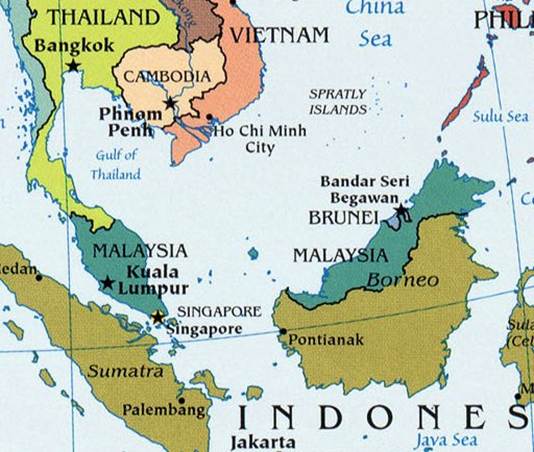
Geostrategic Importance
Strait of Malacca Significance
- Malaysia borders the Strait of Malacca, a chokepoint carrying ~25% of global trade and majority of East Asia-bound energy shipments, making bilateral cooperation vital for SLOC security and anti-piracy coordination.
Indo-Pacific Convergence
- Both countries endorse a Free, Open, Inclusive Indo-Pacific, ASEAN centrality, and UNCLOS-based maritime order, aligning with India’s SAGAR doctrine (2015) and Malaysia’s interest in stable sea-lane governance.
Political–Diplomatic Dimension
Diplomatic Reset
- PM Modi’s 24-hour Kuala Lumpur visit after postponing a 2025 trip signals political intent to stabilise ties despite friction over Malaysia’s calls for “dialogue and de-escalation” on India–Pakistan issues.
Counter-Terrorism Alignment
- Joint statement condemning “terrorism including cross-border terrorism” marks convergence; cooperation spans intelligence sharing, UN coordination, and FATF frameworks to curb terror financing and safe havens.
Economic & Trade Relations
Bilateral Trade Profile
- Bilateral trade ~USD 19–20 billion annually; India imports palm oil, LNG, electronics, while exporting petroleum products, pharmaceuticals, machinery, positioning Malaysia among India’s top ASEAN trade partners.
AITIGA Review Stakes
- Review of ASEAN–India Trade in Goods Agreement (2010) focuses on rules of origin, non-tariff barriers, and trade deficits, as India seeks to prevent rerouting of Chinese goods via ASEAN.
Technology & Emerging Sectors
Semiconductor Cooperation
- MoU linking IIT Madras Global and Advanced Semiconductor Academy of Malaysia supports India’s USD 10 billion Semicon India Programme, aiming at design collaboration, skill development, and supply-chain diversification.
Digital & Energy Collaboration
- Cooperation in digital economy, fintech, and energy transition leverages India’s Digital Public Infrastructure (UPI, Aadhaar stack) and Malaysia’s electronics manufacturing ecosystem for mutually beneficial innovation.
Multilateral & Regional Diplomacy
ASEAN Signalling
- Visit reassures ASEAN after India skipped a summit; Malaysia matters as a founding ASEAN member (1967) and voice in consensus-based regional diplomacy affecting Indo-Pacific stability.
BRICS Interface
- India “noting” Malaysia’s BRICS membership aspirations reflects cautious diplomacy; Malaysia is a BRICS partner country, while Indonesia’s entry increases ASEAN presence in BRICS.
Challenges & Frictions
Political Sensitivities
- Malaysia’s past remarks on Kashmir, Pakistan mediation offers, and hosting Pakistan PM (2025) created trust deficits, showing domestic politics can influence bilateral atmospherics.
Irritants in Legal–Security Domain
- Continued presence of Zakir Naik, wanted under UAPA in India, remains a sensitive issue, though both sides avoided public confrontation to protect broader strategic ties.
Way Forward
Strategic Deepening
- Institutionalising cooperation in maritime security, counter-terrorism, semiconductors, and cyber security can shift ties from personality-driven diplomacy to stable, sectoral partnerships.
Economic Consolidation
- Fast-tracking AITIGA review, supply-chain integration, and MSME partnerships can reduce trade imbalances and anchor ties in long-term economic interdependence within Indo-Pacific value chains.
Neither Surrender nor Triumph, Trade Pacts Mark India’s Growth as Negotiator
Structural Shift in India’s Trade Strategy
From Protectionism to Calibrated Liberalisation
- India moved from pre-1991 import substitution and 150%+ peak tariffs to calibrated FTAs, using trade agreements to secure market access, technology inflows, and value-chain integration while retaining policy space.
Trade as Geoeconomic Statecraft
- Trade policy now serves strategic objectives where tariffs, standards, and supply chains influence power equations; economic agreements increasingly complement diplomacy, security partnerships, and technology alliances.
Relevance
GS II (International Relations)
- FTAs, WTO negotiations, and geoeconomic diplomacy show how trade policy intersects with foreign policy and strategic autonomy.
GS III (Economy)
- Direct relevance to FTAs, tariff policy, non-tariff barriers (SPS, TBT, CBAM), export competitiveness, and supply-chain integration.
Practice Question
- “India’s trade policy has shifted from protectionism to pragmatic liberalisation.” Critically examine. (250 Words)
Core Drivers of India’s Negotiating Behaviour
Strategic Autonomy
- India’s FTA stance reflects strategic autonomy, seen in continued discounted Russian oil imports post-2022, prioritising energy security, inflation control, and fiscal stability over geopolitical pressure.
Domestic Growth Imperative
- Aspiration to reach USD 5 trillion GDP pushes India to secure FTAs for FDI, export markets, and technology transfer, while shielding agriculture, dairy, and MSMEs from import shocks.
India’s Negotiation Leverage
Market Power
- With 1.4+ billion population and a rapidly expanding middle class, India offers one of the world’s largest demand markets, strengthening bargaining capacity in tariff schedules and services negotiations.
Reciprocity Over Concessions
- Earlier vulnerabilities during U.S. GSP withdrawal (2019) and tariff disputes shaped learning; current negotiations emphasise reciprocity, safeguards, and phased liberalisation instead of unilateral concessions.
Logic of Recent Trade Pacts
Diversified FTA Portfolio
- India signed UAE CEPA (2022), Australia ECTA (2022), and concluded India–EU FTA (2026) ,reducing overdependence and building multi-market export resilience.
Beyond Tariffs
- New-age FTAs cover digital trade, IP rights, clean energy, and services mobility, integrating India into high-value technology and knowledge supply chains beyond traditional goods trade.
Developmental Trade-offs
Sectoral Sensitivities
- India protects dairy, agriculture, and MSMEs due to livelihood concerns; sudden liberalisation risks import surges, rural distress, and deindustrialisation without competitiveness buffers.
Standards as Barriers
- Rising non-tariff measures—SPS, TBT, and carbon standards like EU CBAM—increasingly determine trade outcomes, making regulatory alignment and domestic capacity crucial.
Geopolitical Dimensions
Multi-Alignment
- India simultaneously advances FTAs with EU, UK, Gulf, and Indo-Pacific partners, aligning trade with strategic groupings like Quad and IPEF without entering rigid blocs.
Global South Positioning
- India champions policy space for developing nations in WTO debates on agricultural subsidies and public stockholding, projecting itself as a voice of the Global South.
Way Forward
Data-Driven Negotiations
- Stronger trade analytics, sectoral modelling, and stakeholder consultations can align FTAs with industrial policy, PLI schemes, and export competitiveness goals.
Domestic Competitiveness First
- FTAs yield gains only with logistics reforms, skilling, infrastructure upgrades, and regulatory predictability, ensuring Indian firms compete globally rather than depend on tariff protection.