
Published on Jan 21, 2026
Daily Editorials Analysis
Editorials/Opinions Analysis For UPSC 21 January 2026

Content
- The ‘Donroe doctrine’, a broken international order
- Bridging the Gulf
The ‘Donroe doctrine’, a broken international order
Context and Core Argument
- The abduction and incarceration of Venezuelan President Nicolás Maduro by U.S. forces in early 2026 marks a radical reinterpretation of the 1823 Monroe Doctrine, now termed the ‘Donroe Doctrine’.
- The action signals a departure from post-1945 international norms, indicating erosion of sovereignty, non-intervention, and rule-based global order.
Relevance
- GS 1 – World History / Global Political Ideas: Evolution of the Monroe Doctrine into modern unilateral interventionism, reflecting changing nature of sovereignty and power politics.
- GS 2 – International Relations: Breakdown of rules-based international order, violation of UN Charter norms, resurgence of sphere-of-influence politics, and challenges for middle powers like India.
Practice Question
- “The ‘Donroe Doctrine’ marks a shift from a rules-based international order to power-centric geopolitics.”Critically examine the implications of this shift for global stability and India’s foreign policy choices.(250 Words)
The ‘Donroe Doctrine’: Meaning and Evolution
From Monroe Doctrine to Donroe Doctrine
- The original Monroe Doctrine asserted U.S. opposition to external interference in the Western Hemisphere, framed as anti-colonial protection.
- The ‘Donroe Doctrine’ converts this principle into active interventionism, asserting unilateral enforcement of U.S. security interests beyond diplomatic or multilateral means.
Legal and Normative Implications
- The Venezuelan operation violates UN Charter principles of sovereignty, territorial integrity, and non-use of force, weakening the legitimacy of international law enforcement mechanisms.
U.S. National Security Strategy 2025: Strategic Underpinning
Reassertion of Hemispheric Primacy
- The U.S. National Security Strategy (November 2025) explicitly commits to reasserting dominance in the Western Hemisphere and denying non-Hemispheric powers strategic access.
- The doctrine reflects a return to sphere-of-influence politics, rejecting cooperative security frameworks.
Expansion of Strategic Targets
- Implicit threats extend to Cuba, Colombia, Mexico, and even Greenland, justified as security imperatives under expanded U.S. strategic definitions.
Global Response and Systemic Consequences
Weak International Pushback
- Global protests against U.S. action were muted, reinforcing perceptions that the post-1945 liberal international order has weakened significantly.
- The absence of collective response signals normalisation of power-based unilateralism.
Precedent for Other Powers
- U.S. actions risk legitimising similar behaviour by China (Taiwan) and Russia (near abroad), accelerating fragmentation of global norms.
Regional Geopolitical Fallout
Europe
- The NSS criticises Europe’s strategic dependence, urging it to assume primary defence responsibility while hinting at recalibrated U.S.–Russia strategic stability.
- Ukraine conflict appears stalemated, with prospects of a negotiated settlement potentially unsatisfactory to both Russia and Western allies.
Indo-Pacific
- China’s growing influence in Southeast Asia, Eastern Pacific, and Indian Ocean challenges U.S. maritime dominance and alters regional balance of power.
- China’s control over rare earth supply chains has emerged as a strategic economic weapon against U.S. pressure.
West Asia: A Volatile Theatre
Israel–Gaza and Iran
- Israel’s military campaign has paused, but Gaza remains volatile, with ceasefire conditions fragile and violence easily reignited.
- Iran faces widespread internal unrest, claiming to fight on four fronts—economic, psychological, military, and counter-terrorism.
Escalation Risks
- U.S. and Israeli actions appear aimed at completing the unfinished conflict of 2025 by weakening Iran’s regime, raising risks of regional conflagration.
South Asia: Democratic and Security Stress
Afghanistan–Pakistan Region
- Revival of Tehreek-e-Taliban Pakistan (TTP) and Afghan militant groups threatens Pakistan’s internal security and destabilises the Af-Pak border region.
- Pakistan’s democratic backsliding continues, with the military consolidating power and civilian leadership marginalised.
U.S.–Pakistan Reset
- U.S. endorsement of Pakistan’s military leadership and renewed arms supplies reposition Pakistan as a key U.S. ally, complicating India’s security calculus.
Implications for India
Strategic Disadvantages
- India faces diplomatic isolation in conflict zones like West Asia amid implicit cooling of India–U.S. relations over Russian oil imports.
- China’s tactical advantage in trade, tariffs, and supply chains limits India’s ability to hedge against U.S. economic pressure.
Limited Strategic Manoeuvrability
- Improvement in India–China ties post-Tianjin Summit (2025) has not translated into durable stabilisation, with further easing unlikely in 2026.
Terrorism and Internal Security Outlook (2026)
Global Terrorism Trends
- Terrorist groups like Islamic State and al Qaeda are currently more active in Africa but retain operational capacity in Asia and West Asia.
- Regional instability in Iran and West Asia could trigger spillover attacks across multiple regions.
India’s Security Outlook
- While a major terror attack in India appears unlikely, terrorism remains a persistent national security threat, requiring sustained vigilance.
Strategic Assessment
- The ‘Donroe Doctrine’ reflects a shift from rules-based international order to power-centric geopolitics, accelerating global instability.
- Normalisation of unilateral intervention risks fragmenting international norms, encouraging competitive sphere-of-influence politics.
Way Forward: India’s Strategic Choices
Preserve Strategic Autonomy
- India must avoid alignment traps, reinforcing issue-based partnerships while resisting pressure to choose sides in great-power rivalries.
Strengthen Multilateralism
- Advocacy for UN reform, international law, and collective security remains critical to counter unilateralism and protect medium-power interests.
Enhance Internal Resilience
- Economic diversification, defence preparedness, supply-chain security, and counter-terror capabilities are essential to navigate an unstable global environment.
Bridging the Gulf
Context and Trigger
- UAE President Sheikh Mohamed bin Zayed Al Nahyan’s brief visit to New Delhi resulted in economic agreements and an announcement to negotiate an India–UAE Strategic Defence Partnership, the first of its kind.
- The defence announcement assumes significance due to heightened instability in West Asia, overlapping regional rivalries, and India’s deep economic, energy, and diaspora stakes in the Gulf region.
Relevance
- GS 1 – Society & Indian Diaspora: Safety, welfare, and economic importance of nearly 10 million Indians in the Gulf amid regional instability.
- GS 2 – International Relations: India’s West Asia diplomacy, strategic autonomy, defence cooperation with UAE, and balancing relations amid intra-Gulf rivalries.
Practice Question
- India must “tread lightly” while deepening defence cooperation in West Asia. Examine this statement in the context of India–UAE defence ties and regional rivalries.(250 Words)
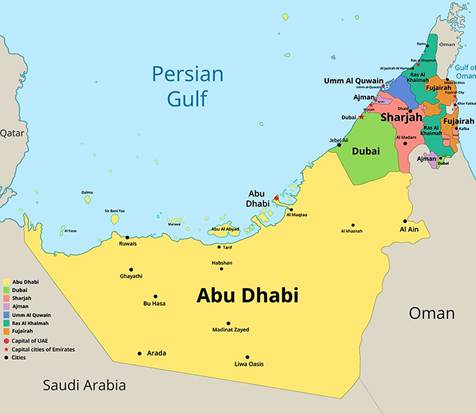
India–UAE Relationship: Strategic Depth
Economic and Trade Dimensions
- UAE is India’s 3rd largest trading partner, 2nd largest export destination, and 7th largest foreign investor, highlighting the centrality of economic interdependence.
- India–UAE CEPA (2022) was India’s first bilateral trade agreement in West Asia, with a stated target to raise bilateral trade to USD 200 billion.
- Recent announcements include a USD 3 billion LNG deal and UAE investment commitments in Gujarat, reinforcing energy-security and infrastructure linkages.
Defence and Security Cooperation
- Proposal for a Strategic Defence Partnership framework marks a qualitative shift from traditional defence cooperation to potential institutionalised security collaboration.
- Official statements emphasise that the framework is not aimed at intervention in regional conflicts, seeking to avoid perceptions of bloc politics.
Regional Security Environment: Growing Volatility
Gulf Power Rivalries
- Relations between UAE and Saudi Arabia have deteriorated, often described as the Gulf’s emerging “cold war”, despite earlier military coordination against the Houthis in Yemen (2014).
- Competing influence in Sudan, lack of communication between MbZ and MbS, and divergent regional strategies have intensified intra-Gulf fault lines.
Wider Regional Instability
- Iranian domestic unrest, US threats of intervention, fragile Gaza ceasefire, and Israel’s reported September 2025 strike in Qatar signal escalating instability.
- Saudi Arabia’s rapid pursuit of a mutual defence pact with Pakistan, and discussions on including Türkiye, suggest new security alignments forming outside India’s influence.
India’s Core Stakes in the Gulf
Diaspora and Human Security
- Nearly 10 million Indians reside in Gulf Cooperation Council (GCC) countries, making regional stability critical for remittances, employment, and evacuation contingencies.
- Any regional military escalation directly affects Indian expatriates and India’s consular and crisis-management responsibilities.
Energy Security
- The GCC region remains India’s primary energy supplier, particularly after US and EU sanctions constrained alternative sources.
- LNG agreements with the UAE are strategically important for India’s energy diversification and price stability.
Connectivity and Geoeconomic Implications
Strategic Connectivity Projects
- India’s regional ambitions depend on stability in West Asia for projects such as:
- Chabahar Port (Iran)
- International North South Transport Corridor (INSTC)
- India–Middle East–Europe Economic Corridor (IMEC)
- Escalating Gulf rivalries and geopolitical uncertainty threaten the viability and predictability of these corridors.
Risk of Strategic Overalignment
- A defence partnership perceived as favouring one Gulf power risks undermining India’s multi-alignment strategy, complicating relations with Iran, Saudi Arabia, and other GCC states.
Diplomatic Signalling and Government Position
Official Reassurance
- India’s Foreign Secretary clarified that the defence framework is not linked to hypothetical regional military scenarios, indicating India’s intent to avoid entanglement.
- Emphasis remains on economic cooperation, stability, and regional balance, rather than alliance-based security commitments.
Strategic Ambiguity
- Despite reassurances, the timing of the announcement amidst Gulf tensions gives rise to perceptions of strategic signalling, necessitating diplomatic caution.
Challenges and Strategic Risks
- Risk of India being drawn into intra-Gulf rivalries due to misinterpretation of defence commitments.
- Potential alienation of other key partners, particularly Saudi Arabia and Iran, critical for energy and connectivity strategies.
- Threats to Indian diaspora safety in the event of regional escalation.
- Uncertainty over long-term feasibility of India’s trans-regional connectivity corridors.
Way Forward: Strategic Prudence for India
Maintain Strategic Autonomy
- India must uphold its policy of issue-based partnerships, avoiding exclusive defence alignments in a volatile multipolar region.
Balance Regional Relationships
- Simultaneously deepen engagement with UAE, Saudi Arabia, Iran, and Qatar, reinforcing India’s role as a neutral and trusted partner.
Prioritise Economic and Diaspora Interests
- Defence cooperation should remain calibrated to protect trade, energy flows, diaspora security, and connectivity projects.
Emphasise Stability-Centric Diplomacy
- India should project itself as a stakeholder in regional stability and de-escalation, not power competition.