
Content
- Sailing Towards Self-Reliance: The Indian Navy’s Aatmanirbhar Bharat Journey
- India’s Transition from Women’s Development to Women-Led Development
Sailing Towards Self-Reliance: The Indian Navy’s Aatmanirbhar Bharat Journey
Why is this in News?
- Navy Day (4 December) highlights India’s maritime power, commemorating Operation Trident (1971).
- INS Mahe commissioned on 24 Nov 2025, adding to accelerated indigenous naval inductions.
- INS Udaygiri & INS Himgiri commissioned in Aug 2025 as India’s 100th & 101st indigenous warships.
- Indian Naval budget doubled from ₹49,623 crore (2020–21) to ₹1,03,548 crore (2025–26).
- 51 large indigenous ships under construction (₹90,000 crore) signalling peak indigenous shipbuilding.
- Indigenisation ratios achieved: 90% (Float), 60% (Move), 50% (Fight).
- INIP 2015–2030 implementation enters mature phase.
Relevance:
GS II – Governance
- Defence procurement reforms: DAP 2020, IDDM, Positive Indigenisation Lists.
- Innovation governance through NIIO, iDEX, SPRINT, SRIJAN.
GS III – Internal Security
- Maritime security, SLOC protection, anti-piracy, EEZ surveillance.
- Strengthening India’s naval deterrence and crisis-response capability.
GS III – Science & Technology
- Indigenous AIP, sonars, radars, EW systems, torpedoes, missiles.
- R&D ecosystem: DRDO–IIT–private sector collaboration.
Basics: Why Indigenisation Matters for a Navy
- Operational Autonomy
Avoids foreign supply-chain disruptions during conflict, sanctions, or crises. - Combat Readiness
Reduces downtime, ensures assured spares, faster upgrades. - Cost Efficiency & Lifecycle Control
Domestic manufacturing lowers lifetime costs. - Strategic Sovereignty
Essential for a leading naval power in IOR. - Industrial Growth
Boosts MSMEs, shipyards, defence research, and high-tech manufacturing. - Blue-Economy & SLOC Security
India’s 90% trade volume, 80% critical freight moves by sea; naval indigenisation is economic security.
India’s Maritime Context: Why India Needs a Strong Indigenous Navy
- 11,098 km coastline; 2.4 million sq. km EEZ.
- 50% global trade & 40% oil flow through the Indo-Pacific.
- India’s own economy depends on coal, crude, iron ore, fertiliser imports.
- 3765 merchant vessels escorted in anti-piracy missions since 2008; 27,260 seafarers protected.
- Increasing roles:
- EEZ surveillance
- Anti-piracy
- Maritime Domain Awareness
- HADR missions
- Protection of offshore assets
- Cooperative security in IOR
INIP 2015–2030: Vision, Strategy, Outcomes
Objectives
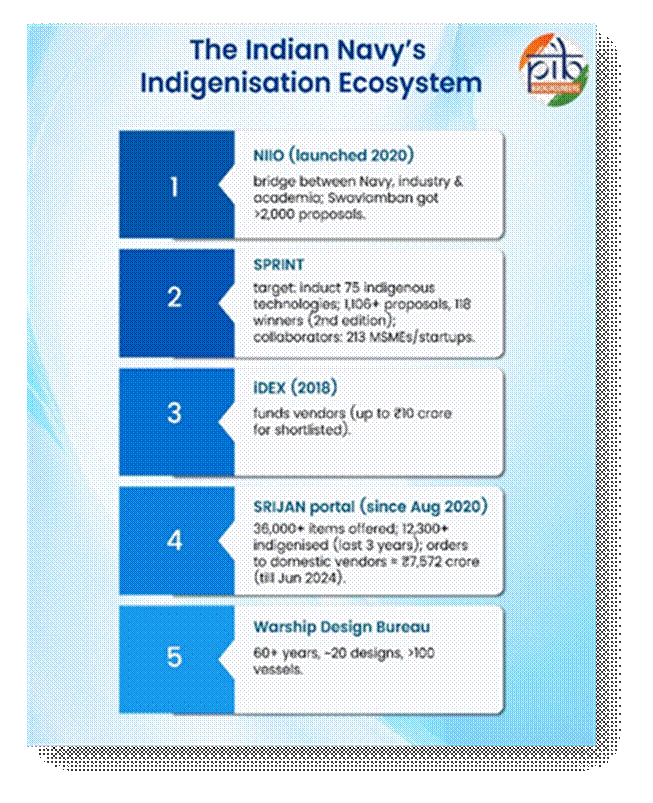
- Indigenise equipment across Float, Move, Fight categories.
- Create an R&D + industry + DRDO collaborative ecosystem.
- List capability gaps & future requirements.
- Move from Buyer’s Navy → Builder’s Navy.
Key Recommendations
- Prioritise Buy Indian / Buy & Make Indian.
- Build domestic capabilities in propulsion, electronics, sensors, underwater systems.
- Absorb ToT, promote standardisation.
- Deep MSME integration.
Execution
- 5,000+ items identified for domestic sourcing.
- Major indigenisation of sonars, EW systems, UAVs, CMS, propulsion auxiliaries, submarine subsystems.
From Buyer’s Navy to Builder’s Navy: Structural Shift
- Over 100 indigenous warships built by Indian shipyards.
- Warship Design Bureau drives indigenous design.
- Navy–IIT partnerships accelerate materials, propulsion & hydrodynamics R&D.
- Swavlamban 3.0 (2023) lays roadmap for industry & academia collaboration.
- Private sector participation targeted to 50% or more.
Indigenisation Status
- Float systems: 90%
- Move systems: 60%
- Fight systems: 50% (key shortfall area—missiles, radars, advanced sensors)
Indigenous Surface Fleet: Major Achievements
51 Ships under Construction
Worth ₹90,000 crore, showcasing robust shipyard capability.
Flagship Projects
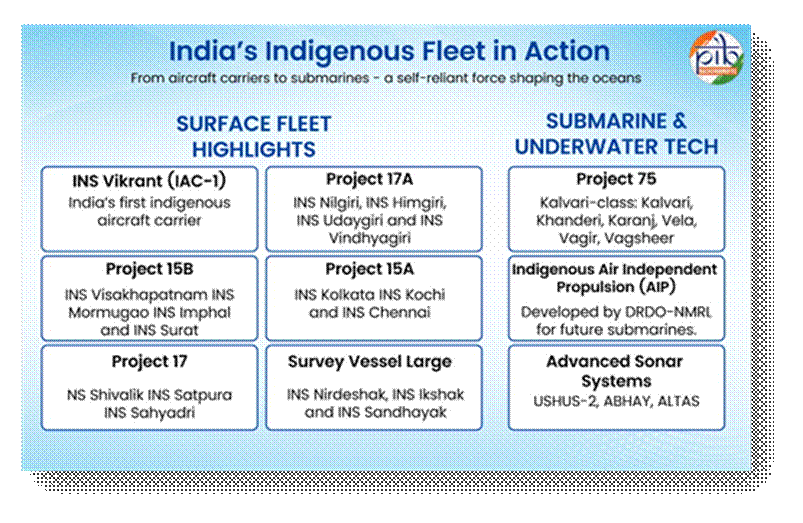
INS Vikrant (IAC-1)
- 76% indigenous content
- 30,000 tonnes of indigenous steel (SAIL)
- Symbol of large-platform self-reliance
Project-15B Visakhapatnam-class Destroyers
- INS Visakhapatnam (2021), INS Mormugao (2022), INS Imphal (2023), INS Surat (2025)
- Advanced air-defence & surface warfare capabilities
Project-17A Nilgiri-class Frigates (Stealth)
- INS Nilgiri, Himgiri, Udaygiri (all 2025)
- Taragiri delivered Nov 2025; Dunagiri, Vindhyagiri, Mahendragiri under construction
Survey Vessels (Large)
- Sandhayak (2024), Nirdeshak (2024), Ikshak (2025), Sanshodhak (under construction)
ASW Shallow Water Craft
- Arnala (2025), Androth (2025), Mahe (2025)
- 80% indigenous components
Submarine & Underwater Systems: Aatmanirbhar Progress
Project-75 Kalvari-class
Six conventional submarines:
- Kalvari (2017) → Vagsheer (2025)
Indigenous AIP (DRDO-NMRL)
- To be retrofitted on Kalvari-class
- Extends underwater endurance significantly
Indigenous Sonars & Underwater Sensors
- USHUS-2
- HUMSA NG/UG
- ABHAY
- ALTAS towed array
- AIDSS (submarine distress system)
Indicates deepening underwater warfare ecosystem.
Weapons & Combat Systems: Indigenisation Push
Missiles
- VL-SRSAM (2025)
- BrahMos (joint but high Indian content)
Torpedoes & Anti-Torpedo Systems
- Varunastra
- Maareech ATDS
- ALWT lightweight torpedo (trials complete)
- MIGM mines
EW & Combat Systems
- EW Suite Shakti
- ESM Varuna
- EW Sangraha
These systems replace legacy imports and strengthen fight component.
Aviation: Indigenous Shipborne Capabilities
- HAL ALH Dhruv Mk-III for shipborne roles (SAR, surveillance).
- 340+ Dhruvs produced; operated by Mauritius & Nepal → export footprint.
- Integration of indigenous radars & sensors on ALH Mk-III.
Shipyard Ecosystem & Industrial Base
Major Shipyards
- Mazagon Dock Shipbuilders Ltd (MDL)
- Garden Reach Shipbuilders & Engineers (GRSE)
- Cochin Shipyard Ltd (CSL)
Industrial Integration
- BEL, BHEL, L&T, Kirloskar, Keltron
- Over 100 MSMEs supplying to INS Vikrant alone
Naval-grade Steel
- Developed jointly by DRDO + SAIL + Navy → strategic independence
Budgetary Trends: Sharp Rise in Naval Expenditure
Navy Budget Growth
- ₹49,623 crore → ₹1,03,548 crore (2020–21 to 2025–26)
- Share in defence budget: 15% → 21%
Capital Expenditure
- ₹26,688 crore → ₹62,546 crore
- Focus: submarines, surface combatants, naval aviation, undersea warfare
Revenue Spending
- ₹22,935 crore → ₹38,195 crore
Indicates sustained government push for maritime modernisation.
Policy Framework Driving Indigenisation
DAP 2020 & DPM 2025
- Prioritise Indian vendors
- Emphasise Buy Indian – IDDM
NIIO (2020)
- Connects Navy, startups, academia
- Accelerates technology adoption
SPRINT Challenges (2022– )
- Target: 75 new technologies
- Collaborations with 213 MSMEs & startups
iDEX (2018– )
- Up to ₹10 crore funding per innovation
- DISC challenges drive naval solutions
SRIJAN Portal
- 38,000 items listed; 14,000+ indigenised by Feb 2025
Positive Indigenisation Lists
- 5,500+ items barred from import
- 3,000 indigenised by Feb 2025
Conclusion: India’s Maritime Self-Reliance Trajectory
- 40+ indigenous ships delivered since 2014.
- New vessel inducted every 40 days in 2024–25.
- Navy transforming into a Builder’s Navy, not a Buyer’s Navy.
- Deepening synergy of industry–academia–research ecosystem.
- Enhances India’s status as IOR’s first responder and credible blue-water naval power.
- Supports strategic autonomy, industrial growth, and long-term maritime security.
“Jalmev Yasya, Balmev Tasya” — Control over the sea is control over power.
India’s Transition from Women’s Development to Women-Led Development
Why is this in News?
- Government briefing in Rajya Sabha (Dec 2025) highlighted:
- Shift from “women’s development” to “women-led development” as a national policy direction.
- Implementation of all four Labour Codes from 21 Nov 2025 with major gender reforms.
- Operationalisation of SHe-Box portal with expanded features in 22 languages.
- Strengthened legal protections under BNS–BNSS–BSA (effective July 2024) for crimes against women.
- Mission Shakti progress report including One Stop Centres, 181 helpline, BBBP, Sakhi Niwas, PMMVY, Palna, etc.
- Massive increase in women’s participation in SHGs (10 crore members) and livelihood programmes.
- New STEM-focused schemes and procurement mandates to boost women’s economic agency.
Relevance:
GS I – Society
- Gender empowerment, social change, SHG movement (10 crore women).
- BBBP, sanitary hygiene, behavioural transformation.
GS II – Polity & Governance
- Nari Shakti Vandan Adhiniyam (33% reservation).
- Labour Codes (gender-equal workplaces).
- Mission Shakti, SHe-Box, OSCs, 181 helpline.
Basics: What is Women-Led Development?
- A governance and development paradigm where women:
- Lead economic decisions
- Participate in political power structures
- Direct community development
- Are creators of economic and social value, not passive beneficiaries
- Central to SDG 5, but India’s model emphasises mainstreaming women in all dimensions of development.
Constitutional & Political Empowerment: Deep Structural Shift
Nari Shakti Vandan Adhiniyam, 2023 (106th Constitutional Amendment)
- 33% reservation for women in:
- Lok Sabha
- State Legislative Assemblies
- Delhi Legislative Assembly
- Represents the largest political empowerment reform since independence.
Significance
- Increases descriptive and substantive representation.
- More women in policy, budgeting, lawmaking → accelerates women-led growth.
Labour Codes Implemented (21 Nov 2025): Gender-Transformative Provisions
Gender Equality at Work
- Equal pay mandated across sectors.
- Gender discrimination prohibited in recruitment and employment.
- Women allowed to work:
- In all sectors, including those previously barred.
- Night shifts, with consent + safety provisions.
- Heavy machinery & underground mining, with safeguards.
Impact
- Expands labour force participation.
- Formalisation boosts wage equality, social security coverage, and mobility.
Workplace Safety Transformation: SHe-Box (National e-Platform)
Key Features
- Single-window portal for complaints under SH Act (2013).
- Automatically forwards complaints to relevant IC/LC.
- Public database of all workplace committees.
- Nodal officer for every organisation.
- Available in 22 languages for remote accessibility.
Significance
- Ensures compliance, accountability, and real-time monitoring.
- Reduces barriers for reporting harassment.
Criminal Justice Reforms: Stronger Legal Protections (BNS–BNSS–BSA)
Effective from 1 July 2024.
Bharatiya Nyaya Sanhita (BNS)
- Chapter V consolidates offences against women & children.
- Key strengthened provisions:
- Section 69: sexual intercourse on false promises (marriage/job/promotion).
- Section 70: gang rape – enhanced punishment.
- Section 99: buying children for prostitution – stricter minimum punishment.
- Section 111: organised crime – includes trafficking networks.
- Sections 75 & 79: expanded definition of sexual harassment.
Bharatiya Nagarik Suraksha Sanhita (BNSS)
- e-FIR & zero FIR for faster action.
- Witness Protection Schemes (Section 398).
- Victim-centric focus for prosecution & trial support.
Bharatiya Sakshya Adhiniyam (BSA)
- Digital evidence expanded: emails, smartphone messages, voice recordings.
- Helps workplace sexual harassment cases under SHe-Box.
Social Empowerment: Mission Shakti Framework
Components
- Sambal (Safety & Security)
- One Stop Centres (OSCs) nationwide for counselling, shelter, legal and medical support.
- 181 Women Helpline (24×7).
- BBBP—curb sex-selective practices + promote education & value of girl child.
- Samarthya (Empowerment)
- PMMVY: Cash benefits via DBT for pregnant & lactating women.
- Sakhi Niwas: Safe accommodation for working women & students.
- Shakti Sadan: Shelter support for distressed women, trafficking survivors.
- Palna: Anganwadi-cum-crèche for increasing workforce participation.
- Hubs for Empowerment of Women: Address information gaps at national, state, district level.
Impact
- Integrated, ecosystem-based intervention across safety, welfare, and skilling.
Education, Health & Welfare: Life-Cycle Continuum Approach
Girl Education
- Samagra Shiksha + separate girls’ toilets → improved enrolment.
- Scholarships and low-cost sanitary napkins (Janaushadhi).
- Sukanya Samriddhi Yojana: incentivised savings for girl child.
Health (Ayushman Bharat)
- 141 women-specific medical packages.
- Screening for 7 major conditions: TB, hypertension, diabetes, oral cancer, breast cancer, cervical cancer, cataract.
- 1.5 lakh Health & Wellness Centres operational.
Affordable Medicines
- 16,000+ Janaushadhi Kendras, including:
- 40 women-specific items
- Suvidha pads @ ₹1 per pad
Social Protection
- NSAP, APY, PMSBY, PMJJBY
- Insurances + pensions create safety net for widows, elderly, vulnerable women.
Economic Empowerment & Financial Inclusion
Livelihood Revolutions
- DAY-NRLM:
- 90 lakh women SHGs
- 10 crore women members
- Transformed rural entrepreneurship, micro-enterprises, credit access.
- NULM: urban livelihood support.
Credit & Enterprise Schemes
- PM MUDRA Yojana
- Stand-up India
- Start-up India
- PM SVANidhi
- Women constitute a majority of beneficiaries.
Public Procurement Preference
- 3% mandatory procurement from women-owned MSMEs.
Digital Skilling
- PMGDISHA, PMKVY, Skill India
- Faster integration into digital & formal economies.
Women in STEM & Knowledge Economy
Key Schemes
- Women Scientist Scheme
- Vigyan Jyoti
- Overseas Fellowship Scheme
Significance
- Addresses underrepresentation in high-tech sectors.
- Facilitates research careers, scholarships, mentorship, lab access.
Cultural Transformation: Gender-Inclusive Communication Guide (2023)
- Addresses linguistic bias.
- Promotes gender-neutral, inclusive communication norms.
- Enables behavioural change across media, institutions, workplaces.
Big Picture: Why This Indicates Women-Led Development
Institutional Level
- Constitutional reservation increases women’s leadership.
- Labour Codes formalise gender-equal workplaces.
Safety & Justice
- Stronger criminal laws + digital evidence + witness protection.
Economic Level
- SHGs → 10 crore members → world’s largest women’s cooperative movement.
- Livelihood + credit + procurement mandates enhance agency.
Health & Education
- Better maternal benefits, cancer screening, school access.
Governance
- Mission Shakti integrates safety, welfare, empowerment under one umbrella.
Digital Governance
- SHe-Box, e-FIR, digital evidence elevate access and accountability.
Conclusion: India at a Structural Turning Point
- India has moved beyond welfare-centric policies to agency-based development.
- Women are now decision-makers, entrepreneurs, legislators, and drivers of economic growth.
- This “women-led development” vision aligns with Sustainable Development Goals and transforms India’s socio-economic landscape.