
Published on Feb 12, 2026
Daily PIB Summaries
PIB Summaries 12 February 2026
Content
- CATCH LIMITS FOR FISHING
- BEST PERFORMING PANCHAYATS
CATCH LIMITS FOR FISHING
Why in News ?
- ICAR–CMFRI recommended Minimum Legal Size (MLS) for key species like pomfret; States advised to enforce via Marine Fishing Regulation Acts (MFRAs) using mesh-size norms and MLS to curb juvenile fishing.
Relevance
GS III (Environment & Economy)
- Sustainable fisheries, marine biodiversity, blue economy, resource governance
- Links to IUU fishing, climate change, coastal livelihoods, EEZ management
- Static areas: EEZ, MSY concept, stock assessment, precautionary principle
Practice Question
- “Catch limits and size regulations are essential for ensuring marine sustainability, but enforcement remains India’s biggest challenge.” Discuss in the context of India’s fisheries governance framework.(250 Words)
Basics
Legal–Institutional Framework
- Fisheries managed by States in territorial waters (up to 12 nm) under MFRAs; Centre regulates EEZ (12–200 nm) and issues advisories for conservation-aligned practices.
ICAR–CMFRI Role
- Conducts periodic stock assessments, species-wise advisories, and ecosystem studies guiding MLS, gear regulations, and conservation measures.
Minimum Legal Size (MLS)
- MLS sets size thresholds to prevent capture of juveniles before first maturity, protecting recruitment and spawning biomass.
Policy Tools for Sustainable Fishing
Gear & Effort Controls
- Mesh-size regulations reduce juvenile bycatch; bans on Bull/Pair Trawling and LED-light fishing in EEZ curb destructive, high-effort fishing.
Spatial Zoning
- Traditional zones reserved for non-mechanised/small motorised boats; mechanised vessels restricted to reduce conflict and overfishing nearshore.
Seasonal Closures
- Uniform 61-day annual fishing ban on both coasts during peak breeding protects spawning stocks and aids stock rebuilding.
Data & Facts
Stock Health
- 91.1% marine fish stocks healthy per MFSS Report 2022 (latest assessment 2023)—suggests benefits of regulations but needs continued compliance.
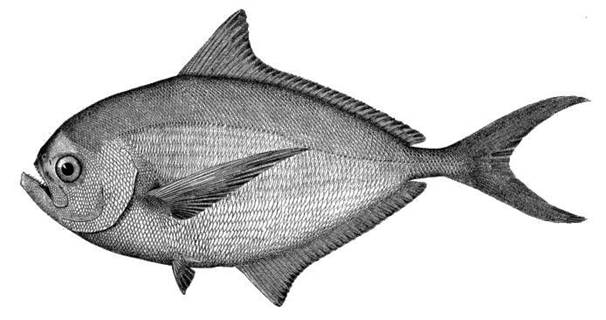
Species Focus—Silver Pomfret
- Maharashtra’s ‘State Fish’ to spotlight conservation; notified MLS ~135–140 mm to protect juveniles in breeding grounds.
Welfare During Bans
- Under PMMSY, support of ₹3,000 (Govt) + ₹1,500 (beneficiary); ₹4,500 released during three-month lean/ban period.
Blue Economy Linkages
Livelihood–Conservation Balance
- Combining MLS, bans, zoning, welfare transfers aligns income stability with long-term stock sustainability.
Habitat Enhancement
- Artificial Reefs funded under PMMSY improve habitat complexity, fish aggregation, and local productivity in coastal/traditional zones.
Challenges
Enforcement Gaps
- Monitoring MLS and gear norms across dispersed fleets is difficult; requires vessel tracking, port inspections, and community co-management.
IUU Fishing Risks
- Illegal, Unreported, Unregulated (IUU) fishing can undermine stock gains and distort data-driven management.
Climate Variability
- Warming seas shift species distribution, affecting stock assessments and MLS relevance over time.
Way Forward
Science-Led Adaptive Management
- Update MLS and closures using real-time stock data, climate indicators, and participatory research.
Tech-Enabled Compliance
- Scale VMS/AIS tracking, e-logbooks, QR landing slips for traceability and MLS enforcement.
Co-Management Models
- Empower fisher cooperatives for self-regulation, reporting, and stewardship to reduce IUU and conflicts.
BEST PERFORMING PANCHAYATS
Why in News ?
- Ministry of Panchayati Raj (MoPR) announced National Panchayat Awards 2023–25 under Incentivisation of Panchayats (IoP) aligned with Localisation of SDGs (LSDGs), rewarding PRIs with ₹50 lakh–₹5 crore grants.
Relevance
GS II (Polity & Governance)
- 73rd Constitutional Amendment, decentralisation, local governance
- Performance-linked grants, SDG localisation
- Fiscal decentralisation & accountability
Practice Question
- “Performance-based incentives to Panchayats can deepen decentralisation but may also widen inter-regional disparities.”Critically examine.(250 Words)
Basics
Constitutional Basis
- Panchayats derive authority from Part IX (Articles 243–243O); promote democratic decentralisation, local planning, social justice, economic development via elected rural bodies.
Rashtriya Gram Swaraj Abhiyan (RGSA)
- Centrally Sponsored Scheme to strengthen PRIs’ capacity, infrastructure, and training; supports Panchayat Bhawans, digital systems, institutional development.
Incentivisation of Panchayats (IoP)
- Performance-based competitive grants encouraging outcomes in poverty reduction, health, climate action, governance, livelihoods, water sufficiency.
Award Architecture
LSDG Alignment
- Themes mapped to SDGs: poverty, livelihoods, health, WCD, water, climate action, sanitation, infrastructure, social security, governance.
Types of Awards
- DDUPSVP, NDSPSVP, and special categories like Carbon Neutral Panchayat, Gram Urja Swaraj, Climate Action, Atmanirbhar Panchayat.
Incentive Size
- Financial awards from ₹50 lakh to ₹5 crore, tier-based; funds reinvested in local development and model replication.
Data & Facts
Digital Planning Scale
- 2,53,992 Gram Panchayats uploaded GPDPs (FY 2025–26), showing near-universal digital local planning adoption.
Financial Digitisation
- PRIs transferred ₹44,000+ crore via eGramSwaraj–PFMS, ensuring real-time payments, reduced leakages, transparent fund flow.
Punjab Snapshot
- 12,807/13,236 GPs service-ready under BharatNet.
- 759 GP Bhawans, 4,300 computers, 500 CSCs approved under RGSA.
Digital Governance Ecosystem
eGramSwaraj
- Platform for planning, accounting, monitoring, online payments; integrated with PFMS for seamless fiscal management.
Meri Panchayat App
- Public access to plans, works, progress, strengthening transparency and social audits.
AuditOnline & Panchayat NIRNAY
- Online audit & Gram Sabha management tools; 13,272 GP audit reports in Punjab (2023–24) generated.
Governance Significance
Deepening Decentralisation
- Performance-linked incentives convert PRIs into outcome-oriented local governments, reinforcing subsidiarity and accountability.
SDG Localisation
- LSDGs make Panchayats frontline actors for achieving Agenda 2030 targets.
Digital India Convergence
- BharatNet + CSC 2.0 + e-Panchayat reduce rural digital divide and improve last-mile service delivery.
Challenges
Capacity Deficit
- Gaps in data literacy, planning skills, trained manpower affect effective utilisation.
Fiscal Dependence
- Limited own-source revenue, high dependence on grants-in-aid.
Inter-State Variations
- Panchayat is a State subject, causing uneven devolution and support.
Way Forward
Capacity Building
- Continuous training in digital governance, SDG planning, financial management.
Fiscal Empowerment
- Strengthen property tax, user charges, local revenue mobilisation.
Best Practice Replication
- Scale award-winning models via peer learning and MoPR platforms.